If you are wondering why does my dog stare at me, you are seeing a common form of canine communication. Dogs watch people to read our movements, anticipate routines, ask for help, and maintain social contact.
A stare does not have one universal meaning, so the safest interpretation comes from the whole body, the situation, and what happens next. Soft eyes and a loose posture usually tell a different story from a motionless, hard-eyed stare around food, toys, or personal space.
How to tell what your dog’s stare means
Before deciding why is my dog staring at me, pause and read the complete body rather than focusing only on the eyes.
Start with the eyes, ears, mouth, tail, weight distribution, and overall stillness. Soft eyes, a relaxed mouth, natural ear position, and a loose body suggest comfort, while wide eyes, a closed tense mouth, pinned or sharply forward ears, a stiff tail, and frozen muscles suggest concern or conflict.
Next, notice the moment. A dog staring during meal preparation, before a walk, beside a toy, while you are petting them, or when a visitor arrives may be communicating something different in each situation.
Finally, ask whether your dog seems to want something, feel socially connected, or feel uneasy. Context turns a glance into useful information.
| What you notice | What it may suggest |
|---|---|
| Soft eyes, loose body, and relaxed mouth | Comfort, affection, attention, or anticipation. |
| Repeated glances toward a door, bowl, leash, or toy | A request or expectation connected to that object or routine. |
| Stiff body, closed mouth, fixed eyes, and little movement | Stress, guarding, uncertainty, or a warning to give space. |
| Blank gaze with confusion or other new behavior in a senior dog | A possible medical or cognitive change that deserves veterinary advice. |
Soft staring usually means attention, affection, or anticipation
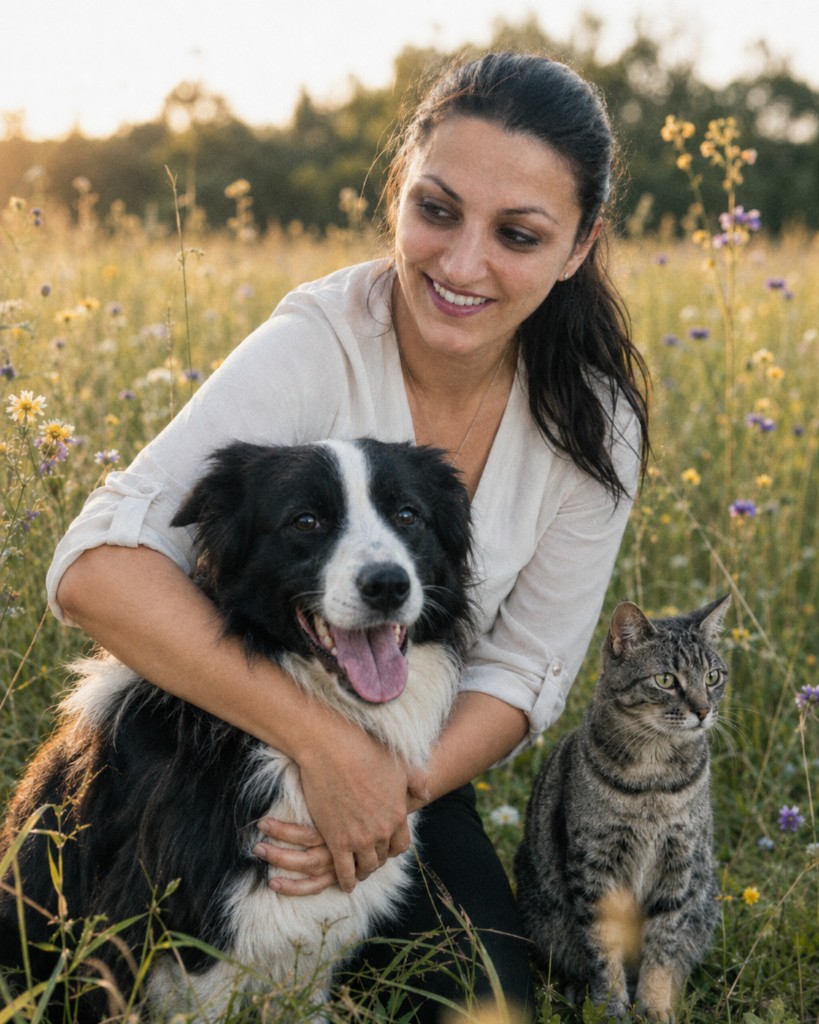
A relaxed dog may look into your eyes because you are a trusted social partner. Gentle eye contact can support bonding, especially when the dog’s body remains loose and they can easily look away.
If you wonder why does my dog stare at me lovingly, consider whether the dog is resting near you, leaning against you, blinking normally, or showing other relaxed behaviors. These signs point more toward social connection than a demand or threat.
Dogs also study human behavior because our movements predict what happens next. Your dog may be watching for a cue that means dinner, a walk, play, going outside, or settling for the night.
Attention can become a learned habit as well. If staring reliably earns eye contact, conversation, petting, food, or your movement toward the leash, the behavior may continue because it works. This does not make the stare manipulative; it means your dog has discovered an effective way to communicate.
Your dog may be asking for something
Many dogs stare when they need a practical problem solved. They may need to urinate, want water, expect a meal, need exercise, or want help reaching a toy.
The stare is often followed by a clearer signal, such as pawing, pacing, whining, walking to the door, looking between you and the bowl, or glancing at the leash. A dog staring while lying down may still be making a request if they repeatedly look toward an object or location.
To tell a request from boredom or habit, check the timing and the dog’s follow-up behavior. A stare that appears at the usual dinner hour and ends when the meal is prepared has a different pattern from a stare that occurs throughout the day without a consistent trigger.
Meet reasonable needs first, but avoid guessing that every stare requires food or constant attention. Otherwise, accidental rewards can make the behavior more persistent.
Staring during petting or close contact can mean very different things
When people ask why does my dog stare at me when I pet her, the answer depends on whether the dog appears relaxed or conflicted. Some dogs maintain eye contact because they want the interaction to continue and are monitoring your hands.
Relaxed signs include soft eyes, a loose body, leaning into your hand, a gently wagging tail, relaxed ears, and a sigh. The dog may move closer when you pause or present another area for petting.
Discomfort can look quieter. Lip licking, turning the head away, showing the whites of the eyes, freezing, closing the mouth, lowering the body, or repeatedly shifting away can mean the dog is uncertain, overstimulated, or asking for a break.
Stop or soften the interaction when these signals appear, especially if the stare becomes fixed. Giving the dog a choice to leave helps you distinguish enjoyment from tolerance.
When staring is intense, still, or without blinking
A hard stare is different from a soft gaze. The dog may hold the head and body very still, close the mouth, shift weight forward, raise the tail, or keep the eyes fixed without easily disengaging.
A dog may show this tension around food, a chew, a toy, a bed, a doorway, or personal space. If the stare occurs with freezing, lip lifting, growling, blocking access, or snapping, treat it as a possible resource-guarding warning rather than a request for attention.
Fear and uncertainty can also produce intense observation, particularly around strangers, unfamiliar handling, loud events, or a situation the dog cannot escape. The dog may appear rigid, crouched, wide-eyed, or ready to retreat.
A dog staring at you without blinking is not automatically aggressive, but the absence of blinking matters less than the complete pattern. Do not test the dog by moving closer, taking an item, or forcing eye contact.
Directly staring back can increase pressure for some dogs. Give space, reduce the trigger when possible, and seek qualified behavior support if the pattern involves guarding or threats.
If your dog stares at you all the time, check habits and environment
When a dog stares at me all the time, I first consider what the dog has learned and what the environment provides. Dogs that are highly people-focused may monitor their owners closely, especially if they have been rewarded for staying near them.
Eye contact, talking, feeding, petting, getting up, or opening a door can all reinforce staring even when the owner does not intend to reward it. The behavior may also increase when the dog lacks a predictable routine, exercise, play, rest, or opportunities to investigate the environment.
Breed tendencies and training history can influence how closely a dog watches people, but they do not determine the meaning of every stare. Interpret the individual dog’s body language instead of relying on a breed label.
To reduce constant staring, meet basic needs, add suitable enrichment, and teach an alternative behavior such as resting on a mat. Reward the alternative calmly before the dog becomes demanding, and avoid making every stare produce a dramatic response.
Blank staring in senior dogs can be different
A senior dog may gaze while resting, listen to household sounds, or watch a familiar room without any problem. Normal rest-time gazing is usually easy to interrupt, and the dog remains oriented when you speak or approach.
A blank stare becomes more concerning when it is new, frequent, difficult to interrupt, or paired with apparent disorientation. Possible clues of age-related cognitive decline include pacing, disrupted sleep, getting stuck behind furniture, house-soiling, altered interaction, anxiety, or confusion in familiar places.
These signs can also have other medical explanations, including pain, vision changes, hearing loss, medication effects, or neurologic problems. Do not assume that a senior dog’s blank staring is simply aging.
If your older dog just blankly stares at you or seems unlike themselves, record when it happens and discuss the change with a veterinarian.
What to do when your dog won’t stop staring
If my dog won’t stop staring, I can respond more effectively by identifying the likely purpose instead of punishing the communication. Use this sequence to investigate the pattern.
- Check water, bathroom access, comfort, exercise, rest, and other basic needs before treating the stare as a training issue.
- Look for a consistent context, such as meal preparation, a closed door, a toy nearby, petting, or the arrival of a visitor.
- Reward a calm alternative behavior, such as going to a mat, sitting, or lying down, rather than repeatedly rewarding intense eye contact.
- Avoid scolding or physically correcting the dog for communicating, because punishment can increase anxiety and suppress warnings without solving the underlying problem.
- If tension appears around food, toys, beds, or handling, manage access and distance safely and contact a qualified trainer or veterinary behavior professional.
- Track the time, trigger, body language, duration, and outcome of each episode so you can identify changes and share useful details with a professional.
Should you stare back at your dog?
When my dog stares at me, should I stare back? Gentle eye contact can be fine when your dog is relaxed, familiar with you, and free to look away. You can soften your face, blink normally, and briefly meet the gaze without turning it into a test.
Do not challenge a tense or guarding dog with direct staring. If the dog seems uneasy, blink, turn slightly sideways, lower the pressure, and create more space. Avoid reaching toward the dog or taking a valued item while the dog is rigid.
The goal is not to prove who is in control. Focus on reading the dog’s comfort level and responding to the situation that produced the stare.
When staring may mean it’s time to call a vet or trainer
Contact a veterinarian about new blank staring, confusion, unusual restlessness, vision changes, signs of pain, or other sudden changes in an older or younger dog. A behavior change can be an early sign of a physical problem.
Seek qualified behavior help when staring is paired with guarding, freezing, growling, lunging, snapping, or repeated attempts to control access to food, toys, people, or spaces. Early guidance can improve safety and prevent owners from accidentally escalating the situation.
Professional advice is also appropriate when the staring is compulsive, difficult to interrupt, appears without a clear context, or interferes with sleep, eating, movement, or daily life.
FAQ
These answers summarize the most common questions about canine staring while keeping body language and context at the center.
Read the whole dog, not just the stare
The answer to why does my dog stare at me may be affection, anticipation, a practical request, learned attention-seeking, uncertainty, guarding, or a senior health change. The eyes provide one clue, but posture, facial expression, timing, and the surrounding situation provide the meaning.
Meet basic needs, reward calm communication, avoid challenging tense dogs, and track unusual changes. When staring is sudden, blank, compulsive, or linked to pain, confusion, or aggression, involve a veterinarian or qualified behavior professional.
Frequently Asked Questions
What does it mean if your dog just stares at you?
A dog that just stares at you may be showing affection, waiting for a familiar cue, asking for food or access, seeking attention, or expressing uncertainty. Soft eyes and a loose body usually suggest comfort, while a stiff body, closed mouth, fixed eyes, freezing, or growling requires more space and caution.
When my dog stares at me, should I stare back?
Brief, gentle eye contact is generally fine with a relaxed dog that can look away freely. Do not stare back at a tense, guarding, fearful, or unfamiliar dog, because sustained eye contact may increase pressure. Blink, turn slightly sideways, and give the dog space if the body looks rigid.
Why does my dog just blankly stare at me?
A dog may gaze blankly while resting or observing a familiar environment, but new or frequent blank staring can signal confusion, vision problems, pain, medication effects, or cognitive changes. In senior dogs, contact a veterinarian if blank staring occurs with pacing, sleep disruption, getting stuck, house-soiling, or disorientation.
How do you tell if your dog is bonded to you?
A bonded dog often chooses to stay near you, checks in with you, relaxes in your presence, responds to your cues, seeks appropriate contact, and can explore or settle while knowing you are nearby. A loving bond does not require constant staring, and independence can also be normal.