If you are wondering why does my dog put his paw on me, the simplest answer is that he is communicating. Pawing can express affection, request attention, ask for food or play, seek comfort, or repeat a behavior that has worked before.
To understand why dogs paw at you, look beyond the paw itself and consider the timing, your dog’s body language, and what happens immediately before and after the touch. A dog places paw on my arm for many possible reasons, so the surrounding situation matters more than the gesture alone.
What it usually means when your dog puts his paw on you
Most pawing is normal social communication rather than a sign that something is wrong. Your dog may be trying to start or continue an interaction, and he may have learned that touching you reliably produces a response.
A paw can signal affection and a desire for social contact, especially when your dog is relaxed and leaning toward you. It can also be a request for petting, food, play, access to a door, or a place beside you.
Some dogs paw because the behavior has been reinforced. If pawing has previously earned eye contact, cuddles, a treat, or a walk, your dog may reasonably try it again. In other situations, pawing can reflect uncertainty, appeasement, stress, or excitement.
The paw itself does not have one universal meaning. Context, the rest of your dog’s body, and the result he appears to want provide a more accurate interpretation.
| What you observe | A likely meaning |
|---|---|
| A gentle paw with a loose body and soft eyes. | Your dog may be seeking closeness or pleasant attention. |
| Repeated pawing while staring at a bowl, toy, or door. | Your dog may be requesting a specific resource or activity. |
| Pawing with pacing, whining, yawning, or turning away. | Your dog may be stressed, frustrated, conflicted, or in need of a break. |
How to tell what your dog means in that moment
Read your dog as a whole rather than treating one movement as a complete message. A relaxed dog often has a loose posture, soft eyes, a relaxed mouth, and an easy tail position. He may lean into you or remain close after placing a paw on you.
A dog requesting something may whine, stare toward a resource, pace between you and a door, or repeat the pawing when you do not respond. The request becomes clearer when the behavior consistently occurs before breakfast, a walk, play, or access to furniture.
Stress or conflict can look different. Watch for tucked or unusually stiff posture, lowered ears, lip licking, yawning, turning the head away, avoiding eye contact, or repeatedly shifting position. These signals do not automatically prove fear, but they suggest that more interaction may not be welcome.
Ask yourself three questions: What happened right before the pawing started, what does your dog’s entire body communicate, and what does he appear to want you to do next? Those answers usually distinguish affection from a request or a need for space.
| Clue | What to consider |
|---|---|
| Loose body and leaning. | Your dog may be comfortable with contact. |
| Whining, staring, or repeated pawing. | Your dog may be making a specific request. |
| Yawning, licking, turning away, or stiffness. | Reduce pressure and give your dog a choice to move away. |
When your dog puts a paw on you while you pet him
A dog puts paw on me when I pet him may be responding to the social contact itself. Many dogs gently place a paw on a person as they relax together, and the movement can be part of maintaining closeness rather than a deliberate request.
If your dog paws when you slow down or stop, he may be asking you to continue. Dogs put their paws on you when you stop petting them because the interaction has been rewarding and they have discovered that a paw can restart it.
Some dogs become excited or overaroused during petting. Look for a loose posture and voluntary closeness if you want to continue. Stop briefly if your dog becomes stiff, mouths at your hand, turns away, shows repeated lip licking, or seems unable to settle.
Offer a pause and allow your dog to choose whether to return. Consent-based handling is especially useful with children, unfamiliar dogs, and dogs that become uncomfortable during prolonged touching.
Common situations and what the paw probably means
When your dog puts a paw on you after you stop petting him, the most likely explanation is a request for more contact, although the strength and repetition of the behavior matter. Reward calm communication rather than escalating pawing.
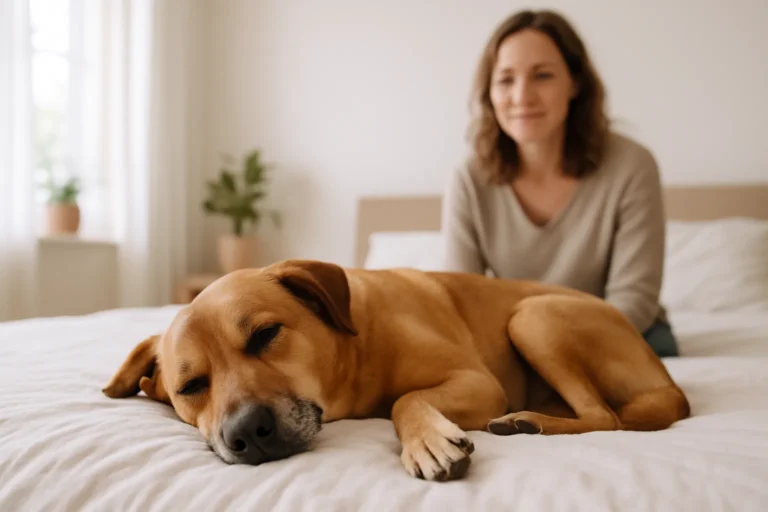
If your dog puts a paw on you while he sleeps or is drowsy near you, he may be maintaining physical contact or reacting to movement. Avoid waking or restraining him, and let him move away if he chooses.
When your dog puts a paw on you at night, check ordinary needs first, including a bathroom break, discomfort, thirst, anxiety, or a learned routine for getting attention. A sudden nighttime change deserves closer observation.
When your dog puts a paw on you in the morning, he may anticipate breakfast, a walk, release from a room, or your usual greeting. Predictable household routines can make morning pawing especially persistent.
A dog places paw on my arm because the arm is an easy target and close to the dog’s face. The location does not create a special meaning by itself, although your response may have taught your dog to use that body part.
If your dog puts a paw on you and pushes, he may be trying to obtain space, restart petting, shift your hand, or intensify a request. Read his posture before deciding whether the push is friendly or demanding.
If your dog puts a paw on you and licks you, the combination may reflect affection, appeasement, attention-seeking, or excitement. Licking alone is not proof of love, so interpret it alongside tension, avoidance, and the surrounding situation.
Affection, attention, or a request: the most likely explanations
Bonding and closeness are common explanations when pawing happens during quiet time. A dog that chooses to stay near you, relaxes beside you, and seeks gentle contact may be using the paw as one part of a comfortable social interaction.
Attention-seeking is another possibility. Your dog may want eye contact, conversation, play, or an opportunity to involve you in what he is doing. If any response follows pawing, the behavior can become a reliable way to start an interaction.
Some dogs request petting or comfort by placing a paw on a person. Others invite play by pawing, bowing, bringing a toy, or bouncing into an energetic posture.
Routine also shapes meaning. Pawing before breakfast, walks, couch access, or a door opening may be a learned request linked to a predictable event. The behavior is still communication, even when your dog is using it strategically.
Is it dominance? Usually no
A dog putting a paw on you is not, by itself, evidence of dominance. The gesture does not show that your dog is trying to control the household or challenge your social position.
Older dominance explanations often reduce complex behavior to a struggle for rank. Modern behavior-focused interpretation looks instead at the immediate context, the dog’s emotional state, and the consequences that have reinforced the action.
If pawing repeatedly earns petting, food, play, or access, reinforcement history explains the persistence more clearly than a dominance label. If the dog is worried or conflicted, body language may point toward stress rather than social control.
Pushy pawing can still be worth training even when it is not dominance. A large dog can scratch someone, and a persistent dog can disturb children, guests, or someone who needs rest. Set clear boundaries without turning the behavior into a power struggle.
When pawing may signal stress, discomfort, or overstimulation
Some dogs use a paw as an appeasement gesture when they feel uncertain. The paw may appear with lowered posture, lip licking, averted eyes, pinned-back ears, or an effort to make the interaction less threatening.
Intense petting, hugging, face-to-face contact, or being prevented from leaving can create conflict. A dog may paw at you while also turning away because he wants the interaction to change or end.
Restlessness, frustration, unmet exercise needs, hunger, a need to eliminate, or insufficient rest can also increase repetitive pawing. Before correcting the behavior, consider whether your dog needs something basic.
Give your dog space when he shows signs that he wants a break. Do not hold him in place, punish warning signals, or assume that a friendly-looking paw always means he wants more touch.
Should you let your dog paw at you?
Gentle pawing is harmless when your dog remains relaxed, the contact is comfortable, and everyone in the household can respond safely. You can allow it as a personal communication style if it does not create scratches, jumping, guarding, or constant demands.
Set limits when pawing becomes rough, repetitive, or disruptive. Establish household rules that protect children, guests, older adults, and anyone who could be knocked over or scratched, particularly when a large or excitable dog is involved.
Consistency matters because occasional rewards can maintain persistent behavior. Everyone should follow the same plan for when pawing earns attention and when calm behavior earns the interaction instead.
How to respond if you want to encourage gentle pawing
If you like the behavior, reinforce gentle contact selectively rather than responding to every demand. Offer quiet praise or brief petting when your dog uses a soft paw and remains relaxed.
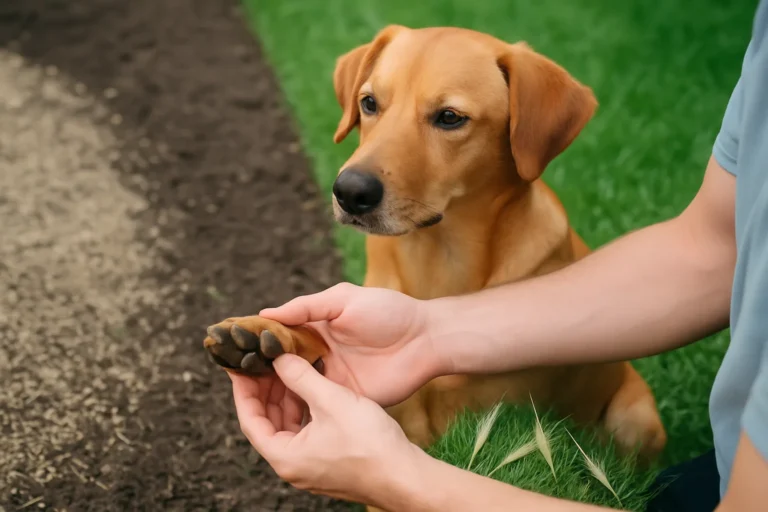
You can pair the behavior with a cue if you want a deliberate touch or shake. Present your hand, mark the gentle contact, and reward it, while avoiding forced handling or repeated grabbing of the paw.
Also reinforce four paws on the floor between interactions. This teaches your dog that calm pauses are valuable and prevents pawing from becoming the only way to maintain your attention.
Use petting, praise, play, or a small reward strategically, and stop before your dog becomes overexcited. The goal is polite communication, not constant physical contact.
How to stop demanding pawing without hurting your bond
When pawing is demanding, avoid giving instant attention every time it happens. Keep your response neutral, protect your skin, and wait for a brief calm moment before offering attention or addressing the underlying request.
Teach an alternative behavior such as sitting, resting the chin on your hand, or going to a mat. Reward the alternative generously at first so your dog learns a clear and successful way to ask for interaction.
Meet predictable needs before the behavior escalates by providing appropriate exercise, enrichment, bathroom breaks, food, and rest. A dog with an unmet need may find it much harder to respond calmly.
Do not hit, shove, yell at, or punish your dog for pawing. Punishment can create confusion or stress and may suppress useful communication without teaching a better option.
- Pause instead of rewarding repeated pawing immediately.
- Wait for calm behavior before responding.
- Teach a clear alternative such as sit, chin rest, or mat work.
- Reward the alternative consistently across household members.
- Check exercise, enrichment, bathroom, food, and rest needs.
When pawing deserves a closer look
A sudden new pawing habit deserves attention, especially when it is intense or unlike your dog’s normal behavior. Note when it occurs, what your dog’s body language looks like, and whether anything changed at home.
Pawing paired with clinginess, restlessness, vocalizing, sleep disruption, unusual avoidance, or difficulty settling may reflect an emotional or physical change. Pain, sensory changes, anxiety, or age-related cognitive changes can sometimes contribute to new behavior.
Ask your veterinarian for guidance if the change persists, appears linked to discomfort, or occurs with other concerning changes. A qualified behavior professional can help when anxiety, frustration, handling sensitivity, or persistent demands are involved.
The meaning depends on the moment
When you ask why does my dog put his paw on me, start with context rather than a fixed label. A loose, relaxed dog may be showing affection or requesting contact, while repeated or tense pawing may signal a learned demand, uncertainty, overstimulation, or an unmet need.
Respond by reinforcing the communication you want, teaching a polite alternative when necessary, and giving your dog space when his body language shows discomfort. With consistent observation, pawing becomes useful information rather than a mystery or a dominance concern.
Frequently Asked Questions
Is dog putting paw on you dominance?
Usually no. Pawing alone is not evidence of dominance, and context, body language, and reinforcement history usually provide a better explanation.
Why do dogs put their paws on you when you stop petting them?
Many dogs are asking you to continue a rewarding interaction. Wait for calm behavior if the pawing becomes repetitive, and watch for signs that your dog is actually overstimulated or wants space.
What does it mean when a dog puts his paw on your arm?
Your dog may be seeking closeness, attention, petting, play, comfort, or access to something. The arm is simply an accessible place to make contact, so read the rest of the situation.
How do you tell if your dog is bonded to you?
A bonded dog often chooses to stay near you, relaxes in your presence, seeks appropriate interaction, checks in with you, and can accept your guidance while still feeling safe enough to explore.