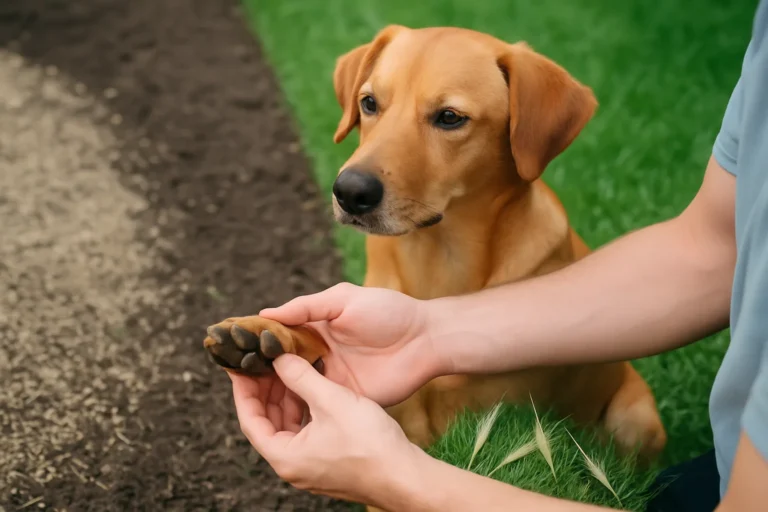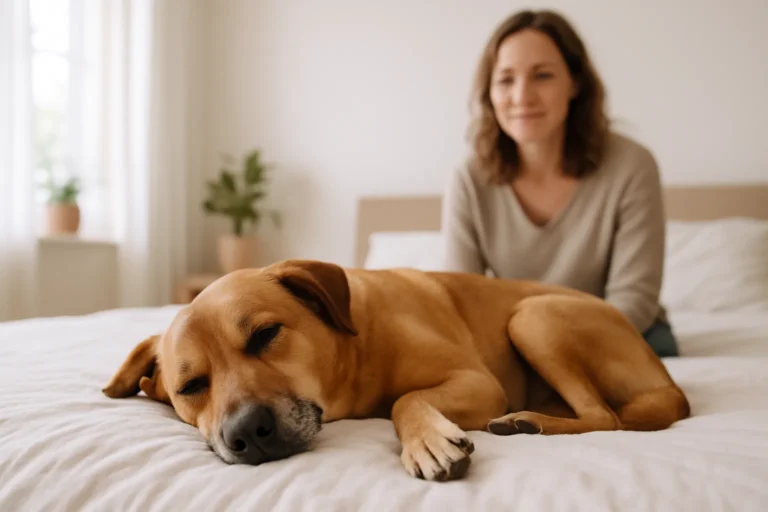
If you are wondering why does my dog lick my feet, the most likely explanation is ordinary dog behavior rather than a serious problem. Feet offer salty sweat, strong scent information, and a reliable way for a dog to greet you, seek attention, or settle close to a favorite person.
Occasional licking is usually harmless, but a dog that licks my feet constantly may have learned that the behavior earns a reaction, or may be using it to cope with anxiety, boredom, or overstimulation. The pattern, body language, and ease with which you can interrupt the licking matter more than the behavior by itself.
Why do dogs lick feet in the first place?
Dogs investigate the world through their noses and mouths, so licking a person’s feet can be a normal form of information gathering. Feet also tend to be warm, accessible, and rich in scent, which makes them especially interesting compared with less strongly scented parts of the body.
The most common reasons are taste, scent, social connection, attention, and comfort. A dog may have more than one reason for licking, and the motivation can change depending on whether you have just exercised, returned home, taken a shower, or settled down for the night.
- Sweat can leave a salty taste that many dogs find rewarding.
- Bare feet, socks, and shoes carry concentrated scent information about where you have been.
- Licking can be an affiliative behavior connected with greeting, closeness, and bonding.
- A dog may repeat the behavior when talking, laughing, moving, or petting makes it successful at getting attention.
The most likely reasons your dog licks your feet
Understanding the context can help you identify why your dog is doing it. Watch what happens immediately before and after the licking, because the consequence often reveals whether your dog is seeking taste, information, social contact, or relief from stress.
| Possible reason | Clues to look for |
|---|---|
| Taste and salt | The licking is more likely after exercise, warm weather, or time spent barefoot. |
| Scent and investigation | Your dog focuses on socks, shoes, or feet after you have been outside or around other animals. |
| Attention seeking behavior | The licking starts when you are busy and stops when you respond. |
| Affection and bonding | Your dog appears relaxed, stays close, and licks briefly during greetings or cuddling. |
| Self-soothing and anxiety | The licking appears during bedtime, separation-related stress, loud noises, or overstimulation. |
| A learned habit | The behavior occurs in a predictable routine and has continued because it reliably produces a reaction. |
Taste and salt
The salty taste of sweat is a straightforward explanation for many cases of foot licking. If your dog shows more interest after a walk, exercise session, hot day, or time spent in shoes, taste may be the main reward.
Scent and social information
Scent and pheromone-rich skin gives dogs information about you and your surroundings. Socks and shoes can be especially appealing because they retain concentrated smells, while bare feet may offer a new combination of sweat, soap, flooring, and outdoor scents.
Attention and affection
Some dogs lick as a friendly greeting or a way to maintain contact with a trusted person. Others discover that licking makes people laugh, speak, look down, pet them, or move their feet, so the behavior becomes attention seeking even if attention was not the original reason.
Anxiety, self-soothing, and habit
Licking can provide repetitive sensory feedback that helps some dogs settle during rest times or after exciting events. A dog may also develop a before-sleep licking habit because the routine predicts closeness and quiet, or because the repeated action has become a familiar way to self-soothe.
A habit does not automatically mean your dog has an anxiety disorder. However, the possibility becomes more important when licking is difficult to interrupt, appears with restless body language, or spreads to other repetitive behaviors.
What it means if your dog licks your feet constantly
When a dog licks my feet constantly, the behavior deserves closer observation rather than an automatic diagnosis. Frequent licking may simply be a strongly reinforced habit, especially if every episode produces conversation, eye contact, petting, or playful movement.
Look at your dog’s entire body and the situations in which the licking occurs. A relaxed dog that can readily switch to a toy or resting place may have a habit, while a dog that paces, pants, whines, clings, trembles, or struggles to settle may be showing stress.
Licking that escalates to floors, bedding, furniture, the air, or the dog’s own body can suggest a broader repetitive or compulsive pattern. A sudden increase can also occur with discomfort, nausea, itchiness, changes at home, or another health issue, so do not assume every change is training-related.
- Frequent licking that stops easily when you offer an appropriate alternative is more consistent with a habit or social behavior.
- Long bouts accompanied by pacing, whining, panting, clinginess, or difficulty settling may point to anxiety or overstimulation.
- Repetitive licking that spreads to surfaces or the dog’s own body may require a veterinary and behavior assessment.
- A sudden change is more concerning than a long-standing, mild routine that has remained stable.
When foot licking is normal and when it is a problem
Brief licking during a greeting, cuddle, or quiet rest period is usually within the range of normal canine behavior. You can still set a boundary if you dislike it, but occasional licking by itself does not require treatment.
The behavior becomes a problem when it interferes with sleep, play, training, or your dog’s ability to relax. It also deserves action when your dog becomes agitated after interruption, damages the skin, or cannot shift attention even when a calm alternative is available.
Consider both hygiene and behavior. Licking may transfer germs between a dog’s mouth, your skin, and household surfaces, and it can irritate cracked skin or open wounds. People with weakened immune systems, allergies, or skin conditions may reasonably choose a stricter boundary.
| Usually manageable | Worth investigating |
|---|---|
| The licking is brief and occurs during greetings or relaxation. | The licking lasts for long periods or is becoming more frequent. |
| Your dog remains relaxed and can respond to a gentle cue. | Your dog cannot disengage or becomes distressed when interrupted. |
| The behavior does not disrupt sleep, activities, or skin health. | The behavior disrupts rest, causes skin irritation, or spreads to other repetitive actions. |
| The pattern is stable and linked to predictable social situations. | The change is sudden or occurs with illness, pain, itching, vomiting, or unusual behavior. |
Why your dog may lick your feet in specific situations
Small changes in timing can explain why a dog licks feet in one situation but ignores them in another. These patterns are useful clues, but they should be interpreted alongside your dog’s body language and general health.
After a shower
After-shower foot licking may be driven by moisture, warmer skin, soap residue, or a stronger contrast between your new scent and the familiar scent your dog expects. Some dogs are also more interested because you are standing still and available for interaction.
Before sleep
Why does my dog lick my feet before sleeping? Often, the behavior is part of a winding-down ritual that combines closeness, attention, and self-soothing. If you consistently talk to or pet your dog at bedtime, the licking may also predict a rewarding part of the routine.
When your dog targets one person
A dog may lick one person’s feet only because that person has a different scent, sweat pattern, routine, or reaction. The targeted person may also spend more time sitting on the floor, allow more access, or have unintentionally rewarded the behavior more often.
When your dog licks feet, legs, and hands
Licking your feet and legs or hands usually indicates a broader preference for social licking rather than a problem specific to feet. If the dog remains relaxed and can stop when asked, consistent boundaries and redirection can usually manage the behavior.
Should you let your dog lick your feet?
Occasional foot licking is usually not harmful for most healthy households, so allowing it is a personal boundary rather than a universal rule. You may decide that a brief greeting is acceptable, or you may prefer that your dog never lick human skin.
It is sensible to stop the behavior if it is excessive, unhygienic, difficult to interrupt, or directed at cracked skin, cuts, medication, or an open wound. You should also use stricter hygiene boundaries if someone in the household has a weakened immune system, significant allergies, or a skin condition.
Allowing licking sometimes and reacting strongly at other times can make the habit persistent because unpredictable rewards are difficult for dogs to ignore. Choose a clear household rule and teach an alternative behavior that earns attention.
- Wash your feet and hands after close contact if hygiene is a concern.
- Keep your dog away from open wounds, topical medications, and irritated skin.
- Avoid allowing licking when it is causing skin irritation or interfering with rest.
- Use the same boundary and replacement behavior for everyone in the household.
How to stop dog licking feet without making it worse
To stop dog licking feet, make the unwanted behavior uninteresting and make a calm alternative consistently rewarding. Punishment, shouting, or repeatedly pushing your dog away can add attention, increase frustration, or make an anxious dog more unsettled.
- Notice the earliest sign of an approach or lick so you can respond before the behavior becomes intense.
- Keep your feet still and avoid laughter, eye contact, conversation, or petting while the licking is happening.
- Calmly interrupt by standing up, moving out of reach, or using a familiar cue such as “place” or “leave it.” Immediately offer a suitable alternative, such as a mat, toy, chew, food puzzle, or brief sniffing activity.
- Reward the alternative behavior with praise, attention, or a treat while your dog is calm and away from your feet.
- Manage predictable trigger times by wearing socks, using a baby gate, or keeping a toy within reach while you build the new habit.
- Add age-appropriate exercise, sniffing, training, enrichment, and quiet decompression when boredom or stress may be contributing.
- Apply the same response every time so your dog does not have to keep trying the licking behavior to discover whether it will work.
A simple redirection sequence
When your dog approaches your feet, cue the behavior you want, guide your dog to the mat or toy, and reward the choice as soon as it happens. Over repeated practice, your dog can learn that settling near you produces better results than licking your feet.
Avoid accidental reinforcement
If you sometimes laugh, play, or give a treat only after your dog starts licking, the dog may learn to begin licking to start the interaction. Give attention proactively when your dog is resting, sitting, or choosing an appropriate toy instead.
If anxiety or compulsive licking is part of the picture
Self-soothing and anxiety can contribute to foot licking when the behavior appears around separation, visitors, loud noises, bedtime, confinement, or overstimulation. Signs may include a tense body, tucked tail, pacing, panting, whining, scanning, clinginess, or difficulty settling after the trigger ends.
Compulsive licking in dogs is more concerning when it is repetitive, prolonged, difficult to interrupt, and disconnected from an obvious social or taste-related situation. Repetition may involve feet, floors, bedding, air, furniture, or the dog’s own skin, and the pattern can gradually interfere with normal activities.
Keep a simple record for about a week when it is safe to do so. Note the time, location, trigger, duration, body language, what stopped the behavior, and whether any other symptoms appeared. This information can help distinguish a predictable habit from stress-related or compulsive behavior.
- Use predictable feeding, exercise, rest, and interaction routines to reduce unnecessary uncertainty.
- Provide calm decompression after exciting events instead of immediately adding more play or handling.
- Offer sniffing activities, food puzzles, and reward-based training that allow your dog to make controlled choices.
- Avoid forcing interaction or punishing repetitive behavior, because added pressure can intensify stress.
- Ask for professional guidance if the licking is escalating, spreading, or interfering with sleep and daily life.
When to talk to your vet or a behavior professional
Talk with your veterinarian when foot licking starts suddenly, increases dramatically, or appears with vomiting, appetite changes, itchiness, pain, skin irritation, unusual odor, limping, or another behavior change. These signs do not prove that the feet are the source of a medical problem, but they make it important to rule out health causes before treating the behavior as a simple habit.
A veterinarian can assess possible medical contributors and help decide whether your dog needs further evaluation. If the behavior is intense or repetitive after medical causes have been considered, a certified trainer experienced in fear-free methods or a veterinary behavior professional can create a safer behavior plan.
Do not use the idea that a dog detects diabetes as a reason to diagnose a person or ignore other symptoms. Dogs can notice scent changes, but foot licking is common and is not a reliable test for diabetes or any other human disease.
- Seek veterinary advice for a sudden onset or dramatic increase in licking.
- Arrange an examination when licking occurs with vomiting, itching, pain, odor changes, skin problems, or marked distress.
- Ask for behavior support when your dog cannot disengage, loses sleep, or repeats the behavior across many settings.
- Use reward-based professional help when anxiety or compulsive behavior is suspected.
FAQ
These answers address common questions about foot licking, hygiene, bedtime routines, and possible health concerns.
The bottom line on foot licking
Most dogs lick feet because they enjoy the salty taste, find the scent interesting, want social contact, or have learned that licking earns attention. A brief, relaxed episode is usually not a concern, but constant, sudden, distressed, or increasingly repetitive licking deserves closer attention.
Set a calm boundary, redirect your dog to a rewarding alternative, and improve enrichment and routines when needed. Contact your veterinarian or a qualified behavior professional when the pattern changes suddenly, comes with signs of illness, or seems impossible for your dog to control.
Frequently Asked Questions
Should I let my dog lick my feet?
You can allow occasional licking if it does not bother you and there are no hygiene concerns, open wounds, skin conditions, or topical medications involved. If you do not want the habit strengthened, calmly redirect your dog and reward a different behavior instead.
Is it bad for your dog to lick your feet?
Occasional foot licking is usually not harmful for a healthy dog or household, but it can be unhygienic, irritate damaged skin, or become a difficult habit. Prevent licking of wounds, medicated skin, and irritated areas, and set a consistent boundary if the behavior is excessive.
Why does my dog lick my feet before sleeping?
Your dog may lick your feet before sleeping because the behavior is part of a comforting bedtime ritual, provides closeness, or helps the dog settle after the day’s activity. If the dog also paces, pants, whines, or cannot settle, anxiety may be contributing.
Why does my dog lick my feet but no one else’s?
Your feet may have a different scent, sweat pattern, routine, or level of access than other people’s feet. Your reactions may also have taught your dog that licking you produces attention, so consistent redirection can change the preference.
Why does my dog lick my feet when I get out of the shower?
After-shower foot licking may reflect moisture, soap residue, warmer skin, or a noticeable change in your usual scent. Your dog may also see the shower as a predictable time when you are standing still and available for interaction.
Do dogs lick people with diabetes?
Dogs may notice changes in a person’s scent, but foot licking is common and is not a reliable way to detect diabetes. Do not use this behavior as a medical test, and speak with a healthcare professional about genuine symptoms or screening.