Why does my dog sigh? In most cases, a sigh is a normal emotional or social signal that means your dog is settling down, feeling content, or letting go of mild frustration.
If your dog sighs a lot, the sound is loud or newly changed, or it appears with coughing, stiffness, restlessness, or breathing difficulty, judge the sigh alongside your dog’s body language and overall health.
What a dog sigh usually means
A typical sigh is a longer, relaxed exhale that often happens when a dog settles into a comfortable position. It can reflect contentment after resting, eating, playing, or spending time with a trusted person.
Dogs can also sigh after an expected reward does not happen, such as when a walk ends or a treat is delayed. In that setting, the sigh may express mild disappointment or acceptance rather than sadness.
Some dogs use sighs to communicate socially. A dog may sigh while looking at you, waiting near a leash, or seeking attention because expressive normal dog vocalizations can become part of daily interaction.
The sound alone does not identify the emotion. Context, timing, posture, facial expression, and what happens immediately before and after the sigh provide a more reliable interpretation.
- A sigh during relaxed rest usually suggests settling or contentment.
- A sigh while waiting for a walk, meal, or toy may suggest mild frustration or an unmet expectation.
- A sigh directed toward a person may be a quiet request for attention or social contact.
- A sigh paired with physical or breathing changes should not be dismissed as ordinary communication.
How to tell if the sigh means relaxed, bored, or stressed
Look for a pattern of body language instead of labeling the sigh by itself. Relaxed dog body language includes soft eyes, a loose mouth, relaxed ears, an easy posture, and weight resting comfortably on the floor.
A bored or hopeful dog may remain alert, watch you closely, bring a toy, or linger near the door while waiting for something to happen. These behaviors often point to anticipation rather than distress.
Dog stress signals are more concerning when they accompany sighing. Panting without heat or exercise, repeated lip licking, pacing, a tucked posture, pinned-back ears, or whale eye can indicate tension or a desire for space.
A calm exhale usually leaves the body loose. A tension-release exhale may happen after a startling event or an unwanted interaction, so the dog may look calmer afterward but still need distance and quiet.
| What you notice | What it may suggest |
|---|---|
| Soft eyes, loose body, and resting posture. | Contentment or normal settling. |
| Alert eyes, waiting, and staying near you. | Anticipation, boredom, or attention-seeking. |
| Panting, pacing, lip licking, or tucked posture. | Stress, discomfort, or overstimulation. |
Why your dog sighs when lying down
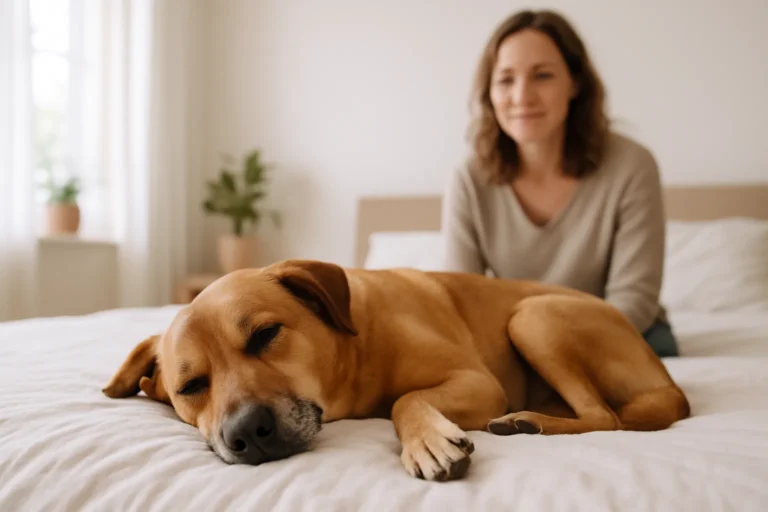
Dog sighing when lying down is commonly a physical release after your dog flops onto a bed, stretches out, or finds a comfortable position. The long exhale may simply mark the transition from activity to rest.
Many dogs sigh at the end of the day or after a walk and play session. Decompressing from exercise, excitement, and social activity can produce a deep, audible breath before sleep.
A lying-down sigh is worth closer attention if your dog repeatedly gets up and lies back down, hesitates before lowering the body, appears stiff, or seems unable to find a comfortable position. Those changes can indicate discomfort rather than relaxation.
- A sigh followed by sleep, loose muscles, and a comfortable posture is usually reassuring.
- A sigh followed by repeated repositioning, stiffness, or reluctance to move deserves observation.
- A new pattern of sighing after ordinary activity should be discussed with a veterinarian if it persists.
Why some dogs sigh loudly or seem to sigh a lot
Why do dogs sigh loudly? Some dogs are simply more expressive, and their size, airway shape, vocal habits, or sleeping position can make an ordinary exhale easier to hear. A loud sigh that is occasional and otherwise unchanged may be normal for that individual.
Repeated sighing can also follow environmental triggers such as waiting, boredom, a postponed walk, or a familiar routine that has been interrupted. Notice whether the sighing stops when the expectation passes or your dog settles.
Repeated sighing during rest becomes more important when it is accompanied by panting, coughing, wheezing, nasal discharge, reduced stamina, restlessness, or changes in sleep. The most useful comparison is your dog’s baseline, not a universal number of sighs.
A change from quiet, occasional sighs to loud or frequent exhalations is more meaningful than a long-standing habit. Record when it happens, what your dog is doing, and whether the sound occurs while awake, asleep, active, or relaxed.
Sighing during petting, cuddling, or close contact
A dog may sigh when you pet or cuddle them because the interaction feels safe and soothing. A loose body, leaning into your hand, relaxed eyes, and an easy decision to remain close support enjoyment or relief.
Other dogs sigh during touch because they are becoming overstimulated or want the interaction to end. Turning away, freezing, yawning, licking the lips, lowering the head, showing whale eye, or moving away are signs to pause rather than assume affection.
Why does my dog sigh when I pet him? The answer depends on the rest of his body and whether he chooses to continue the contact. A sigh does not mean that every dog wants hugging, kissing, restraint, or close face-to-face attention.
Let your dog opt in by offering a hand, petting briefly, and stopping to see whether the dog re-approaches. This approach helps distinguish a comfortable social exhale from a tension release.
Sighing vs groaning, chuffing, and loud exhaling
A sigh is usually a brief, gentle, prolonged exhale with little effort and no repeated struggle to breathe. A groan is a lower vocal sound that may occur while stretching, lying down, rising, or reacting to discomfort.
Chuffing in dogs commonly describes a short, puffing, snorting, or forceful exhale through the nose. Dogs may chuff during greetings, excitement, investigation, or frustration, although owners use the term differently for different sounds.
A forceful exhale can be a single normal reset after activity or stimulation, but repeated forceful breaths, noisy inhalation, open-mouth breathing at rest, or visible abdominal effort are not ordinary sighing.
Why does my dog sigh and groan? Resting posture and a loose body may make harmless vocalization more likely, while groaning with stiffness, reluctance to move, or repeated difficulty getting comfortable deserves closer observation.
| Sound | Common description | What to watch for |
|---|---|---|
| Sigh | A longer, usually relaxed exhale. | Whether the body remains loose and comfortable. |
| Groan | A low vocal sound during movement or rest. | Stiffness, pain signs, or difficulty changing position. |
| Chuff | A short puffing or snorting exhale. | Whether it is occasional or linked to breathing effort. |
| Forceful exhale | A pronounced breath out through the nose or mouth. | Repetition, coughing, wheezing, or labored breathing. |
When sighing could point to pain or a breathing problem
Sighing may mean more than emotion when it appears with coughing, wheezing, noisy breathing, breathing changes in dogs, labored breaths, pale or blue-tinged gums, fainting, or unusually poor exercise tolerance. Breathing difficulty requires prompt veterinary attention, especially if it is sudden or severe.
Discomfort may be more likely when sighing occurs with stiffness, limping, trembling, restlessness, sensitivity to touch, reluctance to climb or jump, reduced appetite, or difficulty getting comfortable. These signs can help identify when sighing may mean pain.
Older dogs and brachycephalic dogs, including many short-nosed breeds, may need closer monitoring because age-related problems and airway challenges can make new breathing or comfort changes more important.
Contact a veterinarian if the sound is new, becomes frequent, grows louder, occurs during rest, or appears with any other symptom. A veterinary signs-of-pain article can help you organize related behavior changes, but it cannot replace an examination.
Seek urgent care for obvious breathing effort, collapse, blue or gray gums, severe weakness, or a dog that cannot settle because breathing is difficult.
- Watch for coughing, wheezing, labored breathing, or reduced stamina alongside sighing.
- Watch for stiffness, limping, restlessness, or trouble getting comfortable alongside sighing.
- Treat a sudden change from your dog’s usual breathing or vocal habits as a reason to call your veterinarian.
What to do if your dog keeps sighing
Start by observing timing, triggers, frequency, and body language. Note whether sighing happens after exercise, during petting, when waiting for something, while lying down, or during sleep.
Reduce predictable stressors and unmet-expectation patterns by keeping routines consistent, providing appropriate enrichment, and giving your dog a quiet place to rest. Avoid repeatedly rewarding sighing if it is being used to demand attention, while still responding to genuine needs.
Check practical comfort factors such as bedding, room temperature, recent activity, and whether handling or movement seems difficult. Do not force cuddling or exercise if your dog appears tense or uncomfortable.
Record a short video with sound if the exhale seems unusual. Showing the timing, posture, and breathing pattern to your veterinarian can make it easier to distinguish a normal vocal habit from a health concern.
- Keep a brief log of the sound, activity, posture, and any accompanying symptoms.
- Give your dog space when body language suggests stress or overstimulation.
- Arrange a veterinary assessment when the pattern is new, persistent, or paired with other changes.
FAQ
These common questions can help you interpret a dog’s sigh by considering the sound, setting, and accompanying body language.
The meaning depends on the whole picture
Most dog sighs are normal signs of settling, contentment, anticipation, or mild frustration. A relaxed posture and predictable situation usually make the sound less concerning.
Pay closer attention when sighing is loud, frequent, newly changed, or paired with pain signs or breathing changes. Observing the pattern and sharing a video with your veterinarian can help your dog receive the right support.
Frequently Asked Questions
Are dogs happy when they sigh?
Dogs may sigh when they are happy, relaxed, and comfortable, but a sigh can also signal mild frustration, attention-seeking, or tension release. Soft eyes, a loose body, and restful behavior make contentment more likely.
What is chuffing in dogs?
Chuffing usually describes a short puffing or snorting exhale through a dog’s nose. It may occur during greetings, excitement, investigation, or frustration, but repeated chuffing with breathing effort, coughing, or wheezing should be assessed by a veterinarian.
Why do dogs let out a big sigh when they lay down?
A dog may let out a big sigh when lying down because the body is releasing tension and settling into rest after activity. If the sigh comes with stiffness, repeated repositioning, or reluctance to move, discomfort may be involved.
Is a dog sighing good or bad?
Dog sighing is usually neither good nor bad by itself; it is a normal behavior whose meaning depends on context. Occasional sighs with relaxed body language are generally harmless, while new or frequent sighs with pain or breathing symptoms warrant veterinary advice.