Most plain lawn grass seed is not highly toxic to dogs, so swallowing a small amount does not automatically mean poisoning. However, the answer to the question “Is grass seed bad for dogs?” depends on what was in or on the seed, how much the dog consumed, and whether the concern is actually a sharp grass awn lodged in the body.
Newly spread seed may be coated with fertilizer or another treatment, while wild grasses can produce barbed awns that enter paws, ears, noses, eyes, or skin. This guide explains the difference, what to do after exposure, how to keep dogs off recovering lawns, and which signs need prompt veterinary attention.
The Short Answer: Grass Seed Usually Isn’t Highly Toxic, but It Can Still Be Dangerous
Plain, untreated lawn seed is generally a lower-risk substance than many household chemicals. A dog that picks up or swallows a small amount may have no symptoms or may develop temporary stomach upset. That does not make every seed product safe to eat.
Coated or treated seed can contain added materials, and a bag of seed may be stored or spread alongside fertilizer, weed killer, or other lawn products. The label, ingredients, amount eaten, and the dog’s size all matter.
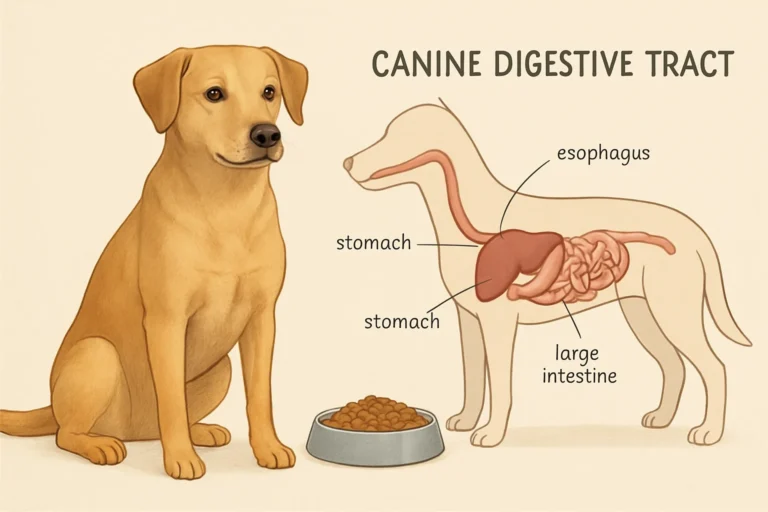
There is also a separate physical hazard. A barbed grass awn can work its way into tissue instead of passing harmlessly through the digestive tract. In that situation, the main danger is irritation, obstruction, infection, or internal injury rather than classic poisoning.
Why Grass Seed Can Be a Problem for Dogs
The phrase “grass seed” can describe several different exposures. A dog may eat loose lawn seed, lick a coating from treated seed, or encounter a dry wild grass head whose awn becomes attached to the coat and penetrates the skin.
Eating a small amount of plain dry seed is usually more likely to cause digestive irritation than severe toxicity. Larger amounts may be harder to assess, particularly for puppies and small dogs, and inhaled material can create a breathing concern.
The surrounding lawn treatment may be more important than the seed itself. Fertilizer, herbicide, fungicide, or a starter product can change the risk. Keep the packaging available so a veterinarian can identify the exact product rather than relying on the general word “seed.” Wild grass awns are a different problem again. Their pointed, sometimes barbed shape can allow them to travel forward through tissue after entering a paw, ear, nose, eye, armpit, groin, or another area.
Is Grass Seed Poisonous to Dogs or Just Irritating?
For plain, untreated lawn seed, “poisonous” may overstate the usual concern. The more common possibilities after a small ingestion are no symptoms or short-lived digestive upset. Quantity still matters, and an individual dog may react differently.
Coatings and additives raise a separate question. Some products include fertilizer, colorants, fungicides, or moisture-holding materials, so the safety of the seed cannot be judged from its appearance. Read the product label and contact a veterinarian if the ingredients or amount are unclear.
A dog can also become seriously ill without being poisoned. Choking, aspiration, repeated vomiting, severe abdominal signs, or a foreign material lodged in the nose can require urgent care. That is why “can grass seeds kill dogs?” cannot be answered by toxicity alone: a severe untreated obstruction or injury may be dangerous even when the seed itself is not a potent poison.
What Happens if a Dog Eats Grass Seed?
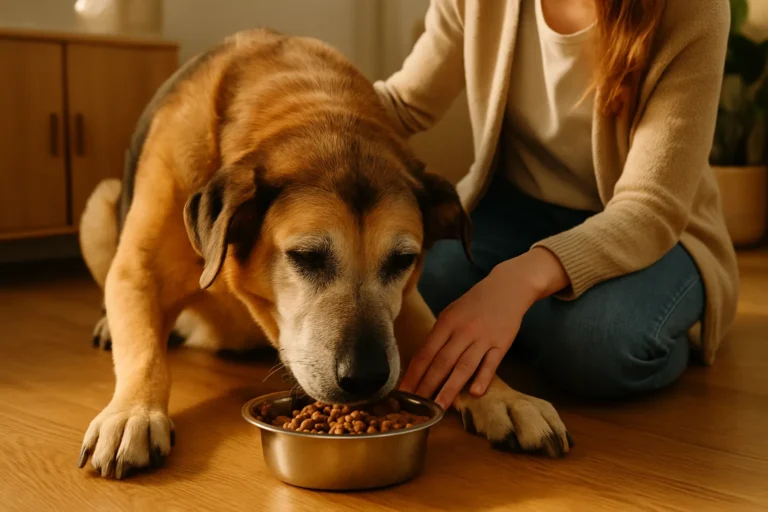
After eating plain seed, a dog may remain normal or develop drooling, vomiting, diarrhea, reduced appetite, or mild abdominal discomfort. Watch the dog closely and note when the exposure happened, what product was involved, and approximately how much may be missing.
More concerning signs include choking, persistent coughing, repeated vomiting, marked lethargy, abdominal swelling, trouble breathing, or an inability to keep water down. These symptoms should not be attributed to ordinary lawn-seed irritation without professional advice.
Risk is higher when a puppy or small dog eats a large amount, when the product is coated or treated, or when seed was mixed with fertilizer or another lawn chemical. If the bag is available, photograph the ingredient list and caution statements for the veterinarian.
What to Do if Your Dog Ate Grass Seed
First, move your dog away from the spilled seed, bag, or freshly treated area. Check that the dog is breathing normally and remove any visible material from the mouth only if it can be done safely without pushing it farther back.
Offer access to fresh water unless a veterinarian tells you otherwise. Do not induce vomiting unless a veterinary professional specifically directs you to do so, because vomiting may be unsafe for some substances or situations.
Call your veterinarian or an appropriate pet poison service when the seed was coated or treated, the amount eaten may be large, the product is unknown, or any symptoms develop. Have the label, estimated amount, exposure time, dog’s weight, and current symptoms ready.
For a small ingestion of known plain seed in a dog that remains completely well, careful observation may be reasonable. Seek advice promptly if vomiting, diarrhea, coughing, breathing changes, weakness, or worsening discomfort appears.
The Bigger Threat: Grass Awns Stuck in a Dog’s Body
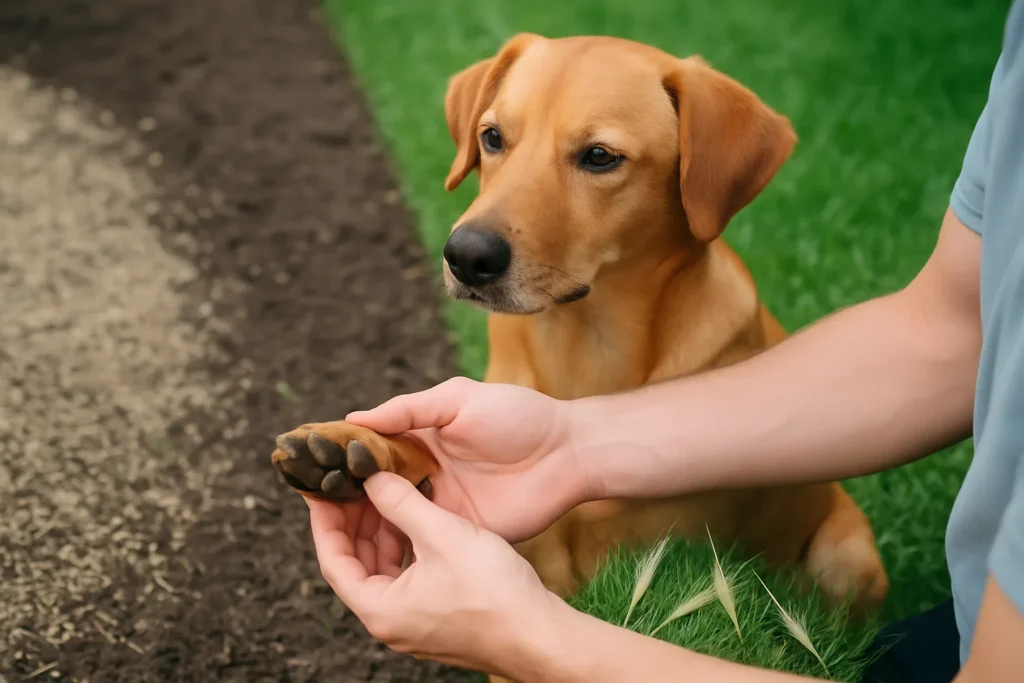
Grass awns are pointed seed structures produced by some wild and ornamental grasses. Their shape and barbs can make them catch in fur and move forward into tissue rather than backing out easily.
Awns may enter through the paws, ears, nose, eyes, armpits, groin, or skin. A dog can also carry one in the coat before it penetrates. Once embedded, it may cause inflammation, an abscess, a draining tract, or deeper damage.
This is not the same as swallowing ordinary lawn seed. A dog with a suspected embedded awn needs an examination, especially when the object may be in the nose, ear, or eye. Avoid digging into tissue or trying to force out a deeply lodged object at home.
Signs a Grass Seed May Be Stuck in Your Dog
Symptoms often appear suddenly after time in a meadow, field, or area of dry grass. The location of the problem can provide a clue, but a dog may not show the exact entry point.
- Nose: sudden sneezing, repeated pawing at the face, a nosebleed, or discharge from one nostril.
- Ear: head shaking, ear scratching, pain, sensitivity, or a new head tilt.
- Paw: limping, persistent licking, redness, swelling, or a draining spot between the toes.
- Eye: squinting, tearing, redness, rubbing, or keeping the eye closed.
- Skin or coat: a painful lump, localized swelling, tenderness, or an oozing area.
When to Call a Vet Right Away
Contact a veterinarian urgently for breathing trouble, persistent coughing, repeated vomiting, inability to keep water down, collapse, severe weakness, or significant abdominal swelling.
Call promptly after a large ingestion of coated or treated seed, even if your dog seems normal. Product-related problems may not be safely assessed from the seed’s appearance alone.
Any suspected grass seed stuck in the nose, ear, or eye warrants veterinary attention. Seek care for limping, swelling, severe pain, discharge, a worsening lump, or other signs that an injury is becoming infected.
If milder symptoms continue for more than a day after exposure, arrange veterinary advice rather than continuing to monitor indefinitely. Bring the product packaging or a clear photograph when a lawn treatment may be involved.
How Long After Planting Grass Seed Is It Safe for Dogs?
There is no single safe number of hours or days for every lawn. The waiting period depends on the seed product, any coating or chemical applied, watering conditions, and the product label’s instructions for people and pets.
Keep dogs off freshly seeded areas while loose seed and visible product remain accessible. Wait until the area has been watered in, the surface is dry, and any stated pet reentry period has passed. If the label gives more restrictive directions, follow those directions.
Restricting access also protects the lawn. Dogs can eat exposed seed, track it elsewhere, disturb germination, or damage fragile new growth. Continue using a barrier until seedlings are established enough to tolerate normal traffic.
Are Coated Grass Seed and Brand-Name Lawn Products Safe for Dogs?
Coated grass seed is not one uniform product. A coating may contain fertilizer, fungicide, colorant, or a material intended to hold moisture. The safety question therefore depends on the exact label rather than the words “grass seed.” Read the caution statements, ingredient information, application directions, and pet reentry instructions before spreading a product. This applies to brand-name products such as Scotts grass seed as well as products from other manufacturers; the brand name alone does not establish whether a particular formulation is safe for access or ingestion.
Store unopened bags securely and clean up spills immediately. Do not allow a dog to snack from a bag, lick freshly applied material, or roam over a treated lawn before the label permits reentry. If the label is missing, contact the manufacturer or a veterinarian before assuming the product is harmless.
How to Protect Dogs During Lawn Seeding Season
Use temporary fencing, gates, or another reliable barrier around newly seeded patches. Keep bags, spreaders, and leftover material out of reach, and sweep up loose seed rather than leaving it where a dog can investigate.
After walks, wipe the paws and inspect the coat, especially between the toes and around the ears. Dogs with long fur may need careful grooming so sharp plant material is found before it reaches the skin.
Avoid overgrown, dry grasses during periods when awns are common. Choose maintained walking areas when possible, and check your dog promptly after field, meadow, or rough-grass exposure.
If your dog repeatedly develops grass-related problems, ask a veterinary professional or groomer about safe coat and paw maintenance. Do not shave or trim sensitive areas without considering the dog’s skin, coat, and comfort.
The Bottom Line on Grass Seed and Dogs
Plain lawn seed is usually a lower-risk ingestion than treated seed or mixed lawn chemicals, but it should still be kept away from dogs. The more urgent concern may be a sharp grass awn that becomes lodged in the nose, ear, eye, paw, or skin.
Block access to newly seeded lawns, follow the product label, inspect your dog after rough-grass walks, and contact a veterinarian for breathing problems, significant digestive symptoms, treated-seed exposure, or any suspected embedded awn.
What happens if a dog eats grass seed?
A small amount of plain seed may cause no symptoms or mild vomiting, diarrhea, drooling, or reduced appetite. Treated or coated seed, a large amount, coughing, repeated vomiting, lethargy, or breathing changes calls for prompt veterinary advice.
My dog has a grass seed stuck in their nose. What should I do?
Contact a veterinarian promptly. Sudden sneezing, face pawing, a nosebleed, or discharge can indicate an embedded awn. Do not probe deeply or try to force the object out at home.
What can I put on a lawn that is safe for dogs?
Choose only products whose labels provide clear application and pet reentry directions, and follow them exactly. Keep dogs away during application and until the stated reentry conditions are met; store and clean up products securely.