If you are wondering why does my dog stare at me, the answer is usually found in the situation around the gaze rather than in the eyes alone.
A dog may look at you because of affection, a learned request, food anticipation, uncertainty, discomfort, guarding, or age-related confusion, so consider the dog’s facial expression, posture, timing, routine, and age before deciding what the stare means.
How to tell what your dog’s stare means
To understand why is my dog staring at me, observe the whole body and the events surrounding the behavior instead of treating eye contact as a complete message.
A relaxed dog usually has a loose body, natural breathing, a soft mouth, and facial muscles that do not appear strained. A worried or defensive dog may become still, close the mouth, lean away or forward, widen the eyes, or show repeated lip licking and yawning.
Notice what happened immediately before the stare began, whether the dog expects food or an activity, and whether the dog appears relaxed, expectant, worried, painful, or protective. Age and routine also matter because the same gaze can mean anticipation in a young dog and confusion in a senior dog.
A single glance rarely provides enough information, so look for a pattern across several situations before changing how you respond.
| Context | Body-language clues | Likely interpretation |
|---|---|---|
| Relaxing near you | Soft eyes, loose body, normal breathing | Social connection or calm attention. |
| Near food or a routine activity | Alert but relaxed posture, repeated glances | Anticipation or a learned request. |
| Near a toy, bed, food bowl, or person | Stiff body, closed mouth, fixed gaze | Possible guarding or conflict. |
| In an older dog with other changes | Confusion, delayed responses, wandering, or staring at walls | Possible medical, sensory, or cognitive change. |
Normal reasons dogs stare at their owners
Many dogs stare because they are socially attentive and have learned that watching a person helps them predict what happens next.
Affection is one possibility, especially when the dog looks relaxed and chooses to remain close. Dogs also watch owners for cues about walks, meals, play, visitors, and bedtime because human movements often signal the next part of the routine.
Some dogs stare because they want something simple, such as access to the yard, a toy, water, attention, or a comfortable place beside you. If staring has ever earned food, petting, play, or a door opening, the behavior may become an efficient request.
Breed tendencies and individual temperament can influence this pattern. A highly people-focused or so-called Velcro dog may monitor an owner more often than an independent dog without either pattern automatically indicating a problem.
- A relaxed stare may reflect affection or social bonding.
- An alert but comfortable gaze may mean that your dog is waiting for direction.
- A repeated gaze around meals, walks, or bedtime may reflect anticipation.
- Persistent attention may be a learned behavior that has been rewarded.
What a relaxed, affectionate stare looks like
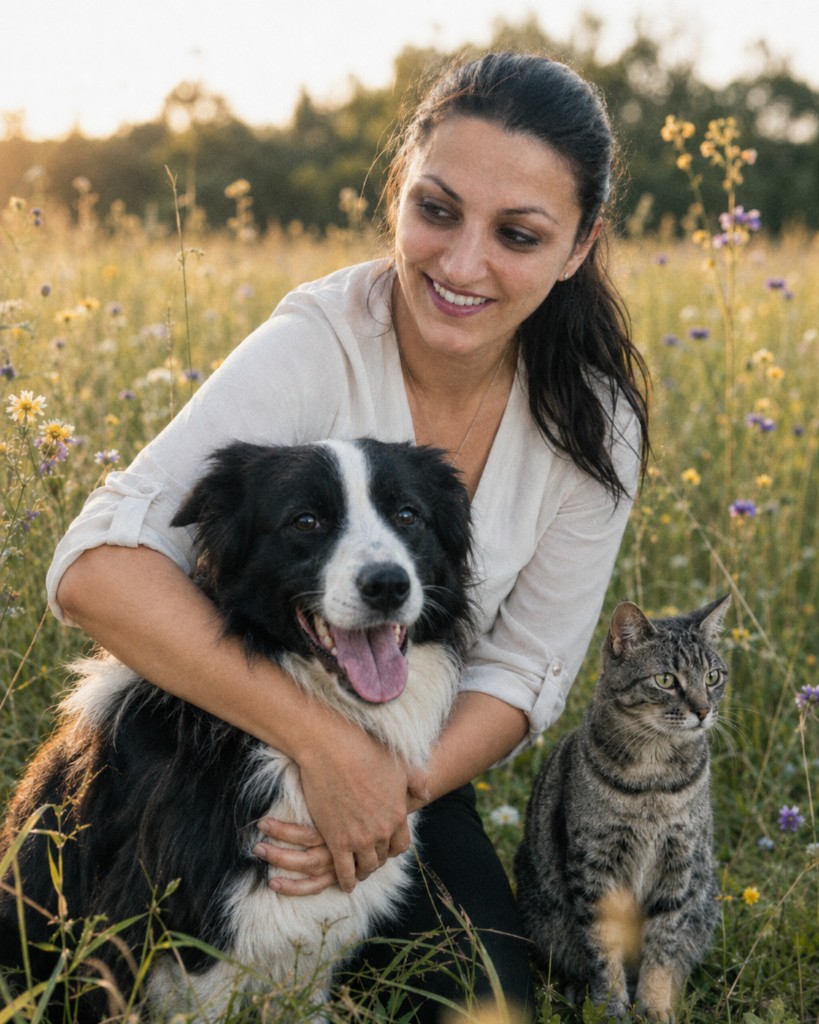
People often ask why does my dog stare at me lovingly when a dog quietly watches them from a comfortable position. A loving or bonded gaze is more likely when the eyes look soft, the dog blinks normally, and the face and body remain loose.
The ears may rest in a neutral position, the mouth may be slightly open, and the dog may settle beside you without demanding contact. Following you calmly from room to room can also reflect attachment, although following alone does not prove that the dog is emotionally secure.
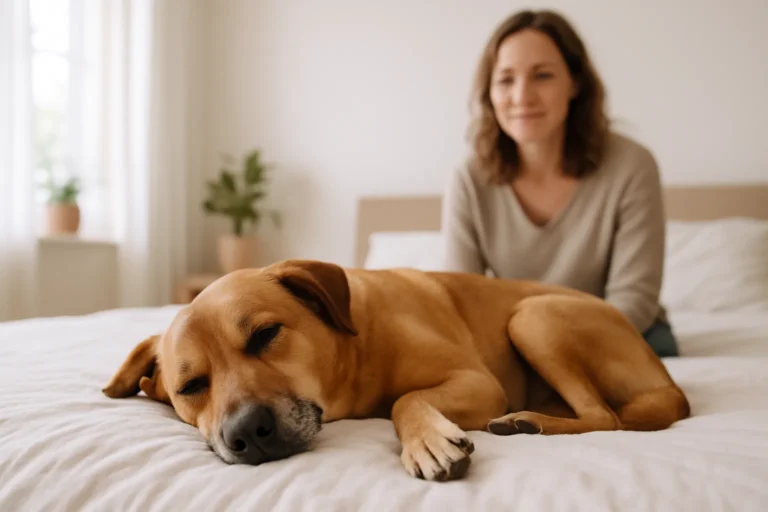
A dog may stare at you while lying down because it feels safe nearby, is monitoring your movement, or expects a familiar event. If the dog can relax, look away, sleep, and respond normally, the behavior is generally less concerning than a fixed stare paired with tension.
Signs of a healthy bond include seeking you for comfort, checking in during unfamiliar situations, relaxing in your presence, responding to your cues, and returning to normal activities after brief separation. Bonding does not require constant eye contact.
When your dog is asking for something
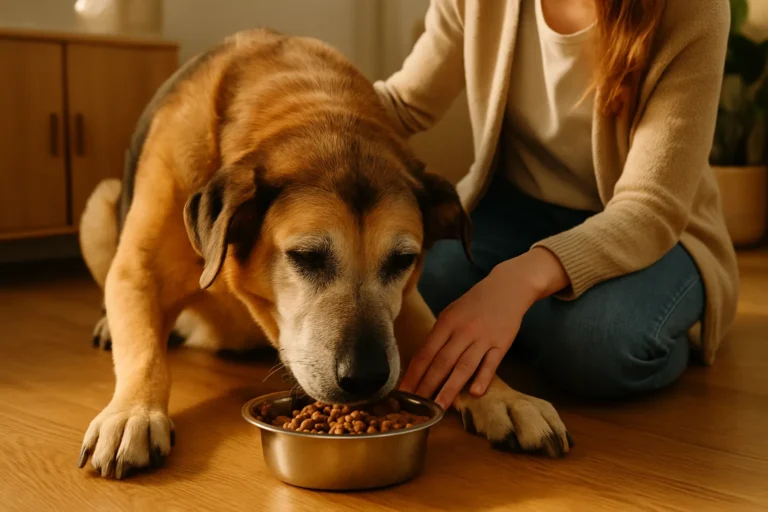
If you are wondering why does my dog stare at me when I eat, food is often the immediate explanation. The dog may have learned that looking at you, sitting nearby, vocalizing, or moving closer sometimes leads to a shared bite or another reward.
The same communication can occur before a walk, play session, outdoor break, training session, or bedtime. Time-of-day patterns are especially useful clues because a dog that stares at the usual dinner hour may be anticipating the schedule rather than expressing distress.
When you pet your dog, the meaning can change from moment to moment. If your dog looks at you with a loose body and leans closer, it may be asking for more contact; if it turns away, licks its lips, freezes, or becomes tense, it may be asking you to pause.
Owners can accidentally teach persistent staring by responding inconsistently. Giving food or attention after a long stare can make the dog repeat the behavior, even if the owner sometimes ignores it.
Meet genuine needs first, then teach an alternative such as sitting on a mat, touching a hand target, or bringing a toy. Reward the alternative before the stare becomes intense.
- A dog that stares during meals may be begging or anticipating a routine.
- A dog that stares near the door may be requesting an outdoor break or walk.
- A dog that stares during petting may be asking for more contact or a pause.
- A dog that receives rewards for staring may continue because the behavior works.
When staring may mean stress, discomfort, or uncertainty
A dog can stare because it is unsure what will happen next, uncomfortable with touch, physically uncomfortable, or caught between wanting something and feeling worried. In these cases, the eyes should be interpreted alongside the rest of the body.
Stress signals may include lip licking, yawning outside of sleepiness, turning the head away, pinned or rapidly shifting ears, a lowered body, freezing, panting, pacing, or repeated attempts to leave. A dog may stare and look sad when it is tired, uncomfortable, anxious, or seeking reassurance, but facial appearance alone cannot identify the cause.
If you are asking why does my dog just blankly stare at me, consider whether the dog responds to its name, follows a familiar cue, and returns to normal engagement. A brief pause can be ordinary, while repeated episodes of seeming absent or confused deserve closer attention.
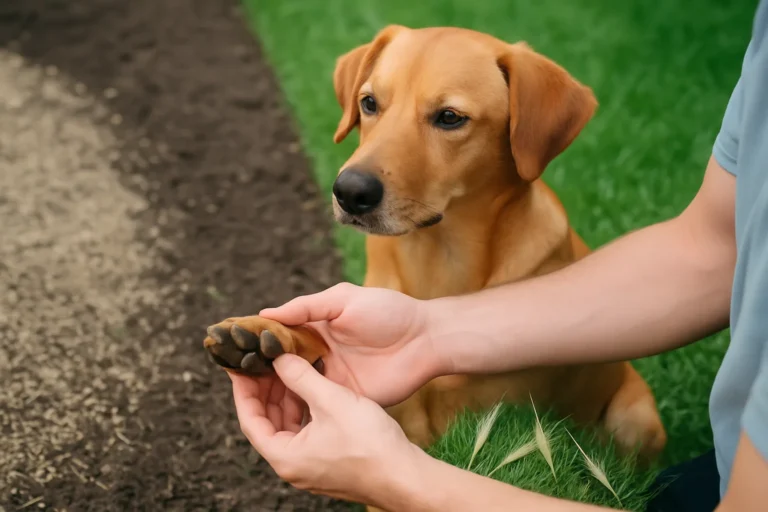
Do not force petting, corner the dog, or interpret stillness as consent. Give the dog space, reduce the trigger, and monitor whether the behavior changes when the environment becomes calmer.
Hard staring and resource guarding: when to take it seriously
A hard stare is different from a soft social gaze. It is usually fixed and intense, with a rigid body, closed mouth, reduced movement, or a posture that communicates control of space or an object.
Resource guarding may involve staring over food, a chew, toy, bed, resting place, or even a person. Other warning signs include hovering over the item, blocking access, stiffening, showing the whites of the eyes, growling, freezing, snapping, or quickly eating when someone approaches.
Do not test the dog by taking the item away, reaching over it, or staring back. Direct eye contact and confrontation can increase pressure and may escalate the interaction.
Move children and other pets away from the area, avoid punishing the warning signals, and contact a qualified force-free trainer or veterinary behavior professional. A professional can assess the risk and design a gradual plan that does not depend on intimidation.
- A soft gaze usually occurs with relaxed muscles and freedom to look away.
- A hard stare is more concerning when it appears with stiffness, guarding, or a closed mouth.
- Growling, snapping, or freezing should be treated as warnings rather than disobedience.
Senior dogs and blank staring
In an older dog, a new pattern of staring may be associated with cognitive decline, sensory loss, pain, or another medical condition rather than affection or a learned request.
Cognitive changes can cause a senior dog to seem lost, stare at walls or empty spaces, pause in familiar rooms, respond slowly, wander, or have difficulty navigating around furniture. Changes in sleep, house-training, activity, social interaction, and day-to-day confusion are important context.
Vision or hearing loss can also make a dog appear disconnected. A dog that cannot see a familiar person clearly or cannot hear a cue may watch more closely, startle easily, or fail to respond as expected.
A veterinary examination is appropriate when blank staring is new, frequent, worsening, or accompanied by disorientation, altered sleep, accidents, pacing, pain, weakness, seizures, or a reduced response to familiar cues. Do not assume that every senior-dog behavior change is simply aging.
Should you stare back at your dog?
When my dog stares at me, should I stare back? With a familiar, relaxed dog, brief soft eye contact can be a comfortable part of social communication, particularly when you blink, keep your face relaxed, and allow the dog to look away.
Prolonged direct eye contact can feel threatening to some dogs, especially unfamiliar, fearful, anxious, or guarding dogs. Avoid leaning over the dog, widening your eyes, or holding its gaze during a tense interaction.
Instead, soften your posture, blink, turn slightly sideways, give the dog space, or redirect it to a familiar alternative behavior. If the dog is guarding, do not use eye contact as a test or attempt to win a confrontation.
What to do if your dog stares at you all the time
If your dog stares at you all the time and this is becoming a daily concern, start by recording when it happens and what follows. Note whether the trigger is food, a routine, boredom, separation, touch, pain, guarding, or an age-related change.
Meet reasonable needs first by providing water, bathroom access, exercise suited to the dog, rest, appropriate social contact, and veterinary care when discomfort is possible. A dog that is bored or uncertain may benefit from sniffing activities, food puzzles, short training sessions, and predictable routines.
Reward calm alternatives instead of rewarding constant visual demands. For example, reinforce settling on a mat, lying quietly, looking away, bringing a toy, or responding to a cue, and deliver attention before the stare becomes prolonged.
Avoid punishing the stare without understanding its cause. Scolding may increase anxiety, suppress useful warning signals, or create more conflict around food and personal space.
If my dog won’t stop staring despite reasonable enrichment and consistent training, seek professional help rather than repeatedly guessing at the meaning.
- Track the time, setting, trigger, body language, and outcome of each episode.
- Meet basic needs before treating the behavior as attention-seeking.
- Teach and reward a calm alternative behavior.
- Use enrichment and predictable routines to reduce boredom and uncertainty.
- Avoid punishment, forced eye contact, and confrontational handling.
When staring deserves a vet visit or behavior consult
Arrange a veterinary visit if the staring begins suddenly, becomes much more frequent, or occurs with pain signs, sensory changes, disorientation, failure to respond, unusual vocalization, pacing, seizures, weakness, or changes in eating, drinking, sleeping, or house-training.
A behavior consultation is important when the stare includes guarding, freezing, growling, snapping, lunging, or escalating conflict around food, toys, beds, people, or handling. A veterinarian can also help determine whether medical issues are contributing to fear or irritability.
Persistent distress that does not improve after needs are met, routines are stabilized, and calm alternative behaviors are reinforced should not be dismissed as a quirky personality trait. Early support is safer and usually easier than waiting for a bite or severe confusion.
FAQ
These answers summarize the most common questions about canine staring and explain when context matters more than the gaze itself.
Understanding your dog’s stare starts with context.
The answer to why does my dog stare at me may be affection, anticipation, communication, uncertainty, guarding, or a health-related change, and the difference is revealed by posture, facial tension, timing, and responsiveness.
Respond to relaxed attention with calm interaction, teach appropriate alternatives for repeated requests, give tense dogs space, and arrange veterinary or behavior support when the stare is sudden, blank, threatening, or paired with other concerning changes.
Frequently Asked Questions
What does it mean if your dog just stares at you?
A dog that just stares at you may be showing affection, waiting for a cue, requesting food or an activity, feeling uncertain, guarding something, or experiencing discomfort. A soft gaze with a loose body is generally less concerning than a fixed stare paired with stiffness, freezing, or other warning signals.
How do you tell if your dog is bonded to you?
A bonded dog often seeks you for comfort, checks in with you in unfamiliar settings, relaxes nearby, responds to your cues, and returns to normal activity after separation. Constant staring is not required for a strong bond, and a dog’s attachment should be judged by its overall behavior.
When my dog stares at me, should I stare back?
Brief, soft eye contact is usually fine with a familiar and relaxed dog, but prolonged direct eye contact can feel threatening to a fearful, unfamiliar, anxious, or guarding dog. Blink, soften your posture, turn slightly away, and give the dog space if its body becomes tense.
Why does my dog just blankly stare at me?
A brief blank-looking pause can reflect tiredness or ordinary inattention, but repeated staring with poor responsiveness, confusion, wall-staring, pacing, sleep changes, accidents, or difficulty navigating may indicate sensory loss, cognitive decline, pain, or another medical problem. A veterinarian should assess a new or worsening pattern.
Why does my dog stare at me when I eat?
Your dog may stare while you eat because it expects food or has learned that begging sometimes works. Keep meals predictable, avoid rewarding prolonged staring, and reinforce a calm alternative such as settling on a mat while you eat.
Why does my dog stare at me when I pet her?
Your dog may be checking your face, asking for more petting, or asking you to pause. A loose body and leaning toward your hand support comfortable interaction, while lip licking, turning away, freezing, tension, or attempts to leave mean you should stop and give her space.