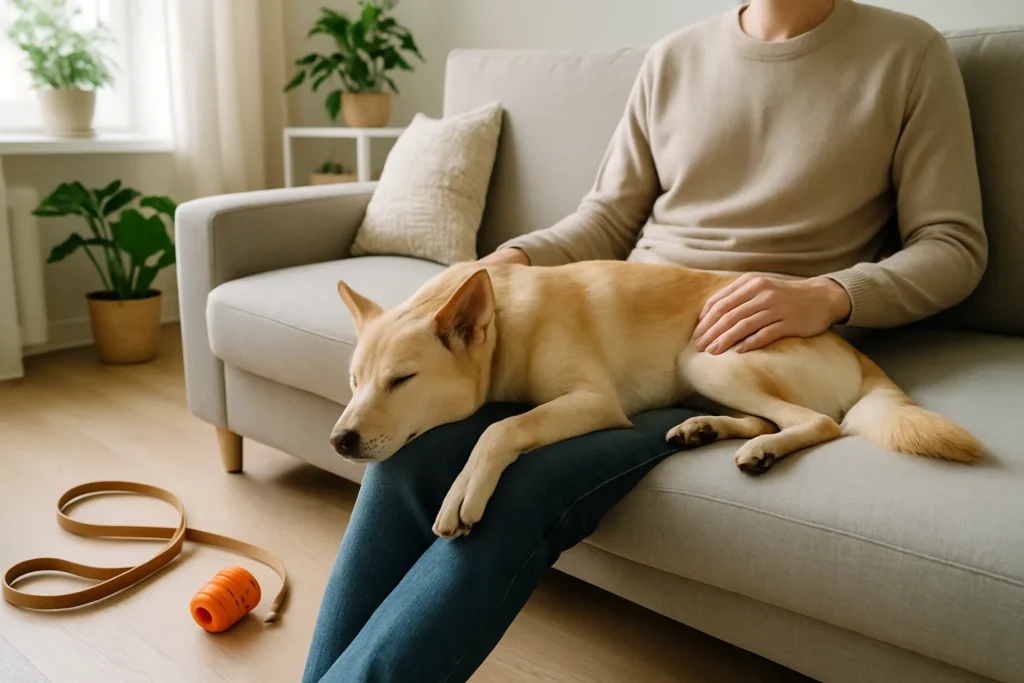
Apartment living with a dog can be comfortable, healthy, and rewarding when the dog’s needs are met consistently. A yard is convenient, but it does not replace walks, enrichment, training, companionship, or veterinary care. The more useful question is not simply, “Can dogs live in apartments?” but whether a particular dog’s needs fit the owner’s schedule, budget, building, and daily routine.
Success depends on planning for potty trips, physical activity, indoor calm, time alone, hallway encounters, and noise before they become problems. This guide explains how to assess your readiness, prepare a safe home, follow lease rules, create dependable routines, and help your dog live peacefully alongside nearby neighbors.
Can dogs live in apartments?
Yes, many dogs can live happily in apartments. Floor space alone does not determine welfare because a dog in a small home may receive more walks, training, enrichment, and social contact than a dog left alone in a large yard.
A dog’s energy level, noise sensitivity, health, age, temperament, and ability to settle matter more than size by itself. Some large, calm dogs adapt well to compact homes, while some small, energetic dogs need substantial exercise and behavioral outlets.
Apartment life may be a poor fit when an owner cannot provide timely bathroom breaks, the dog experiences severe distress around shared-building sounds, or the dog’s activity needs consistently exceed what the household can provide. Mobility limitations, difficult stair access, extended workdays, and strict building rules can also affect suitability.
Having a dog in an apartment is not inherently cruel, but repeatedly leaving a dog bored, distressed, inactive, or unable to toilet is a welfare concern in any type of home. Apartment owners must intentionally replace the convenience of a yard with scheduled outings, indoor enrichment, training, and appropriate support.
- The owner must provide regular bathroom opportunities instead of expecting the dog to wait for convenience.
- The dog must receive exercise and mental stimulation suited to its individual needs.
- Calm behavior around doors, hallways, elevators, stairs, visitors, and nearby sounds should be trained and rewarded.
- The household needs a realistic plan for workdays, illness, bad weather, emergencies, and travel.
Before getting a dog in an apartment, check your real-life limits.
Before getting a dog in an apartment, compare the dog’s likely needs with your actual routine rather than your ideal routine. Include commuting time, social plans, sleep, exercise habits, mobility, and the number of trips you can reliably make outdoors in unpleasant weather.
Consider the full cost of ownership, including routine veterinary care, emergency care, food, grooming, training, supplies, pet rent, property fees, cleaning, and possible help from a dog walker or daycare. Fees and services vary, so obtain current figures for your building and area.
Building layout also changes the workload. Several flights of stairs may be difficult for a puppy, senior dog, recovering dog, or owner with limited mobility. Elevators simplify access but can create close encounters with people and animals, while shared entrances require good leash handling.
A successful match depends on behavior and lifestyle rather than appearance alone. Ask about known energy levels, house-training history, vocal behavior, reactions to strangers and dogs, ability to remain alone, and comfort with urban sounds whenever that information is available.
- Ask whether you can provide an early-morning walk, daytime bathroom access, evening activity, and a final bedtime trip every day.
- Ask whether you can afford professional help if your work schedule or the dog’s behavior makes it necessary.
- Ask whether your building’s stairs, elevators, exits, and surrounding outdoor areas are practical for this dog.
- Ask how you will manage barking, accidents, illness, travel, and days when you cannot follow the normal routine.
- Ask whether you are willing to adjust your schedule for the dog’s needs for many years.
Read your lease and building pet rules carefully.
Review the lease, pet addendum, and current building policies before adopting a dog or signing a rental agreement. Rules vary by property and may change, so do not rely only on a listing, an informal conversation, or another resident’s experience.
Check for pet deposits, one-time fees, monthly pet rent, weight or size limits, stated breed restrictions, and limits on the number of animals. Ask whether management requires vaccination records, identification, registration forms, photographs, or other documentation.
Look for policies covering barking, waste disposal, leash use, elevators, shared courtyards, and restricted areas. Understanding the complaint process can also help you respond promptly if a neighbor or manager reports a concern.
When possible, obtain pet approval and any agreed terms in writing before bringing the dog home. Keep copies of payments, approvals, veterinary records, and communications, and ask the property manager for clarification when wording is unclear.
- Confirm every required pet fee, deposit, and recurring charge directly with the property.
- Verify whether weight, size, breed, age, or pet-number restrictions apply.
- Ask which records and approvals must be submitted before move-in or adoption.
- Review noise, leash, waste, elevator, and common-area expectations.
- Keep written approval and related documentation in an accessible place.
Set up your apartment for success.
A small home works best when the dog has predictable zones for sleeping, eating, playing, and settling. A bed or open crate in a quiet corner can create a retreat, while feeding and water areas should be easy to clean and separated from the designated potty area.
Use nonslip rugs or mats where hard floors are slippery, especially for puppies, senior dogs, and dogs with mobility concerns. Washable covers protect furniture and bedding, and closed storage keeps toys, chews, grooming tools, medication, and cleaning supplies organized.
Dog-proof the apartment by securing trash, electrical cords, household chemicals, medication, human food, and small objects that could be swallowed. Confirm that houseplants are safe or place them completely out of reach.
Treat balconies and open windows as serious safety risks. Do not rely on an ordinary insect screen to contain a dog, block access through wide railings, and do not leave a dog unattended on a balcony. Secure doors and windows so excitement, prey interest, or fear cannot lead to a fall or escape.
Prompt waste removal, washable fabrics, regular vacuuming, clean bedding, and appropriate ventilation help control odor in a compact space. Clean food bowls, water bowls, potty equipment, and frequently used textiles before smells become established.
Build a potty routine when you do not have a yard.
A reliable potty system is one of the most important parts of living in an apartment with a dog. Most dogs need opportunities after waking, after meals or substantial drinking, after active play, during the day, and before bed, but the appropriate interval varies with age, health, medication, diet, and individual habits.
Healthy adult dogs may follow a morning, midday, evening, and bedtime rhythm, with additional outings as needed. Puppies generally need much more frequent trips because they are still developing physical control and learning where to eliminate. Seniors and dogs with medical conditions may also need shorter intervals, so sudden changes in urination or defecation warrant veterinary attention.
Use the same accessible outdoor area when practical, move there without unnecessary delay, and introduce a consistent potty cue. Reward the dog immediately after elimination rather than waiting until you return upstairs, because prompt reinforcement makes the desired behavior clearer.
Indoor grass patches, washable pads, or disposable pads can serve as planned options for some puppies, mobility-limited dogs, or severe-weather situations. However, they require frequent cleaning, take up space, and may slow outdoor training if the rules are inconsistent. Place an indoor station away from food and sleeping areas, and decide whether it is a permanent toilet or a temporary backup.
Clean accidents promptly with a pet-appropriate enzymatic cleaner, following its directions and testing delicate surfaces first. Avoid punishment because it can create fear or hidden elimination without teaching the correct location. Review the schedule, supervision, access route, and reward timing instead.
- Take the dog out promptly after waking in the morning.
- Schedule daytime breaks according to the dog’s age, health, and demonstrated comfort.
- Offer a suitable trip after meals, vigorous play, and substantial drinking when needed.
- Provide an evening outing that allows both toileting and appropriate activity.
- Finish the day with a calm bedtime bathroom trip.
How often should you walk a dog if you live in an apartment?
Most apartment dogs need several outdoor opportunities each day, but not every outing must be a long exercise walk. Separate bathroom access from physical exercise when planning the schedule, because a quick toilet trip may not satisfy a dog’s need to move, sniff, explore, or train.
The right amount of walking depends on age, energy level, physical condition, weather tolerance, health, and breed-related tendencies. A young, active dog may need longer or more vigorous outings, while a puppy, senior, flat-faced dog, or dog with orthopedic or medical concerns may need shorter sessions tailored with veterinary guidance.
A useful routine may combine short bathroom trips, relaxed sniff walks, and one or more structured activity periods. Sniffing and exploring provide valuable mental engagement, so distance and speed are not the only measures of a productive walk.
Watch the individual dog rather than following a rigid number. Restlessness, destructive behavior, repeated attention-seeking, difficulty settling, weight gain, and some forms of barking can indicate unmet activity or enrichment needs, although behavior or health problems can have other causes.
Use exercise and enrichment ideas for apartment living with a dog.
Apartment living with a dog does not require a private yard when the daily plan includes varied outlets. Sniff walks, training walks, quiet decompression outings, play, and appropriate social experiences can provide more meaningful engagement than unsupervised time outside.
On rainy, icy, smoky, or extremely hot days, use indoor searches, food-dispensing toys, hide-and-seek, gentle tug, retrieval in a safe area, or short skill sessions. Choose activities that suit the dog’s body, and avoid repetitive jumping or slippery-floor running when those movements may be unsafe.
Scent work is particularly useful in limited space. Hide a few treats or pieces of the dog’s measured meal in easy locations, encourage searching, and gradually increase difficulty. Safe chews and licking activities can also encourage calm, but they should be selected for the individual dog and supervised when necessary.
Stairs and hallways are shared access routes rather than private exercise facilities. Avoid high-impact stair workouts and activities that block, startle, or inconvenience residents. Use nearby parks, suitable green spaces, quiet streets, or rented secure areas when available and permitted.
A dog walker, responsible daycare, trusted helper, or occasional weekend outing can supplement the routine when appropriate. These options should match the dog’s temperament because crowded daycare or intense group activity is not comfortable for every dog.
- Let the dog investigate safe smells during unhurried walks.
- Practice simple cues in short sessions and end while the dog remains engaged.
- Rotate toys instead of leaving every item available all the time.
- Use part of the dog’s measured food in puzzles or scent games rather than automatically adding extra calories.
- Include calm chewing, licking, and resting activities alongside physical exercise.
Prevent barking and be a good neighbor.
Apartment barking is easier to prevent when you identify its function. Common causes include boredom, alarm at hallway sounds, views of people or animals, excitement at the door, demand for attention, and distress when left alone.
Reduce predictable triggers by moving resting areas away from the entry, limiting access to highly stimulating window views, and using steady background sound at a safe volume. Pair ordinary hallway noises with treats before barking escalates so those sounds begin to predict calm outcomes.
Reward quiet observation, relaxed body language, and settling. If the dog barks to demand play or food, avoid immediately delivering the requested reward during the barking. Wait for a brief pause or cue an alternative behavior, then reinforce the calm response.
Separation-related barking requires more than tiring the dog out or correcting the noise. Recording a short absence can reveal pacing, panting, escape attempts, vocalization, or an inability to eat. Persistent distress deserves help from a veterinarian and a qualified behavior professional.
Neighbor courtesy also includes keeping the dog leashed where required, preventing approaches to people or animals without permission, cleaning up waste immediately, and avoiding noisy play in shared corridors. Quiet departures and arrivals can reduce both canine excitement and disruption.
Train for apartment-specific challenges.
Apartment dogs regularly encounter narrow hallways, closing doors, strangers, delivery sounds, elevators, and stairwells. Introduce these situations gradually at quieter times, use high-value rewards, and create enough distance for the dog to remain able to learn.
Teach the dog to wait before crossing the apartment threshold so an open door does not become an escape opportunity. A secure leash should be attached before entering common areas, and identification details should remain current.
Practice loose-leash walking and passing people without pulling or jumping. Do not force greetings in tight spaces, and step aside or wait for another elevator when the dog needs more room.
A settle cue helps the dog relax while people move through the building or visit the apartment. Reward the dog for lying on a mat, remaining quiet, and disengaging from mild distractions before practicing around more challenging sounds.
Crate or confinement training can provide safe management when introduced gradually and positively, but it should not be used as punishment or as a substitute for bathroom access, exercise, and social contact. Some dogs are more comfortable in a dog-proofed room or behind a secure gate.
- Practice entering and leaving elevators without rushing the doors.
- Teach the dog to pause at apartment and building exits.
- Reward loose-leash walking through quiet hallways before adding distractions.
- Condition doorbells, knocking, and delivery sounds at low intensity.
- Teach a mat-based settle behavior for visitors and busy periods.
Plan for keeping a dog in an apartment while you are at work.
Keeping a dog in an apartment while working outside the home requires a plan based on the dog’s age, health, house-training, emotional comfort, and the total time between departures and returns. Commuting, errands, and delays count as part of the absence.
Before work, allow enough time for toileting, movement, sniffing, food, and a calm transition rather than a rushed trip to the curb. Prepare a dog-proofed resting area with water, comfortable bedding, and only those enrichment items that are safe for that dog without direct supervision.
A trusted neighbor, friend, professional dog walker, or suitable daycare may provide a midday bathroom break and activity. Puppies, seniors, dogs with medical needs, and dogs new to the home often require more frequent support than healthy, settled adults.
Build alone time gradually whenever possible. A newly adopted dog that follows its owner from room to room may struggle if suddenly left for a full workday, even if a previous dog tolerated that schedule.
Use a camera responsibly to observe rather than repeatedly interact from a distance. Persistent barking, pacing, drooling, destruction near exits, indoor accidents, refusal of food, escape attempts, or prolonged inability to settle suggests that the current arrangement needs adjustment and possibly professional assessment.
- Provide an unrushed bathroom and activity period before leaving.
- Arrange a suitable midday break when the dog’s needs or the length of the workday require one.
- Leave water and individually appropriate enrichment in a dog-proofed area.
- Increase absences gradually instead of moving directly to a full workday.
- Prepare backup contacts for overtime, transportation delays, illness, and emergencies.
Understand what the 3-3-3 rule can look like in an apartment.
The 3-3-3 rule is a general adjustment framework, not a deadline or scientific guarantee. It suggests that a newly adopted dog may need roughly three days to decompress, three weeks to learn the household routine, and three months to feel more secure and settled.
During the first three days, keep life quiet and predictable. Prioritize sleep, bathroom trips, simple meals, safety, and brief low-pressure walks rather than introducing many visitors, busy dog areas, or demanding training goals.
During the first three weeks, the dog’s personality and behavior may become more visible as stress changes. Establish consistent feeding, walking, rest, and alone-time routines while reinforcing house training, calm doorway behavior, and comfortable responses to building sounds.
During the first three months, many dogs develop stronger trust and a clearer understanding of the home. Continue training and make gradual adjustments instead of assuming that settling in is complete on a particular date.
Apartment noise, crowded elevators, unfamiliar dogs, and limited distance from triggers can slow adjustment. Some dogs settle sooner, while others need much longer, so progress should be judged by behavior, comfort, and recovery rather than the calendar.
Consider the pros and cons of having a dog in an apartment.
Having a dog in an apartment can encourage a reliable routine because every bathroom break and walk requires deliberate action. Owners may supervise behavior more closely, notice health changes quickly, spend more time near the dog, and have a smaller cleaning footprint than they would in a larger home.
The tradeoffs include the absence of immediate yard access, frequent weather-dependent trips, possible noise complaints, limited storage, and repeated use of stairs or elevators. Lease restrictions and pet-related housing costs may also limit future moving options.
Apartment ownership often works well for people who enjoy daily walks, maintain predictable schedules, train proactively, and can arrange help when needed. It can also suit dogs that recover well from ordinary building activity and can relax indoors after their needs are met.
It may be difficult for households with very long or unpredictable absences, limited mobility, low tolerance for noise management, or no backup care. A dog with intense sound sensitivity, severe separation distress, or activity needs that cannot be met may require substantial support or a different environment.
- A structured routine can support consistent feeding, walking, training, and observation.
- A compact home can make supervision and everyday cleaning more manageable.
- The lack of a yard creates more frequent outdoor trips and weather-related planning.
- Shared walls and common areas make noise prevention and leash manners especially important.
- Building restrictions can affect adoption choices, costs, and future housing flexibility.
Avoid common mistakes apartment dog owners make.
One common mistake is assuming that a small dog automatically needs little exercise or training. Individual energy, temperament, health, and behavioral needs matter more than body size alone.
Another mistake is treating bathroom trips as sufficient exercise. A dog may eliminate quickly but still need time to walk, sniff, play, explore, and use learned skills.
Owners may also wait for barking, destruction, or accidents to become established before changing the routine. Early trigger management, reinforcement of calm behavior, adequate outings, and gradual alone-time practice are usually easier than addressing a long-standing pattern.
Convenience should not outweigh fit when getting a dog in an apartment. Selecting primarily by appearance or size without considering energy, vocal tendencies, history, health, and comfort with urban life can create preventable stress.
Finally, every household needs backup plans. Identify who can help with the dog during illness, travel, severe weather, elevator outages, schedule disruptions, or emergencies, and keep essential supplies and contact details accessible.
- Do not assume that small dogs require minimal activity.
- Do not skip training because most of the dog’s time is spent indoors.
- Do not stretch potty intervals beyond what the individual dog can comfortably manage.
- Do not expect boredom-related barking to disappear without changing its cause.
- Do not choose a dog without considering behavior, energy, health, and housing restrictions.
- Do not wait for an emergency before arranging backup care.
Make apartment life work for both you and your dog.
Living in an apartment with a dog works best when the home is treated as one part of the dog’s environment rather than the dog’s entire world. Reliable potty access, suitable exercise, mental enrichment, calm training, safe management, and respectful shared-space behavior matter more than square footage alone.
Before committing, verify the building rules and honestly assess your schedule, budget, mobility, and tolerance for daily routines. When the dog’s needs and the owner’s resources are a good match, an apartment can be a secure, engaging, and comfortable home.
Frequently Asked Questions
Is it hard to live with a dog in an apartment?
It can be demanding because every potty break, exercise session, and noisy trigger requires active management. It becomes more manageable with a predictable schedule, suitable training, building access, backup care, and a dog whose needs fit the household.
Can I live in an apartment with a dog?
Yes, many people successfully live with dogs in apartments. Confirm that the property permits the dog, then plan for bathroom access, exercise, enrichment, alone time, training, veterinary care, and neighbor-friendly behavior.
Is it cruel to have a dog in an apartment?
No, having a dog in an apartment is not inherently cruel. Welfare depends on whether the dog receives appropriate exercise, mental stimulation, social contact, bathroom opportunities, rest, health care, and freedom from prolonged distress.
How do you have a dog in an apartment without a yard?
Use scheduled outdoor potty trips, daily walks, sniffing opportunities, indoor enrichment, short training sessions, and suitable play. Arrange a walker or trusted helper when your schedule prevents timely breaks, and maintain a safe indoor backup potty option only if it suits your dog and training plan.
What are the best toilet options for dogs in apartments?
Regular trips to a consistent outdoor location are the clearest option for many dogs. Indoor grass patches, washable pads, or disposable pads may help puppies, seniors, mobility-limited dogs, or households facing severe weather, but they require consistent rules and frequent cleaning.