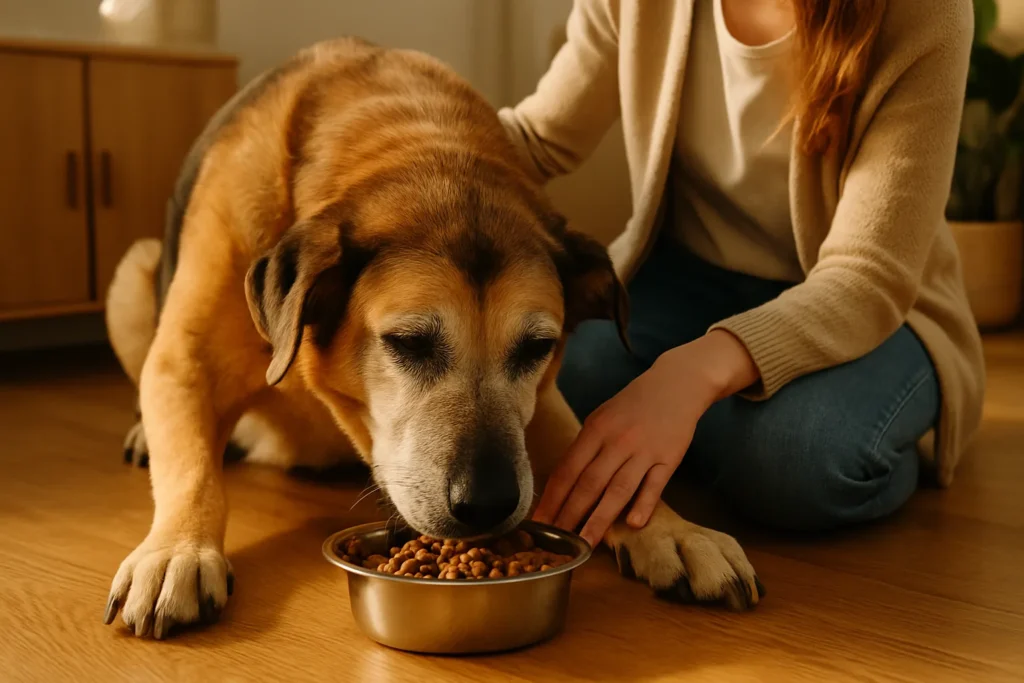
Yes, some older dogs eat less than they did when they were younger. Lower activity can reduce their calorie needs, and gradual changes in smell, taste, chewing comfort, or routine can affect interest in food. A mild decrease is generally less concerning when your dog maintains a stable weight, drinks normally, and continues acting like themselves.
A sudden or significant drop in appetite is different. If your senior dog refuses food, loses weight, vomits, seems painful, becomes unusually tired, or shows another behavior change, contact your veterinarian. The amount left in the bowl matters, but the pattern and your dog’s overall condition matter more.
Is It Normal for Older Dogs to Eat Less?
It can be normal for an older dog to eat smaller portions when they move less and therefore use less energy. This is usually a gradual shift rather than an abrupt refusal of meals. Your dog’s ideal intake depends on factors such as body size, activity, life stage, and health, so bowl volume alone does not establish whether they are eating enough.
Look at the bigger picture: stable weight, normal hydration, comfortable movement, regular stool, and familiar behavior are reassuring signs. A senior dog who still shows interest in meals or treats is different from one who refuses all food. If the change is new, pronounced, or accompanied by other symptoms, do not assume it is simply aging.
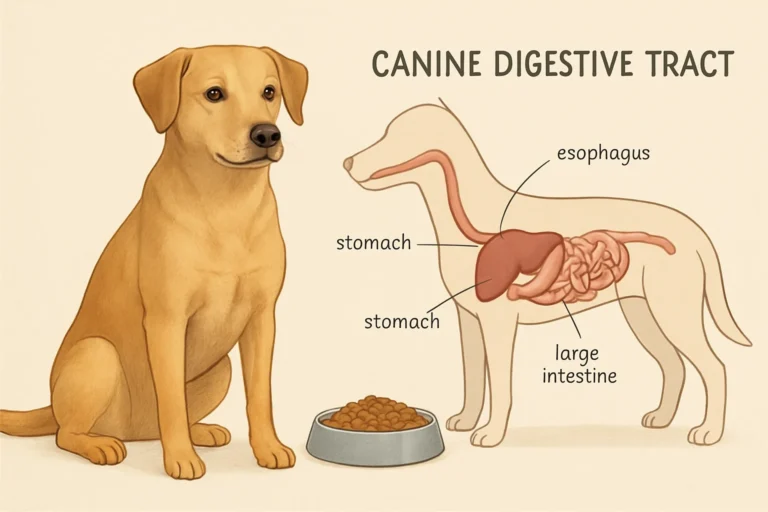
Daily calorie needs depend on body weight, life stage, and activity. This article explains how veterinarians estimate energy requirements without publishing a precise chart here. Ask your veterinarian for individualized feeding guidance.
What Changes in Appetite Are Usually Normal in Senior Dogs?
Normal appetite changes tend to be mild and consistent. Your dog may leave a little food behind, take longer to finish, or show less excitement when the bowl arrives. Some older dogs prefer a different texture or stronger aroma as their senses change.
A dog might also skip breakfast occasionally and eat later, especially if their routine, activity, or comfort has changed. The key checkpoint is whether your dog maintains a healthy weight and muscle condition over time. A smaller meal that keeps weight stable is not the same as ongoing under-eating.
- Eating smaller portions without continued weight loss
- Taking more time to finish a meal
- Preferring softer or more aromatic food
- Showing less excitement at mealtime while remaining interested in food
- Having a mild shift in meal timing
When Eating Less Is Not Just Aging
Appetite loss deserves more attention when it is sudden, persistent, or paired with physical or behavior changes. Senior dogs can have less reserve when an underlying problem develops, so waiting too long can make a situation harder to manage.
Contact your veterinarian promptly if your dog refuses food, particularly if they have not eaten for a full day. Seek advice sooner for a frail or medically vulnerable dog, or whenever appetite loss occurs with vomiting, diarrhea, pain, weakness, or unusual behavior.
- Sudden refusal of food or a major drop in normal intake
- Weight loss or visible loss of muscle around the hips, spine, or shoulders
- Vomiting, diarrhea, constipation, bloating, or other digestive changes
- Bad breath, drooling, pawing at the mouth, or chewing on one side
- Drinking much more or much less water than usual
- Weakness, hiding, restlessness, confusion, or marked lethargy
- Not eating for a full day
Common Reasons an Older Dog May Eat Less
There is no single explanation for every senior appetite change. Observations at home can help describe the pattern, but they cannot identify the cause by themselves.
- Lower energy needs: Reduced activity can mean your dog needs fewer calories than they did earlier in life.
- Changes in smell or taste: Food may seem less appealing when its aroma or flavor is not as noticeable.
- Dental or mouth discomfort: Hard kibble, large pieces, or chewing may become uncomfortable. Drooling, bad breath, or chewing on one side can be useful clues.
- Digestive upset: Nausea, constipation, diarrhea, or a recent food change can reduce interest in meals.
- Medication effects: Some medicines can alter appetite or cause stomach upset. Ask your veterinarian before stopping or changing a prescribed medicine.
- Stress or routine changes: Travel, household changes, heat, noise, or a different feeding location may affect eating.
- Arthritis or other discomfort: Bending to a low bowl or standing for a meal may be awkward for a painful dog.
- Underlying illness: Persistent appetite loss can be a sign that your dog needs a veterinary examination rather than more food variety.
How to Tell if Your Senior Dog Is Eating Less or Actually Losing Weight
It is easy to misjudge intake by looking only at one meal. Record how much food you offer, how much remains, and how many treats or table scraps your dog receives. A dog that appears to eat less from the bowl may still be getting a substantial share of daily food elsewhere, while a dog that finishes meals may still be losing weight.
Check body shape regularly rather than relying only on appetite. Notice whether the ribs, hips, or spine look more prominent and whether muscle seems reduced. If possible, track weight consistently and keep a short log of food, water, stool, vomiting, energy, and medication changes. This record can give your veterinarian a clearer picture.
- Compare the portion offered with the portion actually eaten.
- Include treats, chews, scraps, and food used for medication.
- Watch for changes in body condition and muscle, not just the scale.
- Record weekly weight checks when practical and safe.
- Note appetite and symptoms in a brief daily log.
What to Try at Home if an Older Dog Is Eating Less
If your dog is otherwise comfortable and the appetite change is mild, a few low-risk adjustments may make meals easier. Introduce changes gradually, and stop experimenting if your dog becomes ill or refuses food completely.
Warm food slightly to release more aroma, but check the temperature before serving. You can also add warm water to kibble or offer a softer texture if chewing seems uncomfortable. Feed in a quiet area and consider raising the bowl slightly if bending or standing appears difficult.
Smaller, more frequent meals may suit a dog that struggles with a full portion. Keep treats limited so they do not replace balanced meals, and avoid rapid food changes, force-feeding, or untested home remedies when appetite loss is sudden.
- Warm the meal slightly to increase its smell.
- Add warm water to kibble or try a softer texture when appropriate.
- Offer smaller portions more often.
- Use a quiet, comfortable feeding area.
- Raise the bowl modestly if your dog’s posture suggests discomfort.
- Keep treats controlled and changes gradual.
- Do not force-feed a dog that is refusing food or seems unwell.
What to Feed a Senior Dog That Isn’t Eating Well
A softer, easier-to-chew food may help when texture appears to be the obstacle. Food with a stronger aroma may also be more inviting, particularly if your dog’s interest in smell has changed. However, palatability should not be the only consideration: the main diet still needs to provide complete nutrition appropriate for your dog.
If your dog eats less volume, ask your veterinarian whether the current food and portion are suitable rather than repeatedly switching foods. Calorie density, body condition, dental comfort, and any health concerns all affect the right feeding approach. Persistent poor appetite needs veterinary input before you rely on an increasingly narrow selection of foods.
A dog that accepts soft food but avoids dry pieces may be signaling chewing discomfort rather than simple pickiness. Treat that pattern as useful information to share with your veterinarian.
- Consider softer textures when chewing seems difficult.
- Use a more aromatic, complete food if smell appears to affect interest.
- Prioritize balanced nutrition over treats or table food.
- Ask your veterinarian about calorie density when meal volume falls.
- Avoid endless food switching when poor appetite continues.
How Often Should an Older Dog Eat?
Many senior dogs do well with two meals a day, but there is no universal schedule for every dog. Some eat more comfortably when their daily food is divided into three smaller meals, particularly if a large portion seems unappealing or if they have predictable dips in appetite.
Consistency is usually more useful than chasing a perfect timetable. Serve meals at predictable times and watch the trend in weight, appetite, stool, energy, and comfort. If your dog regularly skips one meal, changing the schedule may help, but a new pattern of skipped meals should still be discussed with a veterinarian.
- Start with a consistent two-meal routine if it suits your dog.
- Try three smaller meals when full portions are difficult.
- Keep meal times predictable.
- Adjust the schedule based on appetite, weight trend, and comfort rather than age alone.
When to Call the Vet About a Senior Dog Eating Less
Call your veterinarian about a sudden appetite change rather than assuming it is normal aging. This includes a dog that is not eating but is drinking water, eating treats but refusing regular food, or eating less while sleeping much more than usual. Treats can show that some food interest remains, but they do not rule out pain, nausea, or another problem.
Also call if you notice weight loss, vomiting, diarrhea, dehydration, mouth pain, weakness, or a major change in behavior. A senior dog may need faster attention than a younger dog when appetite falls, especially if the change continues.
Before the appointment, write down when the change began, how much your dog is eating and drinking, stool or vomiting changes, current medications, treats, and any weight trend. These details can help your veterinarian decide what should happen next.
- Call promptly for sudden or substantial appetite loss.
- Do not dismiss refusal of food just because your dog still drinks water.
- Mention treat-only eating, increased sleep, or reduced activity.
- Report weight loss, vomiting, diarrhea, pain signs, or possible dehydration.
- Bring a record of duration, food intake, water intake, stool, medications, and weight.
The Bottom Line on Senior Dogs Eating Less
Some older dogs do eat less as activity and calorie needs change, especially when weight and behavior remain steady. Gradual, mild changes can often be observed while you track portions, body condition, and comfort.
A sudden refusal to eat, ongoing weight loss, vomiting, pain, unusual thirst, or marked lethargy is not something to label normal aging. When in doubt, contact your veterinarian and share the appetite pattern and other changes you have observed.
How Many Times a Day Should an Older Dog Eat?
Many older dogs do well with two meals daily, while others eat better when their food is divided into three smaller meals. Choose a consistent schedule that supports comfortable eating and stable weight, and ask your veterinarian about a new or persistent change in meal patterns.
What Do You Feed a Senior Dog That Won’t Eat?
A softer or more aromatic complete food may be easier to eat, and adding warm water can improve texture and smell. Do not rely on treats or keep changing foods indefinitely. If your dog refuses food, has chewing difficulty, or eats poorly for an ongoing period, contact your veterinarian before making major diet changes.
What Does It Mean if My Old Dog Is Not Eating but Is Still Drinking Water?
Drinking water does not make appetite loss harmless. A dog that refuses food may have discomfort, nausea, stress, or another problem that needs assessment. Contact your veterinarian promptly, particularly if the refusal lasts, your dog is losing weight, or other symptoms appear.
What If My Older Dog Is Eating Treats but Not Regular Food?
Treats may be more appealing because they smell stronger or are easier to chew, but treat-only eating can also occur with mouth discomfort or illness. Limit treats, note how much regular food your dog is refusing, and contact your veterinarian if the pattern is new or continues.
At What Age Do Dogs Usually Start Eating Less?
There is no single age when every dog starts eating less. Size, activity, health, and individual aging vary, so some dogs show gradual changes earlier than others. A slow decrease with stable weight may reflect lower calorie needs, while a sudden change at any age warrants veterinary advice.