If you are wondering why your cat is so affectionate, the behavior is often a normal sign of trust, comfort, or a strong social bond. Head bunting, purring, following you, sitting on your lap, and sleeping nearby can all be part of ordinary cat behavior.
The most important clue is whether your cat has always been loving or has become suddenly affectionate. A naturally social cat may simply be showing its personality, while a marked change in closeness can reflect a routine shift, stress, aging, discomfort, or illness. Looking at the timing and the other changes around it helps separate a sweet habit from a reason to call your veterinarian.
What an Affectionate Cat Is Actually Communicating
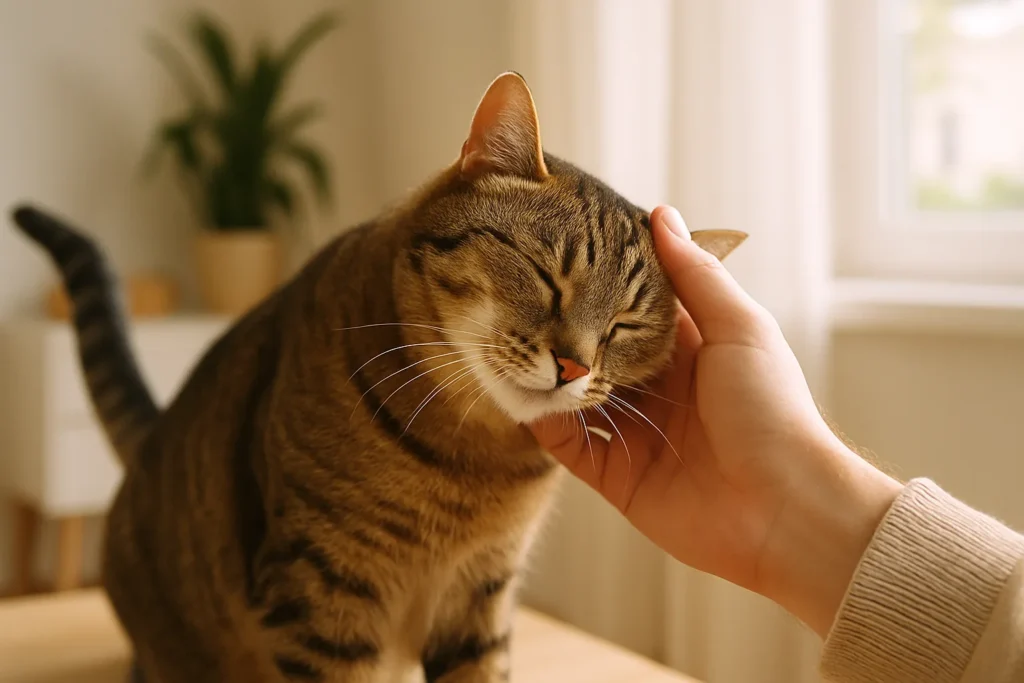
Cats show affection in different ways. Head bunting transfers familiar scent and can be a friendly greeting. Kneading, slow blinking, relaxed purring, following you from room to room, and choosing to sleep nearby can all indicate that your cat feels secure in your presence.
Closeness does not always mean your cat wants to be picked up. Some cats communicate socially by staying beside you, touching you briefly, or resting at your feet. Respecting that preference can strengthen trust more than insisting on prolonged cuddling.
It also helps to distinguish social affection from comfort seeking and attention seeking. A cat may approach because it wants reassurance after a stressful event, food because a routine has taught it when to ask, or play because it has excess energy. The behavior can still be friendly, but its immediate purpose may not be the same as bonding.
- Head bunting or rubbing against your legs
- Kneading with relaxed body language
- Slow blinking and resting with loose, comfortable posture
- Following you or choosing to sleep in the same room
- Purring while calm, though purring should be interpreted alongside the rest of the body language
Why Some Cats Are Naturally More Affectionate Than Others
Early socialization can influence how comfortable a cat feels around people. Kittens that have had calm, positive handling and predictable interactions may grow into adults that seek human company more readily. This is one influence, not a guarantee: individual experiences continue to shape behavior throughout life.
Personality and temperament matter just as much. One cat may be outgoing and physically demonstrative, while another may show the same level of trust by sitting across the room. Neither style is a better measure of attachment.
Breed tendencies may affect activity level or the likelihood of seeking interaction, but breed labels cannot predict every cat’s behavior. A mixed-breed cat may be exceptionally cuddly, and a cat from a breed known for sociability may still prefer limited handling.
Positive reinforcement can also build an affectionate routine. If sitting beside you reliably brings warmth, food, play, gentle attention, or a quiet place to rest, your cat may repeat that behavior. This is learned association rather than manipulation.
Life stage can change social habits. Young cats may alternate between intense play and brief cuddles, adults often settle into established routines, and older cats may seek familiar company more often. A gradual change can be normal, but a rapid change deserves closer observation.
Why Is My Cat So Affectionate All of a Sudden?
When a cat becomes suddenly affectionate, start by reviewing what changed around it. Travel, a different work schedule, a move, fewer people in the home, or a new arrangement of furniture can alter your cat’s sense of security. Staying close may be a way to reconnect or find reassurance.
Your cat may also be asking for something specific. Hunger, a missed play session, a preferred warm sleeping spot, or simple attention can produce a burst of following and cuddling. If the behavior appears at predictable times and stops after the need is met, a routine or attention explanation becomes more likely.
Stress does not always make cats hide. Some withdraw, while others become clingier, more vocal, or more determined to stay near a familiar person. New pets, visitors, loud sounds, construction, conflict between animals, and the loss of a companion can all change how a cat seeks security.
Environmental conditions may contribute as well. Colder weather can make a warm lap or human bed more appealing, and seasonal changes may alter household routines. These explanations are more reassuring when your cat is otherwise eating, moving, grooming, and using the litter box normally.
Aging can bring changes in hearing, vision, confidence, or orientation. An older cat that suddenly follows you closely may be seeking help navigating an unfamiliar situation. Pain or illness can also change social behavior; some cats become needy rather than withdrawn when they feel unwell.
Timing, intensity, and accompanying signs matter more than affection alone. A mild increase that follows a clear household change is different from persistent clinginess that begins abruptly and occurs with appetite, mobility, sleep, vocal, or litter box changes.
- What changed in the home, schedule, people, pets, or noise level?
- Does the affection happen at a consistent time or continue throughout the day?
- Does your cat settle after food, play, warmth, or reassurance?
- Are there changes in appetite, drinking, grooming, movement, sleep, or litter box use?
Time-of-Day Patterns: Morning, Night, and Other Situations
A cat that is especially affectionate in the morning may be greeting you after separation, anticipating breakfast, or responding to a familiar routine. Cats can also have an energy burst after resting overnight. If the behavior is brief and predictable, it may simply be part of your shared morning ritual.
A cat that becomes more affectionate at night may be winding down beside you, seeking warmth, or looking for company when the household becomes quiet. Cats are naturally active at dawn and dusk, so evening attention can also overlap with a desire for play or exploration.
Purring and cuddling often accompany contentment, but purring is not a complete diagnosis of mood. Some cats also purr while self-soothing when anxious or uncomfortable. Consider posture, facial expression, movement, appetite, and the broader pattern rather than treating one sound as proof that everything is fine.
Affection linked to a particular situation can be easier to interpret. A cat may become gentle and close after play, during a thunderstorm, when visitors leave, or whenever you sit in a favorite chair. Note what happens immediately before and after the behavior.
Male vs. Female Cats: Does Sex Change How Affectionate a Cat Is?
There is no reliable rule that one sex is always more cuddly. Personality, early socialization, past experiences, household routines, and whether a cat has been spayed or neutered usually tell you more than sex alone.
An unspayed female in heat may become unusually vocal, restless, affectionate, or eager for attention. Those behaviors are part of a reproductive cycle and can look different from the calm, consistent bonding signals of a relaxed cat.
An intact male may show roaming, marking, vocalizing, or persistent attention-seeking behaviors. These may be driven by reproductive hormones rather than a sudden change in emotional attachment. A veterinarian can discuss reproductive behavior and appropriate care.
For a male cat that is suddenly affectionate and purring, look for the same clues as you would in any cat: recent household changes, the duration of the behavior, body language, appetite, movement, and litter box habits. The same approach applies when a female cat is suddenly affectionate.
When Extra Affection Can Be a Sign of Stress, Pain, or Illness
Extra affection becomes more concerning when it is part of a larger behavior change. A cat that hides less but clings more, vocalizes unusually, cannot settle, sleeps differently, or stops following normal routines may be communicating that something is wrong.
Stress can follow a new pet, visitors, loud noises, changes to the home, altered access to resources, or the loss of an animal or person. A stressed cat may seek constant contact, but it may also show restlessness, overgrooming, reduced grooming, appetite changes, or litter box changes.
Medical problems can also affect behavior. Pain, nausea, discomfort, hyperthyroidism, cognitive decline, and high blood pressure are among the possibilities a veterinarian may consider when increased clinginess occurs with other changes. Affection by itself cannot identify the cause.
Pay particular attention to appetite, thirst, weight, grooming, walking, jumping, breathing, elimination, and vocalization. Sudden clinginess paired with any unusual physical or daily-living sign is a reason to contact your veterinarian rather than assuming your cat is simply becoming more loving.
- A rapid or intense change in personality
- Changes in eating, drinking, weight, grooming, or sleep
- Difficulty walking, jumping, settling, or getting comfortable
- Unusual crying, restlessness, hiding, or vocalization
- Changes in urination, defecation, or litter box habits
How to Read the Pattern Before You React
Keep a simple behavior log for a few days when the change is not an emergency. Record when the affection starts, how long it lasts, what happened beforehand, and whether food, play, warmth, or reassurance changes it. A short video can capture posture or movement that is difficult to describe later.
Watch for the difference between wanting contact and wanting a resource. A cat that leads you to the food area, toys, a window, or a closed door may be making a specific request. A cat that settles quietly against you may be seeking social comfort or rest.
Check ordinary habits without repeatedly handling your cat or forcing interaction. Notice mobility, grooming, appetite, thirst, sleep, and litter box use. Small changes are more useful when compared with your cat’s own normal pattern rather than with another cat’s behavior.
If you want to reduce urgent attention seeking, do not punish or abruptly reject your cat. Offer predictable play, feeding, rest, and interaction, and give attention during calm moments as well as during demands. Enrichment and quiet safe spaces can make the household easier to navigate.
Avoid making major routine changes all at once. A consistent schedule, accessible resources, and patient observation can help you see whether the affection settles as your cat adjusts or continues alongside signs that need professional attention.
- Record the time, duration, trigger, and outcome of each episode.
- Note whether your cat asks for food, play, warmth, or reassurance.
- Compare appetite, thirst, grooming, movement, sleep, and litter box habits with normal behavior.
- Use calm routines, enrichment, and safe resting areas.
- Save videos and notes if a veterinary appointment becomes necessary.
When to Call the Vet About a Suddenly Affectionate Cat
Seek same-day veterinary guidance for sudden affection accompanied by breathing changes, obvious pain, crying, inability to settle, refusal to eat, or straining in the litter box. These signs need attention because they can indicate a problem that should not be assessed through behavior alone.
Arrange a prompt appointment when an abrupt personality change lasts more than a day or two, when an older cat becomes noticeably clingier, or when affection occurs with weight change, appetite change, altered thirst, reduced grooming, mobility problems, unusual sleep, or new vocalization.
Before the visit, write down when the behavior began and whether it is getting stronger. Bring videos if safe to record, appetite and litter box notes, a list of medications or supplements, and details about household changes, new animals, visitors, travel, or possible exposure to hazards.
If your cat has always been affectionate and remains otherwise well, the behavior is usually best understood as part of its individual temperament and bond with you. If the change is sudden or paired with other symptoms, let the pattern guide you toward a veterinary check.
- Contact a veterinarian the same day for breathing changes, obvious pain, crying, inability to settle, not eating, or litter box straining.
- Book a prompt appointment for a lasting abrupt personality change or new clinginess in an older cat.
- Mention any changes in weight, appetite, thirst, grooming, movement, sleep, vocalization, or elimination.
- Bring a timeline, videos, notes, and information about medications and household changes.
Understanding Your Cat’s Extra Affection
An affectionate cat is often expressing trust, comfort, habit, or a desire for social contact. The clearest interpretation comes from your cat’s normal personality and the context around the behavior, not from cuddling alone.
When affection is suddenly intense or appears with physical or routine changes, treat it as useful information rather than dismissing it or assuming the worst. Observe the pattern, support a predictable environment, and contact your veterinarian when red flags appear.
Is it rare for a cat to be affectionate?
No. Cats vary widely, but many are affectionate in ways that match their personality. Some enjoy lap sitting, while others show attachment by staying nearby, greeting you, or resting in the same room.
Which gender of cat is more cuddly?
Neither sex is consistently more cuddly. Individual temperament, socialization, life experiences, household routine, and spay or neuter status generally matter more than whether a cat is male or female.
How to tell if a cat actually loves you?
Look for consistent trust signals such as choosing to be near you, greeting you, slow blinking, rubbing against you, relaxing in your presence, and returning for contact. Respecting your cat’s boundaries is also part of building that bond.