Learning how to take care of cats for beginners is mostly about building a dependable routine. Cats need appropriate food and fresh water, a clean toilet area, safe places to rest, opportunities to play and scratch, regular grooming, and preventive veterinary care.
Good cat ownership also means paying attention to behavior. A new cat may need time to feel secure, and individual preferences vary. Set up your home before the cat arrives, introduce changes gradually, and use calm, reward-based handling rather than force or punishment.
What Cats Need Before You Bring One Home
A prepared home makes the first transition easier for both the cat and the people caring for it. Choose a quiet starting area where the cat can eat, drink, rest, use the litter box, and retreat without being disturbed.
Gather the basics before adoption or arrival. Ask the shelter, rescue, breeder, or veterinarian about the cat’s current food, litter, medical history, and familiar routines so you can avoid unnecessary changes during the first days.
- Food and water bowls that are easy to clean
- Quality cat food matched to the cat’s age and health needs
- At least one suitable litter box and the cat’s familiar litter when possible
- A scratching post or pad
- A bed, covered shelter, or other comfortable hiding place
- A secure carrier for transport
- A plan for identification, including an ID tag where appropriate and microchip registration
- A safe room for the first few days
How to Take Care of Cats for Beginners: The Daily Basics
A daily cat care routine should be simple enough to maintain. Refresh the water, provide the planned food portions, scoop waste, and spend a little time observing how your cat moves, eats, rests, and interacts.
Cats often communicate through small changes rather than dramatic signals. Notice whether your cat is using the litter box normally, showing interest in food, and behaving in a familiar way. Record concerns so you can describe them clearly to a veterinarian.
- Provide fresh water and check that the bowl is clean.
- Feed the planned amount at consistent times or follow the feeding method recommended by your veterinarian.
- Scoop the litter box and look for changes in urine or stool.
- Offer a short interactive play session suited to your cat’s age and energy.
- Give affection only when the cat welcomes it; allow the cat to move away.
- Complete a quick check for changes in appetite, thirst, breathing, movement, coat, eyes, or behavior.
Feed Your Cat the Right Way
Feeding a cat starts with choosing food appropriate for its life stage and any diagnosed health needs. A veterinarian can help you select a diet when a cat is growing, aging, underweight, overweight, pregnant, or managing a medical condition.
Wet and dry food can each fit into a feeding plan. Wet food may add moisture to the diet, while dry food can be convenient, but neither option should replace individualized advice when your cat has health concerns.
Use portion awareness rather than assuming a bowl should always stay full. Daily calorie needs depend on body weight, life stage, and activity, so ask your veterinarian for individualized feeding guidance instead of relying on a generic chart.
Keep treats small in the overall feeding plan and introduce diet changes gradually. Do not give cats alcohol, caffeinated drinks, chocolate, onions, garlic, or foods and medications that a veterinarian has identified as unsafe. Contact a veterinarian promptly if your cat may have swallowed a harmful substance.
- Keep food and water areas separate from the litter box.
- Wash bowls regularly and remove uneaten wet food according to safe food-handling practices.
- Measure portions with the guidance of your veterinarian.
- Make water appealing by keeping it fresh and offering an additional clean location if useful.
- Never make a sudden diet change unless a veterinarian tells you to do so.
Set Up and Maintain the Litter Box
Litter box care is easier when the box is large enough for comfortable movement, easy to enter, and placed in a quiet location. Avoid putting it beside loud appliances, in a busy walkway, or somewhere the cat could feel trapped.
Many households benefit from providing more than one box, especially when they have multiple cats or more than one floor. Keep boxes accessible and observe which locations and litter textures your cat prefers.
Scoop regularly and fully clean the box on a schedule that keeps it acceptable to the cat. Use products that do not leave a strong fragrance, since intense smells may discourage use.
- Do not place food directly beside the litter box.
- Keep the route to the box clear.
- Avoid changing litter, box style, or location abruptly.
- Do not punish accidents; clean the area thoroughly and look for an underlying cause.
- If a cat suddenly stops using the box, contact a veterinarian and review the box setup.
Create a Safe, Comfortable Home for Your Cat
Indoor cat care should include places to rest, hide, observe, and move around. A quiet bed, a covered retreat, a stable perch, and access to vertical space can give a cat choices when it wants privacy or a better view.
Introduce new rooms, visitors, children, and other animals gradually. Let the cat approach at its own pace, and make sure it always has a way to retreat to a familiar safe area.
Cat-proof the home by securing cords, closing access to small hazards, checking windows and screens, and keeping unsafe household substances out of reach. Review plants, medications, cleaning products, and open doors for possible risks.
Most pet cats do best with indoor-focused care because a controlled environment makes it easier to manage hazards and monitor health. If outdoor access is considered, discuss a safe plan with your veterinarian.
- Secure loose electrical cords and strings.
- Keep small objects that could be swallowed out of reach.
- Use secure window screens and prevent accidental escapes.
- Provide comfortable resting areas away from constant noise.
- Keep the home at a comfortable temperature and provide shade and ventilation.
- Give every cat a retreat where people and other pets will not bother it.
Play, Scratching, and Enrichment Matter More Than Most Owners Think
Play and enrichment give cats appropriate ways to explore, stalk, chase, climb, scratch, and rest. Interactive play with a suitable toy can also create a predictable opportunity for attention without requiring the cat to be handled.
Rotate toys so familiar items remain interesting, but supervise toys with strings, small parts, or materials that could be swallowed. End play if the cat becomes overwhelmed, and allow it to settle afterward.
Scratching is normal cat behavior, not a spiteful habit. Offer stable scratching surfaces with different positions and textures, then place them near resting areas or places where scratching already occurs.
Boredom may appear as destructive scratching, persistent vocalizing, restless behavior, overeating, or withdrawal, although behavior changes can also signal stress or illness. Discuss sudden or persistent changes with a veterinarian.
- Provide scratching posts or pads that do not wobble.
- Offer climbing, hiding, and observation opportunities.
- Use toy rotation rather than leaving every toy out at once.
- Keep play gentle and avoid using hands as toys.
- Stop or change an activity when body language shows overstimulation, such as a tense body, tail lashing, or an attempt to leave.
Grooming and Hygiene Basics
Grooming needs vary with coat length, texture, age, health, and the cat’s ability to groom itself. Short-haired cats may need less brushing, while long-haired cats generally need more frequent attention to prevent tangles and detect skin changes.
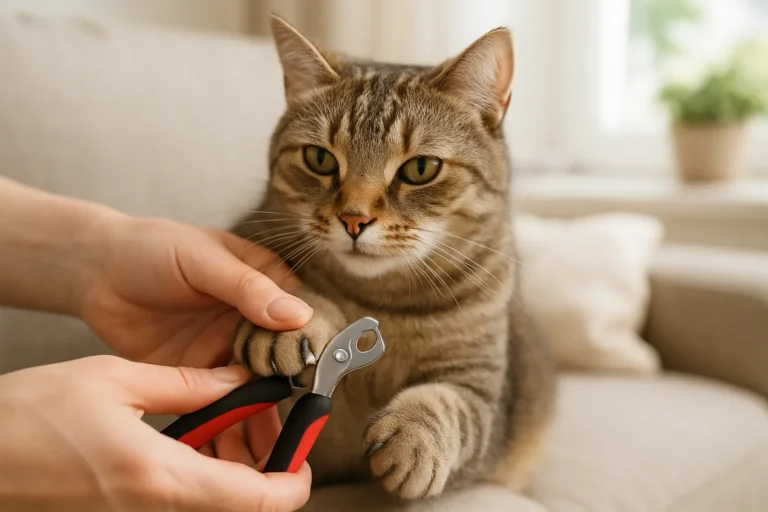
Introduce brushing, nail handling, tooth care, and other grooming gradually. Keep sessions brief, use calm rewards, and stop before the cat becomes distressed. A professional groomer or veterinary team can help with difficult mats or handling concerns.
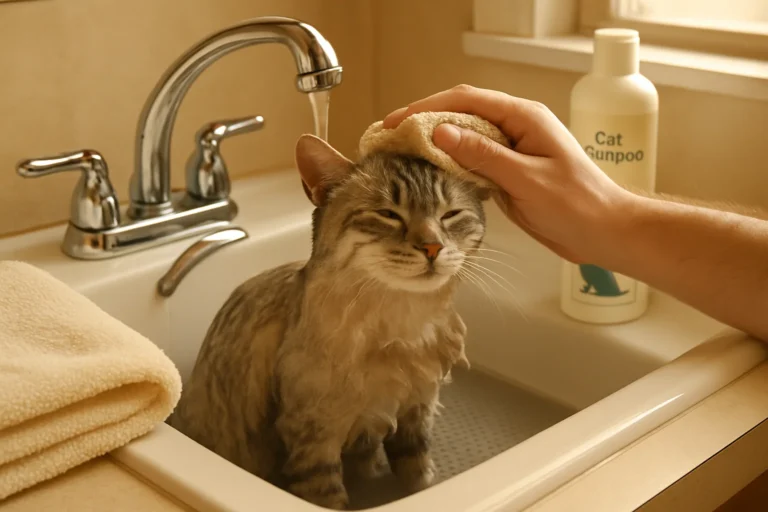
Check the ears, eyes, skin, coat, paws, and mouth during normal interactions. Look for changes rather than trying to diagnose them at home. Bathing is usually not a routine requirement for every cat, but a veterinarian may recommend it for a medical or contamination-related reason.
- Brush according to the cat’s coat and tolerance.
- Ask a veterinary professional to demonstrate safe nail trimming if you are unsure.
- Discuss an appropriate dental-care routine with your veterinarian.
- Do not pull at painful mats or use human grooming products without professional guidance.
- Arrange veterinary advice for persistent hair loss, skin irritation, bad breath, eye discharge, or ear changes.
Routine Veterinary Care and Preventive Health
A first veterinary examination establishes a health baseline and gives you a chance to discuss food, weight, behavior, dental care, parasite prevention, and the cat’s living environment. Bring adoption or medical records when available.
Preventive care may include vaccines, parasite prevention, spaying or neutering, microchipping, and wellness visits. The appropriate timing depends on age, lifestyle, medical history, and local veterinary advice.
Do not wait for an emergency before choosing a veterinary clinic. Keep the carrier accessible, learn how to transport your cat safely, and save the clinic’s contact details and after-hours instructions.
- Schedule an initial examination after bringing home a new cat.
- Keep vaccines and parasite prevention on the schedule recommended by your veterinarian.
- Discuss spaying or neutering and microchip registration.
- Maintain age-appropriate wellness visits.
- Ask before using over-the-counter flea, tick, or other medications.
Signs Your Cat Is Sick, Stressed, or Needs Help
Cats can hide discomfort, so a noticeable change from normal deserves attention. Changes in appetite or thirst, repeated vomiting or diarrhea, unusual hiding, aggression, reduced movement, or altered litter box habits should not be dismissed as simple bad behavior.
Breathing difficulty, collapse, severe weakness, inability to urinate, significant bleeding, suspected poisoning, or a sudden serious injury requires urgent veterinary guidance. If you are uncertain, call a veterinary clinic and describe what you observed rather than waiting for the problem to resolve.
Stress can show up through hiding, avoidance, vocal changes, defensive behavior, overgrooming, appetite changes, or litter box changes. Reduce noise and pressure, restore predictable routines, and seek veterinary advice because illness and stress can look similar.
- Record when the change began and whether it is getting worse.
- Note food, water, litter box, vomiting, stool, and activity changes.
- Do not give human medicine unless a veterinarian specifically instructs you to do so.
- Give the cat a quiet space while arranging professional advice.
- Treat breathing problems, poisoning concerns, inability to urinate, collapse, and severe injury as urgent.
The 3-3-3 Rule and How Cats Adjust to a New Home
The 3-3-3 rule for cats is an informal way to describe adjustment in stages: a cat may need an initial period to decompress, a longer period to learn the household routine, and additional time to show its full personality. It is a flexible guideline, not a deadline or a guarantee.
Some cats hide, eat cautiously, avoid handling, or explore only when the home is quiet at first. This does not automatically mean the placement is failing. Provide food, water, a clean litter box, a hiding place, and calm company without forcing contact.
Build trust through predictable routines and choice. Sit quietly nearby, use gentle play if the cat is receptive, reward desired interaction, and let the cat approach or retreat. Avoid carrying the cat around, inviting many visitors, or introducing every room and pet immediately.
If the cat is not eating, appears unwell, shows severe fear, or has ongoing litter box problems, seek veterinary advice rather than attributing everything to adjustment. A cat that remains distressed or withdrawn also needs a careful review of its environment and health.
- Start with one safe room and expand access gradually.
- Keep food, litter, play, and rest routines predictable.
- Allow hiding while ensuring the cat can reach essential resources.
- Use slow introductions for children, visitors, and other animals.
- Measure progress by relaxed behavior and routine use of resources, not by forced cuddling.
How Cat Care Changes for Kittens vs Adult Cats
Kittens need closer supervision because they are learning how to eat, play, use the litter box, and navigate their environment. Their food, veterinary schedule, parasite prevention, and vaccination plan should be guided by a veterinarian.
Feed kittens with a diet made for growth and follow professional guidance about portions and frequency. Provide safe, supervised exploration, gentle handling, and positive experiences with ordinary household sounds and people.
Kitten-proof rooms by securing cords, blocking narrow gaps, removing small objects, and checking that climbing areas are stable. Keep young kittens away from unsafe appliances, open windows, and unsupervised interactions with larger pets.
Adult cats may have a more established routine, but their needs still vary. Senior cats may need easier access to food, water, litter, and resting areas, along with veterinary attention to changes in mobility, appetite, weight, or behavior.
- Use age-appropriate food rather than treating kitten and adult diets as interchangeable.
- Supervise kitten play and exploration.
- Begin litter training with an accessible box and calm encouragement.
- Keep adult and senior cats’ routines stable while adapting resources to changing needs.
- Ask a veterinarian how care should change as the cat grows.
Common Mistakes New Cat Owners Make
Many first-time owners have good intentions but misread normal cat behavior or overlook small routine tasks. A practical way to prevent problems is to review food, litter, enrichment, handling, and health habits regularly.
Cats do not learn well from punishment. Scolding, chasing, or forcing interaction can increase fear without explaining what behavior you want instead. Make the desired choice easier by improving the environment and rewarding calm, appropriate behavior.
- Free-feeding without monitoring portions or changes in appetite
- Providing too little play, scratching, climbing, or hiding space
- Keeping only one litter box in a noisy, difficult-to-reach location
- Forcing cuddling, handling, introductions, or exploration
- Ignoring subtle changes in eating, drinking, movement, grooming, or litter habits
- Punishing scratching, hiding, vocalizing, or other normal communication
- Changing food, litter, rooms, and routines all at once
- Using medication or parasite products without veterinary guidance
Build a Routine Your Cat Can Trust
The foundation of cat ownership is consistent care: appropriate food and water, clean litter, a safe home, daily enrichment, gentle handling, grooming, and preventive veterinary attention. These cat ownership basics become manageable when they are attached to routines you already follow.
Watch your individual cat rather than expecting every cat to behave the same way. Give new cats time to adjust, respond early to changes in health or behavior, and ask your veterinary team for advice whenever a decision involves nutrition, medication, or illness.
How do you take care of cats for the first time?
Prepare food, water, a litter box, scratching surface, carrier, resting area, and safe room before arrival. Establish a calm daily routine, provide enrichment, respect the cat’s boundaries, and arrange an initial veterinary examination.
What are the main do’s and don’ts with cats?
Do provide fresh water, appropriate food, clean litter, safe hiding and climbing options, play, gentle handling, and preventive care. Do not punish normal behavior, force interaction, make sudden routine changes, or give medication without veterinary guidance.
What annoys a cat the most?
Many cats dislike forced handling, loud or unpredictable activity, dirty litter boxes, blocked escape routes, unwanted introductions, and having their resting places disturbed. Watch body language and give the cat a way to leave.
How is caring for kittens different from caring for adult cats?
Kittens need growth-appropriate food, closer supervision, kitten-proofing, litter training support, socialization, and a veterinarian-guided preventive-care schedule. Adult and senior cats may need more stable routines and adjustments for changing health or mobility.