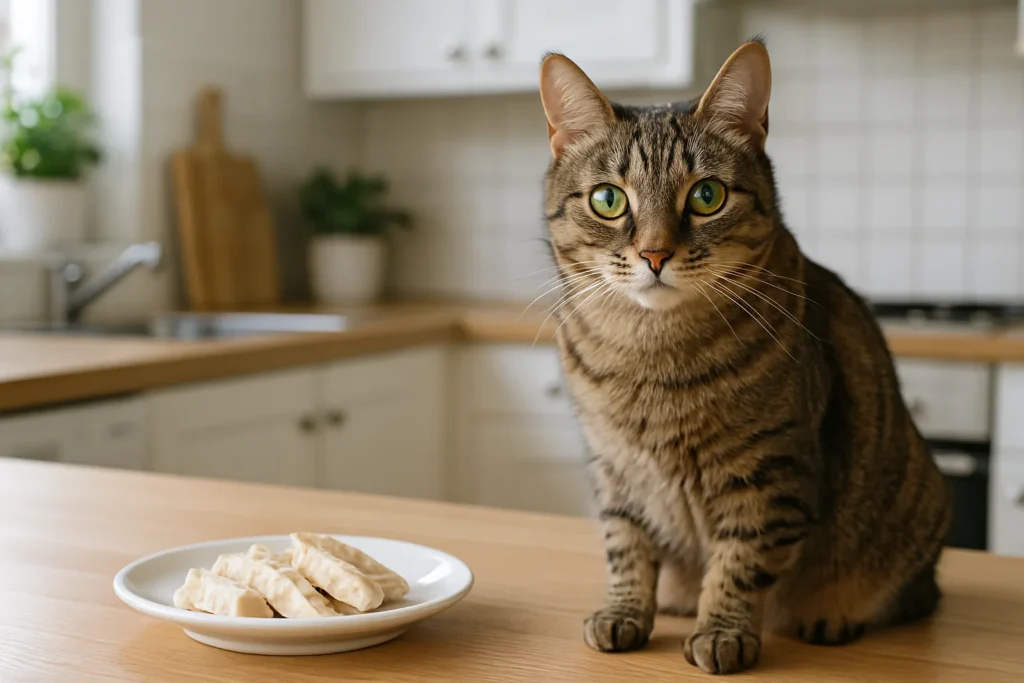
So, is chicken OK for cats? Plain, fully cooked, boneless, and unseasoned chicken is generally safe in small amounts for many cats. It can work as an occasional treat or topper, but it should not replace a complete cat food diet.
The details matter. Bones can injure a cat, seasonings such as onion and garlic are unsafe, and greasy leftovers can cause digestive trouble. Raw chicken also carries food-safety concerns, so cooked chicken is the more practical choice for most households.
When Chicken Is Safe for Cats
The safest default is plain, cooked, boneless, skinless chicken with no salt, spices, marinade, gravy, or sauce. Chicken provides animal protein, which fits a cat’s carnivorous dietary needs, but plain meat alone does not provide everything required for complete nutrition.
Offer only a small amount as a treat, food topper, or, when a veterinarian recommends it, a short-term bland food. Introduce it gradually, especially if your cat has a sensitive stomach or has never eaten chicken before.
Daily calorie needs depend on body weight, life stage, and activity. This article explains how veterinarians estimate energy requirements without publishing a precise chart here. Ask your veterinarian for individualized feeding guidance.
- Choose fully cooked chicken.
- Remove every bone before serving.
- Use skinless meat without seasoning or sauce.
- Start with a small serving and watch for digestive changes.
When Chicken Is Not OK for Cats
Several common forms of human food chicken are poor choices for cats. Cooked bones can splinter into sharp pieces, while raw bones may still create choking, obstruction, or digestive risks. Never give a cat chicken bones intentionally.
Avoid chicken prepared with onion, garlic, heavily salted seasoning, spicy ingredients, sauces, or marinades. Fried, breaded, greasy, or very fatty pieces can also upset the stomach. Rotisserie chicken is often seasoned and may contain salty skin or drippings, so it is not a reliable choice unless you can identify and remove all unsafe ingredients.
Spoiled leftovers should never be served. Deli chicken and canned chicken made for people may contain more salt or other ingredients than is appropriate for a cat, so plain freshly cooked meat is preferable.
- Cooked or small, sharp bones
- Onion, garlic, sauces, and spicy seasoning
- Fried, breaded, or greasy chicken
- Seasoned rotisserie chicken
- Spoiled leftovers or heavily salted processed chicken
Cooked vs. Raw Chicken for Cats
Cats can eat raw chicken in some feeding plans, but raw meat can carry bacteria that may affect the cat or people who handle the food. It also creates added concerns about storage, kitchen hygiene, cross-contamination, and whether the overall diet is nutritionally balanced.
Cooking chicken thoroughly lowers the food-safety risk for most households. Raw chicken should not be presented as automatically healthier, and it should not become part of a raw-feeding plan without careful nutritional planning and veterinary guidance.
- Cooked chicken is the safer practical default for most homes.
- Raw chicken requires careful handling and a properly balanced feeding plan.
- Never add raw chicken bones or seasoned raw meat to a cat’s food.
Best Types of Chicken to Feed
Chicken breast is an easy option because it is usually lean and simple to prepare. Serve it plain, cooked, skinless, and cut into small pieces. Boiled chicken is also useful when you want a preparation with no oil, seasoning, or sauce.
Grilled chicken can be suitable only when it is plain, fully cooked, not charred, and free of oil, marinade, and seasoning. Remove any browned or heavily charred exterior before offering a small piece. Dark meat can be richer and fattier than breast meat, particularly when the skin is left on, so it may be less suitable for cats prone to stomach upset.
- Best default: plain boiled or otherwise fully cooked chicken breast
- Acceptable with caution: plain grilled chicken that is not charred or seasoned
- Use more carefully: dark meat because it can be richer and fattier
- Remove before serving: skin, bones, sauces, and visible excess fat
How to Cook Chicken for Cats Safely
Preparing chicken for a cat is simple, but avoid treating it like a portion from your own dinner. The goal is plain meat with no ingredients that could make a cat ill or cause unnecessary digestive upset.
- Select fresh chicken and remove any visible skin or excess fat.
- Do not add salt, pepper, garlic, onion, spices, oil, butter, marinade, or sauce.
- Cook the chicken thoroughly using a plain method such as boiling or baking.
- Let it cool before handling, then check carefully for bones.
- Shred or cut the boneless meat into small, manageable pieces.
- Offer a small serving alongside the cat’s usual complete food.
- Refrigerate leftovers promptly in a clean, covered container and discard food that is old, spoiled, or questionable.
How Much Chicken a Cat Can Eat
There is no single chicken serving that suits every cat. The appropriate amount depends on body size, age, activity, health, and how much complete cat food the cat already eats. A smaller or less active cat generally needs less extra food than a larger or more active one.
Use chicken as a small treat or topper rather than allowing it to displace the cat’s nutritionally complete food. Because individualized energy needs vary, ask your veterinarian for feeding guidance instead of relying on a precise daily chart based only on weight.
Start with a very small piece the first time. If your cat tolerates it, keep future servings modest and account for them when considering all other treats and extras offered that day.
- Begin with a very small serving.
- Adjust for the cat’s size, age, activity, and health.
- Keep complete cat food as the nutritional base.
- Ask a veterinarian for individualized guidance when weight or medical issues are involved.
Can You Feed a Cat Chicken Every Day?
A small amount of plain chicken every day may be acceptable as a topper or treat for some healthy cats, provided it does not reduce their intake of complete and balanced cat food. Monitor body condition, appetite, and stool quality if you make it a regular extra.
Feeding only chicken every day is not a balanced long-term diet. Plain chicken does not supply the full range of nutrients cats need, so replacing their normal food with chicken can create nutritional deficiencies over time. Cats on prescription or special diets should receive extras only after discussing them with a veterinarian.
- Small daily extras may be suitable for some cats.
- Chicken alone is not a complete long-term diet.
- Do not undermine a prescription diet with unapproved toppers or treats.
Boiled Chicken for Cats With an Upset Stomach
Plain boiled chicken is sometimes used short term when a cat has a mild digestive upset, but it is not a universal treatment. If your veterinarian suggests it, serve small portions of boneless meat and follow the recommended plan for returning to the cat’s normal complete food.
Do not use chicken as a substitute for veterinary care or as a long-term bland diet. Vomiting, diarrhea, lethargy, pain, dehydration concerns, or not eating should prompt veterinary advice, particularly when symptoms continue or are severe.
- Use only plain, boneless boiled chicken if a veterinarian considers it appropriate.
- Offer small portions rather than a large meal.
- Reintroduce normal food carefully according to veterinary guidance.
- Seek advice if symptoms are persistent, severe, or accompanied by weakness or pain.
Signs Chicken Does Not Agree With Your Cat
A cat may react poorly because of the food itself, an ingredient added during preparation, eating too much, or contamination. Watch for vomiting, diarrhea, gas, reduced appetite, or other signs of stomach upset after introducing chicken.
Itching, excessive grooming, skin irritation, or recurring digestive problems can be signs of a possible food sensitivity, although these symptoms have many potential causes. Stop offering the new food and contact your veterinarian for guidance rather than repeatedly testing it at home.
If bones were swallowed, choking, gagging, difficulty swallowing, constipation, abdominal discomfort, or changes in behavior deserve prompt attention.
- Vomiting or diarrhea
- Gas or obvious stomach discomfort
- Itching, skin irritation, or excessive grooming
- Reduced appetite or unusual quietness
- Gagging, choking, constipation, or abdominal pain after bones may have been eaten
When to Call a Vet Right Away
Contact a veterinarian promptly if your cat ate chicken bones, especially if the bones were cooked. Do not induce vomiting or try to force food or liquid unless a veterinary professional specifically instructs you to do so.
Seek urgent advice if the chicken contained onion or garlic, was heavily seasoned, or was followed by repeated vomiting or diarrhea. Signs of choking, trouble breathing, severe abdominal pain, marked lethargy, or refusal to eat also warrant immediate veterinary attention.
- The cat swallowed chicken bones.
- The chicken contained onion, garlic, or substantial seasoning.
- Vomiting or diarrhea is repeated or severe.
- The cat is choking, struggling to breathe, or showing significant pain.
- The cat is unusually lethargic or refuses food.
The Safest Way to Share Chicken With a Cat
Plain, fully cooked, boneless, skinless chicken can be a useful occasional treat for many cats. Boiled chicken is the simplest option, while plain grilled chicken may be acceptable when it is not charred, oily, or seasoned.
Keep chicken secondary to complete cat food, introduce it in small amounts, and avoid bones, raw-food handling risks, seasoning, fatty leftovers, and processed chicken. When your cat has symptoms, a special diet, or may have eaten something dangerous, ask a veterinarian for specific advice.
Can I feed my cat chicken every day?
Some cats can have a small amount of plain chicken daily as an extra, but chicken alone is not nutritionally complete. Keep complete cat food as the foundation and ask your veterinarian about special diets.
Can cats eat raw chicken?
Cats may eat raw chicken in some carefully planned feeding programs, but raw meat can carry bacteria and requires strict handling. It is not automatically better than cooked chicken, and a raw diet should be nutritionally balanced with professional guidance.
Can cats eat cooked chicken?
Yes, if it is fully cooked, plain, boneless, skinless, and unseasoned. Remove all bones and avoid chicken prepared with onion, garlic, sauces, salt, spices, or excess fat.
Can cats eat chicken breast?
Yes. Plain cooked chicken breast is a lean, easy option when served in small pieces without skin, bones, seasoning, or sauce.
Can cats eat grilled chicken?
They can eat a small amount if it is fully cooked, plain, not charred, and free of oil, marinade, and seasoning. Restaurant or barbecue chicken is often unsuitable because of added ingredients.
Can cats eat chicken bones?
No. Chicken bones can cause choking, injury, obstruction, or digestive problems, and cooked bones can splinter. Contact a veterinarian if your cat swallowed one.