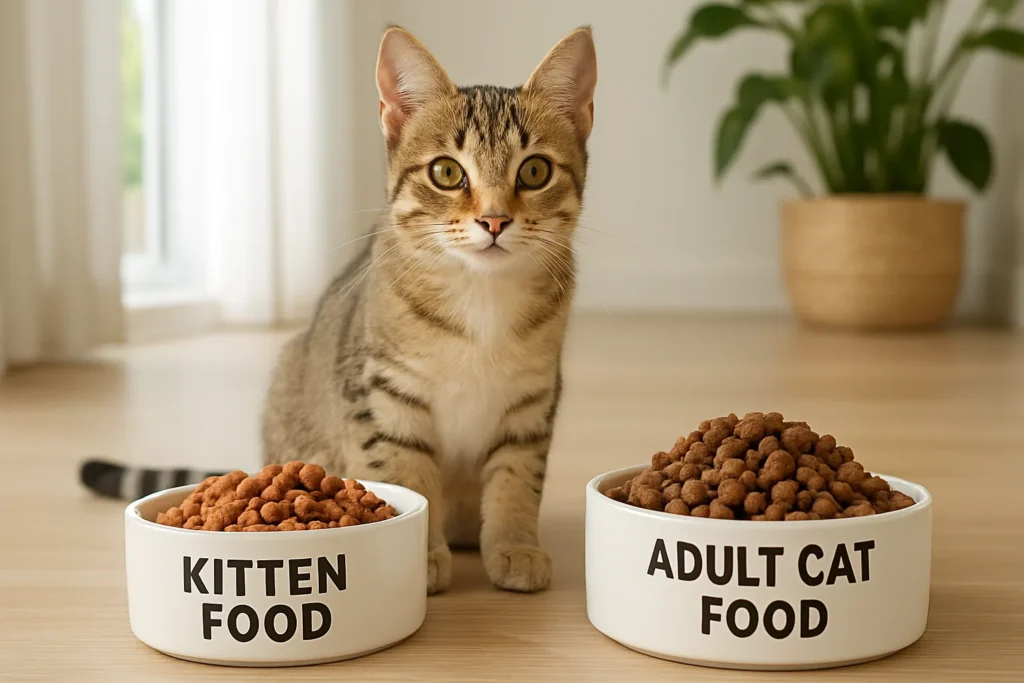
Most cats need kitten food until they are about 12 months old. That is the usual point to begin switching to adult cat food, because growth has generally slowed and the cat is moving toward its adult body.
Age is a useful starting point, not an inflexible deadline. Larger or slower-maturing cats may need kitten food longer, while a cat gaining excess weight or dealing with a health problem may need an earlier review with a veterinarian.
The Short Answer: Most Cats Need Kitten Food Until Around 12 Months
For most cats, the answer to how long do cats need kitten food is until roughly 12 months of age. The transition should begin when the cat’s rapid growth is mostly complete, rather than simply because a particular bag of food has been used up.
Some cats will not fit the standard timeline. Adult size, growth rate, body condition, reproductive status, and health history can all affect when a cat should stop eating kitten food. If the timing is unclear, a veterinarian can assess the cat’s growth and feeding needs.
Daily calorie needs depend on body weight, life stage, and activity. This article explains how veterinarians estimate energy requirements without publishing a precise chart here. Ask your veterinarian for individualized feeding guidance.
Why Kittens Need Kitten Food in the First Place
Kittens are building bone, muscle, organs, and other tissues, so they need food designed for growth rather than maintenance. Kitten formulas are generally more energy-dense and provide a different balance of protein, fat, vitamins, and minerals than food made for mature cats.
That concentrated nutrition helps support rapid development during the early life stage. Adult food may not provide the same growth-focused nutritional profile, so switching too early can make it harder to meet a growing kitten’s needs.
Kitten food is not automatically better for a mature cat. Once growth slows, continuing a calorie-dense growth formula can contribute to excessive weight gain if portions are not adjusted carefully.
When Should a Cat Stop Eating Kitten Food?
The usual answer is around 12 months, but look at the whole picture before changing the diet. A cat may be ready when its growth rate has slowed, its body is approaching adult size, and its weight and body condition are stable.
Body condition matters more than finishing a particular supply of kitten food. A cat that is becoming noticeably rounder, gaining weight quickly, or receiving more calories than it needs may require a feeding review before the usual transition date.
Check the food label for its intended life stage and follow the manufacturer’s feeding guidance as a starting point. Labels can help identify whether a formula is intended for growth, maintenance, or all life stages, but they do not replace an individualized veterinary assessment.
- Age: Most cats begin the change at about 12 months.
- Growth: The cat’s rapid increase in size has slowed or nearly stopped.
- Body condition: Weight is stable and neither excessive gain nor being underweight is a concern.
- Health: There is no illness, recovery plan, or other condition requiring a special diet.
Cats That May Need Kitten Food Longer or a Different Timeline
Not every cat matures at the same pace. Larger-framed or slower-maturing cats may continue growing beyond the first year, so their veterinarian may recommend staying on a growth formula longer or changing the diet in stages.
A cat recovering from illness, an underweight cat, or a cat with special nutritional needs may also require an individualized plan. In these cases, the priority may be restoring health or supporting continued development rather than following a standard birthday-based schedule.
The opposite situation also deserves attention. If a kitten is gaining excess weight, staying on calorie-dense kitten food without reviewing portions may not be appropriate. Ask a veterinarian whether the cat needs a different amount, formula, or transition plan instead of making a sudden change independently.
Signs Your Cat Is Ready to Switch to Adult Cat Food
A cat is more likely to be ready when several practical signs appear together. No single observation proves that growth is complete, but these clues can help you decide when to discuss the change.
A healthy appetite and stable body condition are useful signals. The cat should be eating reliably without unexplained weight loss, persistent digestive trouble, or other symptoms that suggest an underlying problem.
- Growth has slowed compared with the early kitten months.
- The cat is close to its expected adult build for its size and type.
- Weight is stable and the body does not appear noticeably underweight or overweight.
- Appetite and stools are consistent.
- There is no medical or developmental reason to continue a kitten diet.
How to Switch From Kitten Food to Adult Cat Food
Change foods gradually rather than replacing the kitten formula all at once. A slow transition gives your cat time to adjust to a new taste and texture and may reduce the chance of digestive upset.
Begin by mixing a small amount of adult food with the usual kitten food. Increase the adult-food portion little by little over several days while reducing the kitten-food portion. Keep fresh water available and maintain the cat’s normal mealtime routine.
Watch the litter box and feeding bowl during the change. If loose stools, vomiting, marked appetite loss, or food refusal appears, pause at the current mixture or return to the previous ratio and contact a veterinarian if the problem does not settle.
- Offer a small amount of the new adult formula alongside mostly familiar kitten food.
- Increase the adult formula gradually while decreasing the kitten formula.
- Observe stool quality, appetite, energy, and body condition throughout the change.
- Slow down the process if digestive upset or reluctance to eat develops.
- Recheck portions because the calorie content and feeding directions may differ between formulas.
Should You Switch Wet and Dry Food at the Same Time?
Wet and dry food can both be part of a kitten-to-adult diet, but the format should be changed gradually just like the formula. A sudden change in both life stage and texture can make it difficult to tell whether food refusal or digestive upset is related to the recipe, the texture, or the speed of the transition.
When possible, keep the feeding routine familiar and change one factor at a time. For example, you might first introduce the adult version in the same format your cat already accepts, then adjust the other format later.
Track the total amount offered across wet and dry food. Feeding directions and calorie density can vary, so portions should be reviewed when either formula changes. Ask your veterinarian for individualized calorie guidance if your cat’s weight is difficult to manage.
Mistakes to Avoid During the Kitten-to-Adult Food Transition
Most problems during this life-stage change come from treating it as a fixed date or a one-meal decision. A thoughtful transition should account for the cat’s development, current body condition, and response to the new food.
Avoid assuming that a cat must switch on the exact day it turns one, but also avoid leaving a cat on kitten food indefinitely without monitoring weight and portions. The right plan balances continued growth support with the risk of excess calories.
- Switching abruptly instead of mixing the foods gradually.
- Using the same portion size without checking the new food’s feeding directions.
- Assuming every cat matures on the same birthday.
- Ignoring rapid weight gain or a changing body condition.
- Continuing a growth formula without veterinary advice when a cat has a health concern.
- Trying to force a food that causes persistent refusal or digestive symptoms.
When to Ask a Vet Before Changing Food
A routine transition is often straightforward, but some cats need professional guidance before their diet changes. A veterinarian can consider growth, body condition, medical history, and the nutritional purpose of the current formula together.
Seek advice if digestive upset continues, appetite falls, or the cat refuses food. Prompt guidance is especially important for cats that are underweight, overweight, recovering from illness, or living with a chronic health condition.
It is also reasonable to ask for help when you are unsure about adult size, growth progress, portion changes, or whether the food is appropriate for the cat’s life stage. Individualized calorie needs depend on body weight, life stage, and activity, so avoid relying on a generic precise chart.
- Vomiting, diarrhea, or other digestive upset does not settle.
- The cat has poor appetite or refuses food.
- The cat is underweight, overweight, or gaining weight unusually quickly.
- The cat has a chronic illness or is recovering from a medical problem.
- You are uncertain whether growth is complete or how to adjust portions.
Making the Kitten-to-Adult Food Switch
For most cats, kitten food is appropriate until about 12 months, when growth has slowed and an adult maintenance formula becomes more suitable. Larger or slower-maturing cats and cats with special health needs may follow a different schedule.
Use age as a guide, then confirm the decision with growth, body condition, appetite, and overall health. Introduce adult food gradually, monitor stool and weight, and ask a veterinarian for help if the transition causes problems or the timing is uncertain.
Can a 1-year-old cat still eat kitten food?
Yes, a 1-year-old cat may still eat kitten food briefly while transitioning, and some larger or slower-maturing cats may need it longer. Monitor body condition and ask a veterinarian if growth or weight is a concern.
Is switching to adult food too early a problem?
It can be a concern because adult food may not provide the same growth-focused nutrition as kitten food. Discuss an early switch with a veterinarian, especially if the cat is still growing or has a health issue.
What if my cat refuses adult food?
Offer it gradually mixed with familiar kitten food and keep the routine consistent. If refusal continues, appetite drops, or other symptoms appear, contact a veterinarian rather than allowing the cat to go without adequate food.