So, what temperature can cats tolerate? Most healthy adult cats are comfortable in a moderate indoor environment, but there is no single safe number for every cat. Coat type, age, body condition, health, humidity, airflow, shelter, and the length of exposure all matter.
A room that feels comfortable to a person may still feel cool to a kitten, senior, hairless cat, or sick cat. Outdoors, cold, heat, wet fur, wind, direct sun, and inaccessible water can make conditions dangerous much faster. Use temperature as a warning signal, then judge the whole environment and your cat’s behavior.
Cat Temperature Tolerance at a Glance
Because individual tolerance varies and no verified universal cutoff applies to every cat, use this framework rather than treating one thermometer reading as a guarantee. The same temperature can be manageable indoors but unsafe outdoors when wind, rain, sun, or poor shelter is involved.
Exposure time matters as much as the reading. A brief transition is different from sleeping, waiting, or remaining trapped in an extreme environment.
What Is a Comfortable Temperature for Most Cats?
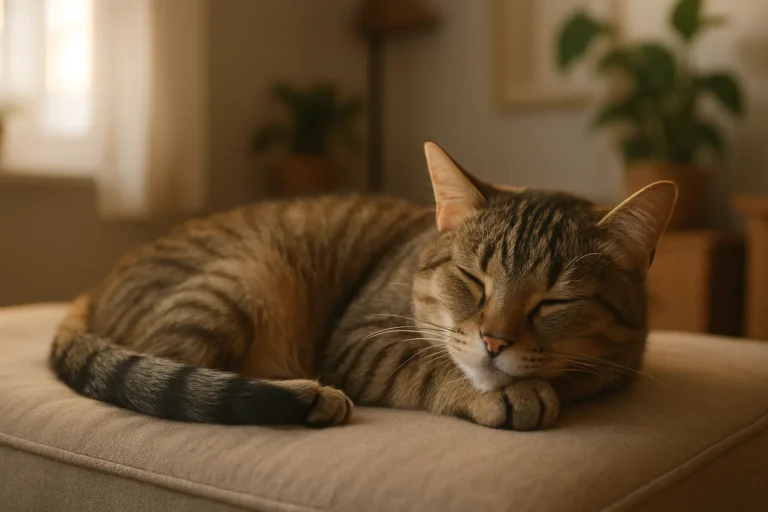
A comfortable temperature for cats is usually a moderate indoor temperature that lets them rest without persistent shivering, panting, agitation, or repeated searching for heat. Healthy adult cats often regulate themselves by moving between beds, floors, sunny areas, and shaded spots.
Tolerable is not the same as ideal. A cat may cope with a cool room but still prefer a blanket or a warm bed. Sunlight, bedding, body contact, and a draft-free resting place can make a meaningful difference without changing the thermostat.
Cats may seek warmer locations even when people feel comfortable because their comfort depends on body size, coat, activity, and individual preference. Give your cat options rather than forcing it to remain in one spot.
- Offer a dry bed away from drafts, doors, and cold floors.
- Let your cat move between warmer and cooler areas.
- Watch behavior over time instead of relying only on the room’s thermometer.
How Cold Can Cats Tolerate?
Cats can tolerate some cool conditions, but discomfort and risk increase when exposure is prolonged or the cat cannot reach warmth. Cold stress is more likely when fur is wet, the cat is exposed to wind, or food and shelter are limited.
Freezing conditions are especially dangerous. Ice, snow, wind, and damp bedding can remove body heat quickly, while outdoor cats may become trapped in sheds, garages, vehicles, or other spaces. A cat that seems acclimated to winter is not protected from severe weather.
Winter nights deserve particular caution because temperatures fall while visibility, shelter access, and human supervision decrease. What temperature is too cold for cats to sleep outside depends on the cat and shelter, but sleeping outdoors in extreme cold should not be considered safe simply because the cat has a thick coat.
There is no dependable answer to how long cats can survive in the cold. Survival depends on body condition, coat, moisture, wind, shelter, hydration, food, and health. Do not use an estimated survival time as a safety plan.
- Bring an outdoor cat inside before severe weather arrives.
- If an outdoor shelter is necessary, keep it dry, insulated, elevated, and protected from wind.
- Replace damp bedding and make sure food and water remain accessible.
- Check enclosed spaces before starting a vehicle, since cats may seek warmth near engines.
How Hot Can Cats Tolerate?
Cats may manage warm conditions when they have shade, water, airflow, and the ability to leave a hot area. Risk rises when heat combines with humidity, direct sun, exertion, dehydration, or confinement.
Enclosed locations such as parked cars, garages, sheds, porches, and sunrooms can become hazardous because heat may build rapidly and ventilation may be poor. Never leave a cat in a parked vehicle, even if the weather initially feels mild or a window is partly open.
Heat stress in cats can progress from restlessness and heavy breathing to weakness, vomiting, collapse, and other emergency signs. Flat-faced cats, overweight cats, cats with breathing or heart problems, and cats with thick coats may have less tolerance for heat.
Can cats tolerate higher temperatures than humans? Not reliably. A cat’s fur may offer some insulation, but it does not make extreme heat safe. Cats also may hide illness, so a quiet cat in a hot environment still needs active monitoring.
- Provide multiple bowls of fresh water in shaded locations.
- Improve airflow without directing dangerously hot air at the cat.
- Keep cats out of parked vehicles and poorly ventilated outbuildings.
- Move a cat indoors at the first sign of heat-related distress.
Indoor vs. Outdoor Cats: Why the Safe Range Changes
Indoor temperature tolerance is easier to manage because the home usually offers stable conditions, bedding, water, and a way to move away from discomfort. Even inside, drafts, cold floors, hot windows, fireplaces, heaters, and closed rooms can create localized risks.
Do cats get cold inside the house? They can, especially if they are small, elderly, hairless, underweight, wet, or unwell. A cat that persistently curls tightly, seeks heaters, or avoids moving may need a warmer resting area and a health check if the behavior is new.
Outdoor exposure adds variables that a thermostat cannot show. Wet fur, wind chill, hot pavement, direct sunlight, humidity, and a lack of shade or shelter can change the risk substantially. Nighttime lows may be more dangerous than daytime conditions, while a shaded daytime area may be safer than a sun-exposed one.
Acclimation can help a cat adjust to ordinary seasonal changes, but it does not make severe heat or cold safe. Cats still need access to a protected environment and should not be left to endure extremes.
- Keep indoor cats away from unventilated hot rooms and cold drafts.
- Provide a reliable route back indoors for cats that go outside.
- Inspect outdoor shelters after rain, snow, strong wind, or very hot weather.
- Treat any trapped or confined cat as higher risk than a cat that can choose where to rest.
Cats Most at Risk in Hot or Cold Weather
Temperature tolerance is not one-size-fits-all. Cats with limited reserves, reduced mobility, or impaired breathing may become distressed sooner than healthy adult cats. A risk-prone cat should have a more conservative environment and closer supervision.
Kittens and senior cats may regulate body temperature less effectively. Hairless and very short-haired cats generally have less insulation in cold conditions, while long-haired cats can overheat when air is hot or humidity is high. Low body weight also reduces protection against cold.
Heart, breathing, thyroid, and kidney problems can affect a cat’s response to heat, cold, dehydration, or exertion. Flat-faced breeds may have more difficulty coping with heat because of airway structure, and overweight cats may struggle with both heat loss and heat dissipation.
Ask a veterinarian for individualized advice if your cat has a medical condition, takes medication, has recently lost weight, or has shown unusual sensitivity to weather.
- Kittens and senior cats
- Hairless, short-haired, or heavily coated cats
- Underweight or overweight cats
- Cats with heart, breathing, thyroid, or kidney problems
- Flat-faced breeds
- Cats that are wet, injured, trapped, or unable to reach shelter
Signs a Cat Is Too Cold or Too Hot
Behavioral changes may appear before a serious emergency. Check on a cat exposed to unusual weather rather than assuming it will move to safety on its own.
Cold stress may look like shivering, a tightly curled posture, cold ears or paws, lethargy, weakness, or persistent attempts to find heat. A cat may also become unusually quiet or difficult to rouse.
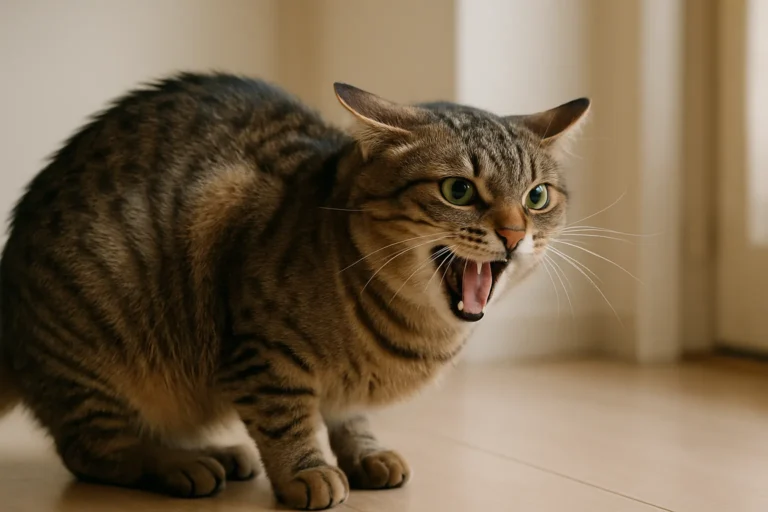
Heat stress may cause panting, drooling, restlessness, weakness, vomiting, rapid breathing, or unusually red gums. Cats do not normally pant like dogs, so unexplained panting deserves prompt attention.
Collapse, severe weakness, confusion, difficulty breathing, seizures, unresponsiveness, or worsening symptoms are emergency red flags. Contact a veterinarian or emergency clinic immediately rather than waiting for the cat to recover.
- Move the cat away from the temperature extreme.
- Observe breathing, alertness, movement, gum color, and whether symptoms are worsening.
- Seek urgent veterinary care for collapse, breathing difficulty, severe weakness, confusion, seizures, or unresponsiveness.
What to Do If Your Cat Is Exposed to Unsafe Temperatures
First, move the cat to a stable, sheltered environment and handle it calmly. If the cat is cold, warm it gradually with dry towels, blankets, and a comfortably warm room. Keep checking alertness and breathing while arranging veterinary advice.
If the cat is hot, move it into shade or air conditioning and offer water without forcing it to drink. Use gentle cooling and airflow; stop if the cat becomes distressed. A veterinarian should assess any cat showing heat-stress symptoms, even if it appears better afterward.
Do not use very hot water, heating pads directly against the skin, ice baths, or aggressive rubbing. Do not force food or water into a weak, confused, vomiting, or unconscious cat.
Call a veterinarian right away for breathing problems, collapse, severe weakness, vomiting, confusion, abnormal gum color, seizures, unresponsiveness, or symptoms that do not improve promptly. Temperature exposure can cause internal problems that are not obvious from appearance alone.
- Cold exposure: dry the cat, provide gradual warmth, and contact a veterinarian if symptoms are present.
- Heat exposure: move the cat to a cool, ventilated area, offer water, and use gentle cooling.
- Avoid extreme temperature changes and direct contact with hot or icy objects.
- Treat severe or persistent symptoms as an emergency.
How to Keep Cats Safe in Winter and Summer
Use consistent indoor heating and cooling habits rather than allowing rooms to swing between extremes. Give cats warm, dry sleeping areas in winter and shaded, well-ventilated areas in summer. Check rooms your cat uses when the weather changes suddenly.
In cold weather, place beds away from drafts and provide clean, dry blankets. In hot weather, keep water available in more than one location, close direct-sun exposure when needed, and make sure the cat can leave warm rooms.
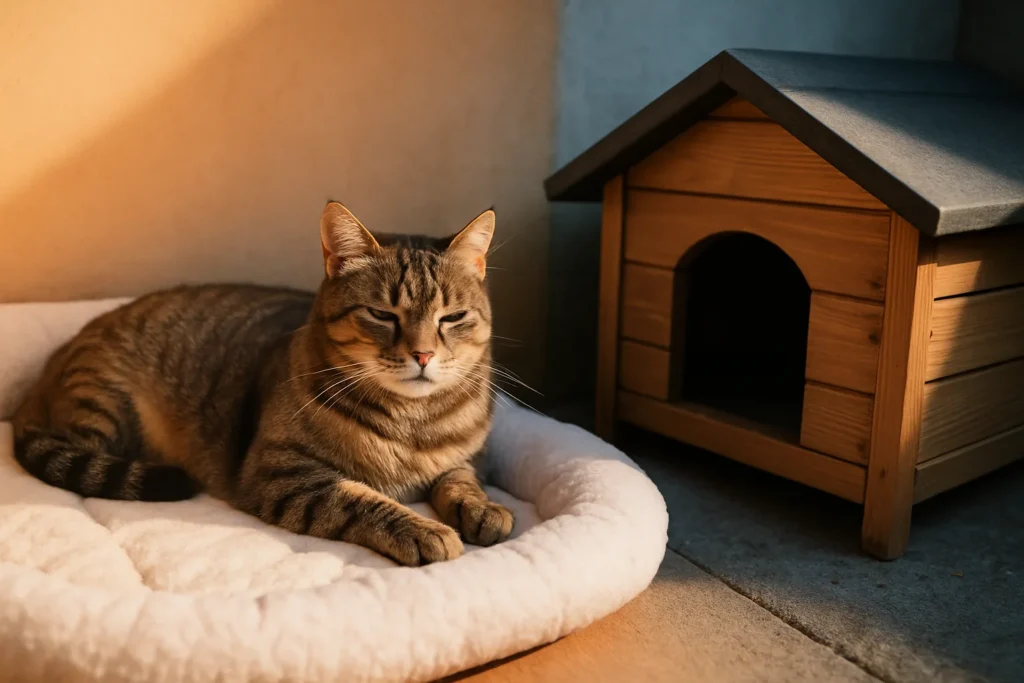
Outdoor or community cats need a dry shelter protected from wind and raised off wet ground. The entrance should be positioned to reduce exposure to rain and wind, and the shelter should remain clean and dry. Water should be checked often in both hot and cold weather.
Do not leave cats in garages, sheds, sunrooms, or vehicles during temperature extremes. These spaces can become dangerously hot, cold, poorly ventilated, or inaccessible to help. Keep cats indoors whenever outdoor conditions are severe.
- Maintain a stable, moderate indoor environment.
- Offer warm bedding and draft-free resting places during cold weather.
- Provide shade, water, and airflow during hot weather.
- Keep outdoor shelters dry, insulated, protected, and easy to access.
- Bring cats indoors during severe weather or whenever symptoms appear.
Keeping Your Cat Safe in Changing Temperatures
The answer to what temperature can cats tolerate depends on more than the thermometer. Healthy adult cats may manage moderate conditions, but extreme heat or cold becomes more dangerous when exposure is prolonged or combined with wind, moisture, humidity, direct sun, confinement, or poor health.
Provide a stable indoor refuge, watch for early signs of cold or heat stress, and act quickly when behavior or breathing changes. When in doubt, move your cat to a protected environment and contact a veterinarian.
What Temperature Is Dangerous for Cats Outside?
Extreme heat or cold can be dangerous, especially when combined with direct sun, humidity, wind, rain, snow, wet fur, or poor shelter. Because risk varies by cat and conditions, bring cats indoors during severe weather rather than relying on a fixed cutoff.
What Temperature Is Too Cold for Cats to Sleep Outside?
There is no universal safe cutoff for outdoor sleeping. Prolonged cold exposure is particularly risky for kittens, seniors, hairless cats, thin cats, and cats without dry, wind-protected shelter. Indoor sleeping is the safest option during cold or wet weather.
Do Cats Get Cold Inside the House?
Yes. Cats may feel cold indoors when they are small, elderly, hairless, underweight, wet, or unwell, or when they rest near drafts and cold floors. Provide a warm bed and watch for shivering, tight curling, lethargy, or persistent heat-seeking.
How Long Can Cats Survive in the Cold?
There is no dependable survival time because cold exposure depends on moisture, wind, shelter, food, hydration, body condition, coat, and health. Do not leave a cat outside to test its tolerance; move it indoors and seek veterinary help if symptoms occur.
Can Cats Tolerate Higher Temperatures Than Humans?
Not reliably. Fur may provide some insulation, but it does not make extreme heat safe. Humidity, poor airflow, dehydration, direct sun, illness, obesity, and flat-faced anatomy can increase risk, and unexplained panting or weakness requires prompt action.