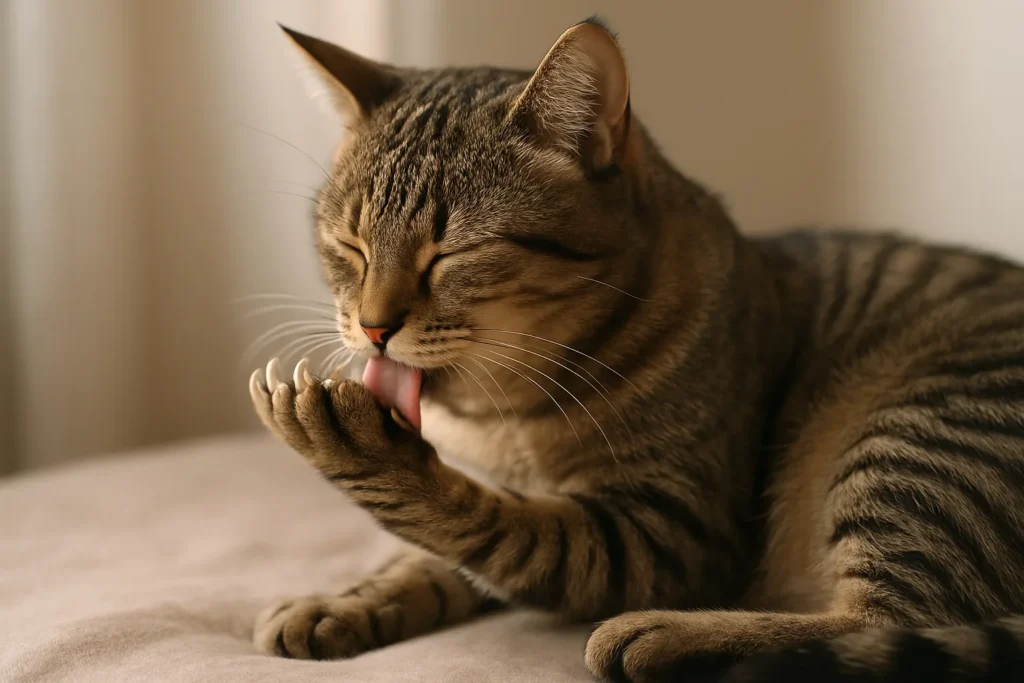
If you are wondering why cats bite their toenails, the behavior is often a normal part of cat claw grooming. Cats may use their teeth to loosen and remove a shedding outer claw layer, just as scratching helps old layers come off. Brief, occasional nibbling followed by normal walking, play, and grooming is usually not a cause for concern.
The important distinction is between routine nail chewing and repeated or painful chewing. Focusing on one toe, biting until the nail bleeds, limping, or showing a swollen paw can indicate a torn nail, debris, irritation, or another problem that needs attention.
Is It Normal for Cats to Bite Their Toenails?
Yes, many cats occasionally bite or pull at their claws while grooming. Cats clean their paws with their tongues, but their teeth are useful for working at a loose nail sheath or removing something caught near a claw. A cat may briefly nibble a nail, pull at it, and then move on without any sign of discomfort.
Normal nail chewing is usually short and occasional. The cat should continue to put weight on the paw, use it normally, and show no bleeding, swelling, redness, or sensitivity. Brief claw pulling can also be ordinary grooming rather than an attempt to damage the nail.
- The chewing is brief and not becoming more frequent.
- The cat does not react as though the paw hurts.
- There is no blood, swelling, discharge, odor, or visible split.
- The behavior is not limited to one persistently irritated toe.
How Claw Grooming Works
Cat claws grow in layers. As a new layer develops beneath an older one, the outer claw sheath becomes loose and eventually comes away. Biting helps the cat catch and loosen that old layer, while scratching provides the friction needed to shed it.
This is why you may find thin, curved claw sheaths near a scratching post or favorite resting place. Scratching surfaces help with natural claw shedding and give a cat an appropriate outlet for stretching and paw maintenance.
Front claws tend to receive more attention because cats use them for scratching, climbing, and handling objects. Rear nails can also be groomed, but a cat may pay attention to them when they become long, catch on fabric, or feel uncomfortable.
Why a Cat Might Bite Their Toenails More Than Usual
Normal grooming is the most common explanation, especially when the chewing is brief and affects several claws over time. However, a noticeable increase in nail biting deserves a closer look. The cause may be minor and easy to address, or it may involve pain in the nail or paw.
Debris such as litter, dirt, or hair can become caught around a claw or between the toes. A cat may bite at the area to remove it. Overgrown nails can also snag on fabric or press uncomfortably against the paw, encouraging repeated chewing.
A recent nail trim may leave a cat sensitive to handling or aware of a changed nail edge. If the cut was close to the sensitive inner portion of the claw, the cat may lick or nibble the nail afterward. A cracked, split, or snagged nail can cause similar behavior.
An ingrown claw may press into the paw pad, particularly when a nail has become very long or curled. Irritation, infection around the nail bed, swelling, or tenderness can also lead to focused biting. Look for redness, discharge, odor, or a visible change in the claw.
Some cats chew their paws because the skin is itchy. Allergies, parasites, or other sources of skin irritation can affect the toes as well as the rest of the body. Stress or anxiety may contribute to overgrooming, especially when nail chewing occurs alongside excessive licking, hair loss, hiding, or other changes in routine.
- Normal claw shedding or routine grooming
- Litter, dirt, hair, or another object caught near the nail
- Overgrown nails that snag or press against the paw
- Sensitivity after a nail trim
- A cracked, split, or otherwise damaged nail
- An ingrown claw or pressure against the paw pad
- Irritation or infection around the nail bed
- Itchy paws or toes
- Stress-related overgrooming
Normal Nail Grooming vs. a Problem: How to Tell
Focus on the pattern rather than one isolated grooming moment. A cat that nibbles briefly and then behaves normally is different from a cat that repeatedly returns to the same nail. Comparing frequency, location, and your cat’s overall behavior can help you decide what to do next.
The strongest warning signs are pain and visible changes. Bleeding, redness, swelling, discharge, a bad odor, or a missing piece of nail is not typical of simple claw shedding. A cat that flinches, hides, stops jumping, walks carefully, or limps may be protecting a painful paw.
Chewing that happens far more often than your cat’s usual grooming also matters. Persistent attention to one toe or one paw is more concerning than occasional chewing across different claws, even if the nail looks normal at first.
- More likely normal: brief chewing, no bleeding, no limping, and healthy-looking paws.
- Needs closer observation: increased grooming, a rough nail edge, possible debris, or sensitivity after trimming.
- More concerning: repeated focus on one nail, bleeding, swelling, discharge, odor, pain, hiding, or reduced activity.
What to Check at Home
Choose a calm moment and look at the paw without forcing the toes apart. A loose, thin outer sheath may come away naturally and is different from a torn nail that is jagged, split, or attached at an unusual angle.
Check whether the nails are overgrown or curling toward the paw pad. Look between the toes and around the nail for litter clumps, hair, dirt, or other debris. Compare the affected paw with the other paws so you can spot one-sided redness, swelling, or a different nail shape.
Do not pull off an attached piece, probe a painful area, or continue the inspection if your cat becomes distressed. If the cat flinches, tries to bite, or cannot comfortably place the paw down, stop and arrange professional advice.
- Look for a loose outer sheath rather than assuming every detached piece is an injury.
- Check for a torn, split, cracked, or missing section of nail.
- See whether an overgrown claw is pressing into the paw pad.
- Inspect between the toes for litter, hair, or debris.
- Compare all four paws for differences.
- Stop immediately if the cat seems painful or highly stressed.
When Nail Trimming Helps and When It Doesn’t
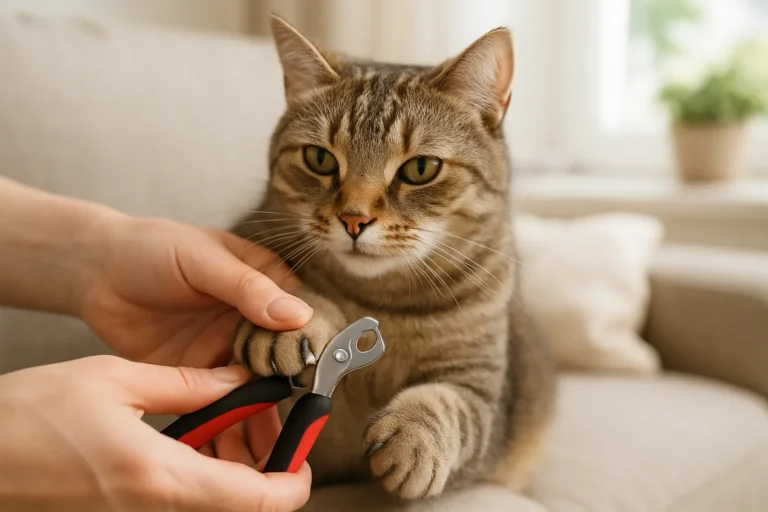
Routine nail trimming can reduce overgrowth and snagging, particularly when a cat’s claws are not wearing down through regular scratching and activity. Keeping nails at a healthy length may also make it less likely that a claw curls toward the paw pad.
Trimming does not eliminate normal claw-grooming behavior. A cat may still nibble at a nail to remove an old sheath, and that behavior is not evidence that the trim failed. The goal is comfortable, safe claw care rather than stopping every grooming action.
Some cats bite their nails after a trim because the edge feels different, a small rough edge remains, or the paw is temporarily sensitive. Avoid cutting too close to the sensitive inner part of the claw. If chewing increases after every trim, reassess the technique and ask a qualified groomer or veterinarian to demonstrate safer handling.
If a nail is already split, ingrown, bleeding, or painful, trimming at home may make the problem worse. Focus on preventing further snagging and seek professional guidance instead of trying to correct a damaged claw yourself.
What You Can Do to Help
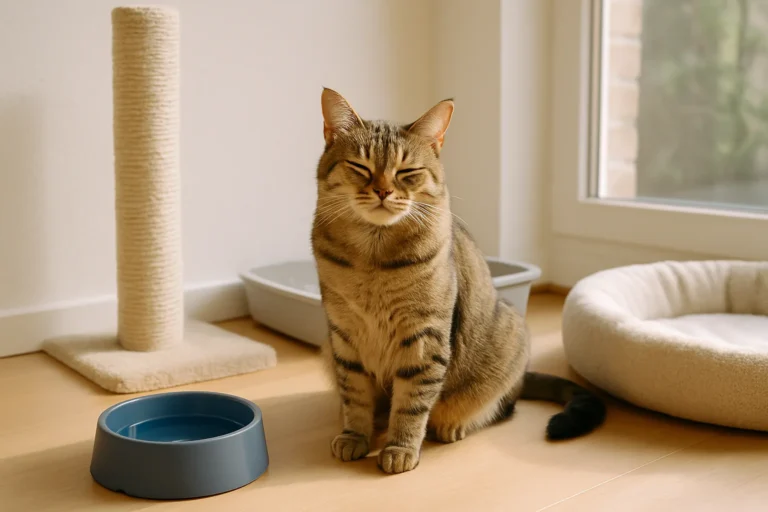
Keep scratching surfaces available and replace or reposition them if your cat rarely uses them. Sturdy posts and pads give cats a safe way to stretch, exercise their paws, and help shed old claw layers.
Check the paws during routine grooming rather than waiting until your cat is chewing intensely. Brief observations can reveal debris, overgrown nails, or a change in one claw before it becomes more uncomfortable.
Use calm handling for nail care. Work gradually, reward cooperation, and stop before your cat becomes frightened or struggles. For a cat that strongly resists trims, professional assistance may be safer than forcing the process.
If stress-related overgrooming seems possible, consider recent changes such as a new pet, household disruption, conflict between cats, or a change in routine. Provide predictable meals, quiet resting areas, and opportunities for play while monitoring whether the chewing settles.
Do not try to stop all claw chewing. Instead, track how often it occurs, whether the same paw is involved, and whether your cat remains comfortable. A change in pattern is usually more useful than a single episode.
- Maintain comfortable nail length without over-trimming.
- Provide sturdy scratching posts or pads.
- Check paws for debris and damage during routine care.
- Use patient, low-stress handling during nail care.
- Reduce avoidable stressors when overgrooming is suspected.
- Monitor the behavior’s frequency, location, and effect on normal activity.
When to Call the Vet
Contact a veterinarian when nail chewing is persistent, painful, or accompanied by visible injury. A professional can examine the claw and paw safely, especially when a damaged nail or infection is difficult to assess at home.
Call promptly for an ingrown or broken nail, swelling, discharge, bad odor, or bleeding that does not quickly stop. Veterinary advice is also appropriate when your cat limps, avoids putting weight on the paw, reacts strongly to touch, or shows other signs of pain.
Arrange an evaluation for persistent chewing of one toe, one paw, or one nail, even when the injury is not obvious. Compulsive grooming or other anxiety-related behaviors may also need attention, particularly when they are affecting your cat’s skin, activity, appetite, or normal routine.
- Bleeding that does not quickly stop
- Swelling, discharge, odor, or other signs of infection
- An ingrown, broken, split, or badly damaged nail
- Limping or pain when walking
- Persistent chewing focused on one toe, paw, or nail
- Compulsive grooming or other notable behavior changes
The Bottom Line on Cat Nail Biting
Cats commonly bite their toenails as part of normal grooming and shedding old claw sheaths. Occasional chewing without pain, bleeding, limping, or visible paw changes is usually not something you need to stop.
Watch for a change in pattern, especially repeated attention to one nail, signs of injury, or discomfort after a trim. Keep claws and scratching options well managed, check the paws calmly, and call your veterinarian when chewing is persistent or your cat seems painful.
Do Cats Bite Their Nails to Trim Them?
Cats mainly bite their claws to groom them and loosen old outer sheaths, not to trim them like a person with clippers. Scratching also helps remove shedding claw layers. Persistent chewing may indicate irritation, damage, or pain.
Should I Worry If My Cat Is Biting a Nail Until It Bleeds?
Yes. Bleeding can indicate a torn, split, or otherwise painful nail rather than normal grooming. Prevent further chewing if you can do so safely and contact a veterinarian, especially if bleeding does not quickly stop or your cat is limping.