If you are wondering why your cat chirps, the short answer is that chirping is usually a normal cat vocalisation linked to excitement, greeting, prey focus, or attention. A cat may make the sound while watching a bird, welcoming you into a room, or asking you to follow.
The cat chirp meaning is not fixed, however. A bright chirp, a rapid chatter, and a rolling trill can sound similar to an inexperienced ear but often happen in different situations. Your cat’s posture, facial expression, tail, and immediate surroundings help reveal whether the sound reflects friendly communication, hunting excitement, mild frustration, or discomfort.
What a Cat Chirp Usually Means
A chirp is typically a short, high-pitched sound that appears when a cat is alert, interested, or socially engaged. Many cats use it to express excitement about a person, toy, meal, or potential prey. Some also chirp to draw attention to something they want you to notice.
Common possibilities include greeting behavior, a request for interaction, hunting focus, and mild frustration when an interesting target is out of reach. The same cat may use the sound differently from one day to the next, so context matters more than trying to assign one universal message.
To interpret a chirp, look at what your cat is doing at the same moment. A relaxed approach and upright tail suggest social interest, while a crouched body and fixed stare point more toward prey arousal.
Cat Chirping vs. Chattering vs. Trilling
People often use chirp, chatter, and trill interchangeably, but these cat vocalisations have noticeable differences. Identifying the sound more accurately can make its likely meaning easier to understand.
A chirp is usually a brief, bright note. Chattering often includes quick jaw movements or clipped sounds, especially when a cat is watching prey. A trill is a rolling, bouncy vocalisation commonly directed toward a person or another cat during social contact.
Searches about cat chatter meaning may therefore describe a sound that is actually a chirp or trill. Cats can also blend vocalisations, particularly when excitement, social interest, and anticipation occur together.
| Sound | What it often sounds or looks like | Common context |
|---|---|---|
| Chirp | Brief and high-pitched | Greeting, attention, or excitement |
| Chatter | Rapid clipped sounds, sometimes with jaw movement | Watching birds, bugs, or other prey |
| Trill | Rolling or bouncy tone | Friendly social contact or a request to follow |
Why Cats Chirp at Birds, Bugs, and Other Prey
A bird outside a window is one of the most common triggers for chirping or chattering. A cat may become intensely focused on the movement, sound, and unpredictable path of a bird, insect, or small animal.
This reaction is often connected to hunting instinct and high arousal. When a window separates the cat from its target, excitement can combine with frustration. The bird-like sound does not necessarily mean the cat is deliberately imitating the prey; it may simply be part of the vocal response that accompanies intense focus.
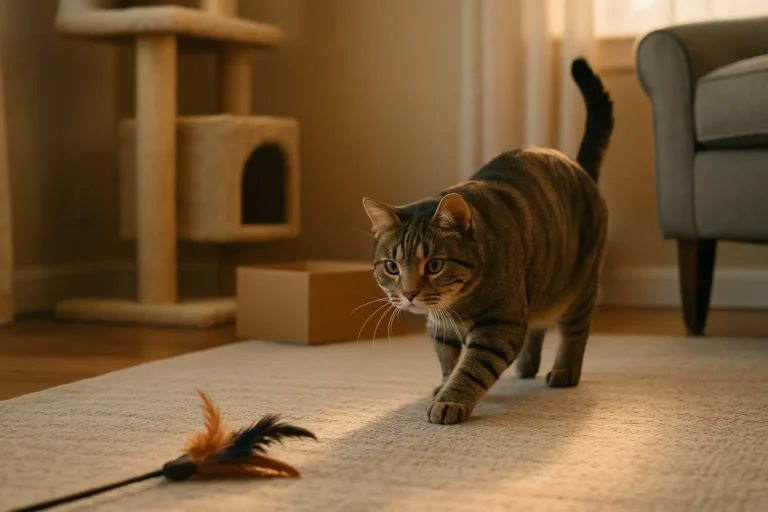
Look for a low crouch, fixed stare, tail twitching, forward ears, or rapid jaw movement. These signs suggest prey-driven excitement more than a social greeting. Giving your cat safe opportunities for interactive play can provide an outlet when window watching regularly leaves them agitated.
Why Your Cat Chirps at You
When a cat chirps at a person, the sound is often social rather than prey-related. Your cat may use it as a greeting when you come home, enter a room, or begin a familiar routine.
Owner-directed chirping can also request food, play, petting, or access to another room. Some cats chirp before walking away and looking back, which may be a learned follow-me signal. If chirping reliably earns attention, conversation, or a meal, your cat may naturally use it more often.
A friendly chirp usually appears with relaxed body language, such as an upright tail, forward ears, soft eyes, or a slow approach. A distressed cry is more likely to sound strained or persistent and may occur alongside hiding, agitation, or other changes in normal behavior.
Why Some Cats Chirp Instead of Meow
Cats have individual communication styles. Temperament, early experiences, household routines, and breed tendencies can all influence which sounds a cat uses most often. One cat may meow frequently, while another relies on chirps, trills, or quiet gestures.
Some cats reserve meows for specific needs and use chirps as a softer way to start social contact. A household can also reinforce chirping if people respond with food, play, talk, or petting each time the sound occurs. Over time, the cat may learn that this vocalisation is especially effective.
The important point is your cat’s usual pattern. A long-standing chirping style is generally less informative than a sudden change in how often, how loudly, or in what situations your cat vocalises.
What It Means When a Cat Chatters or Chirps During Everyday Moments
Everyday circumstances can change the likely interpretation of a chirp or chatter. Consider the event immediately before the sound rather than judging it in isolation.
During petting, a chirp may signal contentment, anticipation, or a request for more interaction. It can also appear when a cat is becoming overstimulated, so watch for skin twitching, tail lashing, sudden tension, or an attempt to move away.
Morning chirping often fits a familiar routine. Your cat may be greeting you, anticipating breakfast, expecting play, or reacting to the household becoming active. When chirping occurs while purring, the two sounds may simply be layered forms of social and relaxed communication.
After a surprising sound such as a sneeze, a chirp may reflect alert curiosity or a brief startle response. Give your cat space to investigate, and judge the reaction by the rest of their body language.
How to Read the Rest of Your Cat’s Body Language
Sound becomes easier to interpret when paired with visible signals. Instead of asking what a chirp always means, ask what your cat’s whole body appears ready to do next.
Relaxed social signs include soft eyes, an upright tail, forward ears, rubbing against you, and a calm approach. These cues fit greeting behavior, friendly attention seeking, or an invitation to interact.
Aroused hunting signs include a low body, intense stare, tail flicking, forward attention, and jaw movement. In contrast, flattened ears, skin twitching, tail lashing, tension, or avoidance can indicate that your cat is overstimulated or stressed.
The full scene helps distinguish a social chirp from playful excitement, prey frustration, or an uncomfortable vocalisation. Consider the trigger, the sound’s intensity, and whether your cat returns to normal afterward.
When Cat Chirping Is Normal and When It Could Signal a Problem
Chirping is usually unremarkable when it is occasional, linked to a clear situation, and accompanied by otherwise normal eating, activity, interaction, and toileting. A cat that chirps at birds, greets you, and then settles into their normal routine is showing a different pattern from a cat whose vocal behavior has changed abruptly.
Monitor more closely if the vocalisation becomes new, excessive, unusually intense, or difficult to interrupt. Hiding, appetite changes, lethargy, aggression, avoidance, or other changes in normal behavior make the situation more important to assess.
A sudden change in vocal habits can have a behavioral explanation, but it may also occur alongside pain, stress, cognitive changes, or sensory decline. Contact a veterinarian when the change is abrupt, persistent, or accompanied by signs of illness. Do not assume that an unusual new sound is simply your cat developing a new communication style.
| Pattern | What to do |
|---|---|
| Occasional chirping tied to a clear trigger | Observe the context and body language |
| More frequent or intense chirping without an obvious trigger | Track the pattern and watch for other changes |
| Sudden vocal change with illness or behavior changes | Arrange a veterinary evaluation |
What to Do if Your Cat Chirps Constantly
Start by keeping a simple record of when the chirping happens, what occurred just beforehand, how long it lasts, and what your cat’s body language looks like. Patterns often reveal whether the trigger is a window, meal routine, greeting, petting, or a particular household sound.
If prey watching appears to create frustration, add regular interactive play and other safe prey-style enrichment. Keep sessions appropriate for your cat and allow them to disengage rather than forcing interaction.
If the chirping is demand behavior, avoid unintentionally rewarding every interruption with food or immediate attention. Instead, respond consistently to appropriate quiet behavior while still meeting legitimate needs for food, play, social contact, and environmental enrichment.
Book a veterinary visit if the pattern is sudden, compulsive, persistent without an identifiable trigger, or accompanied by hiding, appetite change, lethargy, aggression, or other symptoms. A change from your cat’s normal behavior is more significant than chirping itself.
Understanding Your Cat’s Chirps
Cats chirp, chatter, and trill for different reasons, including greeting, excitement, attention, prey focus, and routine-based anticipation. The sound alone cannot provide a complete translation.
Pay attention to the trigger, your cat’s body language, and any change from their usual habits. Occasional context-specific chirping is generally normal, while a sudden or concerning change deserves closer observation and, when paired with other symptoms, veterinary advice.
Why Does My Cat Chirp While Sleeping?
A brief chirp during sleep may be an isolated sleep-related vocalisation, particularly if your cat wakes normally and shows no other changes. Monitor the overall pattern, and contact a veterinarian if sleep vocalisations become frequent, intense, or occur with distress, unusual waking behavior, or other health changes.
Why Does My Cat Trill and Run Away?
A cat may trill and run away as a friendly invitation to follow, a request to play, or an attempt to lead you toward food or another area. Look back for an upright tail, relaxed movement, and repeated glances. If your cat appears tense or avoids contact, consider whether the trill followed a startle or stressful event.
Why Does My Cat Chirp at Me When I Sneeze?
A chirp after a sneeze may reflect alert curiosity or a brief startle response to the sudden sound. Give your cat a moment to assess what happened and check their body language. Relaxed posture suggests curiosity, while hiding, flattened ears, or ongoing agitation suggests stress.