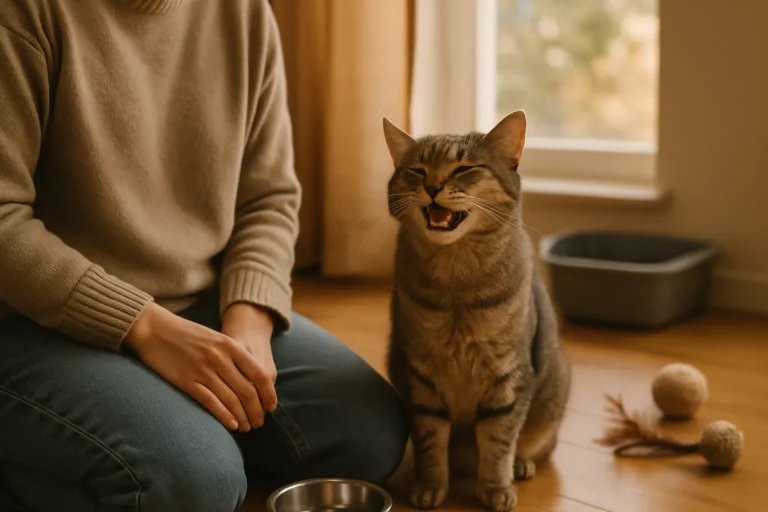
When a cat bites you and then licks you, the behavior is often a form of communication rather than a sudden change from affection to hostility. A gentle nip may be part of grooming, social bonding, play, or an attempt to change what is happening.
The same sequence can also occur when enjoyable petting has become overwhelming. To understand what a cat love bite means, look at the bite’s pressure, what happened immediately beforehand, your cat’s body language, and what the cat does next.
What It Usually Means When a Cat Bites You and Then Licks You
Many cats use their mouths during friendly interaction. A soft nibble followed by licking can resemble a shortened version of social grooming, especially when your cat remains relaxed, stays close, or resumes licking immediately. Some cats also lick to soothe themselves or to maintain contact during an exciting moment.
People often call these love bites in cats, but that label is not a complete explanation. A cat may be affectionate and still become overstimulated, playful, frustrated, or uncomfortable. A gentle, brief nip is different from a painful bite delivered with tense posture, repeated targeting, or defensive behavior.
In other words, the action cannot be interpreted by sequence alone. A cat that bites and licks during cuddling may be communicating differently from one that bites after stalking your moving hand.
The Most Common Reasons Cats Lick and Then Bite
Why do cats lick you then bite you? Usually, the answer becomes clearer when you consider the interaction that came first. Common possibilities include:
- Affection and bonding: Your cat may be combining contact, licking, and a mild nibble as part of a friendly social interaction.
- Grooming behavior: Cats groom members of a familiar social group. Licking your skin or hair, followed by a small nibble, may be an attempt to include you in that routine.
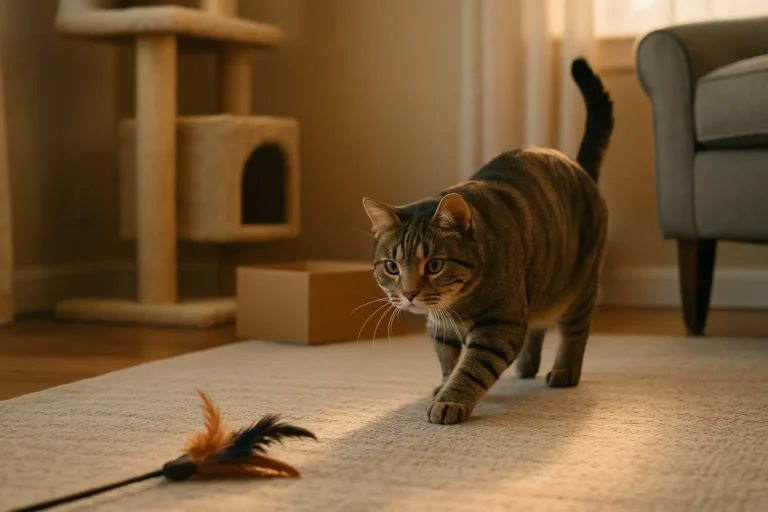
- Play and hunting excitement: A moving hand, sleeve, or finger can trigger chasing, grabbing, and mouthy play, particularly in young or energetic cats.
- Petting overstimulation: Repetitive touch can shift from pleasant to too intense. The bite may mean that your cat wants the interaction to stop, even if purring began earlier.
- Attention-seeking: Some cats learn that a nip reliably makes a person look at them, move, talk, or offer a new activity.
- Frustration or stress: A bite can be a warning when a cat feels trapped, disturbed, or unable to escape an interaction.
Why Does My Cat Bite When I Pet Him?
Petting-induced overstimulation develops when a cat’s tolerance is exceeded. The touch may feel good at first, but repeated strokes, a longer session, or contact with a sensitive area can make the cat want space. The resulting nip may be a clear but restrained message: stop now.
Many cats are selective about where they enjoy being touched. The belly, lower back, and area around the tail base can be less welcome than the cheeks, chin, or shoulders. Preferences vary, so your cat’s response matters more than a general rule.
Purring does not always mean your cat wants more petting. Cats may purr while relaxed, excited, anxious, or trying to settle themselves. Watch for skin twitching, a flicking tail, shifting position, sudden stillness, ears turning sideways, or a head turning toward your hand.
A brief nip followed by walking away is often a boundary-setting message. A hard bite, repeated attack, hissing, growling, pinned ears, or an attempt to pursue you indicates a much higher level of distress or arousal.
- Keep petting sessions short enough that your cat remains relaxed.
- Pause after a few strokes and let your cat choose whether to continue.
- Avoid testing limits by returning to a spot that repeatedly triggers biting.
How to Tell Whether It Is Affection, Play, or a Warning
Use four clues together rather than relying on one signal. Cats can purr during several emotional states, and a single tail movement does not explain the whole interaction.
- Bite pressure: A light, controlled nibble is more consistent with grooming, communication, or play. A painful bite that breaks skin deserves a safety-focused response.
- Timing: A nip during mutual cuddling may differ from one that follows prolonged petting, a sudden noise, or a moving hand.
- Body language: A loose body, relaxed ears, kneading, and continued closeness suggest comfort. Twitching skin, tail flicking, dilated pupils, sideways or pinned ears, and a tense body suggest rising arousal or discomfort.
- What happens next: Returning to licking or settling beside you points in a different direction from stalking hands, escalating, fleeing, hissing, or striking repeatedly.
- Individual patterns: Age, energy level, temperament, and learned habits influence whether a cat is more likely to nibble during play, grooming, or petting.
Why Does a Cat Nip at You Gently?
Why does a cat nip at you without causing pain? A gentle nip can be communication rather than aggression. Your cat may be inviting play, asking for a pause, redirecting your hand, or adding a mouthy gesture to a friendly interaction.
Young cats often explore with their mouths and may not yet have consistent control around hands. Adult cats can also retain playful nibbling habits, particularly when they have learned that human fingers are part of the game. This is why play biting versus a warning bite should be judged by the whole body, not by softness alone.
If a gentle bite seems to happen out of nowhere, review the moments before it. A loud sound, an unwanted touch, an interrupted nap, a hand moving near a toy, or a buildup of petting may have provided the trigger.
What to Do If Your Cat Bites and Licks You
Respond in a way that lowers arousal and teaches your cat that calm communication works. The goal is not to punish a warning, but to prevent the interaction from reaching a bite.
- Stop petting as soon as you notice early cat overstimulation signs. Keep your hand still or withdraw it calmly rather than making a fast movement.
- Give your cat space after a warning nip. Do not restart the interaction immediately to test whether the cat is ready.
- Redirect play biting to a suitable toy, especially when your cat is stalking or grabbing moving hands. Avoid turning fingers into play objects.
- Reward calm contact with gentle attention when your cat is relaxed and choosing to remain near you.
- Avoid yelling, hitting, scruffing, or physical corrections. These responses can increase fear and make future handling more difficult.
- Track the time, touch area, activity, bite intensity, and body language. A pattern can reveal whether the trigger is petting, play, frustration, or a particular environment.
When This Behavior Can Signal Stress, Pain, or a Health Problem
A familiar behavior deserves closer attention when it changes suddenly. A previously tolerant cat that begins biting, avoids touch, or reacts strongly to one body area may be experiencing discomfort rather than simply displaying a new preference.
Possible contributors include pain, skin irritation, dental discomfort, or neurological problems, but behavior alone cannot identify the cause. Stress can also appear as hiding, restlessness, irritability, changes in grooming, or reduced tolerance for ordinary handling.
Arrange a veterinary assessment when biting is sudden, escalating, painful, focused on one area, or accompanied by other changes in appetite, movement, grooming, sleep, or social behavior. If medical causes are not found and the behavior continues, a qualified cat behavior professional can help identify triggers and create a safer plan.
Treat any bite that breaks the skin seriously. Clean the area promptly and seek appropriate medical advice, especially if the wound is deep, worsening, or showing signs of infection.
How to Build Affection Without Triggering Bites
The safest way to strengthen your relationship is to make contact collaborative. Let your cat initiate interaction when possible, and allow the cat to leave without being followed or restrained.
Use short petting sessions with frequent pauses. Notice which areas produce relaxed behavior and which bring on tail flicking, skin twitching, or a head turn toward your hand. Stopping while the interaction is still going well helps prevent a bite from becoming the point at which the session ends.
High-energy cats also need appropriate outlets for chasing, pouncing, and grabbing. Regular interactive play with toys can make hands less appealing targets, while respecting your cat’s signals teaches that a pause will be honored.
Affection is not measured by how much handling a cat tolerates. A stronger bond comes from predictable, respectful contact in which your cat can communicate and retain control.
Understanding the Message Behind the Bite
A cat that bites and then licks may be grooming you, showing affection, playing, or telling you that an interaction has become too intense. The most useful clues are bite pressure, timing, body language, and what happens immediately afterward.
Respond calmly, redirect inappropriate play, stop before overstimulation escalates, and respect your cat’s boundaries. When the behavior is sudden, painful, escalating, or linked with other changes, involve a veterinarian rather than assuming it is just a love bite.
Do cats feel guilty after biting?
Cats may look away, hide, or become quiet after biting, but those actions are better understood as responses to the situation than as human-style guilt. Focus on what triggered the bite and how to make the next interaction calmer.
Why is my cat affectionate and then attacks me?
Affection can shift into play arousal, petting overstimulation, frustration, or discomfort. Look for early signals such as tail flicking, skin twitching, tense posture, changing ears, or enlarged pupils, and end contact before the behavior escalates.
Why does my cat bite me gently?
A gentle bite may be part of grooming, social bonding, play, attention-seeking, or a request for you to stop or change what you are doing. Interpret it alongside the timing, pressure, body language, and what your cat does next.