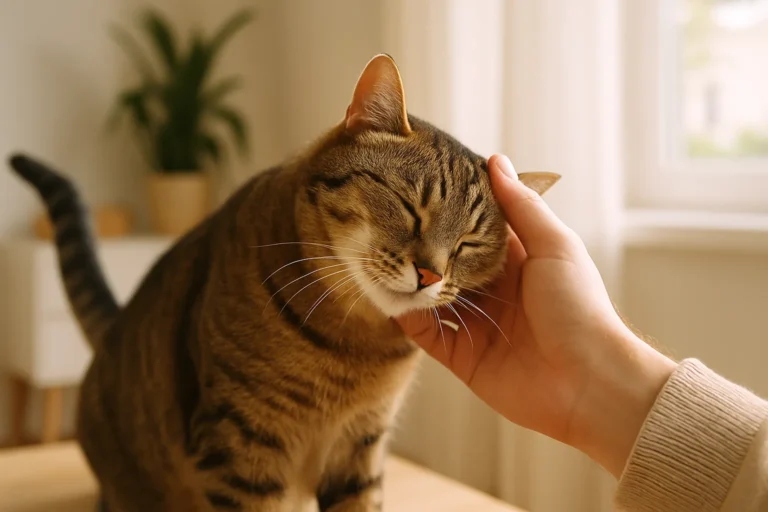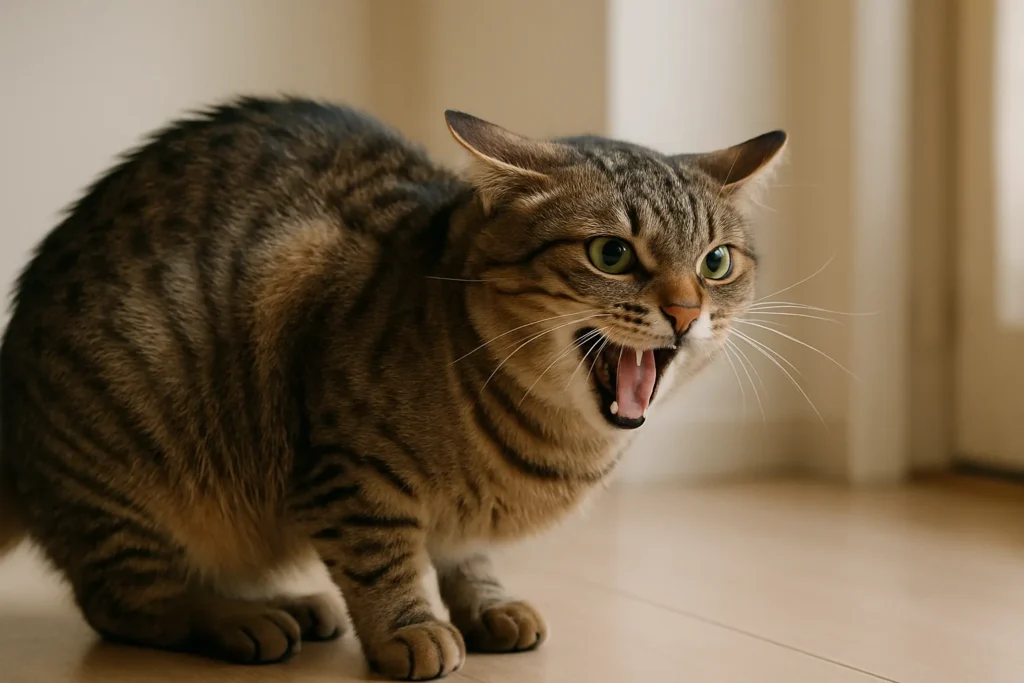
If you are wondering why cats snort when hissing, the sound is often part of the hiss itself. A hiss is a forceful defensive exhale, and the combination of nasal airflow, mouth position, and body posture can make it sound abrupt, wet, nasal, or even a little pig-like.
The sound alone does not tell you whether something is wrong. A cat that snorts only during a brief warning and returns to quiet, comfortable breathing may simply have an unusual cat hiss meaning. Repeated snorting, congestion, noisy breathing at rest, pain-related behavior, or difficulty breathing should be treated differently.
What It Usually Means When a Cat Snorts While Hissing
Hissing is a warning signal produced when a cat pushes air out sharply. The cat may be frightened, startled, irritated, or trying to make another person or animal stop approaching. The exhale can pass through both the mouth and nose, so it may include a short snort or huff.
A snort during hissing may sound wet, nasal, abrupt, or unusually deep because of the way the cat holds its lips, tongue, head, and neck. A raised chin, lowered head, open mouth, or tense facial muscles can change the path of the air. This is why one cat’s hiss may sound airy while another’s sounds like a puff or grunt.
A cat angry snort is therefore not automatically a separate vocalization or a sign of illness. The most useful question is whether the noise occurs only with the defensive display or also when the cat is relaxed, sleeping, eating, or moving around normally.
Normal Snort or a Sign Something Is Wrong?
Context matters more than the sound by itself. A snort is more likely to be part of normal defensive behavior when it appears only during hissing, stops as soon as the confrontation ends, and is followed by quiet breathing and ordinary behavior.
The picture changes when a cat sounds congested when breathing outside a conflict. Repeated snorting, coughing, nasal discharge, loud breathing while awake, or a sound that continues after the cat has settled can point to irritation or another problem that needs veterinary assessment.
Pay attention to frequency and recovery time. A single short episode after a clear fright is different from episodes that become more frequent, last longer, or occur without an obvious trigger. Open-mouth breathing or visible difficulty breathing should not be managed as a behavior problem; contact a veterinarian promptly.
- Likely part of the hiss: occurs during a warning, ends quickly, and leaves the cat breathing comfortably.
- More concerning: happens at rest, repeats without conflict, or occurs with coughing, discharge, low energy, or reduced appetite.
- Urgent concern: open-mouth breathing, obvious effort to breathe, or blue-tinged gums.
Behavior Triggers That Can Make Hissing Sound Like Snorting
Fear is a common reason a cat hisses with extra force. A cat may feel cornered by a person, unfamiliar animal, carrier, loud noise, or sudden movement. The more intense the warning, the more forceful the defensive exhale may sound.
Territorial stress can produce a similar response. Seeing another cat through a window, meeting a new pet, or encountering unfamiliar people may lead to a tense posture and a noisy hiss. Nighttime episodes can follow a startle in a dark hallway or an unfamiliar sound rather than a deliberate attempt to attack.
Frustration and overstimulation also matter. A cat may hiss when handling continues after it has asked for a break, during rough play, or when it cannot reach something it wants. Pain can lower a cat’s tolerance as well, so a sudden change from a friendly response to sharp hissing deserves attention rather than punishment.
Look for the trigger immediately before the sound. That detail can help distinguish boundary-setting from a reaction to fear, stress, or possible discomfort.
Health Issues That Can Add a Snort, Huff, or Congested Sound
A cat may sound different when airflow through the nose or upper airway is irritated or restricted. Nasal congestion and upper respiratory irritation can make breathing sound stuffy, rattly, or snort-like. In that situation, the noise may also appear when the cat is resting, grooming, eating, or walking.
If a cat’s breathing sounds like snoring while awake, it is not the same as a defensive hiss. Listen for whether the sound follows the rhythm of ordinary breathing and whether the cat seems comfortable between episodes. Awake snoring noises, persistent congestion, or loud breathing should be recorded and discussed with a veterinarian.
Flat-faced breeds may naturally produce more noticeable airway sounds because of their facial structure, but a new or worsening sound still deserves attention. Inflammation, irritation, or foreign material can also affect airflow. Do not try to remove something from deep inside the nose or throat at home.
Pain can complicate the picture. A cat with discomfort may hiss when touched or approached and may also produce an unusual huff or snort. The combination of a new defensive reaction and changes in movement, appetite, grooming, or energy is a reason to arrange veterinary care.
How to Read the Rest of Your Cat’s Body Language
Pair the sound with the cat’s ears, eyes, tail, and posture. Ears held back, enlarged pupils, a lowered or crouched body, a tucked or puffed tail, and an attempt to retreat often suggest fear or a request for more distance. A stiff body, direct focus, and forward movement can indicate a more confrontational response.
A frightened cat may hiss defensively while trying to escape, hide, or make itself appear larger. An agitated cat may combine hissing with growling, spitting, swatting, or a rapidly moving tail. These signals do not guarantee what the cat will do next, so give the animal space instead of testing the warning.
Hissing and growling are both warning sounds, and neither should be judged as simply better or worse without context. Hissing is often a sharp exhale, while growling is a lower, sustained sound. The cat’s posture, trigger, and ability to move away provide more useful information than the label.
What to Do in the Moment if Your Cat Hisses and Snorts
Stop moving toward the cat and give it a clear path to retreat. Avoid reaching, picking it up, staring directly, or blocking access to a hiding place. A pause can prevent a warning from escalating.
Do not punish the behavior or hiss back. Your cat may interpret your response as another threat rather than as a lesson. Lower the pressure, separate pets if necessary, and remove the trigger only when you can do so safely.
Once the cat settles, watch its breathing without disturbing it. Note what happened immediately beforehand, whether the sound stopped, and whether the cat returned to normal eating, movement, and interaction. If breathing remains unusual, seek veterinary advice.
- Back away and allow the cat to choose distance.
- Avoid punishment, forced handling, and hissing back.
- Reduce the trigger when it is safe to do so.
- Observe breathing and behavior after the cat calms.
- Write down what happened before the episode.
When Snorting During Hissing Means It’s Time to Call the Vet
Arrange a veterinary evaluation if snorting or noisy breathing occurs when the cat is not hissing, especially if the pattern is new, persistent, or becoming more frequent. A veterinarian can assess the sound alongside the cat’s breathing, nose, mouth, and general condition.
Contact a veterinarian when the noise occurs with nasal discharge, coughing, lethargy, reduced appetite, or a noticeable change in normal behavior. Hissing during handling may also be a pain signal when it is unusual for that cat or focused on one area of the body.
Treat open-mouth breathing, obvious breathing effort, or blue-tinged gums as an emergency. Keep the cat as calm as possible, avoid forcing food or medication, and contact an emergency veterinary service for instructions.
- Noisy breathing continues when the cat is calm or asleep.
- Snorting is paired with discharge, coughing, low energy, or reduced appetite.
- A normally friendly cat suddenly becomes defensive or resists touch.
- Hissing appears connected with a suspected injury or painful movement.
- The cat breathes with its mouth open or shows visible breathing difficulty.
How to Track Episodes So You Can Figure Out the Cause
Keep a simple record of each episode. Note whether it happened during a conflict, handling, play, feeding, grooming, or nighttime activity. Include what approached the cat, how long the sound lasted, and whether the cat recovered quickly.
If it is safe and does not prolong the episode, capture a short video or audio clip for your veterinarian. Do not provoke the cat to recreate the sound. A recording of the cat at rest may be especially useful if the unusual noise is intermittent.
Also note whether the cat snores, sounds congested, or breathes loudly while awake. Track appetite, energy, grooming, litter box habits, movement, and other behavior changes. This pattern can help separate a situational warning from a sound that occurs alongside a broader health change.
- Trigger and setting, including whether the episode occurred at night.
- Sound description and duration.
- Breathing after the cat settled.
- Presence of snoring, congestion, coughing, or discharge.
- Changes in appetite, energy, movement, grooming, or litter box habits.
The Sound Matters, but the Context Matters More
A snort during hissing is often a forceful defensive exhale shaped by the cat’s posture and airflow. If it appears only during a brief warning and disappears when the cat relaxes, give the cat space and monitor the pattern.
When snorting happens at rest, returns repeatedly, or comes with breathing changes, pain signals, discharge, or other behavior changes, contact a veterinarian. A calm response, careful observation, and a safe recording can make the cause easier to identify.
Should I Hiss Back at My Cat If They Hiss at Me?
No. Hissing back may increase the cat’s sense of threat instead of teaching a useful lesson. Stop approaching, give the cat space, and remove the trigger when it is safe.
Is It Worse If a Cat Hisses or Growls?
Neither sound is automatically worse. Hissing is usually a sharp warning exhale, while growling is often lower and more sustained. The cat’s posture, trigger, and whether it can retreat are more important than the sound alone.
Do Cats Understand If You Hiss at Them?
A cat may recognize your hiss as a threatening or warning-like sound, but it is unlikely to understand it as a clear correction. Responding calmly and giving distance is less likely to escalate the situation.