Do cats need their nails trimmed? Many do, but not every cat needs the same schedule. Indoor cats often need more help because their claws wear down less naturally, while active outdoor cats may file their nails through climbing and movement. Age, mobility, scratching habits, and the shape of each cat’s nails also matter.
The best approach is to check your cat’s claws regularly and trim only when the sharp tips become too long. This guide explains how to recognize overgrown cat nails, when scratching is not enough, how often to check different cats, and how to make safe cat nail trimming less stressful.
The Short Answer: Some Cats Need Regular Nail Trims, Others Need Regular Nail Checks
Indoor cats usually need nail trimming more often because carpet, furniture, and indoor floors do not wear down claws as much as outdoor surfaces and climbing activity can. Their nails may become sharp, hooked, or prone to catching even when the cat uses a scratching post.
Outdoor cats may need fewer trims because their claws can wear naturally. However, outdoor cats still need periodic checks. Their claws are important for traction and defense, so avoid shortening them more than necessary.
There is no universal schedule that suits every cat. Think of trimming as preventive cat nail care: inspect the claws, look for signs of excess length, and remove only the sharp hooked tip when needed.
How to Tell Whether Your Cat Actually Needs a Trim
Look at the claws when your cat is relaxed rather than waiting for a problem. A cat may need a trim when the nails catch on fabric, carpet, or bedding, or when you hear them clicking on hard floors.
Other signs include claws that look strongly curved or needle-sharp, frequent snagging during normal handling, or a nail that remains visibly extended while the paw is resting. Senior and less active cats are especially likely to stop wearing their nails down naturally.
A nail curling toward or into the paw pad is a red flag. This can cause pain and injury and should be assessed by a veterinarian rather than handled as a routine cosmetic trim.
- Nails catch on blankets, clothing, carpet, or upholstery.
- Claws click against hard floors during walking.
- The tips look unusually curved, sharp, or hooked.
- Your cat snags skin during ordinary handling.
- A senior or arthritic cat has reduced activity and less natural nail wear.
- A claw is curling toward or into the paw pad.
Indoor vs Outdoor Cats: The Biggest Difference in Trimming Needs
Indoor cats generally need closer nail monitoring because they have fewer opportunities to wear down the tips. Scratching surfaces help, but they may not remove enough length from every claw, particularly the dewclaws and less-used back nails.
Outdoor cats often need fewer trims because climbing, walking, and scratching on varied surfaces can naturally reduce sharp tips. That does not mean their claws should be ignored. Check them for cracks, excessive length, and individual nails that are not wearing evenly.
An outdoor cat should not have its claws shortened too aggressively. Keeping only the overgrown or needle-sharp tip trimmed preserves useful traction and normal movement. Cats with an indoor-outdoor lifestyle need an individual assessment rather than an automatic indoor or outdoor schedule.
How Often Should You Trim a Cat’s Nails?
Many indoor cats need their front nails trimmed every few weeks, but the interval can be shorter or longer depending on how quickly the claws grow and how much they wear naturally. Use the appearance and behavior of the nails as your guide instead of following a rigid calendar.
Kittens may need frequent, tiny trims because their claws are fine, sharp, and fast-growing. Short sessions also help them learn that paw handling is routine. Seniors and cats with arthritis may need closer monitoring because reduced activity can allow the nails to become overgrown more easily.
Front nails commonly need attention before back nails. Even so, inspect all four paws every couple of weeks, including the dewclaws. Checking does not mean clipping every time; it simply helps you catch a problem before a nail becomes painful.
Do Scratching Posts Replace Nail Trimming?
Scratching is valuable for more than claw length. It allows cats to stretch, exercise normal behavior, and shed older outer nail layers. A sturdy scratching post or pad should be part of a healthy nail-care routine.
However, scratching does not always keep every nail at an ideal length. Some cats still develop sharp or hooked tips despite using their scratching surfaces regularly. The dewclaws and certain back claws may receive little benefit from scratching.
Treat scratching posts as a way to support natural nail maintenance, not as a guaranteed replacement for inspection or trimming. Offer surfaces your cat enjoys and still check the claws for catching, clicking, or excessive curvature.
Do Cats Trim Their Own Nails by Biting Them?
Cats may bite or chew at their claws during normal grooming. This can help loosen and remove old nail sheaths, which are the thin outer layers that cats often leave around scratching areas.
Nail chewing is not the same as safely maintaining nail length. A cat can groom its claws and still have sharp, hooked, or overgrown tips that catch on fabric or press against the paw.
Occasional grooming is usually unremarkable, but persistent chewing, licking, or attention to one nail may signal irritation, a broken claw, or another source of discomfort. Examine the paw and seek veterinary advice if the behavior continues or the nail looks abnormal.
Should You Trim the Back Claws Too?
Back claws usually grow more slowly and often need trimming less frequently than front claws. They may also receive more natural wear during walking and jumping, so do not assume they need attention every time you trim the front paws.
Some cats still need back-claw trims, especially seniors, low-activity cats, and cats whose nails remain long despite scratching. Inspect each claw individually rather than trimming automatically.
Pay particular attention to dewclaws and other easily overlooked nails. Because they do not contact the ground in the same way as weight-bearing claws, they may grow longer and curve without obvious signs during walking.
When to Cut a Cat’s Nails for the First Time
Start handling a kitten’s paws early, when it is calm and receptive. Gently touch a paw, press lightly to extend a claw, and offer a reward. Repeat this over short sessions before introducing the clippers.
The first actual trim should be deliberately small. Clip one or two sharp tips, then stop while the kitten is still comfortable. The first goal is to build a positive routine, not to complete every paw in one sitting.
Use treats, calm praise, and short sessions. If the kitten becomes distressed, release the paw and try again later. A cat that learns nail care is predictable and brief is more likely to cooperate as an adult.
How to Trim Your Cat’s Nails Safely at Home
Choose a calm time when your cat is relaxed, and work in a well-lit area. Gather cat nail clippers, treats, and a stable place where you can support the paw without squeezing it. Avoid starting immediately after energetic play or when your cat is already overstimulated.
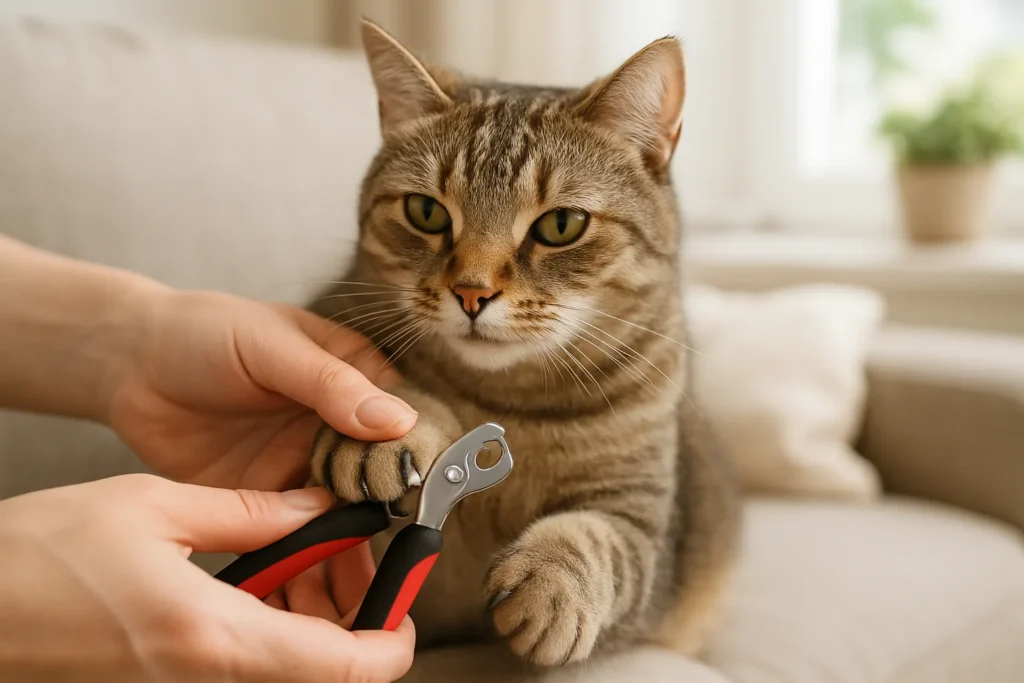
Let your cat see and sniff the clippers if this is a first session. Hold the paw gently and press the toe pad just enough to extend the nail. On a light-colored claw, identify the clear or pale tip and the pink quick inside the nail.
Clip only the sharp, hooked end, staying well away from the quick. The quick contains sensitive tissue, so taking off a small amount is safer than trying to shorten the nail dramatically. If the claw is dark and the quick is difficult to see, remove only the very tip and reassess.
You do not have to finish all the nails at once. Trim one or a few claws, give a reward, and end the session before your cat becomes upset. Consistent, uneventful sessions are more useful than forcing a complete trim.
- Prepare cat nail clippers, treats, and bright lighting.
- Choose a quiet time when your cat is relaxed.
- Gently press the toe pad to extend one nail.
- Identify the clear tip and avoid the quick.
- Clip only the sharp hooked end.
- Reward your cat and stop if stress begins to rise.
Common Cat Nail Trimming Mistakes to Avoid
The most important mistake is cutting too much and hitting the quick. This can cause pain and bleeding and may make your cat more fearful of future handling. Small, conservative trims are safer for beginners.
Do not force a full trim in one session, especially with a kitten or a cat that is still learning. Dull or oversized clippers can also crush or split the nail instead of making a clean cut.
Avoid trimming a frightened, struggling cat without appropriate help. Stop if your cat shows escalating distress, and do not ignore pain, swelling, bleeding, discharge, a broken claw, or a nail that appears infected.
- Cutting too close to the quick.
- Trying to complete every nail despite rising stress.
- Using dull or oversized clippers.
- Holding a frightened cat forcefully.
- Ignoring pain, bleeding, broken nails, or signs of infection.
What to Do If Your Cat Hates Nail Trims
Break the process into micro-sessions. One session might involve touching a paw, another might involve extending a claw, and a later session might include clipping one tip. Pair each step with a reward and stop before your cat becomes highly distressed.
Desensitization works best when the cat remains below its fear threshold. Practice paw handling when no trim is planned, keep your movements slow, and use a familiar resting place. A towel or gentle wrap may help some cats feel secure, but it should never restrict breathing or intensify struggling.
Alternatives to clipping can support management but do not solve every nail problem. Scratching surfaces, regular paw checks, and professional trims may all help. If home attempts are unsafe, ask a veterinarian or experienced groomer to handle the claws.
When to Let a Vet Handle It
Professional help is the safest choice for severely overgrown nails, claws curling into the paw pads, or cats that cannot be handled without significant fear or aggression. A veterinarian should also assess bleeding, persistent pain, broken nails, swelling, discharge, or suspected infection.
Senior cats, arthritic cats, and medically fragile cats may need extra support during handling. A veterinary team can reduce the risk of injury and identify whether a nail problem is related to an underlying paw or mobility issue.
A routine vet or groomer nail trim generally involves gently securing the cat, extending each claw, and removing only the excess tip. Ask the professional to show you how much they are removing so you can better judge future checks at home.
A Simple Nail-Care Routine Keeps Trimming Manageable
Cats do not all need regular clipping, but every cat benefits from regular nail checks. Indoor cats, kittens, seniors, arthritic cats, and low-activity cats often need closer monitoring, while outdoor cats may need fewer trims.
Look for catching, clicking, sharp curves, or nails pressing toward the paw. When trimming is appropriate, remove only the hooked tip, work in short sessions, and ask a professional for help when the claws are overgrown or the process is unsafe.
How often should I check my cat’s nails?
Check them every couple of weeks, even if you do not clip them each time. Inspect all paws, including the dewclaws, and look for catching, clicking, excessive curvature, or a claw pressing toward the paw pad.
Do vets trim cat nails?
Yes. Veterinary teams commonly provide nail trims, and an experienced groomer may also help. Professional assistance is especially appropriate for severely overgrown nails, painful paws, medically fragile cats, or cats that cannot be handled safely at home.
Are back claws supposed to be trimmed less often?
Usually, back claws grow more slowly and may wear naturally more effectively than front claws. They still need individual checks because seniors, low-activity cats, and some indoor cats can develop overgrown back nails.
What if my cat bites their nails but they still seem sharp?
Biting can remove old nail sheaths, but it does not guarantee that the claws are short or comfortable. If the tips remain sharp or hooked, trim only the excess tip if your cat is calm, or ask a professional for help.