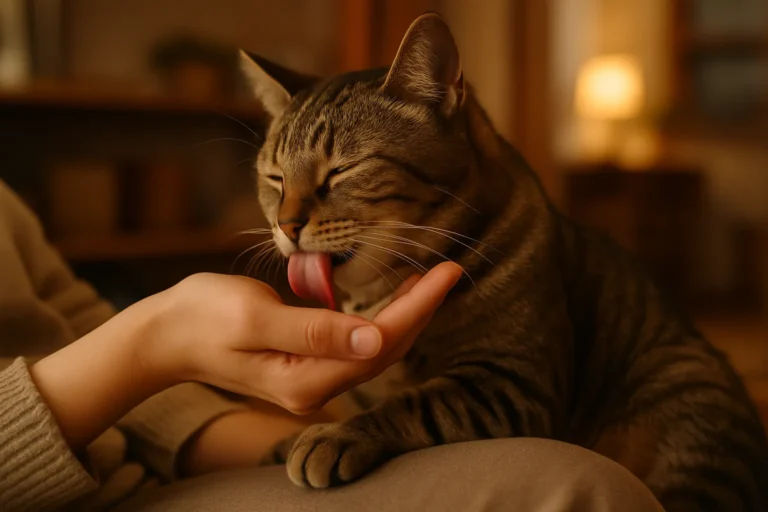
The answer to who is smarter, cats or dogs, depends on what intelligence means. Dogs often stand out when a task involves following human cues, cooperating, or learning commands, while cats can excel at independent decisions, environmental awareness, and self-directed problem-solving.
So, what is smarter: a cat or dog? Science does not support one universal winner. A fair comparison must consider social cognition, memory, communication, adaptability, learning, and motivation rather than treating obedience as a complete measure of intelligence.
How to Answer Who Is Smarter: Cats or Dogs
Pet intelligence is not a single ability. It is a collection of cognitive abilities that may include remembering information, solving problems, adapting to change, communicating with people, and learning from experience.
The comparison becomes clearer when intelligence is divided into practical categories. Dogs usually excel in human-directed tasks because they tend to cooperate readily and respond to gestures, voices, and social feedback. Cats often show strength in self-directed tasks, such as navigating their surroundings, timing an action, or finding a way around an obstacle without guidance.
People also commonly confuse trainability with intelligence. A dog that eagerly repeats a behavior is easy to evaluate, but a cat that declines to participate has not necessarily failed to understand the task. Motivation, reward preferences, attention, and the animal’s relationship with the person running the test all affect the result.
Why Dogs Often Seem Smarter to People
Dogs have a strong case when intelligence is measured through cooperation with humans. Many dogs readily watch a person’s face, follow a pointing gesture, respond to spoken cues, and adjust their behavior based on social feedback.
These abilities make dogs especially effective in command-based learning and collaborative work. A dog may quickly connect a word or gesture with an action, then repeat that action because attention, praise, play, or food is rewarding.
Dogs’ responsiveness is also highly visible to owners. When a dog looks where a person points or brings an object after a cue, its thinking is easy to observe. This visibility can make dogs appear broadly smarter even though the test mainly measures social communication and willingness to cooperate.
In the question of whether dogs are smarter than cats, dogs generally have the advantage in tasks involving human gestures, gaze following, shared attention, and obedience. Those are meaningful skills, but they represent only part of animal intelligence.
Why Cats May Be Smarter in Different Ways
Cats often show intelligence through less obvious behavior. They can learn household routines, remember important locations, and change their actions when the environment changes. Because these decisions are frequently made without looking to a person for approval, owners may overlook the thinking involved.
A cat’s hunting background also favors careful observation, timing, stealth, and rapid responses to movement. Those abilities support environmental awareness and practical problem-solving, even when they do not produce an impressive response to a spoken command.
Cats may understand a cue and still choose not to respond. Their behavior is influenced by immediate value: the reward, the setting, the effort required, and whether the action serves their current goal. Refusing to perform is therefore not reliable evidence that a cat failed to understand.
This helps explain why the question of whether cats are smarter than dogs cannot be settled by obedience alone. Cats may be less demonstrative and less dependent on human direction while still learning effectively in situations that matter to them.
Trainability vs Intelligence: The Biggest Mistake in This Debate
Training success reflects more than cognitive ability. It also depends on social drive, reward sensitivity, attention, prior experience, and whether the animal has been shaped by breeding or daily life to cooperate closely with people.
A species that enjoys interaction and readily repeats rewarded behaviors will look more capable in a command-based test. Dogs often fit this setup well. Cats may be less interested in repeating an action for a reward chosen by a person, so their performance can underestimate what they understand.
Consider two different tasks. Following a cue to sit measures learning, attention, and cooperation with a human. Finding a route around a barrier to reach a desired location measures persistence, spatial awareness, and independent problem-solving. Neither task represents intelligence in full.
For that reason, a dog that follows ten cues is not automatically smarter than a cat that solves a practical challenge. The fairest comparison uses several tasks and records both ability and motivation.
What Science Can and Cannot Prove About Cat and Dog Intelligence
Behavioral research measures performance on specific tasks, not a complete mental ranking of every animal. A study about gesture following can reveal useful information about social cognition, but it cannot determine which species has the better memory or the stronger independent problem-solving skills.
Brain studies can add context, but brain size or neuron comparisons do not settle the entire debate by themselves. Cognitive performance depends on how neural systems are organized and how abilities developed for a species’ way of life.
Direct comparisons can also be misleading because cats and dogs evolved different strategies. Dogs’ social skills support cooperation and communication, while cats’ abilities are closely tied to independent hunting, environmental monitoring, and flexible responses to immediate opportunities.
Test design matters as well. Sample size, the animal’s previous experience, the reward used, the unfamiliarity of the setting, and the level of human involvement can all influence an outcome. A strong conclusion should therefore describe what a test showed, not claim that it revealed total intelligence.
The most defensible scientific answer is comparative rather than absolute: cats and dogs have overlapping cognitive abilities, but their strengths are expressed in different contexts.
Cats vs Dogs by Intelligence Category
A category-by-category framework gives a more useful answer than asking which species wins every mental task. The comparison below describes common tendencies, not rules that apply to every individual cat or dog.
Memory and learning are especially dependent on the task and the animal’s motivation. Both species can learn associations and routines, but their performance may look different depending on whether the test rewards cooperation, exploration, persistence, or careful observation.
| Intelligence category | Typical advantage | Why the comparison is limited |
|---|---|---|
| Social intelligence and reading human cues | Usually dogs | Dogs tend to seek and respond to human guidance more openly. |
| Independent problem-solving and self-sufficiency | Often cats | Cats may solve tasks without signaling their process to people. |
| Obedience and task learning | Usually dogs | Willingness to cooperate strongly affects visible performance. |
| Environmental awareness and stealth-based decisions | Often cats | The relevant skills may appear during quiet observation rather than training. |
| Adaptability to human routines | Both, in different ways | Dogs may coordinate with household activity, while cats may track routines and opportunities independently. |
| Memory and learning | Varies by task and motivation | A single test cannot represent every type of memory or learning. |
So, What Is Smarter: A Cat or Dog?
If intelligence means understanding people, following commands, sharing attention, and cooperating on a task, dogs are usually the stronger performers. Their social orientation makes these abilities easy to train and easy for people to recognize.
If intelligence means acting independently, monitoring the environment, adapting quietly, and solving problems without human direction, cats may be just as capable and may show advantages in some situations.
The clearest answer to who is smarter, cats or dogs, is that there is no universal winner unless the question defines the task first. Dogs often lead in human-social intelligence, while cats often stand out in independent and environment-focused intelligence.
Judge an individual animal by what it can learn, remember, adapt to, and solve rather than by species stereotypes. A responsive dog and a selective cat may both be intelligent, but they communicate and use their abilities in different ways.
The Bottom Line on Cat and Dog Intelligence
Dogs are usually smarter in tasks built around human cooperation, social cues, and obedience. Cats may be equally impressive in self-directed learning, environmental awareness, and practical problem-solving.
The best answer is not that one species wins every mental contest. Intelligence depends on the ability being tested, the animal’s motivation, and the environment in which it must use that ability.
Who is smarter, a cat or a dog?
The answer depends on the task. Dogs tend to perform better in cooperation and command-based tests, while cats may perform better in self-directed situations.
Are dogs easier to train because they are smarter?
Not necessarily. Dogs are often easier to train because they commonly seek human interaction and respond strongly to rewards, cues, and social feedback. Trainability is not the same as overall intelligence.
Can cats understand humans as well as dogs?
Cats can learn routines, cues, voices, and associations with people, but they may respond less openly than dogs. A cat’s lack of response does not always mean it failed to understand.