You can usually get rid of urine smell, but wiping the visible spot is rarely enough. Cat urine can soak into carpet padding, upholstery foam, mattress filling, wood seams, and other porous layers. The reliable process is to find the complete source, absorb fresh urine, apply a suitable cleaner deeply enough, let the area dry, and check the result only after drying.
What to use to clean cat pee depends on the surface and the age of the stain. An enzyme cleaner is generally the most useful choice for dried or strong odors, while basic supplies can handle the first response to a fresh accident. Avoid masking sprays and harsh cleaners that may damage materials or encourage a cat to revisit the area.
Why Cat Urine Odor Is So Hard to Remove
Cat urine odor lingers because urine does not always remain on the surface. It can travel into fibers, padding, cracks, unfinished wood, and the edges of flooring. Once the liquid dries, residue remains behind even when a stain is no longer obvious.
Humidity can make dried residue smell noticeable again. This is why a room may seem fresh after cleaning but develop a cat urine smell in the house on a damp day. Fragrance sprays cover the odor temporarily without treating the material that holds it.
Ammonia-based cleaners are also a poor choice for this job. Their smell can resemble urine to a cat and may encourage repeat marking, while bleach and other harsh products can damage surfaces or create dangerous fumes if mixed with other cleaners. Never combine cleaning chemicals.
What to Use to Clean Cat Pee
For true odor removal, choose a cleaner labeled for pet urine and follow its surface instructions. An enzyme cleaner for cat urine is often the best option for old, dried, or deeply absorbed accidents because it is designed to break down organic residue rather than simply perfume the area.
Vinegar diluted with water may help with the first wipe-down of some fresh accidents, but it is not a dependable substitute for a urine-specific cleaner in carpet, upholstery, padding, or old stains. Baking soda may absorb some surface odor after the area is cleaned and dried, but it does not reach every contaminated layer or reliably neutralize the source.
Gather clean cloths or paper towels, disposable gloves, a suitable cleaner, and a wet vacuum if you have one. Check the care label and test any cleaner on a hidden area first. Do not use steam cleaning at the beginning: heat and moisture can make a deep odor harder to remove or spread it through absorbent materials.
- Pet urine enzyme cleaner for dried, concentrated, or deeply absorbed odor
- Clean towels or paper towels for blotting
- Gloves and a waste bag
- A wet vacuum for suitable carpet and upholstery jobs
- A fan or other safe source of airflow for drying
How to Get Rid of Cat Urine Odor Step by Step
Use this process for most washable or water-tolerant surfaces, then adjust the amount of moisture for the material. The cleaner must reach the same depth as the urine, but over-soaking can damage flooring, upholstery, or the subfloor.
If you are treating a product with a care label, follow that label before using any general method. Keep the cat away from the area until it is dry and the cleaner has been removed or settled according to its directions.
- Find the entire affected area, including nearby edges, seams, and layers beneath the visible mark.
- Blot fresh urine with towels. Press down and lift repeatedly instead of scrubbing, which can spread liquid through fibers.
- Rinse lightly with clean water only when the material allows it, then blot or extract the moisture.
- Apply the urine cleaner generously enough to reach the depth of the accident. Avoid guessing if the urine soaked through carpet or cushions.
- Leave an enzyme cleaner in place for the full time stated on its label. Removing it too soon can limit its effect.
- Blot or extract excess moisture and allow the area to air-dry completely with ventilation.
- Check the odor only after the material is fully dry. Repeat the treatment when the stain is old, concentrated, or still noticeable.
- Wash your hands and dispose of used towels appropriately. Keep pets away during the entire process.
How to Find Hidden Cat Pee Smell in the House
When you cannot see the source, start where the odor is strongest and inspect outward. Get close to the floor, because odor can be more noticeable near the material that holds the residue than at standing height.
A black light for cat urine can help reveal some dried spots in a dark room, although not every glowing mark is urine and not every urine deposit will be obvious. Mark suspected areas with removable tape, then confirm that the material and location make sense before cleaning.
- Baseboards, corners, doorways, and the areas beside litter boxes
- Rugs, carpet edges, closets, laundry piles, and pet bedding
- Behind furniture, beneath beds, and around curtains or stored items
- Cushion seams, mattress edges, and the lower portions of walls
- Flooring gaps, carpet padding, tack strips, and exposed subfloor edges
Identify the Likely Source
A puddle near a litter box may indicate a missed or poorly positioned box, while small spots on vertical surfaces can be consistent with spraying. A recurring spot in one location may point to an old odor that is drawing the cat back. These clues are useful for cleanup, but continued accidents also deserve attention to the cat’s environment and health.
How to Remove Cat Pee Smell From Carpet and Rugs
Carpet is challenging because liquid can pass through the pile and backing into the padding or floor below. Start by blotting a fresh accident from the top and underside when accessible. Do not scrub, and do not assume the visible boundary shows the full affected area.
For a dried stain, apply a suitable enzyme cleaner to the carpet fibers and the underlying layer that was actually reached by urine. Follow the label and use a wet vacuum only when the carpet and machine instructions allow it. Extracting excess moisture can help, but repeated soaking without adequate drying can create a different problem.
- Lift removable rugs and inspect the floor underneath before putting them back.
- Treat carpet padding separately when urine passed through the backing.
- Use airflow to dry the carpet, padding, and floor completely.
- Repeat treatment after drying if odor remains; a single pass may not remove an old deposit.
- Consider professional inspection or carpet removal when the subfloor smells, the padding is heavily saturated, or the odor returns after proper treatment.
How to Get Cat Urine Smell Out of a Couch, Mattress, or Other Upholstery
Check the care tag before applying liquid to a couch, mattress, cushion, or upholstered chair. Remove washable covers and launder them according to their instructions, but inspect the insert and foam as well. Cleaning only the cover will not solve an odor that has soaked through.
Blot fresh urine first, then use controlled amounts of a suitable cleaner on the affected seams, fabric, and filling. The goal is to reach the contaminated depth without saturating the entire piece. Treat both sides of removable cushions when urine could have traveled through them.
Dry upholstery with strong airflow and plenty of time. Do not cover or reuse it while it is damp. Deeply soaked foam can retain odor despite repeated treatments, so replacement or professional odor remediation may be more realistic when the smell remains embedded.
- Remove cushions and inspect seams, zippers, undersides, and the frame.
- Test the cleaner on a hidden section for color change or fabric damage.
- Use towels to press out moisture after the recommended treatment time.
- Keep the area ventilated until the fabric and inner material are fully dry.
How to Clean Cat Pee From Hardwood, Tile, and Other Hard Surfaces
On sealed tile, vinyl, or finished wood, wipe up fresh urine promptly and clean the surface with a product approved for that material. A urine enzyme cleaner may be appropriate for sealed hard surfaces if its label allows it. Test first, especially on finished wood.
The difficult areas are usually grout lines, wood seams, cracks, baseboard edges, and joints where liquid can sit below the surface. Apply cleaner carefully to those areas, allow the stated contact time, and remove excess moisture. Do not flood hardwood or unsealed flooring.
If the odor persists after the visible surface is clean, urine may have reached under the flooring, beneath baseboards, or into the subfloor. Removing a small section for inspection or calling a flooring or odor-remediation professional may be necessary. Repeatedly wiping the top will not treat a hidden layer.
- Use the least moisture needed for finished wood and other moisture-sensitive surfaces.
- Give extra attention to grout, seams, corners, and the bottom edge of baseboards.
- Avoid ammonia, bleach, abrasive scrubbing, and unapproved solvents.
- Dry the area promptly and keep the cat away until cleaning is complete.
How to Remove Old Cat Urine Odor
Old cat urine odor removal takes longer because the residue may have dried inside several layers or been covered by paint, flooring, padding, or furniture. Begin by locating every affected area instead of treating only the strongest-smelling spot.
Use a urine-specific cleaner according to its label, allow complete drying, and reassess before repeating. Old deposits often need more than one treatment because the first application may loosen or reach only part of the residue. Do not add another chemical simply because the first cleaner did not work immediately.
If the odor returns after the surface dries, inspect beneath carpet, under padding, around subfloor edges, and behind baseboards. For a previous owner’s long-standing marking spots, professional odor remediation can be sensible when contamination is widespread or structural materials are affected.
- Treat one manageable area at a time so each layer can dry fully.
- Document suspected spots before moving furniture or replacing flooring.
- Replace deeply contaminated padding or foam when cleaning cannot reach or release the odor.
- Seek professional help when the source is inside the subfloor, walls, or extensive built-in materials.
Natural Remedies vs. Enzyme Cleaners: What Actually Works
Vinegar and baking soda are popular because they are inexpensive and familiar, but they have limited roles. Diluted vinegar may help clean a fresh surface after the urine is absorbed, while baking soda can help with a small amount of residual surface odor once the area is otherwise clean and dry.
Baking soda does not reliably neutralize cat urine throughout carpet padding, upholstery foam, wood seams, or subflooring. It also cannot replace removing the contaminated material. Sprinkling it over a wet stain may create a paste that is difficult to extract.
For persistent odor, an enzyme cleaner is usually the more targeted choice because it is made for organic pet messes. Look for clear surface directions, use enough product to reach the affected depth, and follow the full label time. A gentle recommendation should focus on matching the cleaner to the surface and stain rather than claiming that one product works for every material.
- Use vinegar only where the surface and cleaning instructions allow it, and never mix it with bleach or other cleaners.
- Use baking soda as a limited finishing aid, not as the main treatment for soaked materials.
- Choose an enzyme cleaner for dried, recurring, or deeply absorbed urine odor.
- Test any cleaner in an inconspicuous area before treating a visible surface.
How to Keep the Smell From Coming Back
Odor returns when one contaminated layer is missed or when a cat continues to use the same area. Clean the top surface, backing, padding, seams, and subfloor when each was affected. Then let everything dry completely before covering it with a rug, cushion, or furniture.
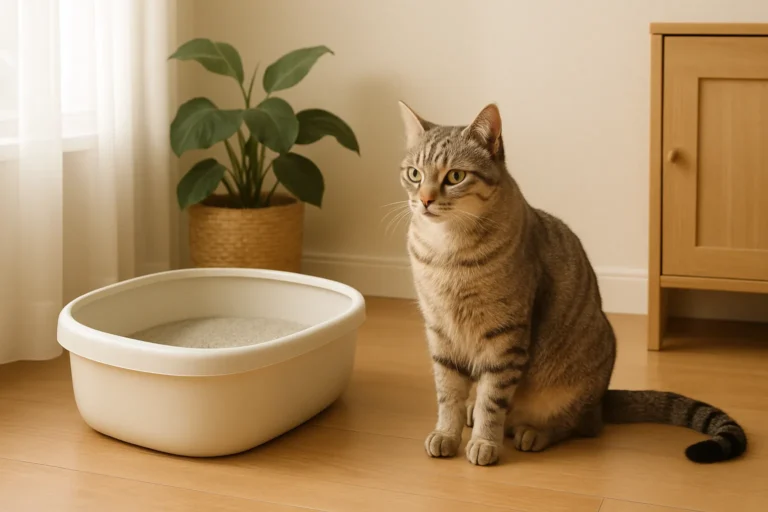
Wash removable fabrics according to their care instructions and make sure they are odor-free before returning them. Keep litter boxes clean, easy to reach, and placed where the cat can use them without feeling trapped or disturbed. If a box is consistently avoided, its location, cleanliness, size, or accessibility may need reconsideration.
Block access to a cleaned spot while it dries and until the source of the accident is addressed. If marking continues, cleaning alone will not prevent another odor deposit.
- Inspect every layer rather than judging success by the appearance of the top surface.
- Dry cleaned materials fully before normal use.
- Keep litter areas clean and provide a calm, accessible route to them.
- Watch for stressors such as household changes, conflict between cats, or unfamiliar animals.
- Recheck any location where the cat repeatedly sniffs, scratches, or returns.
When Cat Pee Odor May Point to a Bigger Problem
One accident can happen when a cat misses the box or is startled, but frequent accidents, sudden changes, straining, or other unusual litter-box behavior should not be treated as a cleaning problem alone. A veterinarian can help determine whether a health issue is contributing.
Stress and territorial marking can also cause repeated spots. Changes in the home, tension between cats, visitors, construction, or a new animal may affect litter-box use. The location and pattern of the urine can provide clues, but they do not replace professional assessment when the behavior continues.
Addressing the cause is part of odor control. If a cat keeps returning to the same surface, even a successful cleanup may be followed by another accident. Arrange veterinary guidance for persistent or sudden changes and make environmental adjustments while the source is being investigated.
- Contact a veterinarian when accidents are frequent, sudden, or accompanied by concerning litter-box behavior.
- Consider stress, territorial marking, and household changes when accidents repeat.
- Do not punish the cat; punishment can increase stress and make the pattern harder to resolve.
- Continue treating contaminated areas while investigating the underlying cause.
A Lasting Solution Starts Below the Surface
The dependable way to get rid of cat urine odor is to find the whole source, treat every affected layer with a surface-appropriate cleaner, and allow complete drying before evaluating the result. Enzyme cleaners are generally the strongest option for persistent urine residue, while vinegar and baking soda have narrower supporting roles.
If the smell returns, look beneath carpet, furniture, flooring, and baseboards rather than adding more fragrance. Then address litter-box access, stress, marking, or possible health concerns so the cleanup lasts.
What is the most powerful urine odor eliminator?
For cat urine, a properly used enzyme cleaner is usually the most targeted option because it is designed for organic urine residue. It must reach the contaminated depth and remain in place for the label’s recommended time.
How can I get rid of the smell of cat pee in my house?
Find every source, including hidden spots under furniture and inside carpet padding, then blot fresh urine, treat affected layers with a suitable cleaner, and dry them completely. Also address repeat marking or litter-box problems.
Does baking soda neutralize cat urine?
Baking soda may reduce some surface odor after cleanup, but it does not reliably neutralize urine soaked into carpet, upholstery, wood, or subflooring. It should not replace a urine-specific cleaning treatment.