Yes, cats get cold outside. Although some cats are better adapted to chilly weather than others, every cat can become uncomfortable or develop cold-related problems when exposure is prolonged. Temperature, wind, wet fur, age, coat type, health, and access to shelter all affect how quickly a cat loses body heat.
As a general guide, many cats begin to feel uncomfortable below about 45°F (7°C), while freezing temperatures around 32°F (0°C) and below create a much greater risk. There is no single temperature that is safe for every cat, so watch the weather, shorten outdoor time, and bring a cat inside whenever conditions are worsening or the cat shows signs of cold stress.
How Cold Is Too Cold for Cats Outside?
A temperature below about 45°F (7°C) is a caution zone for many cats, particularly kittens, senior cats, short-haired cats, small cats, thin cats, and cats that normally live indoors. Some may tolerate a brief trip outside, but they should not be left out for long periods without a warm, dry place to retreat.
At around 32°F (0°C) and below, the risk becomes more serious. Prolonged exposure can contribute to hypothermia and frostbite, especially when a cat cannot find shelter or its coat becomes damp. Freezing weather should be treated as high risk rather than as a test of a cat’s cold tolerance.
The thermometer is only part of the picture. Wind, rain, sleet, snow, and wet bedding can make conditions dangerous at temperatures that might otherwise seem manageable. As the temperature falls, outdoor time should shrink, and cats should have an easy way to return indoors.
Can Cats Live in Cold Weather or Survive the Cold?
Some outdoor and community cats can survive winter conditions when they have reliable shelter, food, unfrozen water, and time to acclimate. A cat that lives outdoors may also have a thicker seasonal coat and know where protected spaces are located.
Survival does not mean the conditions are safe, comfortable, or low risk. Extended cold exposure can leave a cat dehydrated, exhausted, or vulnerable to hypothermia and frostbite. A cat may endure a cold night and still suffer harm that is not immediately obvious.
Indoor-outdoor cats often need more protection than fully outdoor cats because they may be less accustomed to severe weather. Whenever possible, provide an indoor option during cold snaps, storms, and overnight freezes.
What Affects How Cold a Cat Can Tolerate?
There is no universal answer to how cold a cat can tolerate. Two cats exposed to the same weather may have very different levels of risk because of their age, body condition, health, and previous experience with outdoor conditions.
Important factors include:
- Age: Kittens and senior cats generally lose body heat more easily and may have less resilience during prolonged exposure.
- Coat and body size: Short-haired, hairless, small, and thin cats usually become cold sooner than larger cats with dense coats.
- Health: Arthritis, diabetes, thyroid problems, other illnesses, and poor body condition can reduce a cat’s ability to cope with cold.
- Acclimation: A cat accustomed to living outdoors may handle cool weather better than an indoor-only cat, but acclimation does not make severe conditions safe.
- Weather: Wind, rain, sleet, snow, and damp fur remove insulation and speed heat loss.
- Resources: Dry shelter, insulating bedding, enough food, and unfrozen water all help an outdoor cat cope with winter.
Signs a Cat Is Too Cold Outside
A cold cat may first show subtle behavioral changes. It may stay hunched, curl tightly, hide, or avoid moving away from a sheltered spot. Seeking heat near a car engine, vent, garage, or porch can also indicate that the cat is struggling to stay warm.
Watch for shivering or trembling, cold ears or paws, reluctance to move, unusual tiredness, weakness, or seeming disorientation. Pale skin, stiff movement, or a cat that is difficult to rouse are more serious warning signs.
If a cat shows signs of cold stress, move it to a warm, dry area promptly. Do not wait for symptoms to become severe before ending outdoor exposure.
- Shivering or trembling
- Cold ears, paws, or tail
- A hunched posture, tight curling, hiding, or reluctance to move
- Lethargy, weakness, or confusion
- Seeking heat sources such as engines, vents, garages, or porches
- Pale skin, stiff movement, or unresponsiveness
When Cold Weather Becomes an Emergency
Mild discomfort should improve after a cat is moved into a warm, dry environment. Severe lethargy, weakness, slow breathing, collapse, or unresponsiveness may indicate hypothermia and require urgent veterinary attention.
Frostbite is a concern after freezing exposure, particularly on the ears, paws, and tail. Affected tissue may look unusually pale or feel very cold and stiff. Damage may not be fully apparent immediately, so a cat exposed to severe cold should be assessed by a veterinarian if there is any concern.
Bring the cat indoors, wrap it in a dry blanket, and contact a veterinarian right away if it seems weak, unresponsive, collapsed, or injured. Warm it gradually and avoid very hot water, heating pads placed directly against the body, or high direct heat, which can cause burns or worsen injury.
How to Keep Pet Cats Safe in Cold Weather
The safest winter routine for most pet cats is more indoor time, especially during cold snaps, storms, and overnight freezes. If an indoor-outdoor cat goes out, limit the visit and supervise when practical so you can bring the cat back quickly if conditions change.
After wet weather or snow, dry the coat and paws. Check the paws for ice, salt, or chemical residue, and remove any residue the cat could later lick. Provide a warm sleeping area indoors that is dry and away from drafts.
Monitor kittens, senior cats, and cats with health conditions more closely than healthy adult cats. Their outdoor time may need to be reduced further, even when the weather seems tolerable to you.
- Keep the cat indoors more often during freezing weather, storms, and cold nights.
- Shorten outdoor sessions and supervise them when possible.
- Dry the cat’s coat and paws after rain or snow.
- Offer a warm indoor sleeping area away from drafts.
- Check vulnerable cats more frequently.
- Inspect paws for ice, salt, and chemical residue after outdoor time.
How to Help Outdoor or Community Cats in Winter
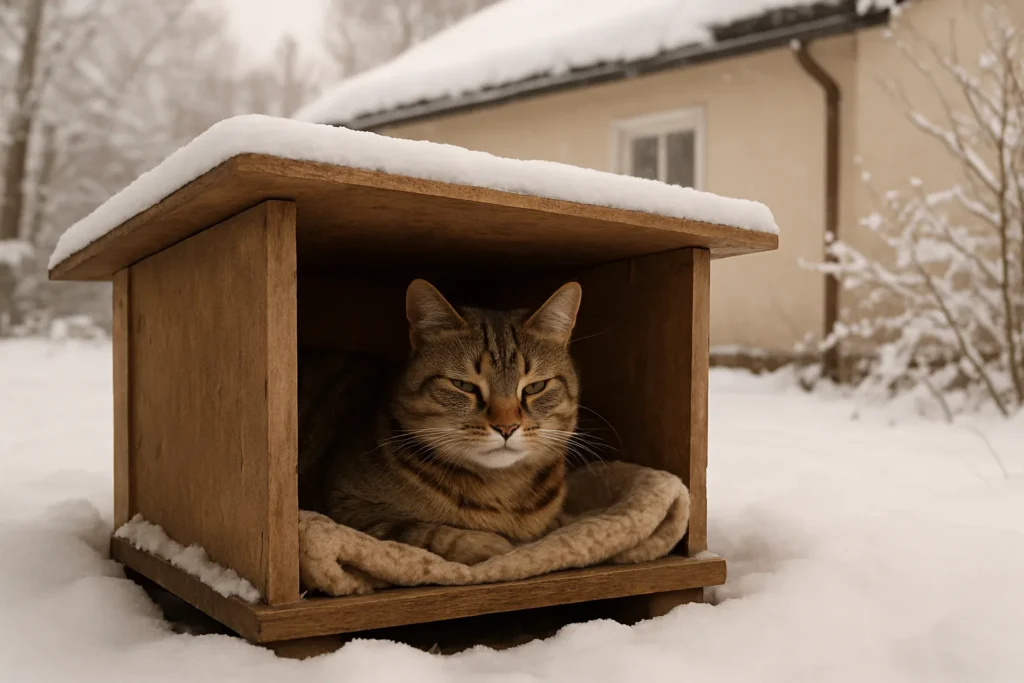
For cats that cannot easily be brought indoors, a dry, insulated shelter can make a major difference. The shelter should block wind, keep out precipitation, and be raised off cold ground. Face the entrance away from the prevailing wind and place it somewhere quiet and protected.
Use straw for outdoor shelter bedding rather than blankets. Blankets and fabric can retain moisture and become cold, while straw stays drier and provides useful insulation. Check the shelter regularly and replace wet or soiled material.
Offer extra food during severe weather and refresh water often so it does not freeze. Before closing a shed, garage, or outbuilding, check whether a cat is sheltering inside. Cats may also hide near warm car engines, so tap the hood and look around the vehicle before starting it.
- Provide an insulated, wind-blocking shelter that stays dry.
- Use straw instead of blankets for outdoor bedding.
- Raise the shelter off the ground and turn the entrance away from prevailing wind.
- Offer extra calories and refresh water frequently.
- Check sheds, garages, and outbuildings before closing them.
- Tap the hood and check around a car before starting the engine.
Do Cats Get Colder at Night, in Wind, or When Wet?
Yes. Winter nights can become much colder than the daytime, and a cat that was comfortable in the afternoon may face a substantially higher risk after sunset. Bring an indoor-outdoor cat inside before temperatures drop rather than waiting for the cat to return on its own.
Wind strips warmth from the body, while rain, sleet, and snow reduce the insulating effect of the coat. Damp fur and wet bedding can make even mild temperatures dangerous when exposure continues.
Consider the full forecast instead of temperature alone. A windy or wet night calls for earlier bring-in times, shorter outdoor visits, and a dry shelter that the cat can reach immediately.
A Simple Rule of Thumb for Cat Owners
If the weather feels uncomfortably cold for a person wearing light layers, it may already be too cold for many cats to remain outside for long. Treat temperatures below about 45°F (7°C) as a caution zone and monitor the cat closely.
Treat freezing temperatures as high risk, particularly when there is no dry shelter or when wind, rain, snow, or damp fur is involved. When you are unsure, bring the cat inside. A short interruption to outdoor access is safer than assuming a cat can tolerate conditions that are already causing cold stress.
Keeping Cats Safe Through Winter
Cats do get cold outside, and there is no single safe temperature for every cat. Below about 45°F (7°C), many cats need closer monitoring and less outdoor time; at or below freezing, exposure becomes significantly more dangerous, especially without dry shelter.
Bring pet cats indoors during severe or overnight cold, watch for shivering, weakness, and confusion, and provide community cats with insulated shelter, food, and unfrozen water. When a cat seems weak, unresponsive, or injured after cold exposure, warm it gradually and contact a veterinarian promptly.
How cold is too cold for a cat at night?
Temperatures below about 45°F (7°C) can be uncomfortable for many cats, and freezing temperatures around 32°F (0°C) and below are high risk, particularly overnight. Wind, wet fur, snow, and a lack of shelter make conditions more dangerous. Bring the cat indoors before temperatures fall after sunset.
Can cats survive outside in the winter?
Some acclimated outdoor or community cats survive winter when they have dry insulated shelter, food, unfrozen water, and protection from wind. However, survival does not mean the conditions are safe or humane. Prolonged exposure can still lead to dehydration, hypothermia, frostbite, illness, or exhaustion.
At what temperature will a cat feel cold?
Many cats may begin to feel uncomfortable below about 45°F (7°C), but individual tolerance varies. Kittens, senior cats, small or short-haired cats, thin cats, ill cats, and indoor-only cats may feel cold sooner. Wet or windy weather can make a higher temperature feel dangerous.
Do cats get cold outside at night?
Yes. Temperatures often fall after sunset, and darkness can make it harder for a cat to find a dry, protected place. Wind and dampness add to the risk. Bring indoor-outdoor cats inside before nightfall during cold weather whenever possible.
What temperature is dangerous for cats outside?
Freezing temperatures around 32°F (0°C) and below raise the risk of hypothermia and frostbite, especially without shelter. There is no universal cutoff because age, coat, health, acclimation, wind, and wetness matter. Any cat showing cold-stress signs should be brought inside immediately.