A purring cat is not always a happy cat. Purring commonly appears during comfort, affection, nursing, and rest, but cats may also purr while frightened, uncomfortable, or trying to settle themselves. The cat purring meaning depends on the entire situation rather than the sound alone.
To understand why cats purr, watch the sound alongside body language, timing, and changes in routine. Relaxed muscles, soft eyes, normal appetite, and familiar behavior point in a different direction from crouching, hiding, tense muscles, or unusual breathing.
What a Cat’s Purr Actually Is
Purring is a rhythmic sound associated with the larynx, or voice box, and the cat’s breathing cycle. Domestic cats commonly produce the vibration during both inhalation and exhalation, allowing the sound to continue through a regular breath pattern.
The exact way every aspect of purring is generated is not completely settled, and individual cats can sound very different. More importantly for owners, the sound itself does not identify one emotion. A purr is a communication and regulation signal whose meaning becomes clearer when you consider what the cat is doing before, during, and after it.
How to Tell What Purring Means in the Moment
Start with the cat’s overall posture. A loose body, gently positioned ears, soft or partially closed eyes, neutral whiskers, and a tail resting naturally fit relaxed purring. A stiff body, flattened or rapidly swiveling ears, wide eyes, tucked limbs, tense whiskers, or a tightly wrapped tail suggest that the purr may be occurring alongside unease.
Next, identify the trigger. Did the purring begin during petting, after the cat settled into a favorite bed, during a car ride, after a frightening noise, or while the cat was being handled? The event immediately before the sound often provides more information than volume does.
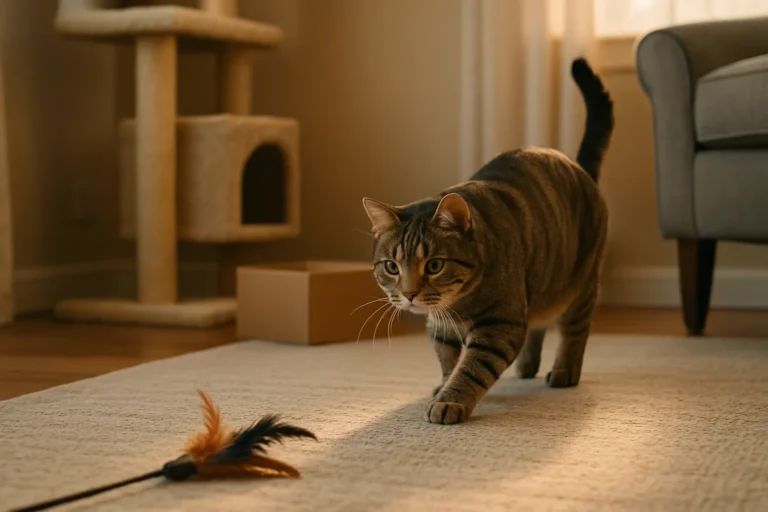
Finally, compare the purring with everyday habits. Appetite, grooming, play, hiding, movement, and litter box behavior can reveal whether the cat seems normally comfortable. A new purr combined with a noticeable change in routine deserves more attention than a familiar purr from a cat behaving normally.
- Relaxed purring usually comes with loose muscles and familiar behavior.
- Tense or restless purring should be interpreted with caution.
- A sudden change in purring matters more than a naturally loud or quiet purr.
- Look for changes in eating, grooming, hiding, movement, and litter box habits.
When Purring Usually Means Contentment or Bonding
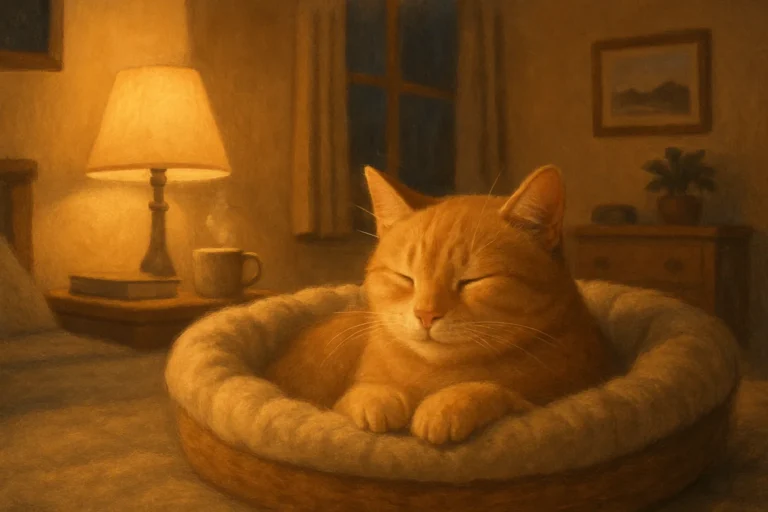
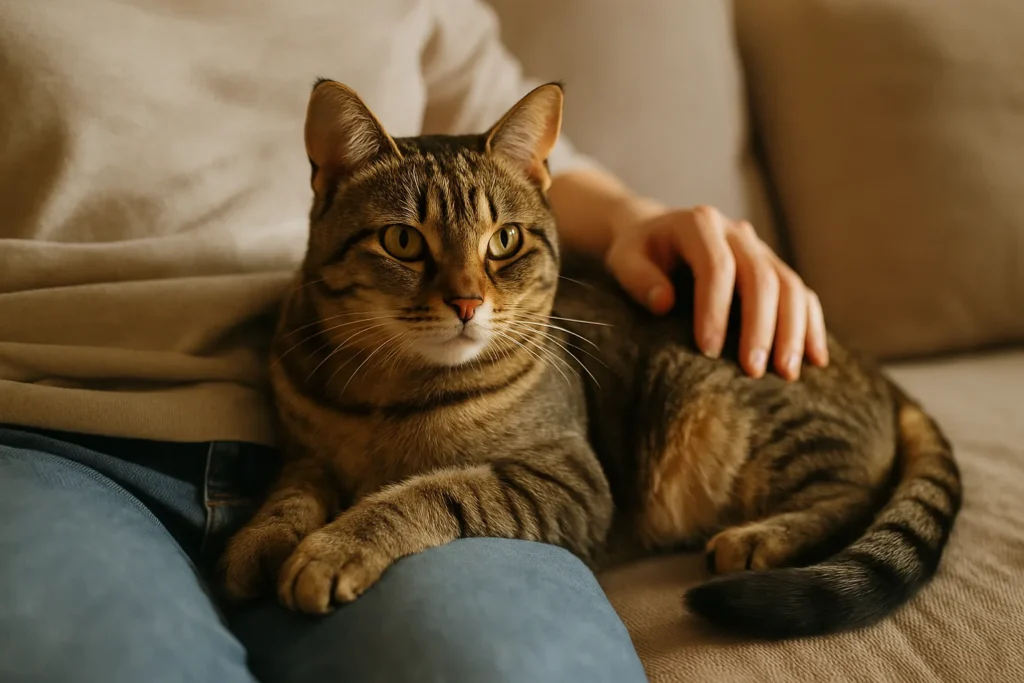
Many cats purr while being petted, cuddled, or settling beside a trusted person. If the cat approaches voluntarily, keeps a relaxed posture, accepts gentle contact, and remains comfortable when the interaction pauses, the purr is often part of a safe social moment.
A cat that purrs next to you may be seeking warmth, companionship, reassurance, or simply a comfortable place to rest. Cats can also learn that purring attracts attention, so a purr beside a person may be both an emotional signal and a practical request for interaction.
Some cats purr loudly when they are deeply relaxed, while others naturally make a faint vibration. Loudness alone does not prove happiness or distress. Compare the volume with the cat’s usual sound and check whether the rest of the body looks calm.
Kneading and purring often appear together because both behaviors can occur during comfort and relaxation. They are related signs, not a guaranteed emotional diagnosis; read the paws, claws, posture, and surrounding circumstances as well as the purr.
What Does It Mean When a Cat Purrs When You Pet Them?
Usually, it means the cat is comfortable with the contact, especially when it leans into your hand, blinks slowly, keeps its muscles loose, or settles in place. If the cat suddenly turns its head, swishes its tail, stiffens, or moves away, stop and give it space even if the purring continues.
Why Is My Cat Purring So Much Next to Me?
Your cat may associate you with safety, warmth, food, play, or attention. Repeated purring beside you is generally routine when the cat is eating, resting, grooming, and interacting normally. A sudden increase accompanied by clinginess, hiding, or other changes should be treated as a change in behavior rather than automatically as extra affection.
When Purring Can Mean Stress, Fear, or Pain
Cats may purr during stressful events such as travel, veterinary handling, unfamiliar visitors, or recovery from a frightening experience. In these situations, purring may help the cat regulate itself or communicate while it feels vulnerable. It should not be used as proof that the cat is comfortable.
Purring linked with possible discomfort may occur alongside crouching, guarding one area, withdrawing, reduced movement, unusual restlessness, changes in breathing, or resistance to normal handling. A cat may also hide discomfort, so a subtle change from its usual behavior can be meaningful.
Purring near the end of life can happen, but it should not be interpreted as comfort alone. If an elderly, seriously ill, or suddenly unwell cat is purring while showing weakness, breathing changes, withdrawal, or difficulty eating or moving, contact a veterinarian for guidance rather than relying on the sound.
Arrange a veterinary assessment when purring is new, persistent, or paired with concerning changes in appetite, mobility, breathing, grooming, elimination, or social behavior. Seek prompt advice for breathing difficulty, severe weakness, collapse, or obvious distress.
- Stress-related purring may occur with hiding, tense posture, wide eyes, or restless movement.
- Possible pain-related purring may occur with guarding, crouching, withdrawal, or a change in normal activity.
- Do not use purring to rule out illness or assume that a sick cat feels comfortable.
- Contact a veterinarian when the purr accompanies a significant or persistent behavior change.
What It Means When a Cat Is Purring and Meowing
Purring and meowing together often indicate social communication directed at a person or another animal. A cat may be greeting you, requesting food, asking for a door to open, seeking attention, or repeating a behavior that has previously received a response.
The meow adds information that the purr cannot provide by itself. A brief, familiar meow during a greeting differs from a repeated, urgent, unusually loud, or strained vocalization. Consider the location and timing: a meow near the food area may be a routine request, while vocalizing during movement, handling, or a change in routine deserves closer observation.
If the combined sounds are new or accompany confusion, restlessness, hiding, appetite changes, or other unusual behavior, do not assume the cat is merely being talkative. Compare the pattern with the cat’s normal communication and seek veterinary advice if the change persists.
What Purring Means in Kittens
Kittens can purr from a very young age. Early purring may help maintain contact with the mother and littermates, particularly during nursing and resting. The mother cat may also purr as part of that close exchange.
A kitten purring while warm, nursing, sleeping, or nestled against its mother is often participating in normal early social behavior. However, a kitten that purrs while cold, weak, separated, unable to nurse, or unusually quiet between episodes needs prompt attention. Because young kittens can change quickly, their overall energy, feeding, warmth, and responsiveness matter more than the purr alone.
As kittens mature, purring can take on the same broad range of meanings seen in adults, including comfort, interaction, excitement, and self-soothing.
How Purring Differs From Chattering, Growling, and Heat Sounds
Cat vocalizations can overlap, but their sound and setting provide useful clues. Purring is a low, rhythmic vibration. Chattering is usually a series of quick, sharp jaw or mouth sounds, while growling is a rough, lower warning vocalization. Heat-related calling is typically more drawn out and urgent than an ordinary purr.
What Does It Mean When a Cat Chatters?
Chattering often occurs when a cat watches birds, insects, or another form of prey through a window. It may reflect intense excitement, frustration, or arousal during visual tracking. Look at the setting and body language rather than treating every chatter as a sign of distress.
When Cats Growl, What Does It Mean?
Growling is generally a warning that a cat feels threatened, defensive, possessive, or highly uncomfortable. It may occur during fear, conflict, guarding, or pain. Give the cat distance, avoid punishment, and look for the trigger. If growling is new, occurs during handling, or appears without an obvious situation, a veterinary check can help identify a possible source of discomfort.
What Does In Heat Mean for Cats?
Being in heat means an unspayed female cat is in a reproductive phase in which she may show behaviors that attract a mate. A cat in heat may become unusually affectionate, restless, vocal, or eager to get outside. She may rub against people or objects, raise her hindquarters, and call repeatedly.
Heat-related calling can sound intense and may be mistaken for ordinary meowing or distress. It is different from a steady purr because it is usually more noticeable, intermittent, and linked with reproductive body language. If the vocal behavior is accompanied by signs of illness rather than the usual heat pattern, contact a veterinarian.
A Simple Checklist: Is This Purring Normal or a Sign to Watch
A familiar purr from a cat that is relaxed, eating normally, grooming, playing, and following its usual routines is generally something you can monitor at home. Record what was happening when the purr began and whether the pattern matches the cat’s normal behavior.
A loud or constant purr deserves closer attention when it is new or comes with tension, hiding, reduced appetite, unusual clinginess, vocal changes, panting, limping, or litter box changes. The volume is less important than the change and the accompanying signs.
Book a veterinary visit promptly when the behavior persists, worsens, or appears with signs of pain, illness, or reduced function. Seek urgent veterinary advice for breathing difficulty, collapse, severe weakness, or obvious distress. Until you know the cause, provide a quiet space and avoid forcing physical contact.
- Usually reassuring: relaxed posture, normal eating, regular grooming, playful behavior, and a familiar purring pattern.
- Watch closely: new hiding, reduced appetite, clinginess, tension, vocal changes, limping, panting, or litter box changes.
- Monitor at home when the cat quickly returns to normal and no other changes are present.
- Book a veterinary visit when the purring is new, persistent, or paired with concerning behavior.
- Seek urgent advice for breathing difficulty, collapse, severe weakness, or obvious distress.
Read the Whole Cat, Not Just the Purr
Purring can express comfort and connection, but it can also accompany stress or discomfort. The most reliable interpretation comes from combining the sound with posture, facial expression, timing, and changes in everyday habits.
When a purr fits a relaxed routine, it is usually part of normal communication. When it changes suddenly or appears with other worrying signs, treat the behavior as useful information and ask a veterinarian for help.
Is loud purring a good sign?
Not necessarily. Some cats naturally purr loudly when relaxed, but volume alone does not show how a cat feels. Compare it with the cat’s usual purr and look at posture, appetite, activity, and other behavior.
Why does my cat purr and meow at the same time?
The combination may be a greeting, a request for food or attention, or learned communication directed at you. A new, urgent, or unusually strained meow alongside purring deserves closer attention.
What is the difference between purring, chattering, and growling?
Purring is a low rhythmic vibration, chattering is usually a quick series of mouth or jaw sounds during intense interest, and growling is a rough warning linked with fear, defense, guarding, or discomfort.
Why does my cat purr so much next to me?
Your cat may feel safe beside you, enjoy your warmth, want attention, or associate you with food and other positive experiences. A sudden increase paired with hiding, clinginess, or other changes should not be assumed to be affection alone.
What does a cat in heat mean?
It means an unspayed female cat is in a reproductive phase that can bring restlessness, increased affection, rubbing, raised hindquarters, and repeated calling. Heat-related vocalizing is different from a steady purr.