Learning how to wash your cat at home starts with deciding whether a full bath is necessary. Healthy cats usually keep their coats clean through regular grooming, so bathing is generally reserved for messes they cannot remove themselves, certain skin-care instructions, or substances that must be removed promptly.
When a bath is appropriate, prepare everything before bringing your cat to the sink or tub. A calm, brief process using lukewarm water, cat-specific shampoo, gentle handling, and thorough rinsing can make bathing safer for both of you.
Should You Wash Your Cat at All?
Most healthy cats do not need routine bathing. Their grooming behavior removes ordinary dirt and loose hair, while brushing can handle much of the debris that collects in the coat.
A full bath may make sense when your cat has mud, grease, a foul-smelling substance, or sticky material in its fur; needs a flea or skin treatment directed by a veterinarian; or cannot groom effectively because of age, body condition, illness, or a particularly messy coat.
Do not force a home bath if your cat is severely distressed, having breathing trouble, or has open wounds. If the coat contains paint, oil, chemicals, or an unknown substance, contact a veterinarian promptly for specific advice rather than experimenting with household cleaners.
- Use grooming or spot cleaning when the mess is small and localized.
- Consider a full bath for widespread dirt, grease, sticky debris, or veterinary-directed treatment.
- Get professional guidance for toxic substances, wounds, breathing problems, or extreme panic.
What to Prepare Before You Start
Set up the entire area first so your cat is not left unattended while you search for supplies. Choose a sink or tub where you can work without twisting or reaching awkwardly, and close nearby doors to limit escape routes.
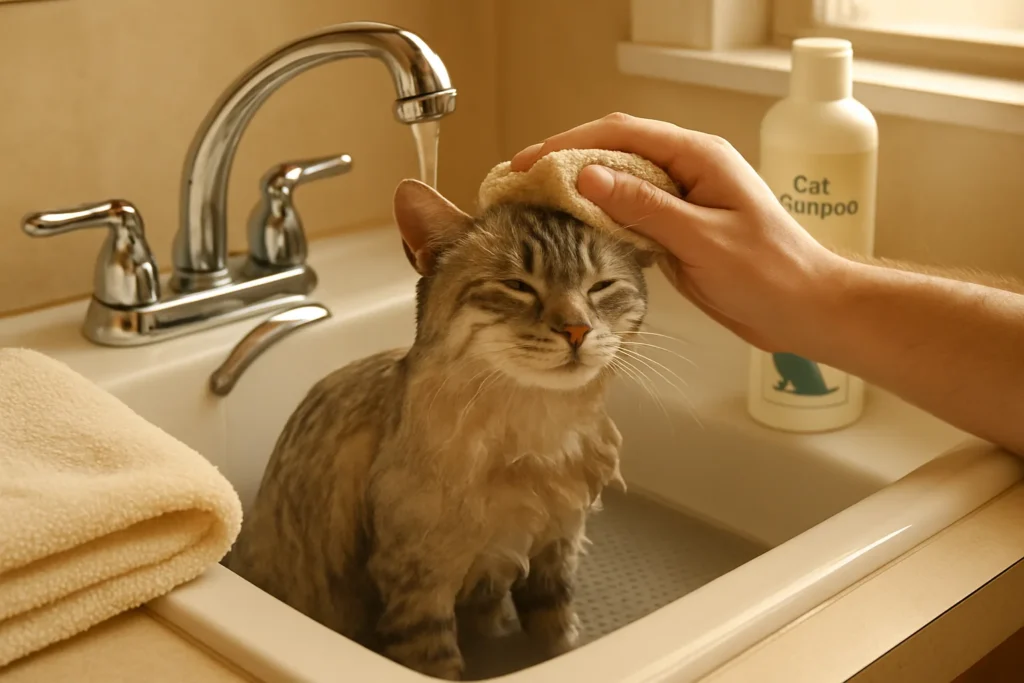
Use a cat-safe shampoo, lukewarm water, several towels, a non-slip mat or folded towel, and a cup or gentle sprayer for rinsing. Keep a washcloth ready for the face and paws. A helper can make the process easier if your cat remains calmer with a second familiar person nearby.
If your cat tolerates it, trimming sharp nail tips before bath day may reduce accidental scratches. Do not begin a nail trim, bath, or other handling task if your cat is already agitated.
- Cat-specific shampoo
- Lukewarm water
- Non-slip mat or towel
- Cup or gentle sprayer
- Washcloth
- Several dry towels
- Optional calm helper
How to Wash Your Cat Step by Step
Brush your cat before adding water. Remove loose debris and gently work through manageable tangles; do not pull at severe mats, which may require a groomer or veterinarian.
Place the cat on the non-slip surface and keep one hand supporting the chest or body. Wet the body gradually from the shoulders toward the rear, keeping water away from the face. Slow, steady movements are less startling than a sudden spray.
Apply a small amount of cat shampoo and massage it gently into the dirtiest areas first. Work around the coat without scrubbing harshly. Keep the head dry while you clean the body, legs, and tail.
Use a damp washcloth to clean the face and paws. Avoid the eyes, ears, and nose, and never pour water directly over the head. If shampoo gets near the eyes or other sensitive areas, rinse that area carefully with clean water.
Rinse thoroughly until no slippery residue remains. Shampoo left in the coat can irritate the skin and may be swallowed during later grooming. Lift your cat out promptly, wrap it in a towel, and blot rather than vigorously rubbing.
Keep the room warm while your cat dries. Replace the damp towel with a dry one as needed, and allow the cat to finish drying in a quiet, draft-free area if it tolerates that better than a dryer.
- Brush first and address serious mats professionally.
- Wet the body gradually with lukewarm water.
- Lather gently with a small amount of cat shampoo.
- Clean the face with a damp washcloth.
- Rinse thoroughly and remove all residue.
- Wrap the cat in a towel and keep it warm while drying.
How to Bathe a Cat Without Getting Scratched
Stay calm, speak quietly, and move with purpose. A bath that drags on gives fear and frustration more time to build, so have the supplies ready and focus on the essential cleaning rather than trying to make the coat perfect.
Support the cat gently under the chest and hindquarters without pinning it down or squeezing. Keep the cat on a stable, non-slip surface, and ask a helper to manage the cup, towel, or shampoo rather than holding the cat forcefully.
Watch for escalating signals such as frantic struggling, repeated attempts to bite, intense vocalizing, flattened posture, or rapid breathing. Stop when continuing is likely to cause injury. A groomer or veterinarian can help with cats that cannot be handled safely at home.
- Use slow movements and a quiet voice.
- Keep the bath short and organized.
- Support rather than forcibly restrain the cat.
- Keep your hands away from the mouth when the cat is panicking.
- Stop if biting, scratching, or distress is escalating.
How to Wash a Cat That Hates Water or Is New to Baths
For a first-time bath, begin with the least invasive option. If only one area is dirty, try spot cleaning instead of immersing the whole cat. If a full bath is necessary, let your cat investigate the dry sink or tub before turning on water.
Use shallow water and keep splashing and spray noise to a minimum. Wet one body area at a time, pause briefly if the cat remains calm, and avoid chasing an escaping cat around the room. Several calm, limited steps are safer than a prolonged struggle.
Offer a reward and quiet recovery time after the bath. If your cat repeatedly panics, cannot be held safely, or becomes aggressive, arrange help from a professional groomer or veterinarian rather than repeating stressful attempts.
- Start with spot cleaning when possible.
- Introduce the sink, tub, and water gradually.
- Use shallow water and limit noise.
- Reward calm behavior after cleanup.
- Seek professional help when resistance remains dangerous.
What to Use and What to Avoid
Choose a shampoo made specifically for cats. Cat skin and coats are not interchangeable with human skin and hair, so human shampoo is not an appropriate substitute.
Avoid strongly scented soaps, household cleaners, and essential oils. Fragrance and concentrated ingredients can irritate the skin, and residues may be swallowed when your cat grooms.
If you do not have cat shampoo, postpone a non-urgent bath until you can obtain a suitable product. For urgent contamination, ask a veterinarian what is safe before applying anything, especially when the substance may be toxic or oily.
- Use cat-specific shampoo.
- Do not use human shampoo or household soap.
- Avoid strongly scented products and essential oils.
- Confirm product safety with a veterinarian after urgent contamination.
How Often Cats Should Be Bathed
Most cats rarely need baths. The right frequency depends on the coat, health, lifestyle, and the kind of mess involved, not on a routine calendar schedule.
Long-haired, elderly, obese, or mobility-limited cats may need more help with brushing and localized cleaning because grooming can be difficult. That does not automatically mean they need frequent full baths; regular coat care may solve the underlying problem with less stress.
Follow your veterinarian’s instructions if bathing is part of treatment for a skin condition. Medicated bathing schedules should not be increased, shortened, or replaced with ordinary shampoo without professional guidance.
- Base bathing decisions on coat, health, lifestyle, and mess.
- Use brushing and spot cleaning to reduce unnecessary full baths.
- Follow veterinary directions for medicated bathing.
How to Clean Your Cat Without a Full Bath
For a small mess, dampen a soft cloth with lukewarm water and wipe only the affected fur. Rinse the cloth frequently so you are lifting dirt away rather than spreading it through the coat.
Clean muddy or litter-covered paws one at a time, then dry them carefully. A separate damp cloth can remove a dirty patch on the legs, belly, or tail without wetting the entire cat.
Brush out dust and loose, dry debris when it is not stuck to the coat. Stop if brushing catches, pulls the skin, or reveals mats. A no-bath cleanup is enough when the substance is minor, removable, and not potentially toxic.
- Wipe isolated dirty fur with a damp cloth.
- Clean paws individually after mud or litter messes.
- Brush away loose dry debris.
- Use professional help for mats or substances that will not come out safely.
Aftercare and When to Call a Vet
Dry your cat thoroughly with towels and keep it warm until the coat is no longer wet. Give it a quiet place to settle, and avoid forcing additional grooming immediately after the bath.
Monitor for continued shivering, marked distress, or skin irritation after washing. Contact a veterinarian if these problems persist or if your cat seems unwell.
Get veterinary guidance promptly after exposure to chemicals, paint, oils, or unknown substances. A veterinarian should also assess persistent odor, dandruff, hair loss, sores, or repeated grooming difficulties, since bathing may be treating a symptom rather than the cause.
- Towel-dry and keep the cat warm.
- Watch for ongoing shivering, distress, or irritation.
- Call a veterinarian after possible chemical or unknown-substance exposure.
- Arrange an examination for persistent coat or skin problems.
A Calm, Necessary Bath Is Better Than a Routine One
The safest approach to washing a cat is to decide first whether a full bath is needed. Spot cleaning, brushing, or professional help may be better choices for minor messes, severe fear, or substances that could be harmful.
When bathing is appropriate, prepare the area, use cat-specific shampoo and lukewarm water, protect the face, rinse thoroughly, and stop before panic becomes unsafe. Keeping the process brief and gentle helps your cat recover more comfortably.
What can I wash my cat with if I don’t have cat shampoo?
For a non-urgent cleanup, postpone the bath until you have cat-specific shampoo. Do not substitute human shampoo, household soap, strongly scented products, or essential oils. For urgent contamination, ask a veterinarian what product is safe.
How often should cats be bathed?
Most cats rarely need a full bath. Frequency depends on the cat’s coat, health, lifestyle, and mess. Follow your veterinarian’s schedule when bathing is prescribed for a medical condition.
How do you bathe a cat without getting scratched?
Prepare everything first, use a non-slip surface, move slowly, support the cat gently, and keep the bath brief. Stop if the cat begins to panic, bite, or scratch repeatedly, and ask a groomer or veterinarian for help.