If your cat just gave birth, stay calm and begin with quiet observation. A cat giving birth for the first time may need reassurance, but most mothers instinctively groom, settle, and nurse their kittens. Your job is to provide a safe space, fresh food and water, and prompt veterinary help if something looks wrong.
This guide explains what to do in the first 30 minutes, how to take care of newborn kittens with their mother, what behaviors are normal, and which signs need urgent attention. It also covers feeding, nest care, rehoming plans, and the mother cat’s eventual spay appointment.
What to Do in the First 30 Minutes
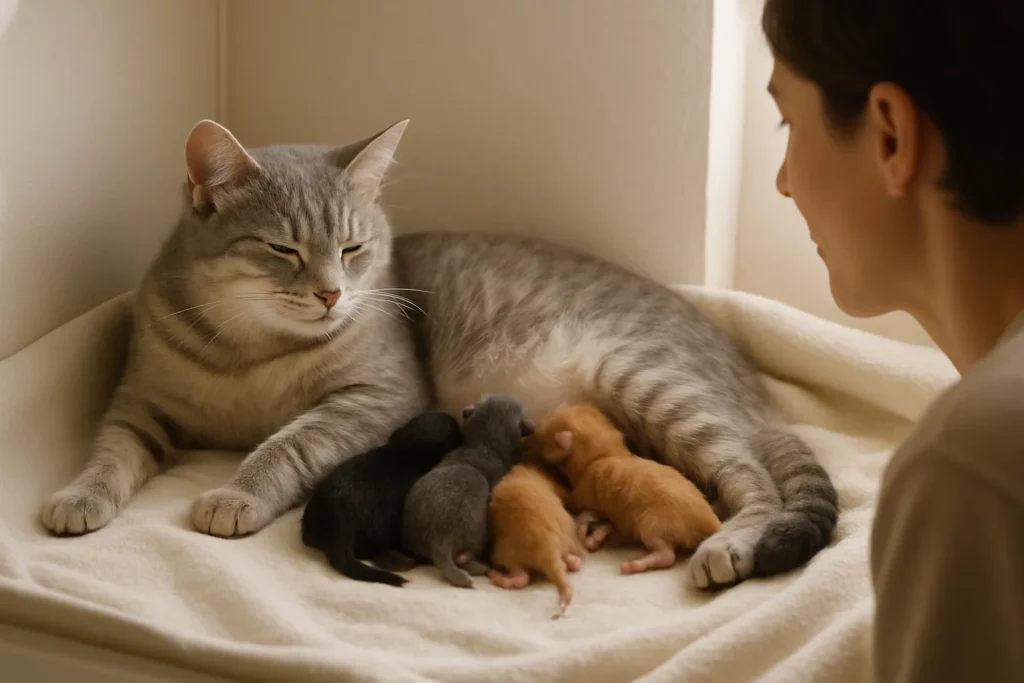
Start by checking the overall situation without disturbing the family. The mother and kittens should be in a warm, quiet, low-traffic area where she can rest and nurse. Let her clean the kittens and settle them unless one is clearly in trouble.
Look briefly at each kitten. A healthy newborn should be breathing, warm, and able to reach the mother. Avoid excessive handling, but act promptly if a kitten is cold, trapped, limp, or not moving normally. If you are unsure whether a kitten is breathing or the mother is still in labor, call a veterinarian for immediate guidance.
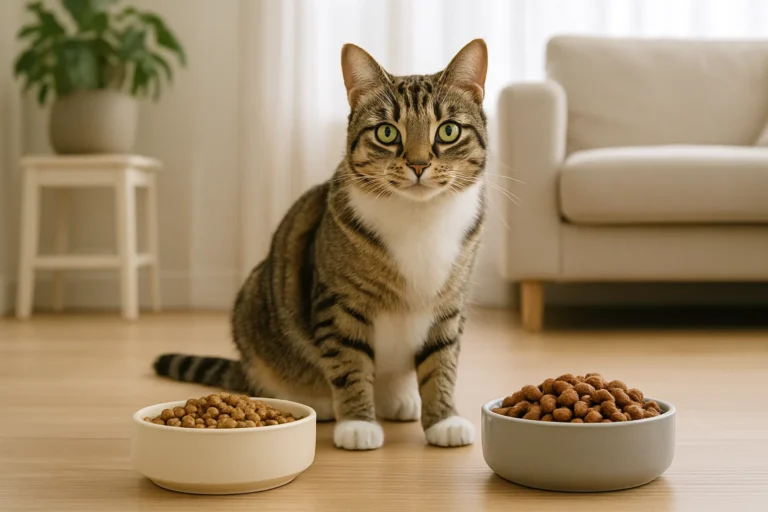
Place fresh water and suitable food close to the nest so the mother does not need to leave the kittens for long. Note how many kittens were born and whether labor appears to have finished. If possible, keep track of placentas, but do not put yourself or the mother at risk trying to inspect or remove anything.
- Keep the area warm, quiet, and away from other pets and children.
- Allow the mother to groom and settle the kittens.
- Check that every kitten is breathing, warm, and near the mother.
- Provide food and fresh water within easy reach.
- Avoid unnecessary handling and repeated nest changes.
- Contact a veterinarian if a kitten is limp, cold, trapped, or unable to nurse.
What Is Normal After a Cat Gives Birth
A mother cat commonly grooms her kittens repeatedly, stays close to the nest, and acts protective. She may be tired, pant briefly after labor, or vocalize more than usual while she settles. Mild meowing by itself does not always indicate a problem.
Newborn kittens generally sleep much of the time and wake for short nursing periods. They should remain warm and close to their mother rather than becoming scattered around the nest. Some discharge can occur after birth, but heavy bleeding or foul-smelling discharge is not something to watch at home.
The mother may want to remain in the nest for most of the day. She should still be able to drink, eat, and use the litter box. Observe her appetite, energy, breathing, and interaction with the kittens instead of judging her behavior from one moment alone.
- Repeated grooming of the kittens
- Tiredness and mild panting immediately after labor
- Protective behavior around the nest
- Mild meowing or calling
- Kittens sleeping and nursing in short bursts
- A small amount of postpartum discharge
When to Call a Vet Right Away
Call a veterinarian or emergency clinic promptly if the mother has heavy bleeding, foul-smelling discharge, severe or worsening pain, distressed breathing, tremors, seizures, collapse, marked lethargy, or a feverish appearance. Do not wait for these signs to resolve on their own.
Urgent help is also needed if she appears to still be in labor without producing a kitten, if a kitten seems stuck, or if you suspect a placenta may be retained. A mother that ignores all of her kittens or cannot remain alert enough to care for them needs veterinary assessment.
A kitten that is cold, limp, gasping, persistently distressed, or unable to nurse may deteriorate quickly. Keep it warm while contacting a veterinarian, but do not force-feed a weak or poorly responsive kitten unless a professional has told you how to do so safely.
- Heavy bleeding or foul-smelling discharge
- Collapse, extreme lethargy, tremors, or seizures
- Signs of severe pain or distressed breathing
- The mother seems to remain in labor without producing a kitten
- A kitten appears stuck or a placenta may be retained
- A kitten is cold, limp, gasping, or unable to nurse
- The mother completely ignores the litter
Set Up the Nest the Right Way
Use a clean, dry box or enclosed bed with low sides so the mother can enter and leave easily. The nest should be warm without becoming overheated, with enough room for the mother to lie comfortably beside the kittens.
Keep food, water, and a litter box nearby but separate from the bedding. Limit noise, visitors, children, and other pets. A safe quiet nesting area helps the mother relax and makes it easier for you to monitor the family.
If the mother chose another safe location, do not force an immediate move simply because it is less convenient. You can place clean bedding and essential supplies nearby, then discuss a relocation with a veterinarian if the chosen spot is unsafe. Replace wet or dirty bedding carefully while keeping the kittens together and minimizing handling.
- Choose a dry, clean space with low sides.
- Keep the nest warm but not overheated.
- Place food, water, and the litter box nearby but outside the bedding.
- Keep children, visitors, other pets, and loud activity away.
- Avoid repeatedly moving the family.
- Change soiled bedding gently and efficiently.
How to Care for Newborn Kittens With Their Mother
When the mother is attentive and nursing, supportive care is usually better than hands-on intervention. Watch quietly to make sure each kitten reaches a nipple and nurses. A kitten that is repeatedly pushed away, separated from the group, or unable to latch needs closer observation and veterinary advice.
Keep kittens warm and look for a quiet, settled litter near the mother. Constant crying can indicate cold, hunger, illness, or difficulty nursing rather than simple fussiness. Weighing kittens daily at the same time, if you have suitable equipment and can do so safely, can help you notice a kitten that is not progressing.
Do not bathe newborn kittens. Avoid unnecessary handling during the first days, and wash your hands before brief health checks. If the mother is caring for them normally, do not separate the kittens for routine attention.
- Check that each kitten can latch and nurse.
- Keep the kittens warm and close to the mother.
- Treat constant crying as a reason to investigate.
- Weigh kittens daily if you can do so safely.
- Avoid bathing newborn kittens.
- Handle the litter as little as practical.
What to Feed the Mother Cat After Giving Birth
Offer the mother frequent meals or access to suitable kitten food while she is nursing. Kitten food is formulated to provide the concentrated nutrition needed during growth and can support a nursing mother’s increased energy demands. Wet food can also help provide fluids and calories.
Keep fresh water available at all times and place it close to the nest. She may eat more than usual while breastfeeding, so do not restrict food unless your veterinarian gives you a specific plan. Daily calorie needs vary with body size, health, litter demands, and other factors; ask your veterinarian for individualized feeding guidance.
Homemade food is not ideal as a complete diet unless it has been formulated with veterinary nutrition guidance. A sudden loss of appetite after birth, repeated vomiting, or a mother who is too weak to eat should prompt a veterinary call.
- Offer kitten food frequently or keep it available as advised by your veterinarian.
- Provide fresh water at all times.
- Use wet food to help support fluid and calorie intake.
- Expect her nutritional needs to be higher while nursing.
- Do not rely on unbalanced homemade meals as a complete diet.
- Take loss of appetite or weakness seriously.
If Your Cat Keeps Meowing After Giving Birth
A mother cat may keep meowing because she is calling to her kittens, seeking reassurance from you, or reacting to the unfamiliar experience. First, check whether all kittens are close to her, warm, and nursing. Make sure the nest is quiet, clean, and comfortable.
Meowing is more concerning when it comes with restlessness, repeated straining, obvious pain, heavy discharge, weakness, or a refusal to care for the litter. These signs can point to a medical problem or continued labor, so contact a veterinarian rather than trying to calm her with repeated handling.
You can sit nearby and speak softly, but let her choose whether she wants contact. Reassurance should not involve frequent nest changes or separating her from the kittens.
- Check that every kitten is present, warm, and nursing.
- Confirm that the nest is quiet, clean, and comfortable.
- Offer calm reassurance without crowding her.
- Watch for pain, restlessness, weakness, or continued labor.
- Call a veterinarian if vocalizing accompanies warning signs.
Mistakes to Avoid With a New Mother Cat and Litter
The safest approach is usually quiet monitoring. Do not move the kittens repeatedly, separate them from their mother without a safety or medical reason, or invite many visitors to handle them. Stress can make the mother restless and may interfere with calm nursing.
Do not give cow’s milk to kittens. Newborn kittens have specialized nutritional needs, and a kitten that cannot nurse requires veterinary guidance about an appropriate milk substitute and feeding technique. Never force liquid into a cold, weak, or poorly responsive kitten.
Do not assume all crying is harmless, and do not ignore changes in the mother’s appetite, discharge, breathing, or behavior. A short call to a veterinary clinic is preferable to delaying care when a newborn or mother seems unwell.
- Do not move the kittens repeatedly.
- Do not separate the family without a clear safety or medical reason.
- Do not allow lots of visitors to handle the litter.
- Do not give cow’s milk to newborn kittens.
- Do not assume persistent crying is harmless.
- Do not overlook changes in appetite, discharge, or behavior.
What to Expect Over the Next Few Days and Weeks
During the first day, focus on warmth, nursing, rest, hydration, and close observation of the mother. Confirm that the kittens remain with her and that she is eating, drinking, and behaving normally between nursing periods.
During the first few days, continue checking the mother’s energy, appetite, discharge, and willingness to care for the litter. Track kitten strength and, if possible, daily weights. Keep the nest dry and make only the changes needed for hygiene.
Over the following weeks, kittens gradually become more active. Around the stage when they begin exploring and showing interest in food, ask your veterinarian how to manage the transition from nursing. Plan veterinary care for the kittens and mother rather than waiting until a problem appears.
- First 24 hours: prioritize nursing, warmth, rest, and monitoring.
- First few days: watch the mother closely and track kitten strength.
- First couple of weeks: maintain nest hygiene and continue daily checks.
- Around the third or fourth week: expect increased activity and begin discussing transition steps with a veterinarian.
- Plan age-appropriate veterinary care for the entire family.
If You Can’t Keep the Kittens
Begin planning early, but do not separate newborn kittens from their mother too soon. They need her care while they nurse, develop, and learn normal feline behavior. A veterinarian or reputable rescue can help you plan an appropriate weaning and adoption timeline.
If you need help placing the litter, use a reputable rescue organization or screen adopters carefully. Avoid handing kittens to unknown people without asking about their experience, household, other pets, and plans for veterinary care.
Keep basic records of each kitten’s appearance, health observations, socialization, and veterinary visits. Clear records help future adopters and make it easier to identify a kitten that needs additional attention.
- Start planning homes well before the kittens are ready to leave.
- Keep the litter with the mother until an appropriate adoption stage.
- Contact reputable rescues if you need placement support.
- Screen potential adopters responsibly.
- Keep health and socialization records for each kitten.
When to Spay the Mother Cat After Having Kittens
The best time to spay a mother cat depends on her recovery, nursing status, overall health, and your veterinarian’s assessment. Ask the clinic about timing early, even if the procedure will not happen immediately, so the appointment does not get forgotten.
A female cat can become pregnant again surprisingly soon after giving birth. Keep her indoors and away from intact male cats while you arrange veterinary care. Your veterinarian can explain how nursing, milk production, and surgical recovery affect the recommended schedule.
The kittens will also need their own age-appropriate veterinary plan, including examinations and preventive care. Ask the clinic to outline the next steps for the whole litter.
- Ask a veterinarian about timing based on recovery and nursing.
- Plan the appointment early.
- Keep the mother away from intact male cats.
- Arrange age-appropriate veterinary care for the kittens too.
Stay Calm, Monitor Closely, and Call When Something Seems Wrong
For the first hours after birth, the essentials are simple: give the mother a quiet nest, keep food and water nearby, confirm that the kittens are warm and nursing, and avoid unnecessary interference. Frequent calm checks are more useful than constant handling.
Trust changes in behavior as a reason to pay closer attention. Heavy bleeding, severe weakness, breathing trouble, continued labor, or a kitten that is cold or unable to nurse warrants prompt veterinary help. With steady monitoring and early planning, you can support the mother and litter safely through the next stage.
Is it normal for a mother cat to keep meowing after giving birth?
Mild meowing can be normal because she may be calling the kittens or seeking reassurance. Check that the kittens are warm and nursing and that the nest is comfortable. Meowing with pain, restlessness, weakness, heavy discharge, or continued straining needs prompt veterinary advice.
What should I feed a mother cat after giving birth?
Offer frequent meals or access to suitable kitten food, along with fresh water at all times. Wet food can help provide fluids and calories. Avoid using homemade meals as a complete diet unless they were formulated with veterinary nutrition guidance.
How do I know if the kittens are okay with their mother?
They should be warm, close to her, and able to latch and nurse. Occasional quiet sleeping is expected, but constant crying, coldness, weakness, or repeated difficulty nursing requires closer assessment and a veterinary call.
When can a cat be spayed after having kittens?
Timing depends on the mother’s recovery, health, and whether she is still nursing, so your veterinarian should set the schedule. Arrange the discussion early and keep her away from intact male cats because she can become pregnant again soon after giving birth.
What should I do if one kitten is not nursing?
Check that the kitten is warm and can reach the mother without being pushed away. Do not force-feed a cold, weak, or poorly responsive kitten. Contact a veterinarian promptly for instructions, because a newborn that cannot nurse can become seriously unwell.
Should I move the kittens into a box if the mother chose another spot?
If the location is safe, avoid forcing an immediate move. Place clean bedding, food, water, and a litter box nearby and reduce noise. If the location is dangerous or unsanitary, contact a veterinarian for advice on moving the family with minimal stress.
How often should newborn kittens eat?
Newborn kittens normally nurse in frequent short bursts and sleep between feeds. Watch for each kitten to latch and remain warm and settled. If a kitten is not nursing, cries constantly, or seems weak, contact a veterinarian rather than relying on a fixed schedule.
Is it normal for the mother cat to leave the nest briefly?
A mother may leave briefly to eat, drink, use the litter box, or stretch. Keep these supplies close to the nest and make sure the kittens remain warm and together. Prolonged absence or complete refusal to return warrants veterinary advice.
How warm should the room be for newborn kittens?
The nest should be comfortably warm but not overheated, with the kittens able to stay close to their mother. Avoid direct heat that could burn or overheat them. Cold kittens, scattered kittens, or persistent crying are reasons to contact a veterinarian promptly.