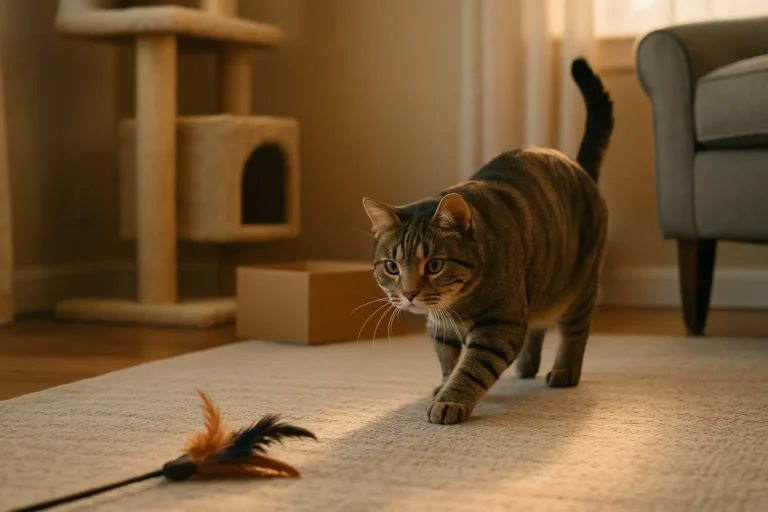
If your cat wakes you with nighttime meowing, zoomies, scratching, or attacks on your feet, the problem is usually not that your cat refuses to sleep. Cats naturally sleep in several shorter periods and often become most active around dawn and dusk. An indoor cat can also accumulate energy during a quiet day, then spend it when you are ready for bed.
So, how do I get my cat to sleep at night? The most reliable approach is a schedule reset rather than a one-time trick. Use daytime enrichment, purposeful evening play, a suitable final meal, a calm sleep environment, and the same response to overnight wake-ups. First, rule out hunger, stress, discomfort, and illness; then give the new routine enough time to become predictable.
Why Your Cat Is Awake When You Want to Sleep
Cats are generally crepuscular, which means their natural activity often rises around dawn and dusk. That is different from being strictly nocturnal. A cat may sleep for part of the evening, become lively late at night, and then wake again before sunrise.
Your household routine can strengthen this pattern. If meowing produces food, play, attention, or a door opening, your cat learns that nighttime behavior works. Indoor cats may also have too little climbing, chasing, exploring, or social activity during the day, leaving stored energy for bedtime.
Life stage matters. Kittens tend to have short activity and sleep cycles, adults may adapt well to a stable household schedule, and senior cats can wake because of discomfort, anxiety, sensory changes, or cognitive changes. The first goal is to distinguish ordinary activity from a new or concerning change.
- Normal dawn-and-dusk activity can be redirected, but it should not be treated as misbehavior.
- A cat that suddenly becomes restless at night deserves closer attention than one with a long-standing routine.
- A predictable daytime schedule makes the evening routine easier to establish.
Rule Out Problems Before You Start Training
Training will not solve a need that is being ignored. Check the basics first: your cat should have access to a clean litter box, fresh water, a comfortable resting place, and an environment that feels safe. Consider whether meal timing leaves a long gap before morning or whether another pet is blocking food, water, litter, or preferred sleeping areas.
Stress can also disrupt sleep. A move, new pet, changed work schedule, visitors, construction, conflict between cats, or a rearranged room may make nighttime the only quiet period in which your cat seeks reassurance. Reduce avoidable stress and give your cat a consistent retreat rather than forcing interaction.
Contact a veterinarian before behavior work if nighttime wakefulness is sudden, intense, or accompanied by changes in appetite, thirst, litter-box use, weight, grooming, mobility, vocalization, or general behavior. Pain, thyroid problems, cognitive changes, and other health issues can require medical assessment. Do not assume an older cat is simply being difficult.
- Check whether hunger or an overly long gap between meals is triggering wake-ups.
- Inspect the litter area and sleeping spaces for cleanliness, access, temperature, and safety.
- Look for recent changes in the household or signs of fear and conflict.
- Seek veterinary guidance for a new pattern or any change that suggests illness, pain, or confusion.
How to Get Your Cat to Sleep at Night: The Reset Plan
Getting a cat to sleep at night requires a sequence that moves your cat from appropriate activity toward rest. The order matters more than trying to exhaust your cat randomly. Start by setting consistent anchors for waking, meals, play, quiet time, and bedtime.
Use the following plan every day, adjusting it to your cat’s age, health, appetite, and normal schedule:
- Structure the day. Keep meals, social time, play, and bedtime broadly predictable. Add daytime enrichment so the cat is not inactive for the entire day.
- Plan late-day activity. Offer interactive play during the late afternoon and again in the evening, rather than waiting for your cat to demand it at midnight.
- Follow a natural sequence. Use chase and pounce play, allow a short cool-down, then offer the final meal. This gives the evening a clear transition toward grooming and sleep.
- Prepare the overnight environment. Make water, litter, resting spots, and safe quiet enrichment available before you go to bed.
- Stop rewarding demands. If the cat is safe and its needs are met, avoid turning nighttime meowing or pawing into food, play, conversation, or access to the bedroom.
- Repeat the same response. Occasional exceptions can teach your cat that persistent behavior eventually succeeds, so consistency matters more than a perfect first night.
Set Up the Ideal Evening Routine
Begin the final high-energy play session well before you expect to fall asleep, not after you are already in bed. Choose a time that leaves room for your cat to chase, pounce, climb, and settle without immediately shifting from excitement to forced quiet. Predictable timing is more useful than making one session unusually intense.
Use a wand toy, a toy that can be chased across the floor, or an activity that encourages climbing and pouncing. Keep your hands and feet out of the game so your cat does not learn that attacking you is part of bedtime. Let your cat catch the toy periodically, then end the session calmly rather than stopping at the peak of excitement.
After play, provide a brief cool-down period and then the planned bedtime meal. The complete routine may be short or extended depending on your cat’s energy and attention, but it should feel repeatable: active play, calm transition, food, grooming, and rest. If your cat ignores a toy, rotate activities and include food puzzles or climbing opportunities earlier in the day.
- Schedule the evening play session before your own bedtime routine is finished.
- Use movement that resembles chasing prey rather than waving a toy passively.
- End with a calm transition and the cat’s normal meal plan.
- Keep the sequence similar each night, even when the session itself is brief.
Use Feeding to Support Sleep, Not 4 A.M. Wake-Ups
Food can either support the schedule or train your cat to wake you. Feeding immediately after nighttime meowing teaches a simple association: make noise, and breakfast arrives. If your cat wakes at 4 a.m., moving the meal earlier in response can make that wake-up more persistent.
Review the whole feeding schedule rather than simply withholding food. Dividing the cat’s usual daily food across suitable meals may prevent an overly long gap, but changes should not reduce the cat’s overall nutritional intake. A bedtime meal can fit some households, while an automatic feeder may separate breakfast from your presence and reduce the reward value of waking you.
Choose feeding changes with your cat’s life stage, health, appetite, and veterinarian’s advice in mind. Do not use sedatives, human sleep medicine, essential oils, or improvised home remedies to make a cat sleep. Sleep aids can mask a problem or create a safety risk, and medication should come only from a veterinarian.
Daily calorie needs depend on body weight, life stage, and activity. Ask your veterinarian for individualized feeding guidance.
- Do not make nighttime demands the event that starts breakfast.
- Keep the cat’s overall daily food plan appropriate rather than simply cutting food.
- Consider separating the morning meal from your waking time with a feeder if it suits your household.
- Ask a veterinarian before changing feeding substantially or using any medication.
Train Better Bedroom Boundaries
Decide first whether your cat will sleep in the bedroom or outside it. Either arrangement can work, but changing the rule from night to night makes the boundary difficult to understand. Make the chosen space comfortable before bedtime so the boundary is not merely a restriction.
If your cat sleeps in the room, provide an approved bed or perch away from your face and feet. Remove stimulating toys from the bed, protect cords, and keep late-night interaction boring. If your cat sleeps outside the room, prepare a safe area with water, a clean litter box, a comfortable bed, and appropriate quiet enrichment.
For scratching, meowing, or pawing at the door, first confirm that your cat is safe and does not need care. Then respond consistently. Opening the door, speaking through it, or offering food during an outburst can reward the behavior. A gradual boundary may be easier for a highly anxious cat than an abrupt change, especially after a move or adoption.
- Choose one overnight arrangement and apply it consistently.
- Offer a comfortable alternative rather than relying on punishment.
- Avoid turning door scratching or nighttime meowing into a conversation.
- Reassess the plan if the cat shows fear, distress, or a sudden change in behavior.
What to Do When Your Cat Wakes You Up at Night
Your response should match the cause without creating a new reward. Before ignoring a disruption, check for genuine needs and unusual symptoms. Once those are addressed, keep your reaction quiet, brief, and consistent.
- Meowing for food: Do not feed at the moment of the meowing. Keep meals on the planned schedule, and consider adjusting the daytime distribution or using a feeder with veterinary guidance.
- Cat zoomies at night: Avoid chasing or joining the race. Increase structured play and daytime enrichment, then use the evening play-to-meal sequence before bed.
- Pouncing on feet or face: Keep still if you can do so safely, avoid using hands as toys, and redirect daytime play toward toys that create distance between you and the cat.
- Scratching at the bedroom door: Make sure the overnight area meets your cat’s needs, then avoid opening the door in response to scratching. Protect the door and provide an appropriate scratching surface outside it.
- 4 or 5 a.m. wake-ups: Do not let the early wake-up automatically move breakfast earlier. Keep the room dark and quiet, and use a consistent feeding cue that is separate from your own reaction.
Mistakes That Keep the Problem Going
Many nighttime problems persist because the cat receives an occasional payoff. Intermittent rewards are especially confusing: if meowing works only sometimes, your cat may try harder or continue for longer before giving up.
Avoid playing only after your cat starts bothering you. That pattern turns pestering into an invitation. Likewise, avoid feeding immediately after being woken, changing the schedule every day, or assuming that keeping your cat awake all day will safely solve the issue. Cats need rest, and forced sleep deprivation can increase stress rather than create a healthy routine.
Random sleep products are not a substitute for diagnosis and routine. A calming aid may be appropriate in some circumstances, but it should be discussed with a veterinarian, particularly if your cat’s behavior has changed or the product contains ingredients intended for people.
- Do not reward the behavior after ignoring it for several nights.
- Do not use your hands or feet for exciting play.
- Do not make large feeding or activity changes without considering health and life stage.
- Do not punish, frighten, or physically restrain a cat for being active.
How Long It Takes to Change Nighttime Habits
A mild, recently formed habit may begin to improve within days when the reward stops and the evening routine becomes predictable. A behavior that has been reinforced for a long time often takes a few weeks of consistent responses. Progress may appear uneven: a better night followed by a difficult one does not necessarily mean the plan has failed.
Stress, age, health problems, household conflict, and an irregular human schedule can slow the change. Keep a simple record of bedtime, play, meals, wake-ups, and unusual symptoms so you can identify patterns instead of judging one night in isolation.
Adjust the plan when the cat’s needs, response, or environment make a step impractical. Seek professional help if there is no meaningful improvement after consistent routine changes, if the behavior escalates, or if any medical or welfare concern appears.
- Look for trends across several nights rather than expecting an instant result.
- Keep the reward structure consistent while the new habit develops.
- Treat new symptoms or major behavior changes as reasons for veterinary advice, not simply longer training.
Special Cases: Kittens, New Cats, and Senior Cats
Kittens often need more frequent meals, shorter play cycles, and extra opportunities to rest. Their nighttime activity may reflect an immature routine rather than deliberate attention-seeking. Kitten-proof the overnight area, provide safe enrichment, and avoid expecting an adult sleep pattern immediately.
A newly adopted cat may be unsettled by unfamiliar people, sounds, smells, and household rules. Give the cat a quiet base area and introduce the broader home gradually. The informal 3-3-3 adjustment idea is best treated as a reminder that settling in can happen in stages, not as a fixed timetable or a promise that every cat will adjust the same way.
Senior cats deserve particular care when they begin waking at night. Comfort needs, pain, sensory changes, anxiety, and cognitive changes can all affect rest. Arrange a veterinary check for a new senior-cat pattern, and make food, water, litter, and resting areas easy to reach without forcing unnecessary stairs or long trips.
- Give kittens shorter, age-appropriate activity periods and frequent chances to rest.
- Let new cats decompress before expecting a polished household routine.
- Treat new nighttime vocalization in a senior cat as a change worth investigating.
- Adapt the environment to mobility, confidence, and access needs.
A Consistent Routine Is the Real Sleep Solution
To get your cat to sleep at night, build the conditions for rest instead of trying to force sleep. Meet basic needs, add daytime enrichment, schedule evening chase-and-pounce play, follow it with food, and make the overnight boundary predictable.
If your cat continues waking you, focus on the pattern: what happens before the wake-up, what your cat gains from it, and whether a health or stress issue could be involved. Calm consistency usually outperforms quick fixes, while sudden or concerning changes deserve veterinary attention.
What to do when a cat won’t sleep at night?
Use a consistent daily schedule with daytime enrichment, an evening play session, a calm transition, and a planned final meal. Prepare a comfortable overnight area and avoid rewarding safe nighttime demands with food, play, or attention. Do not use human sleep medicine or unapproved sedatives.
How do I get my cat to stop waking me up at night?
Identify whether the wake-up is caused by hunger, boredom, stress, access problems, or a medical concern. Then keep meals and play on a schedule, separate breakfast from your reaction, and respond consistently when the cat is safe. Strongly reinforced habits may take a few weeks to change.
Do cats sleep at night like humans?
Not usually. Cats sleep in multiple periods and are often most active around dawn and dusk, so their pattern does not naturally match a human night. Indoor cats can learn a household-friendly routine when activity, food, and quiet time are predictable.
What can I give my cat to sleep at night?
Do not give your cat human sleep medicine, sedatives, essential oils, or improvised remedies. Address routine, enrichment, feeding, and environmental needs first. If sleep disruption continues or your cat seems uncomfortable, ask a veterinarian whether an underlying problem or supervised treatment needs attention.