The right amount of dry food for a cat depends on more than the scoop size printed on a bag. Calorie needs are influenced by current weight, ideal weight, age, activity level, reproductive status, health, and whether the cat also eats wet food or treats.
To estimate how much dry food should a cat eat, start with the food’s calorie information rather than cups alone. Then compare the portion with your cat’s body condition, appetite, energy, and weight trend, and ask a veterinarian for individualized guidance when weight or health is changing.
Start With Calories, Not Just Cups
Dry foods differ in calorie density. One food may provide considerably more energy in the same scoop than another, so a cup-based recommendation is only meaningful when you know which food it describes. This is why the answer to how much dry food for a cat cannot be based on volume alone.
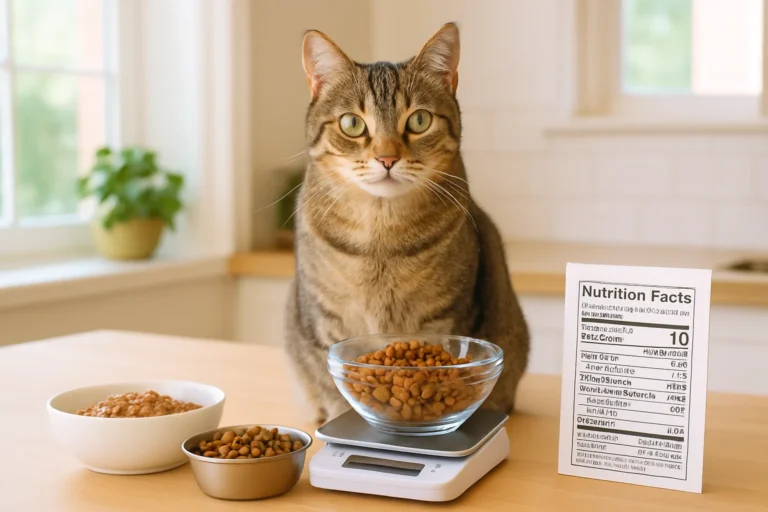
Look on the packaging for a calorie statement, usually expressed per cup, kilogram, or gram. Use the unit that appears on your label. The basic process is to determine the cat’s estimated daily calorie allowance, divide that allowance by the food’s calories per cup, and measure the resulting portion. If the label gives calories per gram, divide the daily allowance by that figure instead.
A kitchen scale is often more consistent than a scoop because it avoids loosely or tightly filling a measuring cup. Weighing food is especially useful when a cat needs careful portion control, when the food changes, or when several people feed the same pet.
Treat the label as a starting point, not a guaranteed prescription. Feeding directions may not account for a cat’s body condition, indoor lifestyle, neutering status, or the calories supplied by other foods.
Daily calorie needs depend on body weight, life stage, and activity. This article explains how veterinarians estimate energy requirements without publishing a precise chart here. Ask your veterinarian for individualized feeding guidance.
- Find the food’s calorie density on the package.
- Estimate the cat’s daily calorie need with veterinary guidance when appropriate.
- Convert the daily calorie allowance into cups or grams using the label information.
- Divide the daily amount among the meals offered.
- Monitor body condition and adjust with professional guidance if needed.
How Much Dry Food Should a Cat Eat Per Day?
A healthy adult cat’s daily dry food amount should be based on energy needs rather than a universal cup range. Two cats of the same apparent size may need different portions because they differ in muscle mass, activity, age, metabolism, and body condition.
Use the cat’s ideal body weight and body condition as important reference points. A cat carrying excess weight should not automatically receive enough food to maintain its current size, while a thin cat may need a carefully planned increase. The appropriate amount is the portion that supports a stable, healthy condition over time.
Indoor and neutered cats often require less food than cats that roam, exercise extensively, or have unusually high activity. However, an indoor cat’s portion should still be based on observation rather than a blanket rule. Recheck weight, body shape, appetite, energy, and stool quality after a feeding change.
If you are deciding how much should I feed my cat dry food, begin with the package guidance and calorie calculation, then refine the amount gradually. A veterinarian can help establish a suitable target when the cat is overweight, underweight, growing, elderly, pregnant, nursing, or affected by illness.
Cat Dry Food Feeding Chart by Weight
A cat feeding chart by weight is useful for organizing the decision, but a reliable chart must also include calorie density and the cat’s circumstances. Without verified calorie requirements and a specific food label, a table of cups, grams, or calories can give a false sense of precision.
Use your cat’s weight as one input, then check whether that weight is appropriate for the cat’s frame and body condition. Next, read the food’s calorie statement and convert the recommended energy intake into the unit you actually measure. The result may be expressed as a daily number of grams or a volume such as cups, but the correct value will vary by product.
For a practical chart at home, make columns for body weight, ideal body condition, daily calorie guidance from your veterinarian, food calories per cup or gram, and calculated daily food. Keep a separate note for wet food and treats so they are not accidentally added on top of the daily allowance.
This approach is more dependable than copying a generic chart because it recalculates the portion when you change brands, recipes, or feeding goals.
- Record current weight and assess whether it is close to the cat’s ideal weight.
- Write down the food’s calorie density exactly as shown on the label.
- Use individualized calorie guidance when the cat’s weight or health needs attention.
- Convert calories into grams or cups and divide the daily portion between meals.
- Review the result regularly instead of treating the chart as permanent.
How Life Stage and Lifestyle Change the Amount
Life stage can change both the amount of food a cat needs and how that food should be offered. A kitten’s needs are related to growth, while an adult’s portion is aimed at maintenance. Senior cats may need adjustments based on muscle mass, appetite, activity, and health status.
Kittens generally need energy-dense nutrition and more frequent meals than adult cats. Their portions should follow the food’s kitten-specific guidance and be reviewed as they grow. A kitten that is not eating well, is failing to grow, or has persistent digestive signs needs veterinary attention.
Healthy adult cats usually do best when their daily food is matched to body condition and activity. An indoor cat feeding amount may need to be lower than the portion for a very active outdoor cat, but individual variation is substantial.
For a senior cat, dry food amount should reflect more than age alone. Changes in appetite, thirst, muscle, weight, or digestion should prompt a veterinary check rather than an unsupervised diet change.
Pregnant or nursing cats have special nutritional requirements. Do not apply an adult maintenance portion without veterinary advice; a veterinarian can recommend an appropriate food and feeding plan for that stage.
How Much Dry Food Should a Cat Eat With Wet Food?
When a cat eats both wet and dry food, the two portions should share one daily calorie budget. Do not feed the full dry-food recommendation and add a full wet-food serving unless the label instructions specifically account for that combination.
Start by identifying the calories supplied by the planned wet food. Subtract those calories from the cat’s daily allowance, then convert the remaining calories into the appropriate amount of dry food using the dry food’s label. This is the central rule for mixed feeding cat portions.
For example, a cat may receive part of its daily energy from wet food at one meal and the balance from measured dry food at other meals. The exact amounts depend on both products’ calorie densities, so the portions must be recalculated when either food changes.
Wet food can alter meal volume and may help some cats feel satisfied, while it also contributes water. Treats, toppers, and table scraps count toward the daily intake as well. If they are offered, reduce the regular food only according to their calorie contribution and follow veterinary advice when precise control is needed.
- Set a total daily calorie target.
- Add the calories from wet food and treats.
- Subtract those calories from the amount available for dry food.
- Convert the remaining dry-food calories into grams or cups.
- Divide the combined food into a consistent daily schedule.
How Much Dry Food Should a Cat Eat Per Meal?
The per-meal amount is simply the cat’s total daily portion divided among the meals offered. If the cat eats only dry food, measure the entire day’s allowance first and then separate it into meal portions. This prevents accidental overfeeding when several people refill the bowl.
Many adult cats can follow a schedule of two or more meals, provided the total daily amount remains controlled. Smaller, more frequent meals may suit cats that beg between meals or prefer grazing, but each day’s portion should still be measured in advance.
Free-feeding can make it difficult to notice how much a cat eats and may encourage excess intake in some cats. Scheduled feeding or a premeasured daily allotment gives you a clearer record. Automatic feeders can divide a measured allowance, but they do not replace monitoring.
Kittens generally need more frequent feeding than adults because they are growing. Seniors may also prefer smaller meals, particularly if appetite or digestion has changed. Any persistent refusal to eat, unusual hunger, or sudden change in meal behavior deserves attention.
- Measure the full daily dry-food allowance.
- Divide it into the number of meals your cat receives.
- Keep wet food and treats within the same daily plan.
- Use a consistent schedule so changes in appetite are easier to notice.
Adjusting Portions for Weight Loss or Weight Gain
For weight management, use ideal weight and body condition rather than current weight alone. A cat that is overweight may need a carefully planned reduction, while a thin cat may need more calories or an investigation into why weight is being lost.
Make portion changes gradually and recheck the cat’s weight and body shape regularly. Avoid aggressive cuts, skipped meals, or sudden overfeeding. Cats with a significant weight problem should have a veterinarian establish the feeding plan and monitor progress.
Rapid weight loss can be dangerous for cats, particularly when a cat stops eating or has an underlying health problem. If appetite falls, vomiting develops, or weight changes unexpectedly, contact a veterinarian instead of assuming the portion is wrong.
Weight gain also warrants investigation when it is unexplained. Reduced activity, medication, changes after spaying or neutering, and health conditions can all affect feeding needs. Keep a record of food, treats, appetite, and weight to make adjustments more informed.
- Base the plan on ideal condition and veterinary guidance.
- Measure every portion, including treats and toppers.
- Make conservative adjustments and monitor the trend.
- Seek veterinary help for rapid, unexplained, or difficult-to-control changes.
Signs Your Cat Is Eating Too Much or Too Little
Body condition is more useful than begging alone when judging whether a portion is appropriate. Gradual increases in body fat, a less defined waist, or difficulty feeling the ribs may indicate that the cat is receiving more energy than it uses. Prominent bones, loss of muscle, or a shrinking body may indicate inadequate intake or an underlying problem.
Energy level and hunger behavior provide context but are not precise measuring tools. Some cats beg despite receiving enough food, while others hide a reduced appetite. Leaving food behind may reflect dislike, dental discomfort, nausea, stress, or simply a portion that is too large.
Vomiting, persistent begging, changes in coat quality, and litter box changes should not automatically be blamed on the feeding amount. These signs can have several causes. Sudden changes in appetite, thirst, urination, stool, activity, or weight are reasons to contact a veterinarian.
Track what the cat actually eats rather than what is placed in the bowl. A simple record of food amounts, treats, wet meals, and weight can show whether a change is related to portions or needs medical evaluation.
- Check body shape and muscle regularly.
- Notice whether appetite changes suddenly or persists.
- Watch for vomiting, stool changes, coat changes, or altered thirst.
- Arrange a veterinary assessment when signs do not resolve or appear abruptly.
Common Mistakes When Measuring Cat Dry Food
Even a well-planned feeding amount can fail when measuring is inconsistent. An overfilled cup, a different scoop, or several unrecorded refills can turn a controlled plan into free feeding without anyone realizing it.
Calorie density is another common source of error. When you switch brands, recipes, or life-stage formulas, do not assume the old volume remains appropriate. Check the new label and recalculate the portion.
Treats, table scraps, dental products, toppers, and food used for medication can add to the daily intake. Include them in the plan rather than treating them as nutritionally invisible.
Revisit portions after spaying or neutering, aging, seasonal activity changes, illness, or a change in household routine. A portion that suited an active young adult may not suit an older indoor cat.
Use the same measurement method each day, label the cat’s food if multiple pets share a home, and keep a written record when weight management matters.
- Do not heap or casually top off measuring cups.
- Recalculate portions when the food changes.
- Count treats and extras as part of the daily intake.
- Review feeding after major lifestyle or life-stage changes.
- Measure the full daily allotment when multiple people feed the cat.
Build a Feeding Plan You Can Recheck
The most dependable answer to how much dry food should a cat eat combines calorie density, ideal body condition, life stage, activity, and all other foods the cat receives. Use the package as a starting point, convert calories into a measured portion, and divide that portion across a consistent schedule.
Because calorie needs vary and the available research here does not support a precise universal chart, consult your veterinarian for individualized calorie targets, weight-loss plans, growth guidance, or sudden appetite and weight changes. Rechecking the plan regularly is safer than relying on one permanent scoop size.
How many grams of dry food should a cat eat per day?
There is no safe universal gram amount because dry foods differ in calorie density and cats differ in energy needs. Use the food’s calories per gram, your cat’s individualized calorie target, and a kitchen scale to calculate the daily portion.
How much dry food should an indoor cat eat?
An indoor cat may need less energy than a highly active outdoor cat, but the correct portion depends on body size, ideal weight, age, activity, and the food’s calorie density. Start with a measured label-based portion and monitor body condition.
How much dry food should a 10-pound cat eat?
Weight alone is not enough to determine the portion. A 10-pound cat may be lean, muscular, or overweight, and different dry foods provide different calories per gram or cup. Use ideal body condition and the food label, with veterinary guidance when needed.
Can I feed dry food only, or should I mix in wet food?
Some cats can eat a complete dry diet, while others do well with a combination of dry and wet food. If you mix foods, subtract wet-food calories from the daily allowance instead of adding wet food on top of the full dry-food portion.