Yes, a cat can eat a small amount of dog food in a pinch, but dog food should not replace cat food. A bite or brief emergency meal is different from using it as a regular diet.
Cats have nutritional requirements that differ from dogs. Their food needs to supply the nutrients and balance appropriate for feline health, so obtain complete cat food as soon as possible and contact a veterinarian if your cat has been eating dog food for more than a brief period.
When Dog Food Is Usually Safe for Cats and When It Is Not
An accidental bite or one or two pieces of dog food is not generally a reason to panic. If your cat eats from the dog’s bowl once, remove the food, offer the cat’s normal meal, and observe for any unusual reaction.
A single meal may be an acceptable short-term stopgap when cat food is temporarily unavailable. The decision depends on the amount, how often it happens, and the cat’s age and health.
Regular feeding is different. Dog food is made for canine nutritional needs, not feline ones, so it is not an appropriate daily diet for a cat. Kittens, pregnant cats, older cats, and cats with health conditions need especially careful feeding guidance.
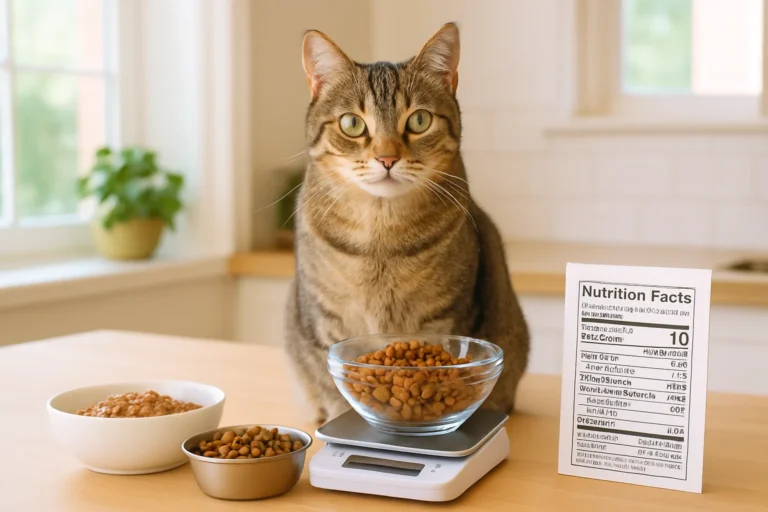
Daily calorie needs depend on body weight, life stage, and activity. Ask your veterinarian for individualized feeding guidance.
- One-off bite: usually monitor and return to the cat’s normal food.
- Emergency meal: use dog food only briefly if no suitable cat food is available.
- Repeated feeding: replace it with complete cat food and ask a veterinarian for advice if the pattern has continued.
Why Cats Cannot Thrive on Dog Food
Cats are obligate carnivores, meaning their nutrition is built around nutrients supplied by animal-based foods. Dogs can have different nutritional pathways and dietary requirements, so a food formulated for dogs is not automatically suitable for cats.
Cat food is designed around feline needs such as appropriate protein levels and nutrients that cats cannot reliably obtain or make in the same way as dogs. Dog food may therefore provide calories without providing the full nutritional balance a cat needs.
This is why the question is not simply whether dog food is poisonous. The more important issue is whether it can support a cat’s health when offered repeatedly. A food can be tolerated as a brief stopgap while still being unsuitable as a long-term diet.
The Biggest Risk: Taurine Deficiency and Other Missing Nutrients
Taurine is an essential nutrient for cats and is one reason feline diets cannot simply be replaced with canine diets. Cat food is formulated to provide taurine in a way that meets feline requirements, while dog food may not provide the same level or nutritional balance.
Other nutrients that require attention include arachidonic acid, preformed vitamin A, and adequate animal-based protein. The concern is not that one mouthful creates a deficiency; it is that repeated substitution can leave a cat’s diet nutritionally incomplete.
Over time, an unsuitable diet may contribute to poor overall condition and problems involving body weight, coat quality, eyes, heart function, or reproduction. These concerns are particularly important when a cat eats dog food as its main food rather than sampling it occasionally.
If your cat has eaten mostly dog food for an extended period, do not try to correct the situation with supplements on your own. A veterinarian can assess the diet, the cat’s condition, and the safest way to return to complete cat food.
- Taurine is a key feline nutrient that should come from a properly formulated cat diet.
- Arachidonic acid and preformed vitamin A are additional feline nutritional considerations.
- Adequate protein and overall nutrient balance matter more than calories alone.
What Happens If a Cat Eats Dog Food Regularly
After a brief exposure, some cats may show no obvious problem, while others may develop digestive upset or lose interest in their usual cat food. Monitor eating, drinking, stool, energy, and body condition rather than assuming that a lack of immediate symptoms means the diet is suitable.
With longer-term feeding, the concern shifts from a single meal to malnutrition caused by an unsuitable nutrient profile. Possible warning signs include weight loss, a poor coat, reduced energy, or ongoing digestive changes.
Kittens have less room for dietary mistakes because they are growing. Senior cats and cats with chronic illness may also be less able to tolerate disruption or nutritional gaps. If any of these cats are relying on dog food, ask a veterinarian for individual guidance rather than waiting for symptoms.
- Watch for vomiting, diarrhea, reduced appetite, unusual tiredness, or weight loss.
- Check whether your cat returns willingly to complete cat food.
- Arrange veterinary advice if dog food has become the main diet or symptoms appear.
Can You Give Cats Dog Food Every Day or for a Week?
Every day is not a safe feeding plan for a cat. Even if the cat appears willing to eat it, dog food is not designed to provide the complete feline nutritional balance required for regular feeding.
A week is also too long when complete cat food is reasonably available. If your cat has eaten dog food for several days, switch back to an appropriate complete cat diet as soon as possible and monitor appetite and digestion.
For a kitten, pregnant cat, senior cat, or cat with a medical condition, feeding dog food for several days is a same-day veterinary question. A veterinarian can help decide whether an examination or a gradual diet change is needed.
Wet Dog Food vs. Dry Dog Food for Cats
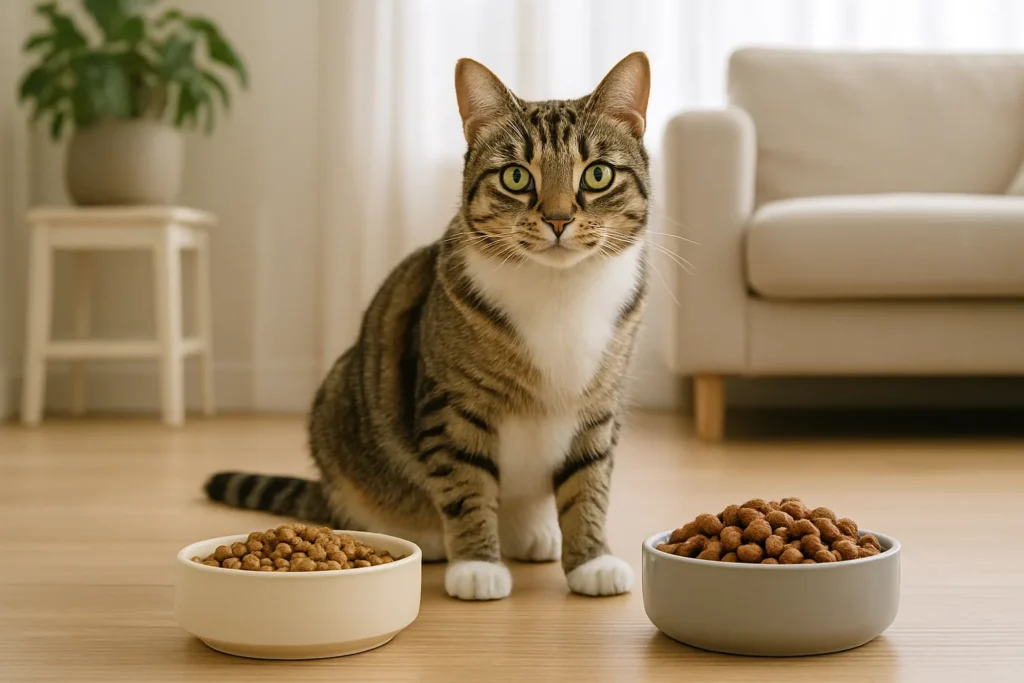
Neither wet nor dry dog food is a proper substitute for complete cat food. The texture changes how the food is eaten, but it does not correct the underlying nutrient mismatch.
Wet dog food may be easier for some cats to eat and can contribute moisture during a brief emergency. Dry dog food may be convenient to offer, but its convenience does not make it nutritionally appropriate for a cat’s regular meals.
If dog food is the only immediately available option, offer only a small temporary amount and obtain cat food promptly. Do not assume that adding water, mixing formats, or choosing a particular texture makes dog food complete for cats.
Can Cats Eat Dog Treats?
An occasional dog treat is not normally a substitute for a cat meal, but its safety depends on the ingredients, size, and the individual cat. Treats should remain occasional and should not displace complete cat food.
Read the label before sharing. Avoid products containing ingredients unsafe for cats, heavily seasoned foods, or pieces that could be difficult for a cat to chew or swallow. Small animals also need smaller portions than dogs commonly receive.
A treat made for dogs is not automatically suitable simply because it is marketed for pets. When in doubt, skip it and use a cat-appropriate treat instead.
What to Feed a Cat If You Run Out of Cat Food
The best option is to obtain complete cat food as soon as possible. If that is temporarily impossible, a small amount of dog food can serve as a short-term stopgap rather than a replacement diet.
Plain cooked chicken or turkey may be another brief emergency option if it contains no seasoning. Offer it without onions, garlic, sauces, or bones. These foods are not a complete long-term diet either, so return to appropriate cat food promptly.
Provide fresh water and avoid experimenting with a long list of human foods. If your cat refuses food, is ill, or has a condition that affects eating, contact a veterinarian instead of relying on emergency substitutions.
- Use complete cat food as soon as it is available.
- If necessary, offer a small amount of plain cooked chicken or turkey without seasoning or bones.
- Avoid onions, garlic, heavily seasoned foods, and bones.
- Treat any substitute as temporary, not nutritionally complete.
What Can You Feed a Stray Cat in an Emergency?
Cat food is ideal for a stray cat, but a brief emergency does not need to become a crisis if it is unavailable. Plain cooked meat without seasoning can work temporarily, and dog food can be used briefly when nothing else suitable is accessible.
Put out fresh water and offer a modest portion in a quiet place. Do not give bones, seasoned leftovers, onions, or garlic. Keep young animals separate from adult feeding assumptions because kittens may need more specialized care.
A weak, injured, very young, or visibly ill stray needs follow-up with a rescue group or veterinarian. If possible, arrange help rather than continuing to use dog food as the animal’s regular source of nutrition.
When to Call a Veterinarian
Call sooner if the cat is a kitten, pregnant, elderly, underweight, or living with a chronic illness. These cats may have more specific nutritional needs or less tolerance for missed meals and dietary disruption.
Seek veterinary advice if the cat has eaten only dog food for several days or longer, or if you cannot get the cat to return to complete cat food. The veterinarian can assess the feeding history and advise on a safe transition.
Get help promptly for vomiting, diarrhea, lethargy, refusal to eat, weight loss, or concerns involving vision or heart function. Do not wait for a suspected nutrient deficiency to become obvious before asking for professional guidance.
- Contact a veterinarian sooner for kittens, pregnant cats, senior cats, or cats with chronic illness.
- Ask for advice after several days or longer on dog food.
- Seek help for vomiting, diarrhea, lethargy, refusal to eat, weight loss, or vision and heart-related concerns.
The Bottom Line on Cats and Dog Food
A small amount of dog food may be acceptable as a one-off or brief emergency measure, but it should not become a cat’s everyday food. Cats need a feline-formulated diet that accounts for nutrients such as taurine, appropriate protein, and other cat-specific requirements.
Return to complete cat food as soon as possible, provide fresh water, and contact a veterinarian when the cat is vulnerable, has relied on dog food for several days, or shows concerning symptoms.
What happens if my cat only eats dog food?
Dog food may not provide the feline nutritional balance a cat needs, including appropriate levels of nutrients such as taurine. Replace it with complete cat food as soon as possible and contact a veterinarian if this has continued for several days or the cat shows weight loss, low energy, or other symptoms.
Can cats eat dog food as a one-off?
A small amount or single emergency meal may be acceptable for an otherwise healthy cat, but dog food should not become a regular diet. Obtain complete cat food promptly.
Can cats eat wet dog food?
Wet dog food may be used briefly when no cat food is available, but it is not a complete substitute for feline food. Its texture does not correct the nutritional mismatch.
What can I feed a stray cat if I do not have cat food?
For a brief emergency, offer plain cooked chicken or turkey without seasoning, onions, garlic, sauces, or bones. A small amount of dog food can also be used temporarily. Provide fresh water and contact a rescue group or veterinarian for kittens, weak cats, or sick cats.