Yes—most cats benefit from regular tooth brushing, and it is one of the most useful parts of cat dental care. Daily brushing is the ideal target, but a consistent routine several times a week is more realistic for many households and is better than occasional, stressful attempts.
The best way to brush cats’ teeth is to begin slowly: use a cat-safe brush or soft dental tool, introduce the sensation in stages, clean the outer tooth surfaces, and stop before your cat becomes overwhelmed. If your cat has painful-looking gums, severe bad breath, swelling, or another mouth problem, arrange a veterinary check before trying to brush.
Yes, You Should Brush Your Cat’s Teeth—Here’s Why
A cat’s teeth collect a film called plaque. If plaque is not regularly disturbed, it can harden into tartar, which is much more difficult to remove at home. Over time, buildup around the gumline can contribute to gingivitis, unpleasant breath, and more serious dental discomfort.
Cats may continue eating, grooming, and acting fairly normal even when their mouths hurt. They are often good at hiding discomfort, so a lack of obvious symptoms does not prove that the mouth is healthy. Regular home care helps you inspect the teeth and gums while reducing the amount of soft plaque that remains on the tooth surfaces.
Brushing is mainly a preventive measure. It can remove fresh plaque, but it will not scrape away hardened tartar or replace a professional dental assessment when disease is already present.
How Often Should You Brush a Cat’s Teeth?
Daily brushing is the ideal routine because plaque returns continually. If every day is not practical, aim for a consistent schedule of about three brushing sessions per week as a realistic starting point. The most useful routine is the one you can maintain without turning dental care into a struggle.
Consistency matters more than an occasional long session. A brief, calm cleaning repeated regularly is preferable to waiting weeks and then trying to hold your cat still for an intensive session. Begin with only the surfaces your cat will tolerate, then gradually increase coverage.
If your cat accepts just a few seconds at first, count that as progress. Building cooperation is part of the process, not a sign that you are doing the routine incorrectly.
When Not to Start Brushing Until a Vet Checks Your Cat
Arrange a veterinary examination before home brushing if you notice bleeding gums, clear mouth pain, a broken tooth, swelling, persistent drooling, pawing at the mouth, difficulty eating, or unusually severe bad breath. These signs can indicate that brushing would be uncomfortable or that the mouth needs treatment first.
Do not try to scrub through active gingivitis or advanced dental disease. A sore mouth can make a cat more fearful of future handling, and brushing cannot remove established tartar. Your veterinarian can assess the mouth and decide whether a professional dental cleaning or another treatment is appropriate.
After the mouth has been checked, ask the veterinary team how and when to restart home care. A gradual routine is usually easier once painful problems have been addressed.
What You Need Before You Brush
Keep the equipment simple. A small cat toothbrush, a soft pet dental brush, gauze, or a finger brush may work, depending on what your cat accepts. Choose a tool that lets you reach the outer tooth surfaces without forcing the mouth open.
Use toothpaste made specifically for pets and follow its label directions. Human toothpaste is not an appropriate substitute because it may contain ingredients that are not intended for cats. Never use baking soda, essential oils, or homemade dental mixtures unless your veterinarian has specifically approved them.
Toothpaste can improve the experience and provide ingredients selected for pet dental care, but the brushing motion does most of the mechanical work. If your cat refuses toothpaste, brushing gently with a damp soft tool can still disturb plaque; it is better to avoid toothpaste temporarily than to use an unsafe product.
- A small cat toothbrush or another soft pet dental tool
- Cat-safe toothpaste, if your cat accepts it
- A quiet place and a few small rewards
- A towel only as a loose comfort aid, never as a way to force the mouth open
The Best Way to Brush Your Cat’s Teeth
Choose a calm time when your cat is relaxed. Sit beside your cat rather than looming over them, and let them move away between attempts. Keep the first sessions very short; the goal is to create a predictable, low-pressure routine.
Start by touching the cheek and briefly lifting one lip. When your cat remains comfortable, use a clean finger to touch the outside of a few teeth. Do not begin by prying the jaws apart. Most early cleaning can focus on the outer surfaces, where plaque commonly gathers and where access is easier.
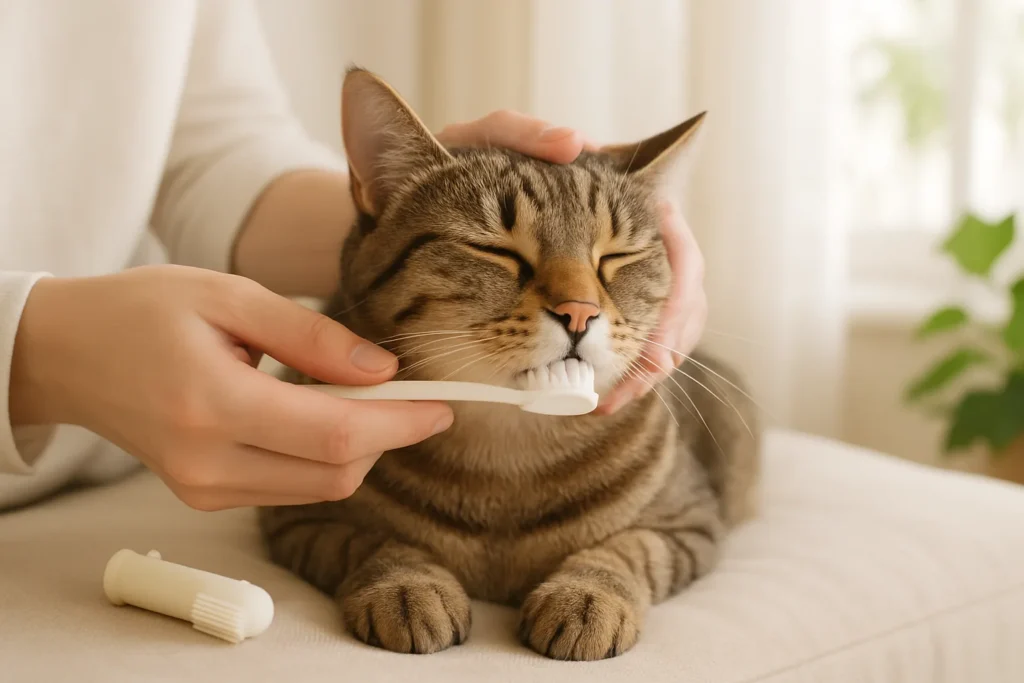
When your cat is ready, place a small amount of cat toothpaste on the brush and use gentle circular motions along the gumline. Work on a few teeth at a time, especially the larger cheek teeth, and keep pressure light. Praise your cat and offer a reward immediately afterward.
Stop while your cat is still coping. Panting, struggling, repeated swatting, flattened ears, or frantic escape attempts mean the session has become too difficult. End calmly and return to an easier step next time.
- Choose a quiet, familiar location.
- Lift the lip briefly instead of forcing the mouth open.
- Touch the outer teeth before introducing the brush.
- Use gentle motions along the gumline.
- Reward cooperation and finish before your cat becomes highly stressed.
How to Brush Your Cat’s Teeth If They Refuse
A cat that refuses brushing usually needs a slower introduction, not more restraint. Work through the steps over days or weeks, depending on your cat’s reactions. Repeat an easy step until it looks routine before moving forward.
Begin by touching your cat’s cheek for a moment and offering a reward. Next, let your cat taste a tiny amount of cat-safe toothpaste from your finger. Then progress to brief cheek rubs, a fingertip touching the outer teeth, and finally a soft brush touching one or two teeth.
Pause and return to the previous step if your cat turns away, becomes tense, swats, hides, or tries repeatedly to escape. If your cat remains relaxed, accepts the reward, and returns willingly, you can gradually extend the contact. Each session should end with something your cat enjoys.
Forcing the mouth open or holding a cat tightly can make future care harder and may increase fear. Gentle restraint for safety is different from pinning a struggling cat down. If progress stops completely, ask your veterinary team about handling support and other dental-care options.
- Touch the cheek briefly and reward calm behavior.
- Introduce the taste of pet toothpaste from a finger.
- Rub the cheek and outer gums for a moment.
- Touch one or two outer teeth with a finger or soft tool.
- Add the brush gradually and increase time only when your cat stays relaxed.
Teeth Cleaning for Your Cat Beyond Brushing
Professional dental cleaning and home brushing serve different purposes. A veterinary dental procedure can address established tartar and allow the mouth to be assessed more thoroughly, while home brushing helps control new plaque between examinations. One does not replace the other.
If brushing is difficult, your veterinarian may discuss dental treats, dental diets, water additives, gels, or dental wipes. These options can provide useful support when used appropriately, but they should not be presented as equal replacements for brushing. Their suitability depends on your cat’s health, preferences, and ability to use them safely.
Choose dental products with guidance from your veterinary team, especially if your cat has mouth pain, dietary restrictions, or a history of dental disease. Avoid anything that requires forceful chewing or handling if it makes your cat uncomfortable.
- Professional dental care for established tartar or suspected disease
- Dental treats or diets selected for your cat’s needs
- Veterinary dental gels or wipes
- Water additives approved for cats
- Regular observation of the teeth, gums, breath, and eating behavior
A Simple Dental Routine for Cat Owners Who Are Starting From Zero
During the first week, focus on cooperation rather than cleaning. Choose a quiet location, touch the cheek or lift the lip briefly, reward calm behavior, and stop. If your cat already shows mouth discomfort, schedule a veterinary check instead of beginning this training.
Over the following weeks, introduce the taste of pet toothpaste, then a finger or soft tool, and finally a few gentle strokes on the outer teeth. Keep sessions brief and increase coverage only when your cat stays comfortable. Missing a day is not a reason to restart; simply return to the next manageable session.
For the long term, work toward daily brushing or a consistent routine of several sessions each week. Continue watching for changes in breath, appetite, chewing, drooling, or behavior, and arrange a veterinary dental check when the mouth looks painful or home care no longer seems comfortable.
- This week: build comfort with cheek touches, lip lifts, and rewards.
- This month: introduce the brush and clean a few outer teeth at a time.
- Long term: maintain a calm, regular routine and monitor for mouth changes.
Make Dental Care Calm, Regular, and Safe
So, are you supposed to brush your cat’s teeth? Yes—but the routine should be gradual and comfortable. Aim for daily care when possible, accept a consistent several-times-a-week routine as a practical starting point, and use only products made for cats.
If brushing is impossible, supportive dental products and professional care may still help, but they do not make painful symptoms safe to ignore. A veterinary check should come first whenever your cat’s mouth appears sore or abnormal.
Can I brush my cat’s teeth with toothpaste made for people?
No. Use toothpaste made specifically for cats or another product approved for feline dental care. Human toothpaste may contain ingredients that are not suitable for cats.
Can I brush my cat’s teeth without toothpaste?
Yes. A damp, soft pet dental tool can still mechanically disturb plaque. This is preferable to using an unsafe product, although your cat may eventually tolerate cat-safe toothpaste as training progresses.
Should I brush my cat’s teeth if they have gingivitis?
Ask a veterinarian first, particularly if the gums bleed, the mouth appears painful, or the breath is unusually bad. Brushing an inflamed or diseased mouth may be uncomfortable, and established tartar requires professional assessment rather than extra-forceful home cleaning.
I’ve never brushed my cat’s teeth—what should I do now?
Start with a veterinary check if you notice pain, swelling, bleeding, drooling, broken teeth, or severe bad breath. Otherwise, begin with brief cheek touches and rewards, then introduce pet toothpaste and a soft brush gradually.