Sudden aggressive behavior in dogs should be treated as both a safety concern and a possible health warning. Growling, snapping, lunging, guarding, or biting can appear when a dog is frightened, overwhelmed, confused, or in pain, and an abrupt personality change deserves a prompt veterinary examination.
If you are asking why does a dog suddenly become aggressive, the behavior may not be as random as it seems. Illness, discomfort, sensory loss, stressful events, changes at home, and previously missed warning signals can all contribute, so the first priorities are preventing contact, identifying urgent symptoms, and arranging appropriate veterinary and behavioral support.
What should you do first if your dog is suddenly aggressive?
Create distance without confronting the dog. Move people and other animals away, close a door or place a secure barrier between them, and give the dog enough quiet space to settle without being watched, touched, or followed.
Do not punish growling, because growling is a warning that helps prevent a bite. Shouting, staring, cornering, grabbing the collar, taking an item by force, or attempting to establish dominance can intensify fear and make the next response less predictable.
Arrange a veterinary examination promptly, even if the incident had an apparent behavioral trigger. A veterinarian can look for pain, illness, medication effects, sensory changes, and neurological problems before a training plan is developed.
- Separate children, visitors, and other pets from the dog until the cause and level of risk have been assessed.
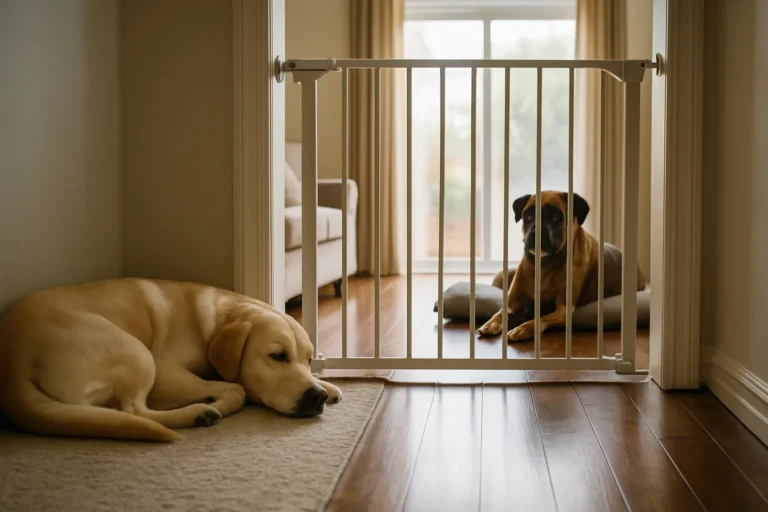
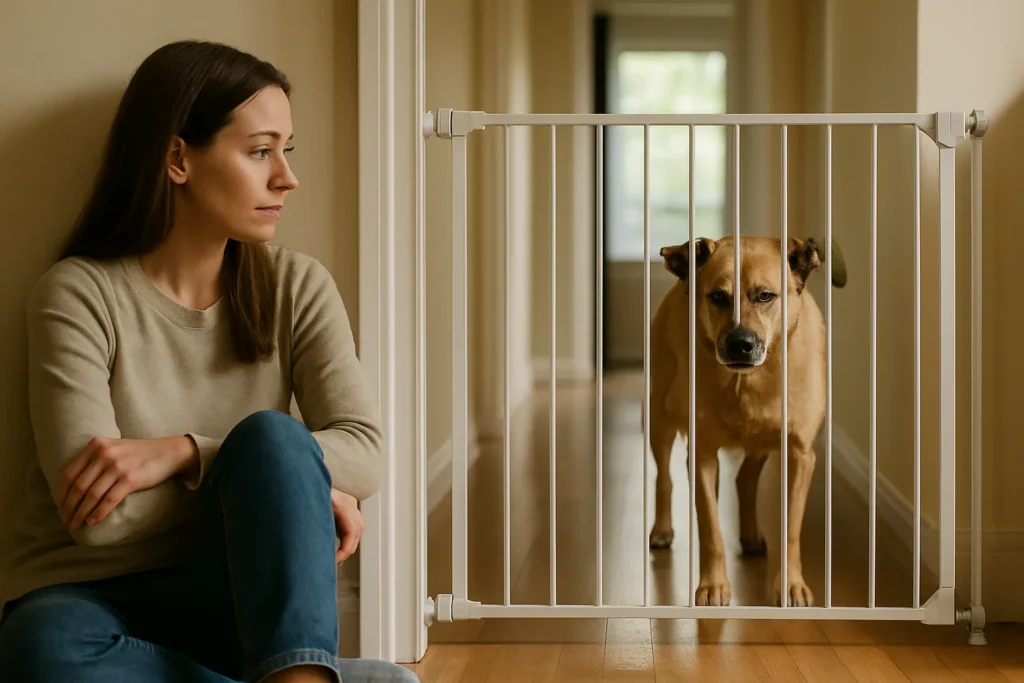
- Use calm exits, closed doors, pet gates, or familiar confinement areas instead of physically moving the dog.
- Avoid reaching for food, toys, bedding, or stolen objects that the dog may be guarding.
- Cancel avoidable encounters with known triggers, including crowded walks, visitors, grooming, and group play.
- Seek emergency assistance if a person or animal is in immediate danger and safe separation cannot be maintained.
- Obtain medical care for any bite that breaks human skin, especially a deep wound or an injury to the hand, face, joint, or a vulnerable person.
When does sudden aggression need a veterinary check right away?
First-time aggression in a previously social or tolerant dog warrants a prompt veterinary appointment. Contact a veterinarian the same day when the change is severe, rapidly escalating, associated with pain, or accompanied by abnormal movement, awareness, or behavior.
Emergency evaluation may be necessary if aggression occurs with collapse, breathing difficulty, repeated vomiting, suspected poisoning, major trauma, seizure activity, inability to walk normally, or profound disorientation. Do not try to restrain a confused, painful, or seizing dog with your hands; call the clinic for safe transport instructions.
- A dog that limps, cries, flinches, avoids touch, guards a body part, or struggles to stand may be reacting to pain.
- A dog that stares blankly, circles, paces, becomes lost in familiar spaces, collapses, or has seizure-like movements may have a neurological problem.
- New difficulty seeing or hearing can cause exaggerated startle responses and defensive aggression.
- Recent illness, injury, surgery, medication use, or a medication change can help explain an abrupt behavioral shift.
- Aggression that appears overnight, occurs during sleep, or becomes prominent at night can be associated with pain, sleep-startle, sensory decline, or cognitive changes.
- Repeated bites, attacks without reliable separation, or increasingly intense threats require urgent professional risk assessment.
Why is my dog suddenly aggressive, and what are the most common causes?
The most common explanations include pain, fear, anxiety, accumulated stress, guarding, frustration, disrupted rest, and medical changes affecting perception or impulse control. Several causes can operate together, such as an arthritic dog becoming startled by a child after a noisy day.
Aggression is usually a distance-increasing behavior rather than evidence that a dog is spiteful or trying to take control of the household. The dog may be trying to protect a painful body part, retain a valued resource, escape an interaction, or stop something perceived as threatening.
1. Pain or physical discomfort can lower a dog’s tolerance.
Pain-related aggression may occur when a dog is touched, moved, approached while resting, fitted with equipment, groomed, or asked to use stairs. Dental disease, arthritis, ear inflammation, skin problems, injury, and abdominal discomfort may be present even when the dog is not crying or visibly limping.
2. Fear or anxiety can produce defensive aggression.
A frightened dog may growl, lunge, or snap when escape feels impossible. New fears can follow a painful procedure, rough interaction, dog fight, frightening noise, or change in the environment.
3. Stress stacking can make the reaction appear sudden.
Stress stacking occurs when several challenges happen before the dog has recovered from the previous ones. Poor sleep, construction noise, visitors, an upsetting walk, and unwanted handling may combine until a normally manageable event triggers an outburst.
4. Guarding and territorial responses can develop or intensify.
Resource guarding can involve food, toys, furniture, doorways, resting areas, or access to a favored person. Territorial behavior may be directed toward unfamiliar people or animals near the home, yard, car, or other spaces the dog considers important.
5. Frustration and overstimulation can push a dog beyond its coping threshold.
A dog prevented from approaching or escaping a trigger may redirect its arousal toward a nearby person or animal. Crowded spaces, fence running, leash tension, intense play, and prolonged excitement can increase this risk.
6. Hormonal, neurological, or cognitive changes can alter behavior.
Diseases affecting the brain or body can change sleep, awareness, perception, pain levels, and behavioral control. These possibilities cannot be diagnosed from aggression alone and require veterinary investigation.
What medical conditions can cause sudden aggressive behavior in dogs?
A health problem should be considered whenever behavior changes abruptly, particularly when aggression is new, uncharacteristic, or associated with handling. Dogs often conceal discomfort, and irritability may appear before owners notice more obvious physical symptoms.
A veterinary workup may include a physical and neurological examination, an oral and ear examination, pain assessment, and diagnostic testing chosen according to the dog’s age, history, and symptoms. Owners should not give human pain relievers or alter prescribed medication without veterinary direction.
- Orthopedic pain from arthritis, spinal disease, muscle injury, or joint problems can make movement and touch threatening.
- Dental disease, ear infections, skin inflammation, urinary problems, and abdominal discomfort can cause irritability or touch avoidance.
- Neurological causes can include seizure-related events, brain disease, nerve pain, or disorders that affect awareness and behavioral control.
- Endocrine or hormonal disorders can influence energy, sleep, discomfort, and behavior, although aggression alone does not identify a specific condition.
- Vision or hearing loss can prevent a dog from recognizing an approaching person and increase defensive startle responses.
- Canine cognitive dysfunction can cause confusion, altered sleep, anxiety, pacing, loss of familiar routines, and nighttime agitation in senior dogs.
- Medication side effects, drug interactions, anesthesia recovery, or post-procedure discomfort can coincide with an abrupt behavioral change.
Why does a dog suddenly become aggressive even without illness?
Once medical contributors have been evaluated, the dog’s recent experiences and the exact context of each episode can reveal behavioral triggers. Fear after a negative encounter, household disruption, social conflict, and repeated stress may change how safely a dog handles situations it previously tolerated.
What looks like a sudden switch may also be the final step in a longer communication sequence. Turning the head away, lip licking, freezing, showing the whites of the eyes, lowering the body, leaving, and stiffening can precede growling or snapping but are easy to overlook.
- A frightening or painful experience can create a new association with a person, place, movement, or handling routine.
- Repeated low-level triggers can accumulate through stress stacking until the dog reacts to a seemingly minor event.
- Conflict can develop around food, toys, furniture, doorways, sleeping areas, or access to people.
- Barrier frustration can occur behind fences, windows, gates, crates, or leashes when the dog cannot approach or retreat.
- Visitors, moving, schedule changes, construction, a new baby, or a new pet can reduce predictability and rest.
- Punishment may suppress early warnings without changing the underlying fear, which can make later bites seem less predictable.
Why is my dog suddenly aggressive toward me, a family member, or one specific person?
Aggression toward owners or family members commonly occurs around touch, movement, resources, resting places, or predictable routines. A dog may react when one person lifts it, fastens a collar, approaches a bed, removes an object, hugs it, or interrupts sleep.
One person may trigger the response because of a distinctive movement, voice, scent, uniform, mobility aid, or history of interactions. That person may also be the one who performs an uncomfortable task, approaches the dog’s guarded space, or unknowingly misses subtle avoidance signals.
Nighttime or sleep-startle aggression can occur when a dog is awakened abruptly, cannot identify who is approaching, or is experiencing pain or cognitive confusion. Avoid waking the dog by touch, keep children away from its sleeping area, and discuss new nighttime episodes with a veterinarian.
Aggression toward family members requires prompt professional attention when it involves bites, appears unrelated to an identifiable context, occurs with confusion or staring, or is increasing in frequency or severity. Do not ask the targeted person to test the dog or repeatedly recreate the situation.
Why is my dog suddenly aggressive toward other dogs?
Aggression toward other dogs can arise from fear, leash or barrier frustration, pain, competition over resources, or changing social tolerance. The setting matters because a dog that reacts on a tight leash may behave differently in a spacious environment, while a dog guarding food or owner attention may react only at home.
Pain can reduce tolerance for being bumped, chased, mounted, or approached near a resting area. A frightening encounter can also create defensive expectations, causing the dog to react earlier or at a greater distance during later meetings.
Social maturity may make some dogs more selective about companions, but a marked or abrupt change still warrants a veterinary check. While waiting for help, avoid dog parks, daycare, on-leash greetings, narrow passing spaces, and shared high-value items.
- Walk at quieter times and increase distance as soon as another dog appears.
- Use visual barriers and separate rooms to prevent fence fighting or conflict between dogs in the home.
- Feed household dogs separately and remove toys or chews that have caused tension.
- Do not hold dogs close together, force greetings, or allow them to fight it out.
- Seek individualized help if there has been a bite, household conflict is escalating, or safe separation is difficult.
If a dog is getting aggressive with age, do dogs get more aggressive as they age?
Age alone does not automatically make dogs aggressive. Many senior dogs remain sociable, but pain, reduced mobility, poorer sleep, sensory decline, and cognitive dysfunction can lower tolerance or make ordinary interactions confusing and frightening.
Hearing loss can allow people to approach without warning, while vision loss can make shadows or sudden movement alarming. Arthritis, dental pain, and spinal problems can make petting, lifting, grooming, or contact with energetic pets uncomfortable.
Cognitive decline may cause nighttime pacing, altered sleep, house-soiling, anxiety, disorientation, changes in social interaction, or failure to recognize familiar routines. Progressive aggression with any of these signs needs prompt veterinary assessment rather than being dismissed as normal aging.
- Schedule an examination when an older dog becomes unusually irritable, avoidant, restless, or sensitive to touch.
- Approach where the dog can see you, speak before coming closer, and avoid waking it with physical contact.
- Provide quiet resting areas that children and other animals cannot enter.
- Reduce slippery surfaces and difficult movement if mobility appears painful, while asking the veterinarian about appropriate assessment and treatment.
- Track whether confusion, sleep disruption, startle responses, or aggression are becoming more frequent.
How can you respond safely without making aggression worse?
Management prevents rehearsals of aggression and protects everyone while the cause is investigated. It is not a substitute for diagnosis or treatment, but it reduces opportunities for an incident and gives the dog more predictable conditions.
After a veterinary workup, seek a qualified behavior professional who uses reward-based, nonconfrontational methods. A veterinary behaviorist is especially appropriate for severe, unpredictable, escalating, or medically complicated aggression, while an experienced credentialed trainer or behavior consultant may assist with lower-risk cases in coordination with the veterinarian.
- Reduce exposure to identified triggers instead of repeatedly testing whether the problem has disappeared.
- Use secure gates, closed doors, separate rooms, or a familiar crate only when the dog already tolerates those arrangements calmly.
- Maintain predictable schedules for meals, walks, sleep, and quiet time whenever possible.
- Allow the dog to move away and stop interactions when its body becomes still, tense, avoidant, or watchful.
- Avoid yelling, leash corrections, shock or prong collars, forced restraint, alpha rolls, and other dominance-based methods.
- Do not attempt to fit unfamiliar safety equipment during an aggressive episode, because hands-on handling can provoke a bite.
- Ask a professional about gradual basket-muzzle conditioning for future safety when appropriate, rather than forcing a muzzle onto a distressed dog.
- Keep children completely outside the dog’s managed area because they should never be responsible for reading warnings or following a behavior plan.
What should you track before your veterinary or behavior appointment?
A written incident log can help professionals identify patterns that are difficult to recall during an appointment. Record observations without deliberately recreating the trigger, and use video only when it can be captured incidentally from a safe location.
Describe behavior objectively, such as freezing, staring, growling, lunging, or making contact, rather than labeling the dog as dominant or unpredictable. Include what happened immediately before and after the reaction.
- Record who or what the dog reacted to and how far away the trigger was.
- Note the time, location, lighting, noise level, and whether the dog had been resting or sleeping.
- Document early body-language changes, including avoidance, lip licking, freezing, staring, stiff posture, or raised fur.
- Record changes in pain, touch sensitivity, sleep, appetite, thirst, mobility, urination, or bowel movements.
- List recent medications, dose changes, illnesses, injuries, procedures, and possible toxin exposures.
- Describe household changes such as visitors, travel, schedule disruption, construction, moving, or the arrival of a person or pet.
- Track whether episodes are becoming more frequent, more intense, less predictable, or more likely to involve physical contact.
- Bring vaccination information, relevant medical records, and a list of previous bites or near bites to the appointment.
Sudden aggression calls for safety, veterinary care, and careful observation.
When a dog is aggressive all of a sudden, create safe separation and arrange a veterinary examination before assuming the problem is disobedience. Pain, illness, sensory loss, fear, stress stacking, guarding, and cognitive changes can all affect behavior.
Avoid punishment and physical confrontation while tracking when and where incidents occur. Prompt medical evaluation and qualified, reward-based behavior support offer the safest path toward identifying triggers, reducing risk, and improving the dog’s comfort.
Frequently Asked Questions
How do you calm an aggressive dog?
Increase distance, remove other people and pets, reduce noise, and allow the dog to settle behind a secure barrier without touching, staring at, cornering, or punishing it. Do not try to soothe an actively threatening dog through hands-on contact, and seek veterinary or emergency assistance if safe separation is not possible.
My dog is aggressive towards other dogs, so what should I do?
Prevent close encounters by choosing quiet routes, creating distance, avoiding dog parks and greetings, and separating household dogs around food, toys, and resting areas. Arrange a veterinary examination for new behavior and obtain individualized professional help, especially after a bite or escalating conflict.
Why is my dog getting more aggressive with age?
An older dog may become more reactive because of arthritis, dental pain, reduced hearing or vision, disturbed sleep, anxiety, or cognitive dysfunction. Aging does not inevitably cause aggression, so a progressive personality change should receive a prompt veterinary assessment.
What breeds have sudden rage syndrome?
The label sudden rage syndrome has historically been associated with English Springer Spaniels and Cocker Spaniels and has been reported in other breeds, but it is rare, controversial, and not diagnosed from breed or aggression alone. Seizure disorders, pain, fear, guarding, and other medical or behavioral causes must be investigated by a veterinarian, with referral to a veterinary neurologist or veterinary behaviorist when indicated.
Why is my dog suddenly aggressive at night?
Nighttime aggression may involve sleep-startle, pain when rising, reduced vision or hearing, anxiety, disrupted sleep, or cognitive dysfunction in an older dog. Avoid waking the dog by touch, provide an undisturbed sleeping area, keep children away, and arrange a veterinary check for new or escalating episodes.
Why is my dog aggressive all of a sudden with one family member?
That person may be associated with painful handling, a guarded resource, startling movements, unfamiliar clothing, or a routine the dog finds frightening. Prevent further confrontations, do not ask the person to test the dog’s response, and seek veterinary and qualified behavioral assessment if the pattern is new, escalating, or associated with a bite.