Why do we love dogs so much? For many people, the answer begins with the way dogs combine affection, attention, play, routine, and dependence in one highly personal relationship. A dog can be a companion, a responsibility, a source of comfort, and an enthusiastic participant in everyday life.
When people ask why people love dogs, they are also asking why the relationship can feel so emotionally important. The answer involves human psychology, the long history of dogs and humans, and each person’s experiences, needs, and personality. Dogs often meet social and emotional needs in a direct, consistent way, but the strength and meaning of the bond differ from one person to another.
Why do humans love dogs in the first place?
Humans love dogs because dog companionship often feels constant, responsive, and easy to include in daily life. Many dogs seek attention, follow familiar routines, express excitement openly, and stay physically close to the people they trust. Those behaviors can make affection seem clear and reliably returned.
The relationship also satisfies several needs at once. Living with a dog may bring comfort during quiet moments, fun during play, structure through feeding and walking, and a sense of purpose through caregiving. A person can feel loved while also feeling needed.
Dogs may seem emotionally accessible because people can often recognize their basic signals, such as relaxed posture, eagerness to play, avoidance, or excitement at a reunion. Human interpretations are not always perfect, but readable patterns help the relationship feel understandable.
This connection is both emotional and historical. Humans did not suddenly decide that dogs make good companions; dogs and people developed a close partnership across many generations of living, working, and adapting alongside one another.
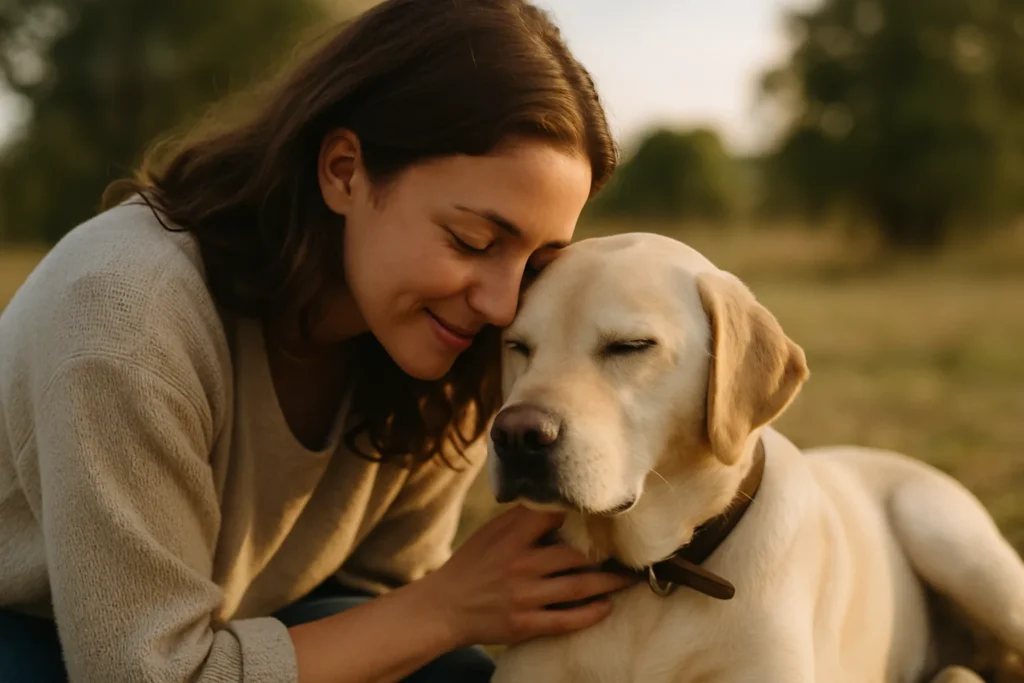
Dogs can make people feel connected, comforted, and less alone.
A dog provides a living presence during ordinary parts of the day, including waking up, preparing meals, working at home, exercising, and relaxing. This steady company can make an otherwise empty room or repetitive routine feel shared.
People often experience dogs as accepting because the relationship usually involves less social ambiguity than many human relationships. A dog does not need to understand every concern to sit nearby, invite play, or greet a familiar person warmly. That simple attention can feel reassuring without requiring a complicated conversation.
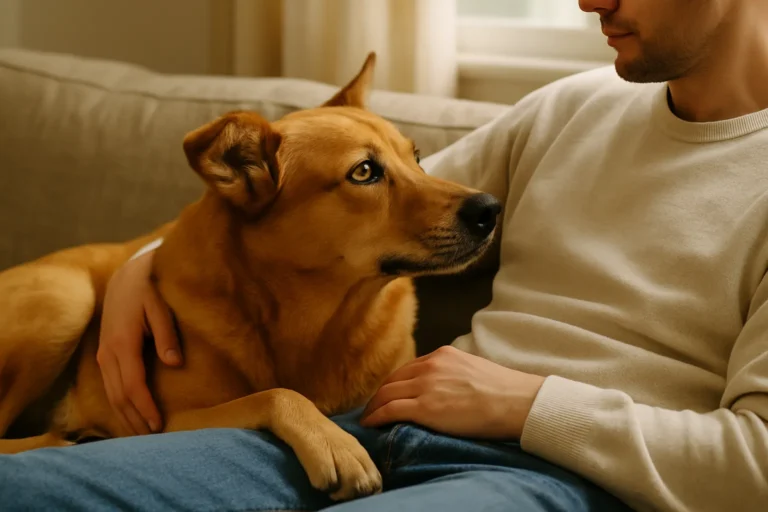
Physical closeness and repeated care can deepen attachment to dogs. Petting, resting together, filling a food bowl, opening the door for a walk, and checking on a sleeping dog become small rituals of mutual awareness. Their emotional importance often grows through repetition rather than through a single dramatic event.
Emotional support from dogs should not be treated as a guaranteed medical effect, but many people find a dog’s familiar presence grounding during stress, change, grief, or loneliness. The dog provides something immediate to notice and care for, which can bring attention back to the present moment.
Why are dogs and humans so close?
Dogs and humans are close partly because they have lived and worked alongside each other for a very long time. Early relationships likely offered mutual advantages, with dogs gaining access to resources and human settlements while people benefited from canine alertness, hunting assistance, protection, and other forms of work.
The exact path from early partnership to modern pet ownership was complex, but the relationship became more than a practical arrangement. People increasingly incorporated dogs into households and communities, while dogs became especially capable of living within human social environments.
This long familiarity helps explain why dogs can seem naturally woven into human life. They appear in family traditions, work, recreation, stories, and ideas about loyalty and home. Each generation also learns from the previous one how dogs should be treated and what roles they can play.
Shared history does not mean every human is destined to love every dog. It means that human cultures and canine behavior have had abundant time to develop around one another, creating conditions in which close relationships can form readily.
Why do dogs and humans bond so well?
Dogs and humans bond well because many dogs pay close attention to human voices, gestures, movements, and routines. A dog may learn that a certain pair of shoes predicts a walk, that a particular tone means praise, or that a person’s posture signals an invitation to interact.
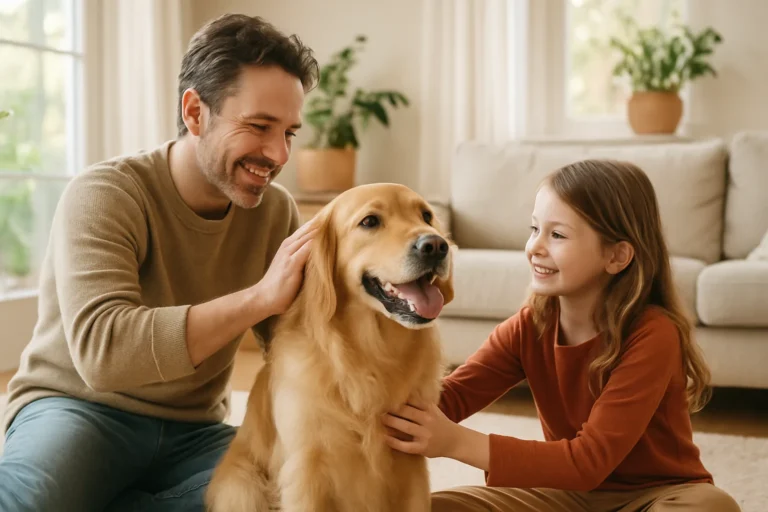
Dogs also tend to seek proximity and repeated engagement. Following someone through the house, resting nearby, bringing a toy, or waiting at the door creates frequent opportunities for interaction. Humans often respond by talking, touching, playing, or offering care, which reinforces the relationship in both directions.
Visible affection matters as well. Greeting rituals, wagging bodies, relaxed leaning, and eager participation can make a person feel recognized. Although people must avoid assuming that every canine action has a human motive, consistent behavior can still communicate familiarity, trust, and expectation.
Shared activities turn affection into an ongoing partnership. Walking requires coordination, training builds communication, and play develops familiar rules. Even household routines create repeated moments in which a person and dog anticipate and respond to each other.
People often love dogs as active companions rather than simply as pets.
Dogs often participate actively in human routines. They may accompany people on walks, trips, outdoor activities, training sessions, and visits with friends. This involvement can make a dog feel like a companion in motion rather than an animal who happens to share the home.
Many owners call dogs family because daily life becomes organized around mutual habits. The person notices when the dog expects breakfast, and the dog recognizes when the person is preparing to leave. These small adjustments create a shared household rhythm.
The relationship also combines affection with responsibility and teamwork. Dogs depend on people for safety, appropriate food, exercise, health care, guidance, and opportunities to express normal behavior. Providing that care can strengthen commitment because love becomes something a person repeatedly puts into action.
Dogs do not have to be ranked above other pets for their bond with humans to be distinctive. Their sociability, mobility, responsiveness, and dependence often allow them to participate in more parts of a person’s day, which can make the relationship unusually immersive.
Why do I love dogs so much?
Your attachment may reflect your personal history as much as anything dogs do generally. Positive childhood memories, a comforting relationship with a particular dog, or family traditions involving dogs can shape what the species represents to you.
A dog may symbolize safety, home, uncomplicated affection, or emotional stability. If a dog has remained present during major changes, that animal can become connected in memory with survival, growth, celebration, or recovery. The relationship then carries meaning beyond everyday pet ownership.
Caregiving can also support identity and purpose. Planning walks, learning about behavior, arranging care, and making decisions for another living being create responsibility and structure. Someone who thinks of themselves as a dog person may also build friendships, hobbies, and routines around that identity.
Loving dogs deeply is common, but the feeling does not have one universal cause or intensity. Your bond may be especially strong because it matches your temperament, lifestyle, emotional needs, and past experiences.
Psychology helps explain why we love dogs so much.
Dogs and human psychology meet most clearly through attachment. People tend to bond with beings who are familiar, emotionally significant, and consistently present. A dog who seeks closeness and depends on a person can become an important attachment figure without replacing human relationships.
Reciprocity strengthens the bond because affection feels meaningful when it appears to be returned. A person offers food, safety, play, and attention, while the dog responds with proximity, trust, enthusiasm, or cooperation. The exchange is not identical on both sides, but it can still feel mutual.
Humans also naturally interpret animal behavior in terms of intentions and personality. People may describe a dog as humorous, stubborn, gentle, jealous, or brave. These descriptions can capture genuine patterns, but they can also involve projection, so responsible owners remain willing to reconsider what a dog is communicating.
Routine gives the relationship emotional weight. A single walk may be pleasant, but hundreds of walks create memories, expectations, and a sense of shared life. Repeated positive interactions can make the dog central to how home, leisure, and daily time are experienced.
Dogs can sometimes feel easier to love than people.
Human relationships involve language, competing expectations, social roles, and complicated histories. Interactions with dogs usually provide simpler feedback, such as approaching, avoiding, playing, resting, or asking for something. That relative simplicity can feel refreshing.
Some people feel less judged or misunderstood around dogs because dogs do not evaluate status, appearance, or personal choices in the same way humans can. A dog’s needs are often concrete, and meeting them can produce an immediate response.
Dogs are not effortless companions, however. They can be noisy, fearful, destructive, reactive, demanding, expensive, or difficult to understand. Loving a dog responsibly means accepting those challenges and seeking suitable help rather than expecting endless affection without work.
Finding comfort in dogs does not make healthy human relationships unnecessary. Dogs can provide valuable companionship, but people also need forms of communication, support, and mutual understanding that animals cannot offer.
Not everyone feels the same way about dogs.
Feelings about dogs are shaped by experience, culture, personality, health, and lifestyle. Someone who experienced a frightening encounter may feel cautious, while a person who grew up with gentle dogs may associate them with security and play.
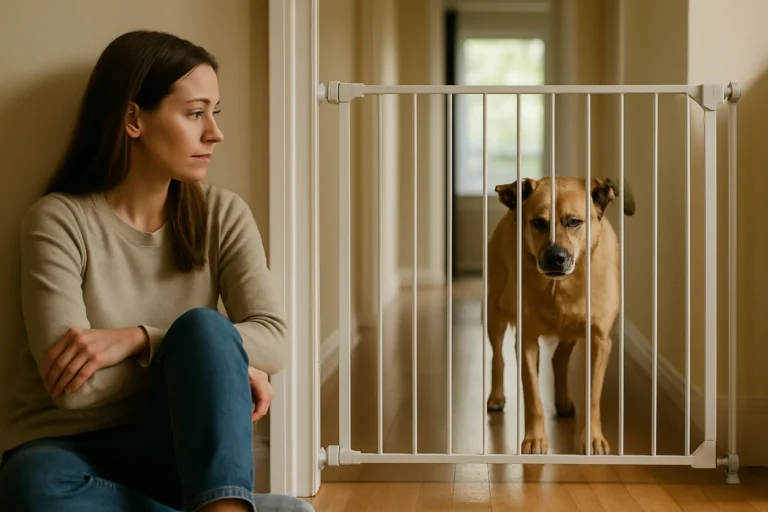
Practical concerns also matter. Allergies, limited housing, demanding work, financial constraints, noise sensitivity, mobility limitations, or a preference for a quiet home can make dog ownership unappealing or unsuitable.
Some people prefer animals that require less direct interaction, while others simply do not want pets. That preference does not indicate a lack of empathy, just as loving dogs does not automatically make someone more caring or responsible.
The human-canine bond is powerful precisely because it is personal rather than compulsory. Respecting fear, discomfort, boundaries, and cultural differences allows people and dogs to share spaces more safely.
History, psychology, and personality all help explain why humans love dogs.
History explains why dogs fit so readily into human homes and activities, while psychology explains how consistency, reciprocity, caregiving, and shared routines build attachment. Dogs often provide a form of companionship that feels active, responsive, and emotionally clear.
Personality and experience determine how strongly each individual feels that connection. Humans love dogs not for one simple reason, but because an ancient partnership can become a deeply personal relationship built through ordinary moments of attention, trust, responsibility, and affection.
Frequently Asked Questions
Why do humans fall in love with dogs?
Humans can fall in love with dogs because repeated care, physical closeness, shared activities, and responsive behavior create attachment. A dog may become associated with comfort, home, purpose, and important periods of a person’s life.
Is it normal for humans to love dogs?
Yes, strong affection for dogs is a common human experience. The relationship can carry many of the features that make any bond meaningful, including familiarity, trust, responsibility, companionship, and grief when the relationship ends.
What animal is most bonded to humans?
There is no single objective ranking that applies to every species, culture, or individual relationship. Dogs are among the animals most closely integrated into human social life, but people can also form strong bonds with cats, horses, birds, and many other animals.
Why do Americans love dogs so much?
Many Americans encounter dogs as household companions, family members, working partners, and participants in outdoor and social activities. Cultural stories about loyalty, widespread pet-centered routines, and lifestyles that accommodate dog companionship can reinforce that affection, although attitudes vary widely.
Why do some people love dogs more than other pets?
Some people prefer dogs because dogs often seek frequent interaction, display recognizable social signals, and join activities outside the home. Others prefer quieter or more independent pets, so the strongest bond usually depends on compatibility rather than one species being inherently better.