How long does it take a dog to digest food? A healthy dog processes a meal over several stages, but there is no single digestion time that applies to every dog. Stomach emptying happens before the meal has completed its journey through the intestines, and stool timing can be affected by the feeding schedule, food, activity, age, and health.
That is why one source may discuss food leaving the stomach while another discusses full gastrointestinal transit. A dog may pass stool after eating without passing that same meal, so digestion and pooping are related but not identical. Use the timeline below as general context, not as a reason to delay veterinary care when a dog is sick or may have swallowed something dangerous.
Dog Digestion Timeline at a Glance
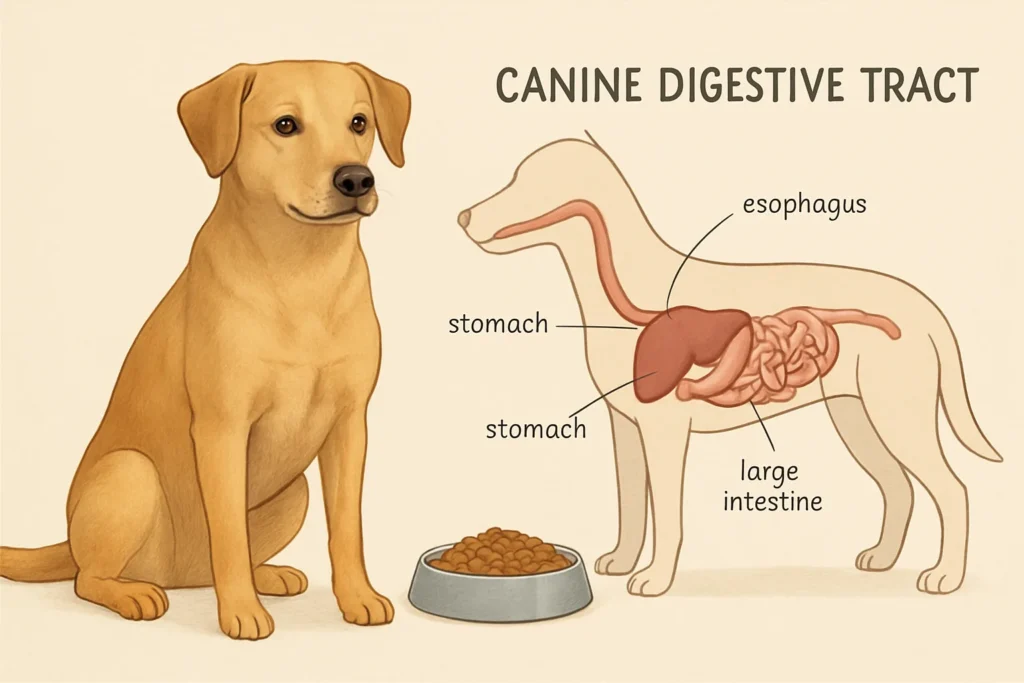
Dog digestion can be understood as a sequence rather than one event. First, a dog eats and chews the meal. The stomach then mixes the food with digestive fluids and releases it gradually into the small intestine. Nutrients are absorbed mainly as the meal moves through the small intestine, while the remaining material continues toward the large intestine and eventually becomes stool.
The stomach may become relatively empty before the entire meal has been digested and passed. Full gastrointestinal transit takes longer than stomach emptying, which explains why broad online estimates can appear inconsistent. A range describing stomach emptying is not interchangeable with a range describing when a dog will poop after eating.
Healthy dogs also vary from one meal to the next. A small, moist meal may move differently from a large, rich meal, and a dog with an established morning feeding routine may poop soon after eating because of a bowel movement triggered by the meal rather than because the new food has already traveled through the entire digestive tract.
- Eating and stomach mixing begin the process.
- Stomach emptying releases food gradually into the small intestine.
- Intestinal digestion and nutrient absorption follow stomach emptying.
- The large intestine removes more water and forms stool.
- Passing stool does not prove that the most recent meal has completed digestion.
How Digestion Time Changes by Dog Size
Small dogs and toy breeds often eat smaller meals, which can change the amount of food the stomach must process at one time. Their individual metabolism and gut motility still matter, so body size alone cannot predict when a meal will leave the stomach or when a dog will poop.
Medium dogs generally fall between the extremes of meal volume and body size, but their digestion can still vary with food composition, portion size, exercise, hydration, and health. A medium dog eating a large or unusually rich meal may digest it differently from the same dog after a normal portion.
Large and giant breeds may consume larger meals, making portion size especially relevant to stomach distension and movement after eating. Deep-chested dogs also deserve extra caution around large meals and vigorous activity because abdominal swelling and unproductive retching can indicate an emergency.
A useful way to think about dog digestion time by size is to consider the whole combination of dog, meal, and routine. Size may influence timing, but it does not provide a reliable countdown for an individual dog.
- Small dogs: meal volume, hydration, and individual motility are important.
- Medium dogs: routine and portion size often make more difference than size alone.
- Large and giant dogs: larger meals require careful portion control and caution around vigorous activity.
- Any dog: a sudden change in digestion is more important than comparison with another dog.
How Food Type Affects Digestion Speed
Food type changes how a meal behaves in the stomach and intestines. Moist foods contain more water and may have a different texture from dry kibble. Fresh or lightly cooked foods can also vary widely in moisture, fat, protein, and fiber, so the label or preparation style alone does not determine digestion speed.
High-fat meals and rich table scraps may be more difficult for some dogs to tolerate. They can cause digestive upset even when a dog has previously handled its regular food well. Treats given in addition to a full meal can also increase the total food volume and alter the usual routine.
Fiber affects stool volume and intestinal movement. Some fiber sources support normal stool quality, while abrupt increases may lead to gas, loose stool, or changes in frequency. A food that appears to move quickly because it produces a bowel movement soon after eating has not necessarily been fully digested.
Foods that tend to digest fastest in dogs are generally those that are familiar, appropriately portioned, and well tolerated by that individual dog. There is no universally fastest food for every dog, and a veterinarian should guide major diet changes or therapeutic feeding plans.
- Dry kibble: lower moisture and meal size can affect how it is processed.
- Wet food: higher moisture and a softer texture may change stomach contents.
- Fresh or lightly cooked food: digestion depends on its ingredients, moisture, fat, and fiber.
- High-fat foods: rich meals may increase the chance of digestive upset.
- High-fiber foods: changes can affect stool volume, gas, and bowel frequency.
- Treats and table scraps: extra portions can disrupt a familiar feeding pattern.
How Long Food Stays in a Dog’s Stomach
Food does not usually leave a dog’s stomach all at once. The stomach stores and mixes the meal, then releases it gradually into the small intestine. The stomach may be relatively empty while digestion is still continuing farther along the gastrointestinal tract.
Meal size is one of the most important influences on stomach emptying. A larger meal generally gives the stomach more material to process than a small meal. Moisture, texture, fat content, and the dog’s normal motility also influence how the meal behaves.
Water and soft foods do not follow exactly the same pattern as a dense, dry, or fatty meal. This is one reason it is misleading to ask only how long food will stay in a dog’s stomach without describing the food and the dog.
If a dog vomits, seems painful, develops abdominal swelling, or repeatedly retches without producing anything, do not use an expected stomach-emptying timeline to decide whether to wait. Contact a veterinarian promptly.
How Long Until a Dog Poops After Eating?
Some dogs poop soon after a meal because eating can stimulate movement in the colon. This response is sometimes called the gastrocolic reflex. It moves material that was already farther along in the digestive tract, so a bowel movement after eating does not necessarily contain the meal the dog just consumed.
Other dogs poop later according to their established feeding, walking, and bathroom routine. Healthy stool timing can differ between dogs and can change when meal schedules, food, activity, hydration, or stress changes.
To understand how long it takes a dog to digest food and poop it out, separate two questions: when did the stomach begin emptying, and when did the remaining material reach the end of the intestinal tract? Watching the dog’s normal pattern is more useful than expecting every meal to produce stool on the same schedule.
- A bowel movement soon after eating may reflect the gastrocolic reflex.
- The stool passed may have formed from an earlier meal.
- A consistent feeding and walking routine can make bathroom timing easier to recognize.
- A sudden change in stool frequency, consistency, or effort deserves attention.
Other Factors That Change Dog Digestion Time
Age can affect digestion patterns. Puppies are still developing and may have different meal sizes and feeding schedules from adult dogs. Seniors may show changes related to activity, appetite, dental comfort, medication, or an underlying condition. These life-stage differences make a universal digestion timetable unreliable.
Hydration supports normal gastrointestinal function, while stress and major changes in routine can affect appetite and bowel habits. Exercise may also influence when a dog wants to eat or eliminate, although strenuous activity immediately after a large meal is not appropriate.
Breed tendencies and body shape can matter, particularly for deep-chested dogs. Medications and supplements may alter appetite, stool consistency, or gastrointestinal movement. Food intolerance and gastrointestinal disease can also make a previously predictable pattern change.
When digestion changes repeatedly, consider the full context: new food, new treats, household stress, medication, water intake, stool appearance, vomiting, appetite, and energy level. Share that history with your veterinarian rather than focusing on one isolated meal.
- Age and life stage
- Hydration and water access
- Exercise, stress, and routine changes
- Body shape and breed-related risks
- Medication or supplement use
- Food intolerance or gastrointestinal disease
Before Walks or Running: How Long Should You Wait After Feeding?
A gentle bathroom walk is different from running, rough play, or intense training. After a small meal, some dogs tolerate calm movement well, but vigorous activity after eating can be harder on the digestive system. After a larger meal, choose rest and calm observation rather than strenuous exercise.
Deep-chested dogs and dogs that eat quickly need particular caution around large meals and intense activity. Abdominal swelling, repeated unproductive retching, weakness, collapse, or obvious distress requires immediate veterinary attention.
Because meal size, breed, age, and health all differ, there is no single waiting period that safely applies to every dog. Ask your veterinarian for individualized guidance if your dog exercises intensely, has a history of digestive problems, or is at increased risk of bloat.
- Keep post-meal activity calm when the meal was large or rich.
- Use a gentle walk for bathroom needs instead of running or rough play.
- Watch deep-chested dogs closely for abdominal swelling or unproductive retching.
- Seek urgent veterinary help for signs of severe abdominal distress.
If Your Dog Ate Something Unusual or a Foreign Object
A foreign object does not follow the normal digestion timeline. Some objects cannot be digested, may become lodged, or may damage the gastrointestinal tract while moving. Waiting to see whether an object passes can be dangerous, even if the dog initially appears normal.
Call a veterinarian promptly if your dog swallowed a toy, bone, fabric, string, medication, chemical, or another unusual item. The urgency depends on what was swallowed, how much, the dog’s size, and the dog’s current symptoms.
Possible obstruction signs include repeated vomiting, loss of appetite, abdominal pain, swelling, lethargy, straining, or changes in stool. Do not induce vomiting or give home treatments unless a veterinary professional specifically instructs you to do so.
- Do not estimate safety from the usual time it takes a dog to digest food.
- Record what was swallowed, when it happened, and approximately how much.
- Contact a veterinarian or emergency veterinary service promptly.
- Treat string, medication, chemicals, and sharp or large objects as especially urgent concerns.
Signs Digestion May Not Be Normal
Normal variation is usually judged against a dog’s own pattern. A dog that suddenly vomits, develops diarrhea, becomes constipated, stops eating, or seems unusually tired may need veterinary advice, especially when symptoms persist or occur together.
Repeated grass eating or lip licking can accompany nausea, but these signs are not specific enough to identify a cause. Abdominal pain, a distended abdomen, repeated unproductive retching, collapse, or marked weakness should be treated as urgent warning signs.
The possibility of an obstruction, poisoning, severe gastrointestinal illness, or another medical problem is more important than calculating when a meal should have finished digesting. When in doubt, call a veterinarian and describe the symptoms, recent food, medications, and any possible exposure.
- Repeated vomiting or inability to keep water down
- Persistent or severe diarrhea
- Straining, constipation, or a major change in stool pattern
- Repeated grass eating or lip licking with other signs of illness
- Abdominal pain, swelling, or unproductive retching
- Loss of appetite, unusual lethargy, weakness, or collapse
What Can Help Support Healthy Digestion
A consistent feeding schedule can make appetite and stool patterns easier to monitor. Feed portions appropriate for the dog’s individual needs, and avoid allowing treats or table scraps to replace a balanced diet. If weight or calorie needs are uncertain, ask a veterinarian for personalized feeding guidance.
Introduce food changes gradually rather than switching abruptly. Provide reliable access to fresh water, and choose a complete diet that suits the dog’s life stage and health needs. Fiber may be helpful in some situations, but the right amount and source depend on the dog.
Veterinarian-recommended probiotics may support some dogs, but they are not a substitute for diagnosing repeated vomiting, diarrhea, pain, or appetite loss. Discuss chronic or recurring digestive symptoms with a veterinarian before adding supplements or changing the diet substantially.
- Keep meals and portions consistent.
- Limit unplanned treats and rich table scraps.
- Change foods gradually.
- Maintain dependable access to fresh water.
- Use fiber or probiotics only when appropriate for the individual dog.
- Seek veterinary guidance for recurring digestive symptoms.
The Bottom Line on Dog Digestion Time
How long does it take dogs to digest food? The answer depends on which stage you mean. Stomach emptying, nutrient absorption, intestinal transit, and passing stool occur at different points, and size, meal composition, portion, age, routine, and health can all change the pattern.
A familiar digestion and bathroom routine is usually the best comparison for your dog. Do not wait for an expected timeline if your dog has severe vomiting, abdominal swelling, pain, lethargy, loss of appetite, or may have swallowed a foreign object; contact a veterinarian instead.
How long does it take for a dog’s stomach to be empty after a meal?
Stomach emptying occurs gradually and differs with meal size, moisture, texture, fat content, and individual gut motility. A relatively empty stomach does not mean the meal has completed its entire digestive journey.
What foods digest fastest in dogs?
There is no single fastest food for every dog. Familiar, appropriately portioned food that the individual dog tolerates well is generally more predictable than rich meals, sudden diet changes, or excessive treats.