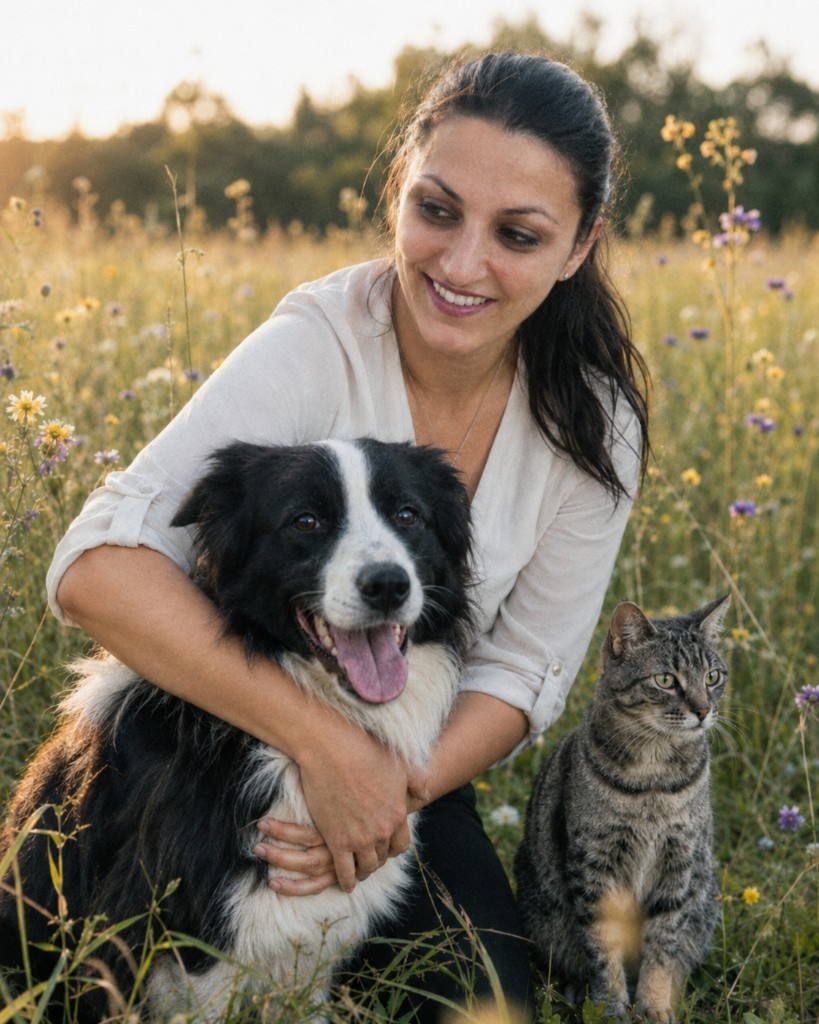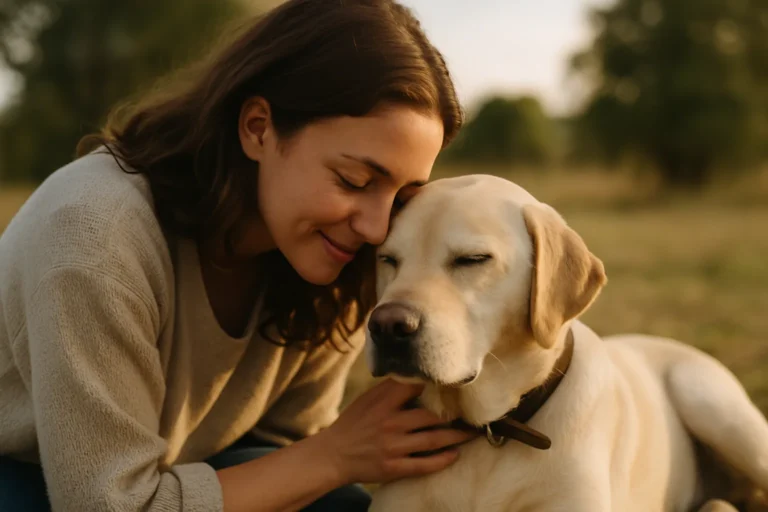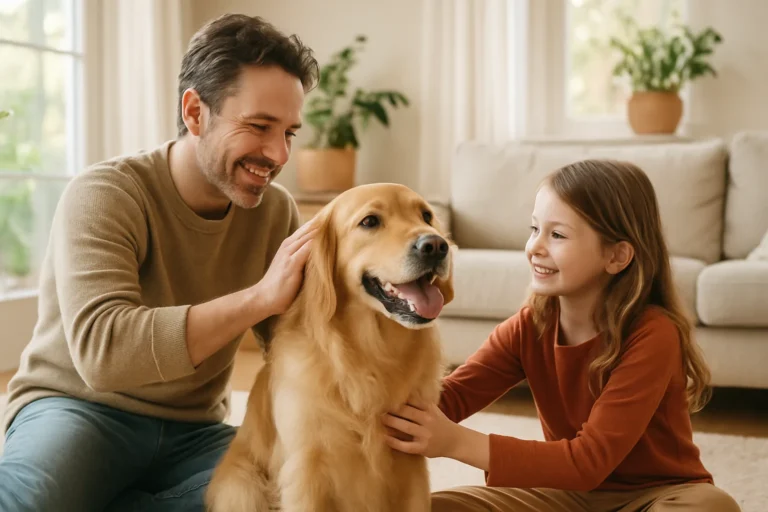
If you have ever wondered, “Why does my dog love me?” the answer involves more than meals and treats. Dogs are highly social animals whose history with people prepared them to seek human guidance, safety, companionship, and rewarding interaction.
Dogs become affectionate through a combination of domestication, individual temperament, daily care, familiar routines, and positive shared experiences. Their attachment is not identical to human romantic or family love, but it is a genuine social bond expressed through trust, proximity, excitement, play, and a preference for familiar caregivers.
Why Do Dogs Love Their Owners So Much?
Dogs love their owners so much because people often become their primary source of security, social connection, guidance, comfort, and enjoyable experiences. A dog learns that a familiar person makes important things happen, including meals, walks, play, rest, protection, and relief from uncertainty.
This attachment also reflects thousands of years of domestication. Dogs that could communicate with people, respond to human behavior, and live successfully in human groups were more likely to thrive alongside us. Modern dogs are consequently unusually attentive to human voices, gestures, faces, and routines.
Daily life deepens that inherited social tendency. Every calm interaction, training session, walk, game, and predictable response helps a dog associate its owner with safety and satisfaction. Over time, familiarity becomes emotionally significant rather than merely convenient.
Calling this bond love is reasonable when love is understood through canine behavior. Dogs do not experience or explain relationships exactly as people do, but they form durable preferences, seek reunion, show distress when trusted figures disappear, and use familiar humans as sources of reassurance.
Do Dogs Genuinely Love Their Owner?
Dogs genuinely love their owners in the practical sense that they form lasting emotional attachments and actively seek affiliation with particular people. Animal behavior professionals often describe these relationships using terms such as attachment, social preference, proximity seeking, and secure-base behavior.
A bonded dog may explore confidently when its owner is nearby, check in during unfamiliar situations, relax more easily in the owner’s presence, and become excited when that person returns. These behaviors matter because they occur across different situations and are not limited to times when food is available.
Relaxed eye contact can also be part of friendly communication, provided the dog’s face and body remain soft. Leaning, resting nearby, initiating play, bringing toys, and choosing to approach an owner all offer additional evidence of affiliation.
No single action proves love by itself, and some behaviors have several possible meanings. Taken together over time, however, voluntary closeness, trust, reunion excitement, and a consistent preference for an owner support the conclusion that the relationship is emotionally meaningful to the dog.
Why Dogs Become So Attached to People
Owners commonly act as caregivers by providing food, water, shelter, protection, exercise, and guidance. Dependence helps bring a dog and person together, but the relationship can grow beyond the fulfillment of basic needs as the dog develops trust and positive expectations.
Routine strengthens attachment because predictability makes life easier to understand. Regular meals, walks, bedtime habits, departures, and greetings teach a dog who organizes its day and what signals lead to safe or enjoyable outcomes.
Trusted owners can also serve as a secure base. In unfamiliar places, a dog may look back at its person, move closer when uncertain, or become more willing to investigate after receiving calm encouragement. This use of a caregiver for emotional regulation is a central feature of attachment.
Learning history matters as well. Reward-based training, cooperative care, play, and respectful handling create positive associations, while frightening or inconsistent interactions can undermine trust. The strongest attachments usually combine dependable care with social enjoyment and emotional safety.
- Meals and practical care make an owner important to a dog’s daily survival and comfort.
- Predictable routines help a dog feel secure and understand what will happen next.
- Play, training, and exploration create rewarding shared experiences.
- Calm support helps a dog manage unfamiliar or stressful situations.
- Repeated positive interactions turn familiarity into a lasting social preference.
Why Dogs Love Us Unconditionally: What That Really Means
People often ask why dogs love us unconditionally because canine affection can appear remarkably steady. Dogs generally do not judge people according to social status, appearance, career success, or past embarrassment, and many remain eager to reconnect after minor mistakes or brief disruptions.
Their forgiving behavior partly reflects their relationship-oriented nature and focus on present patterns. If daily life remains safe and rewarding, a missed walk or impatient moment does not necessarily erase a long history of trust.
However, unconditional affection does not mean unlimited tolerance. Harsh punishment, neglect, frightening handling, chronic conflict, or repeated unpredictability can damage trust and cause avoidance, fear, defensive behavior, or emotional withdrawal.
Trust can often be rebuilt through patient, consistent, positive interactions, although the process may take time. A healthier interpretation of unconditional love is that dogs can show unusually stable affection within a relationship that continues to meet their physical and emotional needs.
Why Are Dogs So Affectionate and Cuddly?
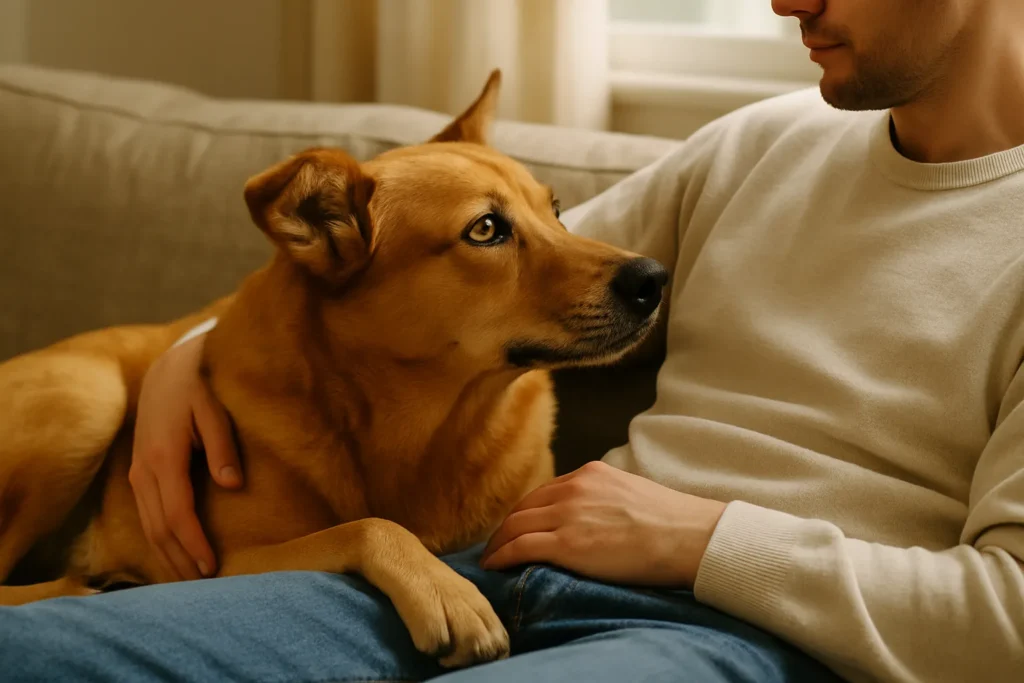
Dogs are affectionate because social contact can provide reassurance, warmth, attention, and pleasure. Physical closeness may also become associated with resting, protection, and calm interaction, especially when a dog has experienced gentle handling from an early age.
Breed tendencies can influence how affection is expressed, but they do not determine an individual dog’s personality. Some dogs are inclined to stay physically close, while others are more independent, active, watchful, or sensitive to touch.
Early socialization, handling, household routines, age, health, and past experiences all help explain why dogs are so cuddly in some homes but less physically demonstrative in others. A dog that feels sore, overheated, trapped, or tired may avoid cuddling without feeling less attached.
Affection also has forms beyond touch. One dog may climb into a person’s lap, while another shows the same strength of bond by following at a comfortable distance, requesting games, sleeping nearby, or checking in during walks.
Why Does My Dog Love Me So Much?
Your dog may love you so much because you are the most predictable and emotionally significant person in its life. Your voice, scent, movements, schedule, and way of responding have become familiar cues that help your dog understand what is happening.
Shared experiences strengthen this connection. Walks in new places, successful training, quiet evenings, play sessions, and gentle support during stressful events give your dog a history of turning toward you and receiving something useful or comforting.
Some rescue dogs seem especially devoted after settling into a secure home, although rescue status does not automatically produce clinginess. A dog’s earlier experiences, genetics, socialization, and current environment all influence how quickly and intensely it attaches.
So-called velcro dogs may follow one person closely because of temperament, learned reinforcement, insecurity, or a strong preference for that caregiver. Single-person dogs can also form narrow social preferences, particularly when one person provides most of their care and interaction.
- Your scent and voice are familiar signals associated with safety.
- Your predictable responses help your dog navigate daily life.
- Shared activities give your dog repeated reasons to seek your company.
- Your support during uncertain moments can make you a secure base.
- Your dog’s personality may favor intense attachment to one familiar person.
How Dogs Show They Love Their Owners
Dogs show love through patterns of voluntary behavior rather than one universal gesture. The most meaningful signals are relaxed, freely offered, and seen in several contexts instead of appearing only before meals.
Following can indicate affection and social interest, although constant shadowing may also reflect boredom or anxiety. Relaxed eye contact, a softly moving body, comfortable proximity, and periodic check-ins are often clearer when considered together.
Happy greetings are another common sign. A bonded dog may wag with its whole body, bring a toy, vocalize, lean close, or briefly become energetic when an owner returns. The intensity varies with personality and arousal.
Licking can be social, attention-seeking, exploratory, or self-soothing, so it should not be treated as automatic proof of love. Choosing to rest beside you, inviting play, bringing valued objects, and seeking you in unfamiliar environments often provide stronger context.
- Your dog chooses to rest beside you even when nothing is being offered.
- Your dog approaches with loose muscles, soft eyes, and comfortable body language.
- Your dog greets you enthusiastically after a separation.
- Your dog brings toys or invites you to join a favorite activity.
- Your dog checks in with you while exploring unfamiliar surroundings.
- Your dog seeks calm contact or proximity when uncertain.
- Your dog responds to your guidance because previous interactions have built trust.
Dogs That Love Their Owners May Not All Show It the Same Way
Dogs that love their owners can differ greatly in how they communicate that bond. An independent dog may prefer lying across the room while still monitoring its owner, responding to invitations, and seeking that person when uncertain.
Age can change affection styles because puppies, adolescents, adults, and senior dogs have different energy levels and needs. Pain, sensory decline, fatigue, and other health changes can also make a previously cuddly dog more reserved or make a worried dog more dependent.
Breed mix and temperament affect sociability, sensitivity, play style, and tolerance for physical restraint. Past experiences matter too, especially for shy dogs that may show trust through small steps such as eating nearby, sleeping deeply in a person’s presence, or initiating brief contact.
Comparing one dog with another can therefore be misleading. The better question is whether an individual dog voluntarily seeks interaction, appears secure, and shows a consistent preference for its owner in ways that fit that dog’s personality.
Why Some Dogs Also Love Strangers
Some dogs approach strangers enthusiastically because they have naturally outgoing temperaments and broad positive experiences with people. Early socialization can teach a dog that unfamiliar humans often bring attention, play, or other pleasant interactions.
Novelty may add to the excitement. A new person has unfamiliar scents, movements, and possibilities, which can be especially interesting to a confident, people-oriented dog.
General sociability is different from a primary attachment. A dog may enjoy meeting many people while still relying on its owner for reassurance, following that person’s routines, and choosing that person when tired or uncertain.
Friendly behavior toward strangers does not weaken the owner bond. It usually means the dog feels comfortable expanding its social circle, although greetings should still be managed to protect the dog’s comfort and other people’s boundaries.
Affection, Loyalty, or Dependence? Understanding the Difference
Healthy affection allows a dog to enjoy closeness while remaining capable of resting, exploring, and coping with ordinary short separations. Dependence becomes concerning when the dog cannot function comfortably without constant access to one person.
Loyalty is partly emotional and partly shaped by learning. Dogs stay near people they trust, but they also repeat behaviors that lead to walks, attention, safety, and predictable outcomes. These explanations can coexist rather than cancel one another out.
Food motivation does not make affection fake. An owner who supplies meals will naturally be important, but a dog that seeks the person during rest, play, uncertainty, and exploration is demonstrating a broader relationship than simple anticipation of food.
Pacing, destructive behavior, persistent vocalizing, escape attempts, heavy panting, drooling, or an inability to settle during absences may indicate separation-related distress rather than exceptional love. Sudden clinginess can also accompany pain, illness, sensory changes, or household disruption and deserves attention.
| Behavior pattern. | Likely interpretation. |
|---|---|
| The dog enjoys contact but can also rest independently. | This pattern is generally consistent with a healthy bond. |
| The dog seeks its owner in unfamiliar settings and then resumes exploring. | This pattern may reflect secure-base behavior. |
| The dog appears attentive mainly when food is present. | This pattern may be driven largely by learned food motivation. |
| The dog panics, destroys exits, or cannot settle when left alone. | This pattern may indicate separation-related distress. |
| The dog suddenly becomes unusually clingy or withdrawn. | This change may warrant assessment for stress, pain, or illness. |
How to Strengthen Your Bond Without Creating Clinginess
A strong dog-human bond grows from trust, communication, and shared activity rather than constant physical contact. Predictable care and reward-based training help your dog understand what you want while preserving a sense of safety.
Combine closeness with opportunities for independent success. Enrichment toys, sniffing, comfortable resting areas, age-appropriate exercise, and gradual practice with short separations can teach a dog that being apart is safe and manageable.
Respect your dog’s preferences around touch. Invite contact instead of restraining the dog, pause periodically, and notice whether it moves closer or turns away. This approach makes affection more voluntary and helps prevent discomfort.
If your dog shows intense distress when alone, seek individualized help from a veterinarian or qualified behavior professional. Separation-related problems are not stubbornness, and simply forcing longer absences can increase fear.
- Maintain predictable routines while allowing reasonable flexibility.
- Use positive reinforcement to make learning cooperative and rewarding.
- Share walks, games, scent activities, and quiet time based on your dog’s needs.
- Reward calm independent behavior instead of reinforcing every demand for attention.
- Provide a comfortable place where your dog can rest without being disturbed.
- Let your dog choose whether to continue cuddling or physical contact.
- Build tolerance for separation gradually rather than disappearing for overwhelming periods.
Dog Love Is a Bond Built on Trust.
Dogs love their owners through a combination of social instinct, domestication, caregiving, familiarity, positive learning, and individual preference. Food and routine contribute to the relationship, but voluntary closeness, secure-base behavior, relaxed trust, and social choices show that the bond commonly extends beyond dependence.
A dog does not need to cuddle constantly or ignore every stranger to be deeply attached. The clearest signs of canine love are consistent trust, comfortable companionship, happy reconnection, and a willingness to choose an owner while still feeling secure enough to explore and rest independently.
Frequently Asked Questions
Do dogs genuinely love their owner?
Yes, dogs genuinely love their owners in a canine sense. They form lasting attachments, prefer familiar caregivers, seek them for reassurance, celebrate reunions, and voluntarily spend time near them, even when no immediate reward is available.
Why do dogs get so attached to their owners?
Dogs become attached because owners provide safety, care, guidance, routine, social interaction, and rewarding shared experiences. Domestication also favored dogs that paid attention to people and formed successful social relationships with them.
How can you tell if a dog truly loves you?
Look for a pattern of relaxed proximity, soft body language, happy greetings, voluntary check-ins, invitations to play, and a preference for you during rest or uncertainty. No single behavior proves love, so context and consistency matter.
Why are some dogs more affectionate than others?
Affection varies with genetics, breed tendencies, personality, socialization, early handling, age, health, learning history, and current surroundings. Less cuddly dogs can remain strongly bonded while expressing affection through play, following, cooperation, or quiet proximity.
Why do dogs love humans more than other dogs?
Dogs do not always love humans more than other dogs, but domestication made them unusually skilled at connecting with people. A dog may prefer its owner because that person provides care and security while still valuing suitable canine companions.
Do dogs love us as much as we love them?
Human and canine emotions cannot be measured on one identical scale, so the amount of love cannot be compared precisely. Dogs nevertheless form genuine, durable attachments and can make their owners central figures in their social and emotional lives.