No. Raw meat itself does not make dogs aggressive. If a dog behaves differently after a diet change, the more likely explanations include resource guarding, heightened food excitement, a new feeding routine, stress, pain, or a problem with the overall diet—not a switch to raw meat alone.
That does not mean behavior around raw food should be ignored. Raw meals, bones, and other high-value items can reveal guarding or conflict that was less obvious with ordinary food. This guide explains how to identify what you are seeing, what other triggers to consider, and when to involve a veterinarian or qualified behavior professional.
What the Short Answer Gets Right and Wrong
The claim that raw meat turns a friendly dog aggressive is a myth. There is no established causal link between raw meat as an ingredient and aggression. Dogs do not become socially aggressive simply because their food is uncooked.
The confusion often begins when a behavior change happens soon after a diet switch. Timing can make the new food seem responsible, even though several things may have changed at once: the meal may be more valuable, the dog may now eat in a different place, people may approach more often to monitor the meal, or another dog may be competing for access.
This is a correlation-versus-causation problem. Raw food may be present when the behavior is first noticed without being the underlying cause. A useful review asks what changed around feeding, not just what was in the bowl.
- Raw meat does not create aggression by itself.
- A higher-value meal can make existing guarding easier to notice.
- A change in routine, handling, competition, or health may explain the timing.
- Behavior around food should be described precisely before it is labeled aggression.
Aggression, Resource Guarding, and Food Excitement Are Not the Same Thing
Aggression is a broad term for behavior intended to threaten or harm, but a single growl or tense moment does not explain the whole situation. A dog’s posture, facial expression, movement, history, and what happens immediately before and after the incident all matter.
Resource guarding is behavior used to keep another person or animal away from something valuable. Around food, it may include freezing over a bowl, stiffening, hovering, staring, growling, showing teeth, snapping, or biting when someone approaches. Guarding can occur with kibble, treats, toys, stolen objects, or raw meaty items.
Food excitement is different. A dog may jump, bark, spin, whine, rush toward the feeding area, or struggle to settle because the meal is highly motivating. Those behaviors can be noisy and intense without being an attempt to drive someone away.
Owners may also mistake prey drive, arousal, frustration, or ordinary chewing behavior for aggression. A dog that grips a meaty item firmly is not necessarily becoming dangerous, while a dog that quietly freezes when a person nears the item may be showing a more important guarding signal.
- Food excitement: rushing, vocalizing, jumping, or difficulty waiting.
- Resource guarding: stiffening, hovering, freezing, growling, snapping, or biting to retain an item.
- Frustration: frantic behavior when access is delayed or blocked.
- Aggression risk: escalating threats, contact, repeated lunging, or a bite.
Why a Dog May Seem More Reactive After Starting Raw
Raw food may be more valuable to an individual dog than the food it previously received. Greater value can intensify normal excitement or expose a tendency to guard, but that is different from raw meat creating a new aggressive personality.
The feeding setup can also change. An owner may move meals to a separate room, stand nearby to supervise, take away unfinished food, or repeatedly touch the bowl. These actions may be intended as safety precautions but can make a worried dog feel pressured.
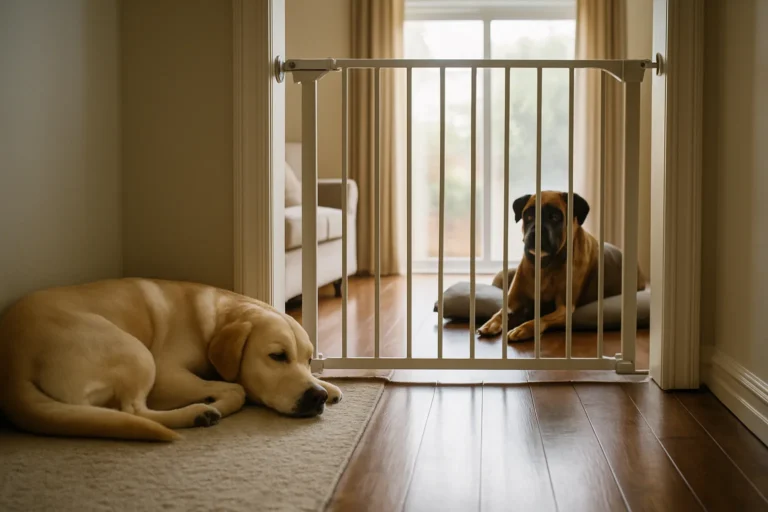
In a multi-dog household, competition is another important variable. Dogs may eat faster, block one another, stare, steal food, or defend a feeding area when meals are more appealing. Bones and large meaty items deserve special attention because they are often consumed more slowly and may be carried or defended for longer.
A dog may also be reacting to the owner’s behavior. If people approach hesitantly, correct the dog, test its tolerance, or repeatedly remove the meal, the dog can learn that humans near food predict conflict. That pattern can strengthen guarding even though the food itself is not the root cause.
- Feed dogs separately when competition or guarding is present.
- Give valuable chews only in areas where the dog can remain undisturbed.
- Do not test a dog by reaching toward its bowl or taking food away.
- Observe whether the reaction occurs with all food or only with bones and other high-value items.
The Real Causes of Aggression to Rule Out First
Pain is an important possibility when a previously comfortable dog becomes irritable or defensive. Dental discomfort, digestive problems, orthopedic pain, illness, or another health issue can lower a dog’s tolerance, including during handling or mealtime.
Fear and anxiety can produce defensive behavior when a dog believes a person, animal, place, or situation is threatening. Stress, overstimulation, unfamiliar visitors, household conflict, and changes in the environment may also make reactions more likely.
Frustration and poor impulse control can appear as barking, lunging, grabbing, or snapping when access to food, space, or another desired activity is blocked. A history of having food taken away or being challenged around resources may contribute to guarding.
Social learning and environmental triggers matter as well. A dog may react to another animal near its bowl, a child moving unpredictably, a person bending over, or a crowded feeding area. These causes are more useful to investigate than breed stereotypes or the assumption that blood changed the dog’s temperament.
- Pain or illness
- Fear and anxiety
- Stress or overstimulation
- Frustration and blocked access
- A history of food conflict or guarding
- Poor socialization or a specific environmental trigger
Can an Unbalanced Raw Diet Affect Behavior?
Raw meat as a single ingredient is not the same as a complete, balanced raw diet. A dog fed an incomplete plan may not receive appropriate nutrition over time, particularly if meals lack needed variety or essential nutrients. That concern is about diet adequacy, not a claim that raw food directly causes aggression.
Hunger, gastrointestinal upset, and physical discomfort can affect how a dog behaves. A dog that is not eating enough, has digestive distress, or feels unwell may be more restless, irritable, or less tolerant. Those signs can occur alongside a diet change and may be mistaken for a personality change.
If behavior changes after raw feeding begins, review the entire plan with a veterinarian rather than focusing only on whether the food is raw. Discuss the ingredients, preparation, portioning, supplements, stool quality, appetite, weight, and any other health changes. A diet review is especially important for growing dogs, pregnant or nursing dogs, and dogs with medical conditions.
- Separate concerns about diet balance from the myth that raw meat causes aggression.
- Watch for appetite changes, digestive upset, discomfort, or changes in body condition.
- Ask a veterinarian to review the full feeding plan when health or behavior changes appear together.
What If the Dog Is Aggressive Around Raw Meat but Not Other Food?
This pattern most often points to value-specific resource guarding. The dog may consider a raw meaty item, bone, or chew more important than ordinary food and therefore use stronger signals to keep others away. That does not prove the raw item caused aggression; it shows that the item is a stronger trigger.
Handling mistakes can make the situation worse. Repeatedly reaching for the food, removing it without an exchange, cornering the dog, or allowing children to approach can teach the dog that guarding is necessary. Punishment may suppress a growl without removing the underlying concern, leaving people with less warning.
Use management first. Feed in a quiet, separate area, keep children and other pets away, and wait until the dog has finished and moved away before cleaning up. Do not take away a high-value item simply to test the dog’s reaction.
If the dog freezes, growls, snaps, lunges, or has bitten, stop experimenting at home. A veterinarian can assess possible pain or illness, and a qualified behavior professional can create a safer plan for the household.
- Identify whether the behavior is limited to bones, raw items, or other high-value resources.
- Prevent children and other pets from approaching during meals.
- Avoid punishment, confrontation, and bowl-removal tests.
- Get professional help for escalation, snapping, lunging, or bite history.
Does Raw Meat Make Dogs Aggressive to Humans or Certain Breeds More Aggressive?
Raw meat does not make a dog aggressive toward humans. If a dog threatens a person near food, the behavior is more consistent with guarding, fear, pain, learned conflict, or another individual trigger. The response should focus on safety and assessment rather than blaming the ingredient.
Blood does not act as a switch that makes dogs aggressive. Its smell may attract attention or increase excitement in some dogs, just as a strong food odor can, but excitement is not the same as an intent to attack.
Breed labels do not explain a single dog’s behavior. Assumptions about pitbull aggression, or about any other breed group, can obscure the roles of genetics, early experiences, learning, environment, health, and management. Stereotypes persist because dramatic incidents are memorable and complex behavior is often reduced to a simple label.
Assess the individual dog and the specific situation instead: what happened immediately before the reaction, what resource was present, who approached, and whether the behavior occurs outside mealtime.
- Do not treat blood as an aggression trigger.
- Do not use breed stereotypes to predict an individual dog’s behavior.
- Look for the interaction between temperament, learning, environment, and health.
- Prioritize safety whenever a dog threatens or injures a person.
What Dog Owners Should Do If Behavior Changes After a Diet Switch
Start by recording what changed and when. Note the food, feeding location, meal format, bones or chews, other animals nearby, people who approached, and the dog’s exact behavior. A simple record can reveal that the reaction is tied to a particular item or situation rather than every raw meal.
Review the feeding routine and household context. Separate dogs, create distance from children, reduce traffic around the feeding area, and avoid disturbing the dog while it eats. If the dog guards an item, manage access rather than trying to prove that you can take it away.
Do not punish growling or force the dog to tolerate handling. A growl is useful warning information, and suppressing it can increase bite risk if the dog remains distressed. Keep everyone safe while arranging help.
Contact a veterinarian if the change is sudden or occurs with pain, vomiting, diarrhea, appetite changes, weight changes, lethargy, or other signs of illness. Discuss nutritional balance as well as medical causes.
For growling, snapping, lunging, or biting, work with a qualified behavior professional who uses humane, evidence-informed methods. Until the situation is assessed, avoid high-risk tests and do not allow children to manage the dog’s meals.
- Track the behavior and every change surrounding meals.
- Manage distance, access, and competition before attempting training.
- Never punish or challenge a dog for guarding.
- Seek veterinary guidance for sudden changes or signs of illness.
- Seek behavior support when there is escalation or bite risk.
Bottom Line: Raw Meat Does Not Create Aggression, but Mealtime Can Expose Existing Issues
Raw meat does not inherently make dogs aggressive. When a dog seems different after a diet switch, the most likely explanations are a higher-value resource, a changed feeding routine, competition, stress, pain, guarding history, or an unbalanced diet.
Describe the behavior accurately, manage meals to prevent conflict, and avoid punishment or tolerance tests. If the reaction is sudden, severe, or directed at people, involve a veterinarian and a qualified behavior professional rather than trying to solve the problem by changing food alone.
Can blood make dogs aggressive?
Blood may attract a dog’s attention or increase excitement because it has a strong odor, but it does not automatically create aggression. Watch the dog’s body language and the surrounding situation rather than treating blood as a cause of hostile behavior.
Why does my dog act different when eating raw?
Raw food may be more valuable, and that can reveal guarding or increase food excitement. A changed feeding location, household competition, handling, stress, pain, digestive discomfort, or an unbalanced diet may also be involved.
Can raw bones increase resource guarding?
A raw bone can become a highly valuable resource, so a dog may guard it more strongly than ordinary food. This does not mean the bone created aggression. Give it only in a safe, quiet area and do not take it away as a test.
Should I stop feeding raw if my dog growls at mealtime?
Do not confront or punish the dog. Securely manage meals, keep people and other pets away, and contact a veterinarian if the change is sudden or health concerns are present. A qualified behavior professional can help determine whether the issue is guarding and create a safer plan.