Dog aggression towards other dogs in the home can be frightening, especially when dogs that once lived peacefully together suddenly clash. The behavior is usually connected to identifiable triggers such as food, space, attention, fear, pain, or overexcitement rather than a simple desire to be difficult.
If your dog is aggressive with other dogs, start with safety instead of trying to force friendship. Separating the dogs, recording what happened, and arranging veterinary or behavior support when needed can prevent another incident while you investigate why your dog is aggressive toward your other dog.
Start With Safety if Dogs in the Same Home Are Fighting
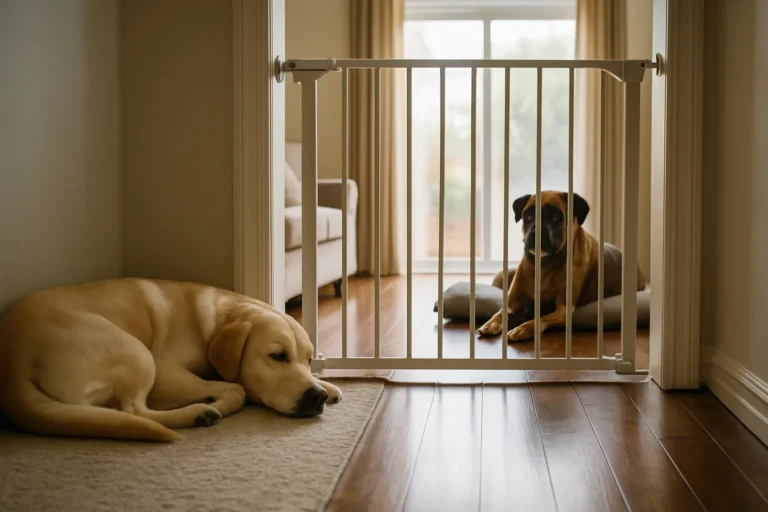
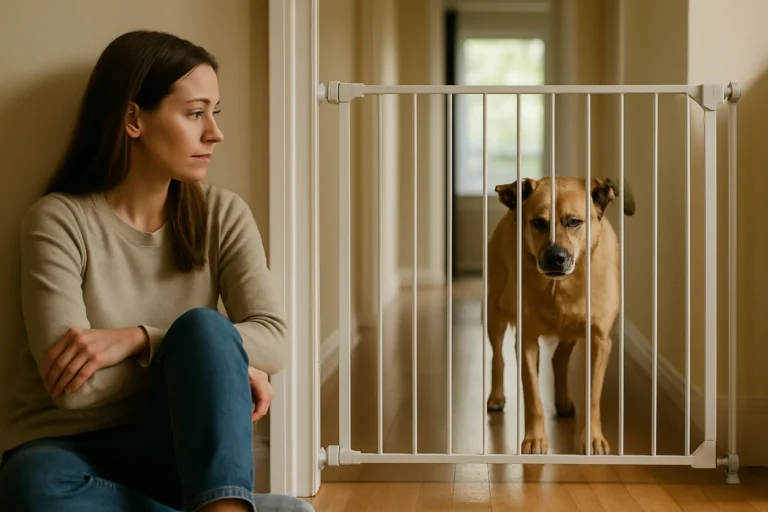
Separate the dogs whenever you cannot actively supervise them. Use closed doors, sturdy gates, crates, exercise pens, or separate rooms according to what each dog can handle safely. Feed them apart, and remove chews, favorite toys, and other high-value items from shared areas.
Do not grab collars, reach between fighting dogs, or place your hands near their heads. People can be bitten when they try to stop a highly aroused conflict. If a fight has occurred, write down which dog initiated contact, what happened immediately beforehand, where it occurred, and whether either dog was injured.
- Separate dogs before predictable conflict points such as meals, arrivals, and bedtime.
- Use barriers and separate routines rather than testing whether the dogs can cope together.
- Check both dogs for injuries and seek veterinary advice for punctures or other wounds.
Why Dog Aggression Happens Between Housemates
Resource guarding is a common cause. A dog may guard food, treats, toys, resting places, a person, a doorway, or access to a couch. Territorial behavior and pressure in narrow spaces can create additional conflict, particularly when dogs meet at doors, hallways, windows, or gates.
Fear and anxiety can make a dog use aggressive displays to increase distance. Stress can also build across several small events. A mismatch in age, energy, play style, or communication may cause one dog to repeatedly ignore the other dog’s boundaries. Social maturity can change the relationship as a younger dog moves toward adulthood.
Pain or illness may lower a dog’s tolerance or make ordinary contact feel threatening. Sensory decline, hormonal changes, and other health-related changes can also alter interactions. These possibilities matter even when the dogs previously got along.
Why a Dog May Suddenly Become Aggressive Toward Another Dog at Home
When a previously peaceful dog becomes suddenly aggressive toward other dogs, first look for a change rather than assuming the behavior appeared without a cause. New pain, an ear or dental problem, skin discomfort, reduced vision or hearing, or another health issue can change how a dog responds.
Household changes can matter too. Visitors, a move, a new pet, schedule disruption, crowded rooms, or a frightening incident may raise stress. A dog reaching social maturity may also begin responding differently to a housemate. Repeated tense encounters at feeding times, doorways, or furniture can reinforce the pattern until the dogs react as soon as the situation begins.
If you are asking, ‘Why is my dog attacking my other dog all of a sudden?’, treat the change as important information. Separate the dogs, review recent events, and arrange a veterinary examination when the onset is abrupt or unexplained.
Common Triggers to Look For in a Multi-Dog Household
Instead of labeling a dog as aggressive in every situation, look for a repeatable pattern. Note what was present, how close the dogs were, which dog approached, and the earliest change in body language. A simple incident log can reveal that conflicts are limited to one resource, location, or type of interaction.
Pay particular attention to meals and treats, toys and chews, owner attention, lap space, beds, couches, crates, hallways, and greetings at doors or windows. Play can also become a trigger when one dog becomes overexcited or fails to stop when the other dog signals discomfort.
Nighttime conflicts and rest interruptions deserve special attention. A dog that is disturbed while sleeping, approached in a dark room, or startled near a resting place may react differently from a dog engaged in daytime play.
- Record the time, location, resource, distance, and behavior of each dog.
- Look for early tension before contact, not only the final fight.
- Track whether the same dog is approached, cornered, or repeatedly provoking the interaction.
How to Tell Whether It Is Tension, Guarding, or a Real Fight
Early warning signs can include a hard stare, freezing, blocking access, hovering, a lip lift, or growling. A dog may become still and watchful before escalating. High arousal may also show up as intense staring, rapid movement, barking, or an inability to respond to familiar cues.
A pattern around one bed, bowl, person, toy, or doorway may suggest guarding or space pressure. Repeated bullying, such as one dog persistently pursuing or cornering the other, is different from a brief mutual disagreement. Any conflict involving contact should be taken seriously, even if the dogs appear calm afterward.
Do not punish growling. Growling is a warning that can give you time to create distance. Punishing the warning may suppress the sound without changing the dog’s discomfort, leaving fewer visible signals before a bite or fight.
Rule Out Medical Causes Before Assuming It Is Only Behavioral
A veterinary examination is especially important when aggression is sudden, unusually intense, or accompanied by other changes. Orthopedic pain, ear problems, dental pain, skin pain, vision or hearing loss, neurologic issues, endocrine problems, and hormonal changes can affect tolerance and behavior.
Before the appointment, record when the change began, how often conflicts occur, what happens immediately beforehand, and whether either dog shows changes in movement, appetite, sleep, sensitivity, or communication. Share videos only if they can be made safely; do not stage an interaction to demonstrate the problem.
A medical evaluation does not rule out a behavior component. It helps identify factors that may need treatment while a separate household management and training plan is developed.
How to Stop Dog Aggression at Home: Management First
The first step in how to stop my dog being aggressive with other dogs is to prevent more rehearsals of the behavior. Feed separately, give chews and high-value toys behind barriers, and supervise transitions such as coming through doors or moving between rooms. Do not require the dogs to share bowls, furniture, or tight spaces.
Create a predictable routine with separate rest areas and planned rotation of access to prized spaces. After visitors, play, walks, or other exciting events, give the dogs calm decompression time apart. If one dog guards a couch, doorway, or person, change access and positioning rather than confronting the dog at close range.
Management is not a cure, but it lowers immediate risk. Avoid forcing proximity, arranging unsupervised play, or allowing the dogs to ‘work it out.’ Some pairs may need long-term separation during specific activities or may be safest without free interaction.
- Feed dogs in separate rooms or secured areas.
- Store or distribute high-value items separately.
- Use barriers during arrivals, departures, visitors, and other high-arousal moments.
- Give each dog an undisturbed sleeping and resting area.
- Rotate access when sharing a space is likely to cause conflict.
Behavior Modification That Can Help Dogs Live Together More Calmly
Behavior modification should begin at a distance where both dogs can remain calm. Reward each dog for noticing the other without staring, lunging, freezing, or rushing forward. Keep sessions brief and stop before either dog becomes overwhelmed.
Useful skills include stationing on a mat, settling, recall, and leaving an item when asked. Practice these skills separately before using them around the other dog. Parallel routines, such as calm walks or working on cues with space between the dogs, can build predictable experiences without forcing direct interaction.
Counterconditioning pairs a known trigger with something positive while maintaining enough distance for calm behavior. After an incident, dog-to-dog reintroduction should be gradual and structured. A qualified behavior professional can help choose distances, identify body-language changes, and decide when direct interaction is appropriate.
- Begin below the level that triggers barking, freezing, or lunging.
- Reward calm observation and disengagement.
- Increase proximity only when both dogs remain relaxed across repeated sessions.
- Use brief, structured reintroductions rather than unrestricted access.
Mistakes That Often Make Aggression Worse
Yelling, physical punishment, alpha-style corrections, and forced dominance routines can increase fear and arousal. They may also make the other dog predict something unpleasant whenever it appears. Punishing a growl can remove a warning without resolving the underlying problem.
Making dogs share bowls, beds, toys, or cramped spaces creates unnecessary competition. Allowing repeated fights or tense approaches gives the behavior more opportunities to become established. Moving too quickly after a fight can produce another incident before either dog is ready.
Do not assume dogs will resolve serious household conflict by themselves. If one dog persistently targets the other, the dogs cannot disengage, or the incidents are escalating, use separation and seek professional guidance rather than testing their limits.
- Do not use punishment or forced confrontation.
- Do not deliberately provoke a reaction to test whether the problem is fixed.
- Do not allow repeated rehearsal of chasing, cornering, guarding, or fighting.
- Do not rush reunions after an incident.
When to Call a Veterinarian or Certified Behavior Professional
Call a veterinarian after puncture wounds, repeated fights, a sudden personality change, or aggression with no obvious trigger. Veterinary help is also appropriate when pain or illness may be involved. Keep the dogs separated while arranging care.
Seek behavior-professional support when one dog persistently targets the other, conflicts are difficult to predict, children or vulnerable adults may be nearby, or you cannot reliably prevent contact. A tailored plan is especially important when the dogs differ greatly in size, when bites have occurred, or when household routines make separation difficult.
The safest outcome may involve lifelong management rather than unrestricted interaction. That can include separate feeding, rotating rooms, supervised time together, or permanent separation. Success means reducing risk and improving welfare, not necessarily making every pair of dogs share every part of the home.
- Arrange urgent veterinary care for significant wounds or severe injuries.
- Request professional behavior guidance after repeated or escalating incidents.
- Keep children away from conflict and from dogs that are highly aroused.
- Use permanent management if free interaction cannot be made safe.
Building a Safer Routine for Dogs That Live Together
Household dog aggression is a safety and behavior problem, not a situation to solve through punishment or forced sharing. Separate the dogs, remove predictable triggers, document the pattern, and rule out medical causes when the change is sudden or unusual.
With careful management and gradual behavior modification, some dogs can become calmer around one another. Others need lasting separation or highly structured interaction. A realistic plan that prevents fights is safer than expecting dogs to tolerate situations they cannot handle.
Why Is My Male or Female Dog Suddenly Aggressive at Home?
Sudden aggression in either a male or female dog can be associated with pain, illness, sensory changes, stress, household disruption, social maturity, or repeated conflict around a resource. Separate the dogs and arrange a veterinary assessment when the change is abrupt or unexplained.
Can Two Dogs Be Reintroduced After a Fight?
Sometimes, but reintroduction should be gradual, structured, and based on calm behavior at a safe distance. Start with management and separate routines rather than immediate free interaction. After injuries, repeated fights, or severe arousal, involve a qualified behavior professional.
How Long Does Behavior Change Usually Take?
There is no reliable one-size-fits-all timeline. Progress depends on the triggers, medical factors, history, severity, household setup, and consistency of management. Improvement should be measured by safer, calmer responses rather than by rushing the dogs into close contact.
Is It Safe to Let Dogs Work It Out Themselves?
No. Allowing repeated confrontations can lead to injury and strengthen the pattern. Prevent contact during predictable triggers, supervise carefully, and use veterinary or behavior-professional support when the dogs cannot remain safely separated or calm.