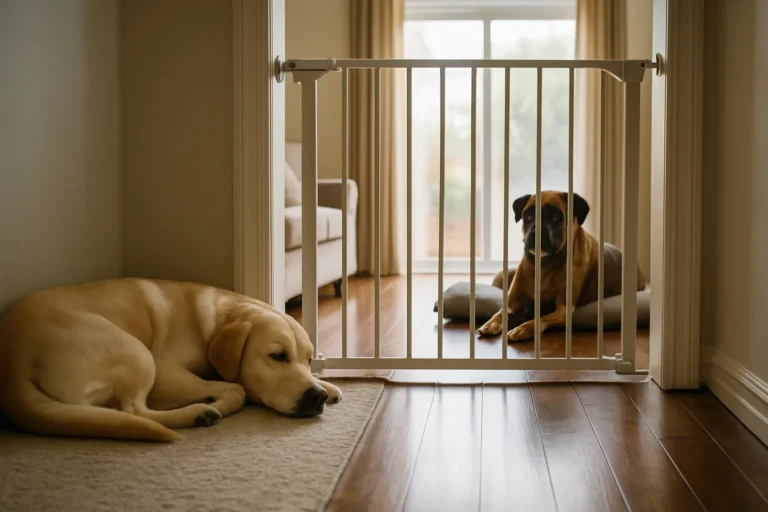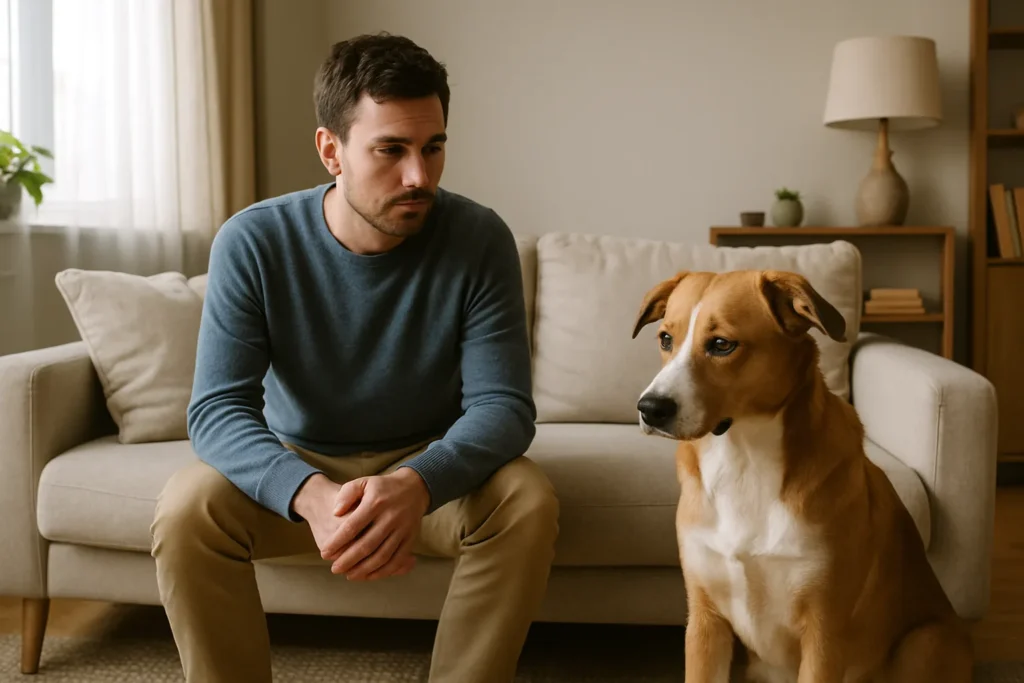
If you are thinking, “My dog is acting strange,” focus first on what is different from your dog’s normal behavior. A normally social dog may hide, a relaxed dog may begin pacing, or an independent dog may suddenly refuse to leave your side. These changes can result from stress, pain, illness, a disrupted routine, sensory changes, or aging.
A dog acting out of character is not automatically experiencing an emergency, but abrupt or significant changes should not be dismissed. This guide explains how to compare medical and behavioral causes, recognize concerning symptom patterns, observe your dog safely, and decide when veterinary care is needed.
Why Is My Dog Acting Strange All of a Sudden?
Strange behavior means behavior that is unusual for your individual dog, rather than behavior that looks unusual in dogs generally. A playful burst of energy may be normal for one dog, while pacing, staring, hiding, clinginess, trembling, irritability, or refusing food may represent a meaningful change in another.
When your dog is acting weird all of a sudden, consider the timing, duration, severity, and surrounding circumstances. Note whether the change followed a loud noise, unfamiliar visitor, missed walk, diet change, medication, injury, stressful event, or possible exposure to something harmful. Also look for changes in appetite, thirst, breathing, movement, urination, bowel movements, and sleep.
Behavior is one way dogs communicate discomfort. Pain, nausea, infection, neurological changes, and other medical problems can alter behavior before an obvious physical sign appears. Fear, anxiety, overstimulation, and household disruption can look similar, so an abrupt or unexplained change warrants particular attention.
Medical Causes of Sudden Behavior Changes in Dogs
Medical causes of sudden behavior change in dogs should be considered first when the difference is abrupt, intense, unexplained, or accompanied by physical symptoms. Behavior alone cannot identify a diagnosis, and several unrelated conditions can produce similar signs.
Contact your veterinarian if a change persists, interferes with normal activities, or appears alongside changes in eating, drinking, elimination, movement, breathing, awareness, or energy. A veterinarian can review the history, examine your dog, and determine whether testing is appropriate.
- Pain or injury can cause hiding, panting, restlessness, guarding, reluctance to move, disrupted sleep, or unexpected irritability.
- Digestive upset or nausea can cause lip licking, drooling, repeated swallowing, grass eating, pacing, appetite loss, vomiting, or unusual postures.
- Fever, infection, or inflammation can be associated with lethargy, reduced appetite, trembling, withdrawal, or a general change in responsiveness.
- Neurological problems can affect balance, awareness, coordination, recognition, or behavior and may cause circling, staring, confusion, or seizure-like activity.
- Hormonal or metabolic problems may affect thirst, appetite, energy, sleep, elimination, or temperament, but veterinary assessment is needed to investigate them.
- Hearing or vision changes can make a dog appear startled, hesitant, fearful, unresponsive, or confused, especially in unfamiliar or dimly lit surroundings.
- A reaction to a medication, dosage change, vaccination, anesthesia, or recent treatment may affect behavior, so owners should report the timing and symptoms to the prescribing clinic.
Behavioral and Environmental Reasons Your Dog May Be Acting Out of Character
Behavioral causes of sudden behavior change in dogs often follow an identifiable trigger, although the connection may not be immediately obvious. Review what happened during the hours or days before the behavior began, including events that seemed minor to people but may have been significant to the dog.
If your dog is acting funny but continues eating, drinking, moving, eliminating, and interacting normally, careful observation may reveal an environmental explanation. However, apparently normal physical behavior does not completely exclude pain or illness, particularly when the change continues or worsens.
- Stress and anxiety may cause panting, pacing, yawning, lip licking, shedding, vocalizing, hiding, destructive behavior, or an inability to settle.
- Loud noises, guests, travel, construction, storms, unfamiliar surfaces, or new surroundings may cause sudden fear or hypervigilance.
- Separation-related distress may appear as following, vocalizing, escape attempts, destruction, indoor elimination, or agitation around departure cues.
- Changes to feeding, walking, work, or sleep schedules can unsettle dogs that rely heavily on predictable routines.
- Insufficient sleep, excessive activity, crowded social situations, or prolonged excitement can leave some dogs overstimulated and irritable.
- A new baby, visitor, roommate, pet, family absence, or household conflict can change a dog’s sense of safety and access to attention or resources.
- A diet change, missed exercise, reduced enrichment, or an unfamiliar feeding schedule may contribute to behavioral changes, although persistent physical symptoms need veterinary attention.
How to Read the Behavior: What Different Signs Can Mean
A single odd behavior rarely points to one specific cause. Look at clusters of signs, what happened immediately beforehand, and whether your dog can still eat, drink, walk, rest, and respond normally.
The patterns below provide broad next steps rather than diagnoses. Seek veterinary advice when a sign is sudden, severe, recurrent, worsening, or accompanied by physical symptoms.
1. My Dog Is Acting Weird and Restless.
Pacing, panting, changing positions, repeatedly asking to go outside, or being unable to settle can reflect fear, overstimulation, a need to eliminate, nausea, breathing difficulty, or pain. Check the room temperature and recent triggers, offer access to water and a calm toilet break, and observe whether your dog can move and breathe comfortably.
Contact a veterinarian promptly if restlessness is intense or persistent, or if it occurs with a swollen abdomen, repeated unproductive retching, breathing trouble, vomiting, weakness, or obvious pain.
2. Why Is My Dog Acting Weird and Clingy?
Sudden neediness can follow fear, a routine change, separation-related stress, or an unfamiliar event. Dogs experiencing pain, nausea, reduced vision, or confusion may also seek reassurance from a familiar person.
Provide calm company without forcing physical contact, and watch for trembling, panting, appetite loss, limping, sleep disruption, or difficulty settling. Arrange a veterinary check if the clinginess is unexplained, persistent, or paired with physical changes.
3. Why Is My Dog Acting Weird and Scared All of a Sudden?
A dog may suddenly hide, freeze, lower the body, tuck the tail, avoid a room, or startle after hearing a noise or encountering a frightening event. Sounds and scents that people cannot detect may also affect dogs.
Allow your dog to retreat to a safe space, reduce noise, and avoid dragging the dog toward the suspected trigger. Unexplained fear can also accompany pain or sensory and neurological changes, so seek veterinary guidance if there is no clear trigger or the behavior recurs.
4. My Dog Is Shaking and Acting Weird All of a Sudden.
Shaking can occur with fear, excitement, cold, pain, nausea, weakness, or other medical problems. Move your dog away from obvious stressors and observe alertness, breathing, movement, gum color, and any vomiting or diarrhea without delaying care when the signs are severe.
Urgent veterinary help is appropriate if shaking occurs with collapse, marked weakness, breathing difficulty, repeated vomiting, severe pain, unresponsiveness, seizure-like movements, or possible toxin exposure.
5. Why Is My Dog Acting Weird and Looking Around?
Repeatedly looking around can indicate alertness to a sound, scent, insect, reflection, unfamiliar object, or other environmental change. A frightened dog may also scan the surroundings while panting, freezing, pacing, or keeping the ears pulled back.
Move to a quiet, familiar area and see whether the behavior resolves. Contact a veterinarian if your dog appears unable to focus, stares into space, snaps at unseen objects, loses balance, seems confused, or has repeated episodes.
6. Why Is My Dog Acting Weird and Disoriented?
Disorientation may appear as getting stuck behind furniture, staring at walls, circling, stumbling, failing to recognize familiar people, or seeming unable to find a doorway. These signs are different from simply being distracted and can require prompt veterinary assessment.
Keep your dog away from stairs, water, traffic, and sharp objects while arranging care. Sudden confusion, loss of balance, unresponsiveness, collapse, abnormal eye movement, or seizure-like activity should be treated as urgent.
7. Why Is My Dog Acting Strange at Night?
Nighttime pacing, vocalizing, waking, staring, or indoor accidents can result from outside noises, discomfort, a need to eliminate, schedule changes, anxiety, reduced vision, or age-related cognitive changes. Keep a record of when the behavior starts and whether it improves after a toilet break or environmental adjustment.
A predictable evening routine, comfortable sleeping area, and low-level lighting may help some dogs, but these measures should not replace an examination when the change is new or persistent. Senior dogs and dogs showing pain, excessive thirst, breathing changes, confusion, or frequent urination need veterinary evaluation.
Why Is My Puppy Acting Weird?
Puppies change quickly as they grow, and brief bursts of energy, increased chewing, inconsistent attention, and changing sleep patterns can be part of normal development. Teething may increase mouthing and chewing, while developmental fear periods can make a previously confident puppy cautious around unfamiliar people, objects, sounds, or places.
A puppy’s unusual behavior should not automatically be attributed to growth or training. Puppies can deteriorate quickly when they are ill, and digestive upset, parasites, pain, infection, toxin exposure, or swallowed objects may also change their behavior.
Call a veterinarian promptly if a puppy becomes unusually lethargic, repeatedly vomits, develops significant or persistent diarrhea, refuses food or water, has a swollen or painful abdomen, struggles to breathe, becomes weak, or appears confused. Keep the puppy away from possible hazards and do not give human medication.
Senior Dogs: When Strange Behavior May Be Age Related
Older dogs may gradually develop changes in sleep, awareness, social interaction, house training, or navigation. Cognitive decline can be one possible explanation, but hearing loss, vision loss, arthritis, dental disease, organ problems, medication effects, and other medical conditions may produce overlapping signs.
Hidden pain can cause a senior dog to avoid stairs, resist handling, become irritable, pace at night, or stop participating in familiar activities. Reduced sight or hearing may lead to startling, hesitation, barking, or apparent unresponsiveness.
Gradual change deserves discussion at a routine veterinary appointment, while sudden change requires faster attention. New disorientation, collapse, severe weakness, breathing difficulty, loss of balance, or a rapid personality change should not be dismissed as normal aging.
When a Dog Acting Strange Needs a Vet Check Right Away
When a dog acting out of character needs a vet check depends on the severity, speed of onset, accompanying symptoms, and possible exposure history. Contact a veterinarian or emergency clinic immediately when the behavior suggests a threat to breathing, circulation, awareness, mobility, or safety.
Even without an emergency sign, arrange a veterinary appointment when an unexplained behavior change lasts longer than a day, keeps returning, disrupts eating or sleep, or worsens quickly. Puppies, senior dogs, dogs with chronic conditions, and dogs taking medication may need earlier assessment.
- Seek emergency care for sudden collapse, inability to stand, profound weakness, or unresponsiveness.
- Seek emergency care for labored breathing, choking, blue or very pale gums, or severe respiratory distress.
- Obtain urgent help for sudden disorientation, severe loss of balance, seizure-like activity, or repeated abnormal movements.
- Contact a veterinarian for repeated vomiting or diarrhea, especially when accompanied by lethargy, pain, blood, dehydration, or inability to retain water.
- Treat yelping, continuous trembling, a rigid or swollen abdomen, guarding, or reluctance to move as possible pain signs that require professional advice.
- Contact a veterinarian or animal poison service immediately after possible toxin or medication exposure rather than waiting for symptoms.
- Separate people and other animals safely if new aggression appears, particularly when aggression accompanies pain, weakness, confusion, or other illness signs.
- Arrange an examination if a behavior change lasts more than a day, recurs, or becomes progressively more pronounced.
What to Do at Home Before the Appointment
Safe observation can give your veterinarian useful information, but it should not delay urgent care. Keep your dog in a quiet, secure area and prevent access to stairs, traffic, water hazards, unfamiliar animals, and anything that may have caused poisoning or injury.
Do not force food, strenuous exercise, handling, or interaction when your dog appears painful, frightened, or disoriented. Never give pain relievers, sedatives, stomach remedies, or other human medications unless a veterinarian specifically instructs you to do so.
- Write down when the behavior began, how long each episode lasts, how often it occurs, and what happened immediately beforehand.
- Record changes in appetite, water intake, urination, stool, sleep, breathing, activity, and social interaction.
- Look from a safe distance for limping, swelling, wounds, vomiting, diarrhea, abdominal enlargement, or reluctance to move.
- Provide a calm, quiet space with comfortable bedding and easy access to fresh water unless a veterinarian gives different instructions.
- Take a short video of the unusual behavior when doing so is safe, because the episode may not occur during the appointment.
- Gather medication containers, recent treatment information, diet details, and any packaging from a possible toxin exposure.
- Call the clinic before traveling when your dog may be aggressive, contagious, unable to walk, or in need of immediate stabilization.
Questions Your Vet or Behavior Professional May Ask
A clear history helps a veterinarian distinguish an isolated reaction from a pattern requiring examination or testing. Be as specific as possible rather than describing the behavior only as strange or funny.
For sudden or unexplained changes, veterinary assessment should generally come before behavior modification because pain and illness can affect temperament and learning. If medical causes are ruled out, a qualified behavior professional can assess triggers, body language, and environmental factors without using punishment.
- Your veterinarian may ask exactly when the behavior started and whether the onset was sudden or gradual.
- Your veterinarian may ask how long episodes last, how often they occur, and whether your dog returns fully to normal afterward.
- You may need to describe recent changes in routine, diet, medication, supplements, exercise, travel, household members, or surroundings.
- The clinic may ask about vomiting, diarrhea, coughing, limping, pain, thirst, urination, appetite, sleep, weakness, or confusion.
- You may be asked about possible access to medications, toxic foods, household chemicals, plants, garbage, or foreign objects.
- A professional may ask about previous anxiety, fear, aggression, injuries, chronic illnesses, and similar behavior episodes.
- Videos, written notes, medication labels, and a timeline can help the veterinary team understand behavior that is not visible during the examination.
Why Is My Dog Acting Strange? Common Behavior Changes: The Bottom Line
Frequently Asked Questions
Why is my dog suddenly acting so weird?
A sudden behavior change can follow fear, stress, disrupted sleep, a routine change, pain, nausea, illness, medication, or sensory and neurological problems. Check for a recent trigger and physical symptoms, and contact a veterinarian if the change is severe, unexplained, persistent, or worsening.
How can I tell if my dog is unwell or just stressed?
Stress often follows a recognizable trigger and may improve in a calm, familiar setting. Illness is more concerning when unusual behavior occurs with appetite loss, vomiting, diarrhea, altered thirst or urination, limping, pain, weakness, breathing changes, fever, confusion, or persistent lethargy, but a veterinarian may be needed to distinguish the causes.
Why is my dog acting weird even though they are otherwise acting normal?
A dog that is eating, drinking, walking, and eliminating normally may be reacting to an unfamiliar sound, scent, schedule, person, animal, or other environmental change. Continue observing because some medical problems initially cause subtle behavioral changes, and arrange a vet check if the behavior persists, recurs, or becomes more pronounced.
Why is my dog acting weird at night?
Nighttime changes can be associated with outside noises, anxiety, a need to eliminate, discomfort, reduced vision, schedule disruption, or age-related cognitive changes. Record the pattern and seek veterinary advice if it is new, frequent, or accompanied by pain, confusion, excessive thirst, breathing problems, or indoor accidents.
Why is my dog acting clingy all of a sudden?
Sudden clinginess can follow fear, household disruption, separation-related stress, pain, nausea, reduced vision, or confusion. Offer calm reassurance and observe for physical signs, but contact a veterinarian when the behavior is unexplained, persistent, or associated with trembling, panting, appetite loss, weakness, or discomfort.
Why is my dog acting weird and disoriented?
Disorientation can occur with sensory decline, medication effects, toxin exposure, neurological problems, age-related cognitive changes, or other medical conditions. Because sudden confusion can be urgent, keep your dog safe from stairs and hazards and contact a veterinarian promptly, especially if balance, awareness, or responsiveness is affected.