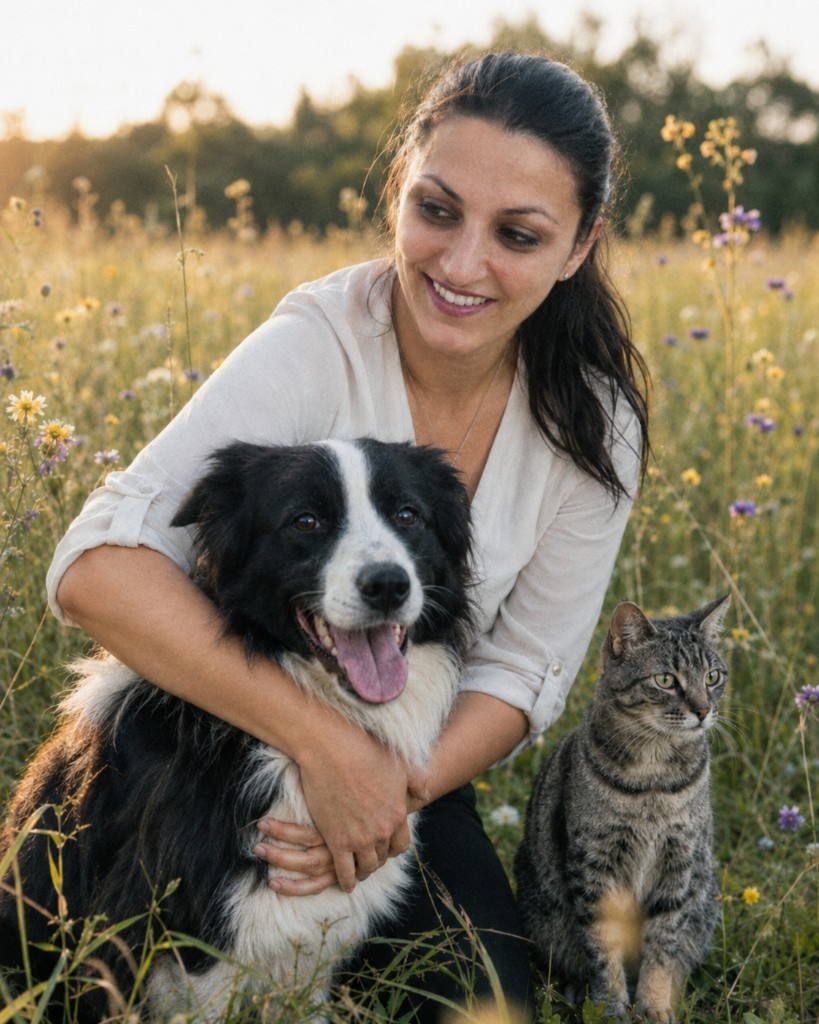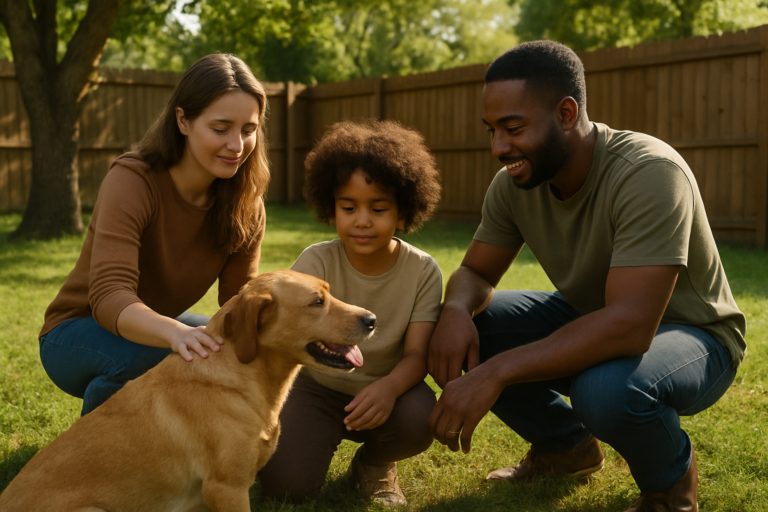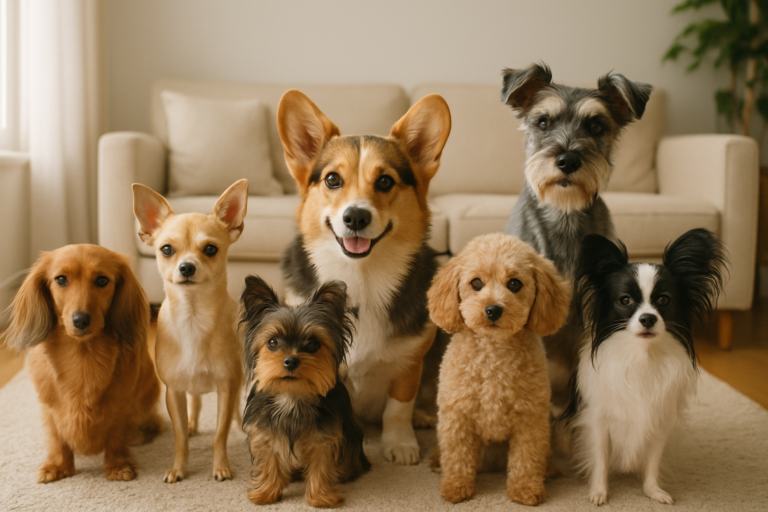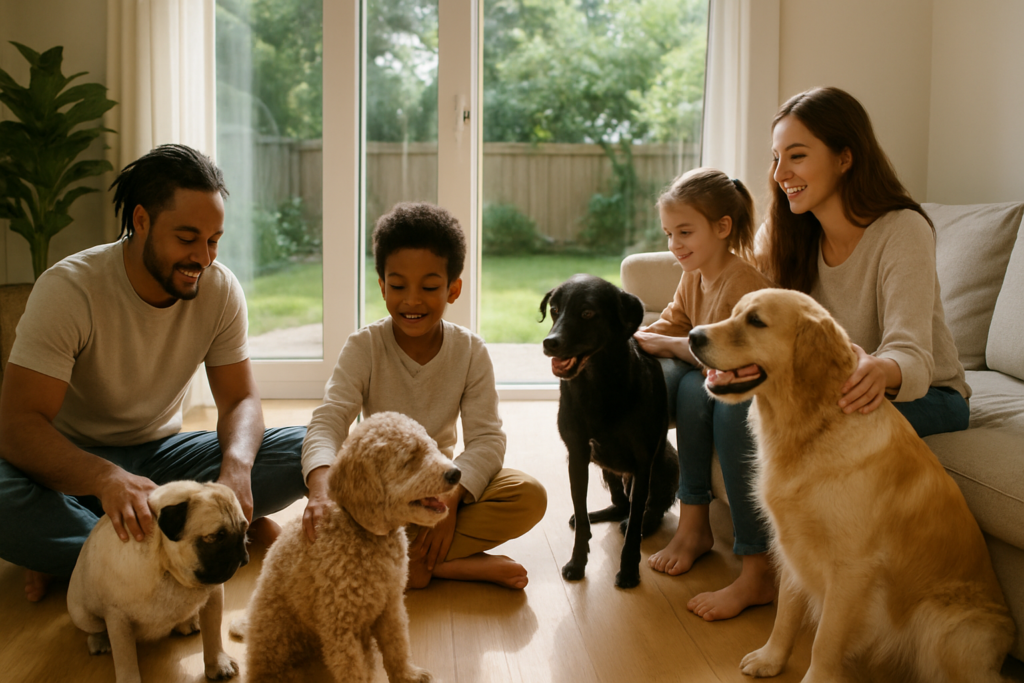
When deciding what is a good family dog, start with your household rather than a popularity ranking. The best match depends on your children’s ages, activity level, available space, schedule, grooming tolerance, and experience with training.
Many dog breeds are great for families, but breed tendencies do not guarantee an individual dog’s behavior. A suitable family companion needs an appropriate temperament, careful socialization, consistent training, enough exercise, and respectful treatment from every family member.
What makes a good family dog?
A good family dog is friendly, manageable, resilient enough for the household’s activity level, and able to settle when daily excitement ends. Families should consider the whole care commitment instead of choosing solely for appearance or reputation.
Individual temperament matters as much as breed. Meeting the dog, reviewing its history, and asking how it responds to handling, noise, visitors, children, and other animals can reveal whether the match is practical.
- A family dog should show a stable temperament and enough patience for the household’s normal movement, noise, and social activity.
- Trainability and sociability make it easier to teach household rules, polite greetings, recall, and safe behavior around visitors.
- The dog’s energy level should fit the family’s routine on ordinary weekdays, not only during weekends or vacations.
- The dog’s adult size and sturdiness should be safe around children without making daily handling difficult for adults.
- Coat care, shedding, drooling, and professional grooming needs should fit the family’s budget and tolerance for mess.
- Barking tendency and the ability to relax indoors matter in apartments, shared buildings, and busy family homes.
How to choose the right family dog for your home
Before comparing breeds, describe the life the dog will actually have. Include work and school hours, transportation, exercise opportunities, training time, travel plans, and the adults who will remain responsible when children lose interest.
Choose according to your most demanding normal week rather than an ideal schedule. A dog whose basic needs fit difficult days is more likely to remain manageable throughout changes in school, work, and family activities.
| Which factor should your family assess? | Which practical question should your family answer? |
|---|---|
| Your family should assess its realistic exercise schedule. | Can an adult provide the dog’s required walks, play, and mental stimulation every day? |
| Your family should assess its home and outdoor access. | Can the dog move, rest, toilet, and play safely without depending on a yard for all exercise? |
| Your family should assess its available training time. | Can adults consistently teach manners, supervise interactions, and attend training sessions if needed? |
| Your family should assess allergy and grooming concerns. | Can the household manage shedding, brushing, bathing, coat trimming, and related expenses? |
| Your family should assess its supervision capacity. | Can an adult actively supervise children and the dog rather than expecting them to manage each other? |
Best family dog breeds by lifestyle, not just popularity
The answer to what dogs are good family dogs changes with the household. The following groups describe common breed tendencies, but every prospective dog should still receive an individual assessment.
Best all-around family dogs
Labrador Retrievers, Golden Retrievers, Standard Poodles, and well-socialized Collies often combine sociability with trainability. They generally need meaningful daily exercise, and their size, exuberance, or coat care may be challenging for some homes.
Best dogs for active families
Labrador Retrievers, Golden Retrievers, Boxers, and Standard Poodles can suit families that enjoy walking, hiking, training, and active play. Physical exercise should be paired with scent games, retrieving, or training so the dog receives mental stimulation.
Best calm family dogs
Adult Cavalier King Charles Spaniels, Bernese Mountain Dogs, Newfoundlands, and some adult rescue dogs may be relatively calm indoors after appropriate exercise. Health, heat tolerance, grooming, drooling, and large-breed costs require careful consideration.
Best good house dogs for families with limited space
Bichon Frises, Miniature Poodles, Cavalier King Charles Spaniels, and calm adult mixed-breed dogs can adapt to smaller homes when they receive regular walks and enrichment. Beagles may fit physically, but their vocal nature and scent-driven behavior can be difficult in shared buildings.
Best low-shedding or hypoallergenic family dogs
Poodles and Bichon Frises shed relatively little, but they require regular brushing and professional coat maintenance. No dog is completely hypoallergenic because allergens can occur in dander, saliva, and urine, so sensitive family members should spend time with the individual dog before adoption.
Best family dogs for first-time owners
Golden Retrievers, Labrador Retrievers, Poodles, Bichon Frises, and carefully matched adult dogs are often approachable choices for first-time owners. Beginner-friendly does not mean effortless, and every dog still needs training, exercise, preventive veterinary care, and supervision.
Top family dog breeds to consider
This shortlist includes ten familiar dog breeds great for families, but it is a starting point rather than a universal ranking. Families should compare each breed’s likely benefits and challenges with their own schedule and capabilities.
| Which breed should your family consider? | Why might the breed suit a family? | Which challenge should your family expect? |
|---|---|---|
| The Labrador Retriever is a popular family candidate. | It is commonly sociable, trainable, playful, and eager to join family activities. | It usually needs substantial exercise and may be boisterous, mouthy, and prone to shedding. |
| The Golden Retriever is a widely considered family companion. | It is commonly affectionate, cooperative, and responsive to reward-based training. | It needs exercise, coat care, and screening for significant inherited health concerns. |
| The Poodle is available in several sizes. | It is intelligent, athletic, trainable, and relatively low-shedding. | It requires routine grooming and enough mental activity to prevent boredom. |
| The Beagle is a compact and sociable hound. | It is often cheerful, sturdy, playful, and comfortable in an active household. | It can be vocal, scent-driven, independent, and unreliable when off leash. |
| The Collie is an attentive and responsive family dog. | It is commonly gentle, trainable, and engaged with its household. | It may bark, herd moving children, or require considerable coat care. |
| The Boxer is an energetic and affectionate companion. | It is often playful, people-oriented, and sturdy enough for active family life. | It can be exuberant around small children and needs training, exercise, and heat precautions. |
| The Cavalier King Charles Spaniel is a small companion breed. | It is commonly affectionate, adaptable, and interested in staying close to family members. | It is physically less robust than larger breeds and has serious potential health concerns. |
| The Bernese Mountain Dog is a large working breed. | It is often affectionate, steady, and devoted to its household. | It needs space, grooming, heat management, and a budget for large-dog care. |
| The Bichon Frise is a small, social companion. | It is often cheerful, adaptable, and relatively low-shedding. | It needs frequent coat maintenance and patient house-training. |
| The Newfoundland is a giant family companion. | It is commonly patient, gentle, and calm when its exercise needs are met. | It requires extensive space, grooming, drool management, and significant financial commitment. |
Which dogs are best for families with kids by age group?
Children’s developmental stages affect their ability to follow rules, read canine body language, and control their movements. The safest choice is a dog whose size, sensitivity, energy, and handling tolerance match the children’s current behavior.
Families with toddlers and preschoolers
Families with very young children often benefit from a calm, sturdy adult dog with a known history around children. A highly excitable adolescent dog may knock a child down, while a fragile toy dog can be injured by grabbing, falling, or rough play.
Toddlers and dogs should always have active adult supervision or be separated with secure barriers. An adult should intervene before either the child or dog becomes uncomfortable.
Families with school-age children
School-age children may enjoy training games, supervised walks, retrieving, and age-appropriate care tasks. Labrador Retrievers, Golden Retrievers, Poodles, Collies, Beagles, and many mixed-breed dogs can be considered when their energy and temperament fit the household.
Families with teens
Teenagers can participate in advanced training and more vigorous exercise, so active breeds may become realistic options. Adults must remain responsible for the dog when schoolwork, sports, employment, or college plans change the teenager’s availability.
Why supervision matters more than breed reputation alone
Any dog can become frightened, defensive, or overwhelmed, including a breed with a friendly reputation. Children should never climb on a dog, disturb it while eating or sleeping, take items by force, or follow it when it tries to leave.
Best family dogs by size
Size affects handling, travel, feeding costs, space, and injury risk, but it does not determine whether a dog will be calm indoors. Energy level, age, training, and temperament are usually more informative than body size alone.
Small family dogs
Bichon Frises, Miniature Poodles, and Cavalier King Charles Spaniels can suit families seeking a portable companion. Small dogs still need exercise and training, and children must handle them gently because their size can make accidental injuries more likely.
Medium family dogs
Beagles, smaller Standard Poodles, Collies, and many mixed-breed dogs offer a balance between sturdiness and manageability. Exercise, barking, herding behavior, and prey drive vary substantially among dogs in this broad size group.
Large family dogs
Labrador Retrievers, Golden Retrievers, Boxers, Bernese Mountain Dogs, and Newfoundlands are frequently considered by families. Large dogs can be sturdy companions, but they cost more to feed and medicate and can accidentally knock over children.
How size affects exercise, safety, and space
A large dog does not automatically need a large yard, and a small dog is not automatically suited to apartment life. Families should consider indoor activity, vocal behavior, toileting access, exercise intensity, stair use, vehicle space, and whether adults can physically control the dog when necessary.
Best family dogs for first-time owners
First-time owners often do best with a sociable, trainable dog whose exercise and grooming requirements fit an ordinary routine. Labrador Retrievers, Golden Retrievers, Poodles, Bichon Frises, and temperament-tested adult dogs may be suitable candidates, depending on the household.
Breeds with extreme stamina, intense guarding tendencies, strong independence, or highly specialized working drives can require more management than a new owner expects. A qualified reward-based trainer can help families establish routines before problems become established.
An adult dog may be easier than a puppy because its size, coat, energy level, and basic temperament are more apparent. A foster-based rescue may also provide useful information about house-training, visitors, children, other animals, and indoor behavior.
- First-time owners should choose a dog whose daily needs fit their present experience rather than a breed they hope to grow into.
- The family should budget for training, veterinary care, food, grooming, boarding, equipment, and unexpected medical costs.
- Every adult should agree on exercise duties, house rules, child supervision, and the long-term care plan before adoption.
Good house dogs for families: what matters indoors
Good house dogs for families are able to relax indoors after their physical and mental needs have been met. A quiet adult dog with moderate exercise needs may fit a small home better than a vocal, restless, or highly driven small breed.
Families should ask how the dog responds to doorbells, visitors, household appliances, neighboring animals, confinement, and time alone. These behaviors influence daily compatibility even when a dog’s size seems ideal.
| Which indoor trait matters? | Why does this indoor trait affect family life? |
|---|---|
| A manageable barking tendency matters indoors. | Frequent alert barking can disturb sleeping children, remote work, and nearby neighbors. |
| The ability to settle after exercise matters indoors. | A dog that can relax is easier to include in meals, homework, and evening routines. |
| Manageable shedding and mess matter indoors. | Hair, mud, drool, odor, and grooming needs affect cleaning time and household comfort. |
| Tolerance for visitors and activity matters indoors. | A busy home may overwhelm a fearful dog or intensify uncontrolled greeting and guarding behavior. |
| Crate training and house-training matter indoors. | These skills support safe management, travel, veterinary recovery, and predictable household routines. |
Family dog traits that can be a poor fit for some households
No breed is automatically a bad family dog, but some traits are incompatible with particular homes. Honest screening protects both the family and the dog from a placement that becomes stressful or unsafe.
- A very high prey drive may complicate life with cats, rabbits, wildlife, or children who run and squeal.
- Extremely high exercise needs can lead to frustration and destructive behavior when a family cannot provide enough daily activity.
- A fragile toy breed may be vulnerable to accidental injury in a home with rough or unpredictable young children.
- Strong guarding instincts can become difficult without skilled socialization, training, visitor management, and secure containment.
- Heavy grooming needs can cause matting, discomfort, and substantial expenses when a family underestimates coat maintenance.
- Extreme sensitivity to noise or handling may be difficult to manage in a loud household with frequent visitors.
- Persistent vocal behavior may be unsuitable for apartments or families that need a quiet home.
Should you choose a puppy, adult dog, or rescue for your family?
Puppies allow families to guide socialization from an early age, but they require frequent toilet breaks, close supervision, safe social exposure, and months of training. Puppy biting, chewing, jumping, and nighttime disruption can be especially demanding alongside young children.
Adult dogs often have more predictable sizes, coats, activity levels, and temperaments. An adult may already have house manners, although adjustment, training, and careful introductions are still necessary.
A rescue dog can be a puppy or an adult, and its suitability depends on the individual rather than the label. Foster observations and a documented behavior history can help a family evaluate real household behavior.
- Families should ask how the dog has behaved around children of similar ages.
- Families should ask about handling tolerance, resource guarding, bite history, fear, separation distress, and reactions to other animals.
- Families should ask about confirmed health conditions, recommended screening, vaccination history, and likely adult size.
- Families should ask what exercise, grooming, training, and containment the dog will require.
- Families should ask whether the shelter, rescue, or breeder offers post-placement guidance and a responsible return policy.
How to introduce a new family dog to children
Prepare the household before the dog arrives by establishing sleeping areas, feeding locations, barriers, walking duties, and rules for interaction. The dog should have a quiet retreat that children are not allowed to enter.
Keep early introductions calm and brief. Allow the dog to approach voluntarily, reward relaxed behavior, and separate everyone before excitement or discomfort escalates.
- Children should pet the dog’s shoulder or side gently instead of hugging, climbing on, or reaching over it.
- Children should leave the dog alone when it is eating, sleeping, chewing, hiding, or moving away.
- Adults should supervise all interactions closely and use gates or separate rooms whenever active supervision is impossible.
- Food bowls, valued chews, and high-interest toys should be managed by adults until the dog’s behavior is well understood.
- Adults should watch for stress signals such as lip licking, freezing, turning away, tucked posture, growling, or attempts to escape.
- A qualified behavior professional should evaluate persistent fear, guarding, snapping, or aggression instead of leaving children to test the dog’s tolerance.
What Are Great Family Dogs? How to Choose the Best Fit: The Bottom Line
Frequently Asked Questions
What is a good family dog for first-time owners?
A trainable and sociable Labrador Retriever, Golden Retriever, Poodle, Bichon Frise, or carefully evaluated adult dog may suit a first-time owner. The best choice has exercise, grooming, size, and training needs that the adults can manage consistently.
What are good family dog breeds that do not shed much?
Poodles and Bichon Frises are commonly considered low-shedding family dogs, but both require regular brushing and professional grooming. No breed is completely hypoallergenic, so family members with allergies should spend time with the individual dog before committing.
What dogs are good family dogs in smaller homes?
Bichon Frises, Miniature Poodles, Cavalier King Charles Spaniels, and calm adult mixed-breed dogs may adapt well to smaller homes. Indoor calmness, barking, exercise needs, and access to toileting areas matter more than size alone.
What are the top 10 family dog breeds to start with?
A useful shortlist includes the Labrador Retriever, Golden Retriever, Poodle, Beagle, Collie, Boxer, Cavalier King Charles Spaniel, Bernese Mountain Dog, Bichon Frise, and Newfoundland. These breeds have different exercise, grooming, health, size, and training requirements, so they should not be treated as a universal ranking.
Are large dogs or small dogs better for families with kids?
Neither size is automatically better for families with children. Large dogs may be sturdy but can knock children over, while small dogs are easier to handle but may be injured by rough play, so temperament, training, and supervision should guide the decision.