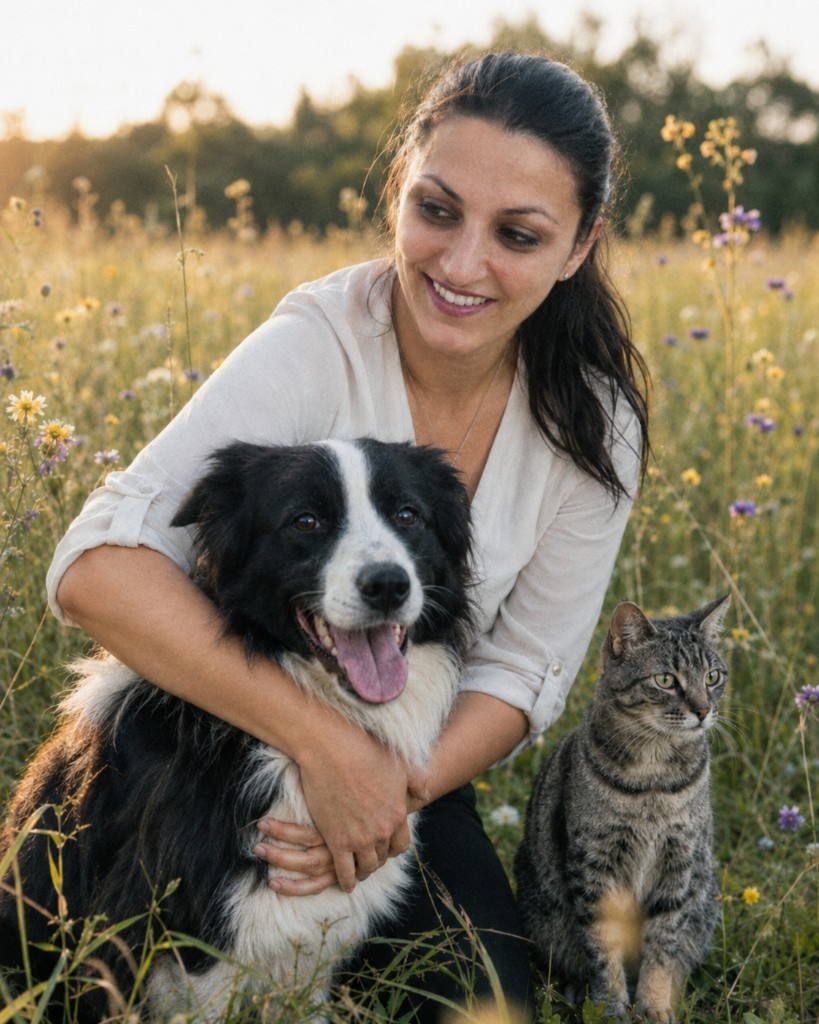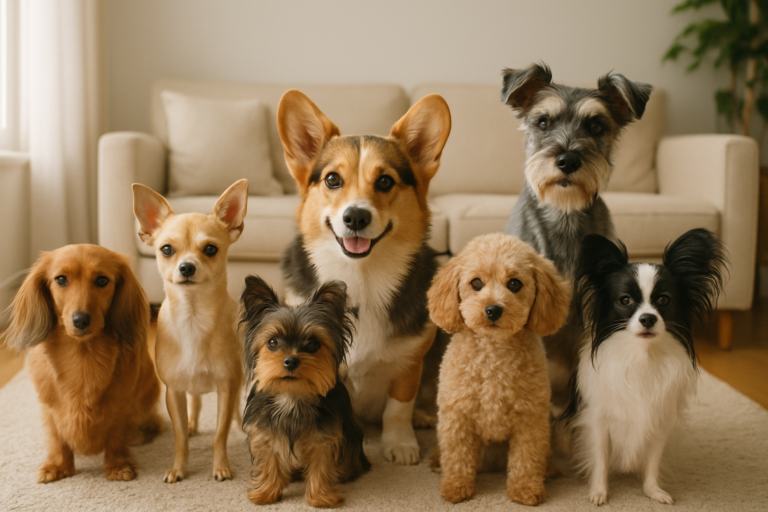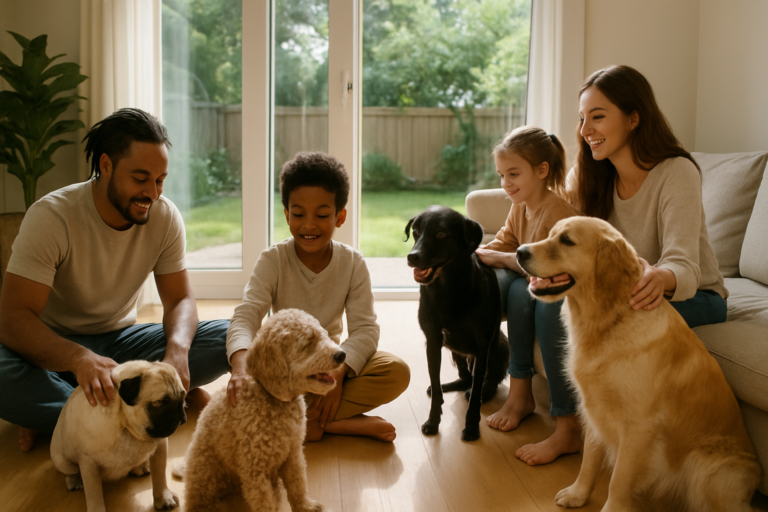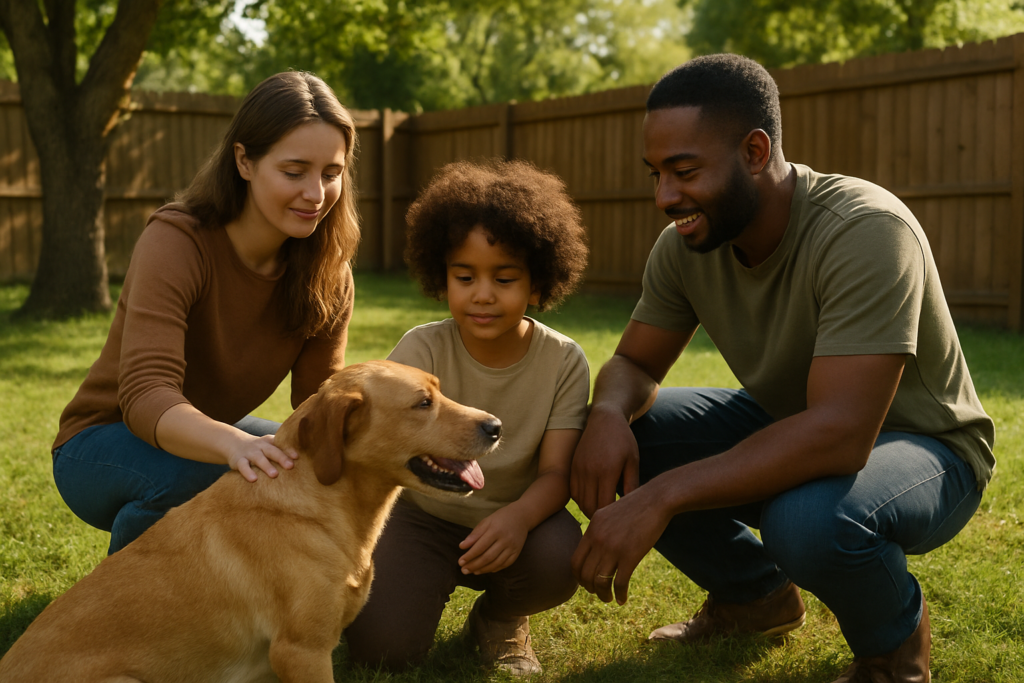
Dogs that are good with kids tend to be friendly, trainable, resilient, and comfortable with normal household activity, but breed alone cannot guarantee safe behavior. The best match depends on the dog’s individual temperament, the children’s ages and behavior, and the adults’ commitment to training and supervision.
Some dog breeds good with kids are better suited to active school-age children than toddlers, while others are too energetic, strong, or delicate for a particular home. This guide compares the best dog breeds for toddlers, older children, and teens while also covering small, medium, and large options.
How to Choose Dogs That Are Good With Kids
Begin with the realities of your household rather than a breed’s family-friendly reputation. A calm adult dog may suit a busy family better than a demanding puppy, and a moderate-energy breed may be more successful than an athletic dog that receives too little exercise.
Meet the individual dog whenever possible and observe whether it recovers calmly from excitement, accepts gentle handling, and can disengage from play. Fearfulness, persistent guarding, uncontrolled jumping, and intense chasing deserve careful evaluation regardless of breed.
- Toddlers need especially predictable, sturdy dogs because they move suddenly and cannot reliably follow safety rules.
- Grade-school children can participate in supervised games and training, but adults must retain responsibility for care and handling.
- Teens may manage more exercise and training, although their schedules can change quickly because of school, work, and activities.
- The dog’s adult size should fit the home, but size alone does not determine exercise needs, gentleness, or manageability.
- Energy level should match the exercise that adults can provide every day rather than the activity children merely hope to provide.
- Trainability, frustration tolerance, and the ability to settle are valuable in noisy homes with frequent movement or visitors.
- Sturdy dogs usually tolerate accidental contact better than fragile toy dogs, but large dogs can cause accidental knockdowns.
- Coat care, shedding, barking, house-training, food costs, and veterinary expenses should be considered before choosing a breed.
- An adult dog with a documented history around children can be more predictable than a puppy whose mature temperament is unknown.
Best Dog Breeds for Toddlers and Young Kids
The best dog breeds for toddlers generally combine patience, emotional stability, manageable energy, and enough sturdiness to cope with an active home. Lower reactivity is particularly valuable because toddlers often squeal, stumble, wave objects, and move unpredictably.
No gentle breed should be expected to tolerate climbing, grabbing, or interrupted sleep. An attentive adult should remain close enough to intervene whenever a young child and dog share the same space.
- Labrador Retrievers are sociable and trainable, but young Labs can be exuberant, mouthy, and strong enough to knock over a toddler.
- Golden Retrievers are often patient and people-oriented, although they need daily exercise, coat care, and training for calm greetings.
- Cavalier King Charles Spaniels are affectionate and adaptable, but their smaller bodies require gentle handling and careful health screening.
- Bichon Frises are cheerful companion dogs with relatively sturdy small bodies, but their coats need regular professional or at-home grooming.
- Beagles are friendly and robust, but their scent drive, vocal nature, and food motivation require secure management.
- Standard Poodles are intelligent, athletic, and trainable, but they need mental stimulation, exercise, and scheduled coat clipping.
- Bernese Mountain Dogs are often gentle and steady, but their great size, shedding, expense, and relatively short lifespan require serious consideration.
Watch for behaviors that could overwhelm a toddler.
Jumping, mouthing, body-slamming, resource guarding, and frantic chasing can make even a friendly dog unsafe around a small child. Gates, pens, leashes, separate rest areas, and reward-based training can prevent these behaviors from being repeatedly practiced.
Best Dog Breeds for Older Kids
School-age children can follow clearer boundaries, practice simple cues, and enjoy structured games with a dog. Playfulness, resilience, trainability, and an ability to settle after activity are useful traits for this stage.
Adults should choose a dog’s exercise requirements based on the family’s established routine. Promises that children will handle every walk are rarely a reliable long-term care plan.
- Boxers are playful and affectionate, but their strength, jumping, and prolonged adolescent energy require consistent training.
- Collies are responsive and family-oriented, but they may bark or attempt to control running children through herding behavior.
- Portuguese Water Dogs are clever and athletic companions for active families, but they need substantial exercise, training, and grooming.
- Cocker Spaniels can be merry and affectionate when well socialized, but children must respect their handling boundaries and resting space.
- Boston Terriers are sturdy companion dogs with moderate exercise needs, but heat and breathing limitations require careful management.
- Havanese are social and trainable small dogs, but they need gentle handling, coat care, and support with being left alone.
Give older children safe and supervised dog-care jobs.
Older children can measure food, refill water, practice cues, hide treats for scent games, and join an adult on walks. Adults should supervise these tasks and remain responsible for veterinary care, difficult handling, and interactions involving food or unfamiliar dogs.
Best Dog Breeds for Teens
The best dog breeds for teens may be more athletic or training-intensive because older children can understand body language, practice consistently, and participate in longer activities. However, an adult still needs to guarantee the dog’s care when school, sports, college, or work changes the teen’s availability.
Athletic appearance should not be the only reason to select a high-drive breed. Dogs bred for demanding work can develop destructive, vocal, or compulsive behavior when a household cannot provide appropriate physical exercise, mental work, and rest.
- Labrador Retrievers can join teens for hiking, retrieving, and training, but young Labs need impulse-control work and regular exercise.
- Golden Retrievers often enjoy active family life and cooperative training, but their grooming, shedding, and social needs are substantial.
- Standard or Miniature Poodles can excel in sports and advanced training, but their intelligence requires productive outlets and regular grooming.
- Vizslas are affectionate endurance athletes, but their exercise needs and sensitivity can make them too intense for quieter households.
- Australian Shepherds are highly trainable and versatile, but their herding instincts, motion sensitivity, and need for purposeful activity can challenge casual owners.
- Standard Schnauzers are intelligent and robust, but they can be strong-willed, vigilant, and demanding of consistent training.
Choose for the entire household rather than one active teen.
A dog that is ideal for a dedicated teenage runner may be exhausting for younger siblings or adults with limited time. Families should plan for the dog’s needs during exams, injuries, severe weather, vacations, and the teen’s eventual move away from home.
Small Dog Breeds Good With Kids
Small dog breeds good with kids can fit compact homes and may be easier for adults to transport, but small size does not automatically mean easy care or toddler suitability. Some small dogs are physically fragile, quick to defend their space, difficult to house-train, or uncomfortable with rough handling.
The best small dogs good with kids are usually sociable, relatively sturdy, and raised with respectful handling. Families should provide elevated or gated resting places where a small dog can retreat without being followed.
- Cavalier King Charles Spaniels are gentle companions, but they are somewhat delicate and require careful screening for inherited health problems.
- Havanese are outgoing and adaptable, but their coats need frequent brushing or regular clipping.
- Bichon Frises are playful and sturdy for their size, but grooming and house-training demand consistency.
- Boston Terriers are compact and robust, but their flat faces can limit strenuous exercise and heat tolerance.
- Pugs are affectionate and solidly built, but breathing, eye, skin, weight, and heat-related concerns can make their care less simple than expected.
- Shih Tzus can suit calm families with respectful children, but their eyes, faces, and long coats require attentive care.
Compare small dogs by care needs rather than size alone.
A short coat may reduce brushing without reducing shedding, while a low-shedding coat usually needs professional clipping. Barking, dental care, separation distress, house-training, exercise, and breed-related health concerns all affect whether a small dog is genuinely manageable for a family.
Medium Sized Dogs Good With Kids
Medium sized dogs good with kids can offer a useful balance between physical sturdiness and manageable size. Many are large enough for active play without creating the space, food, and transportation demands associated with giant breeds.
Energy varies widely within this size range, so families should not assume that every medium-sized dog has moderate exercise needs. Field-bred and working lines may be considerably more intense than companion-oriented dogs of the same breed.
- Beagles can suit moderately active families that accept vocalization, scent-driven wandering, and the need for secure fencing.
- English Springer Spaniels are affectionate and energetic, but they need regular exercise, coat care, and close engagement with their people.
- Standard Poodles offer trainability and athleticism, but they require clipping, mental stimulation, and more exercise than many families expect.
- Border Terriers are sturdy and affectionate, but their terrier prey drive and determination require secure management around small animals.
- Whippets are often quiet indoors after appropriate exercise, but they can be sensitive, fast, and strongly motivated to chase.
- Brittanys are cheerful sporting dogs for active homes, but they can become restless when daily exercise and training are insufficient.
Look for an adult whose demonstrated energy matches your routine.
Families seeking moderate activity may find a mature Beagle, Whippet, or companion-bred Poodle more manageable than a young sporting dog. The individual dog’s age, health, breeding line, and established habits matter as much as its breed label.
Large Family Dogs That Often Do Well With Children
Some large dogs are patient, sociable, and less physically fragile than toy breeds, but gentleness does not cancel their strength. A friendly greeting from a large adolescent dog can knock down a toddler or pull an unprepared child off balance.
Large dogs generally require more food, larger equipment, more vehicle space, and higher medication or boarding costs. Giant breeds may also have shorter lifespans and greater risks of serious orthopedic or other health problems.
- Labrador Retrievers are trainable and sociable, but adolescent enthusiasm and mouthing must be managed.
- Golden Retrievers are cooperative and affectionate, but they need exercise, grooming, and careful health screening.
- Bernese Mountain Dogs are often calm and devoted, but their size, shedding, heat sensitivity, and lifespan can be difficult for some families.
- Newfoundlands are famously substantial and often gentle, but drool, grooming, heat management, expense, and immense size are unavoidable considerations.
- Collies are responsive and often attentive to family members, but barking, coat care, sensitivity, and herding behavior may require management.
Teach large dogs to greet children with four paws down.
Adults can use gates or a leash during exciting arrivals and reward the dog for standing calmly, sitting, or going to a mat. Children should not hold a powerful dog’s leash until the dog has dependable walking skills and the supervising adult considers the situation safe.
Dog Breeds Good With Kids but Not Right for Every Family
No breed is universally good or bad with children. A dog may struggle because of pain, fear, inadequate socialization, previous experiences, resource guarding, overwhelming noise, or a mismatch between its drives and the household.
Traits that can be challenging include physical fragility, intense herding, high guarding tendencies, low tolerance for handling, strong chase behavior, extreme sensitivity, and difficulty settling. These traits do not make a dog defective, but they can demand more skill and management than a family can realistically provide.
- Families should ask whether the dog has lived with children of similar ages and how those interactions were managed.
- Families should ask how the dog responds to handling, noise, visitors, running, toys, food, and attempts to interrupt play.
- Families should request information about fear, bites, snapping, guarding, separation behavior, escape attempts, and recovery after stress.
- Families should ask breeders about the temperaments and health testing of both parents rather than relying on appearance or awards.
- Families should ask rescues or foster homes for specific observations instead of accepting broad labels such as friendly or family dog.
- Families should arrange professional behavioral guidance before adoption when a dog’s history or reactions raise safety concerns.
Evaluate the individual dog’s behavior and history.
A familiar breed name cannot replace observation, honest disclosure, and a realistic assessment of the home. Families should be willing to decline a dog whose fear, arousal, strength, or care requirements exceed their experience.
Training and Supervision Matter More Than Breed
A family dog is a companion rather than a babysitter. Active adult supervision means watching the interaction closely, recognizing changes in behavior, and intervening before either the child or dog becomes overwhelmed.
Reward-based training can teach useful skills such as coming when called, leaving objects, dropping toys, settling on a mat, walking without pulling, and greeting without jumping. Socialization should involve controlled, positive exposure rather than forcing a dog to endure frightening contact.
- Children should never climb on, ride, hit, chase, corner, or tightly hug a dog.
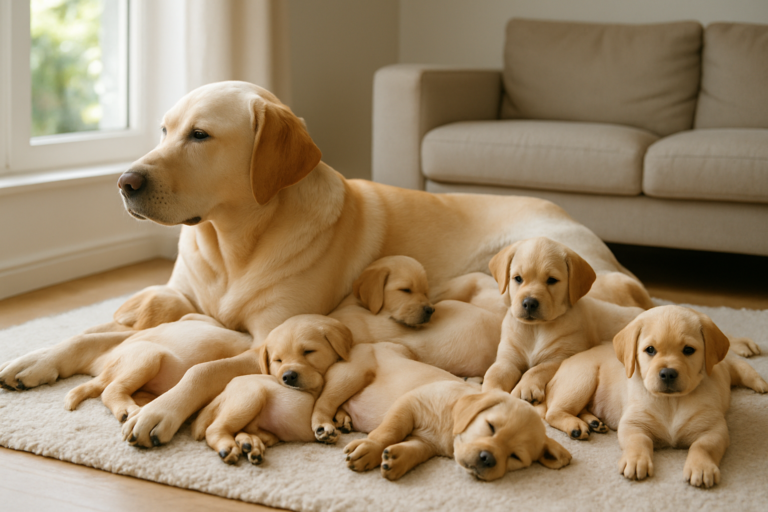
- Children should leave dogs alone while they are eating, chewing, sleeping, hiding, ill, or caring for puppies.
- Adults should separate dogs and children with gates or doors when close supervision is unavailable.
- Food bowls, chews, prized toys, and resting areas should be managed to prevent conflict rather than used to test tolerance.
- Children should learn that lip licking, yawning, turning away, freezing, tucked posture, showing the whites of the eyes, growling, and retreating can signal discomfort.
- Adults should never punish a growl because it communicates distress and provides an opportunity to create distance.
- A qualified reward-based trainer or veterinary behavior professional should be consulted when a dog shows guarding, snapping, intense fear, or escalating aggression.
Build predictable routines for everyday interactions.
Calm routines around doors, meals, visitors, play, and bedtime reduce opportunities for conflict. Every dog should have a quiet sleep space that children cannot enter, and every child should know when an adult must take over.
Puppy or Adult Dog for a Family With Kids?
Puppies allow a family to shape early routines, but they also bite during play, have toilet accidents, wake at inconvenient hours, and require intensive socialization and training. Combining puppy care with toddlers can be exhausting because both need constant supervision.
A well-assessed adult dog may already be house-trained, calmer, and physically mature, making its energy and temperament easier to evaluate. An adult rescue with a detailed foster history around children may be more predictable than either a very young puppy or a dog observed only in a kennel.
- Families should learn whether an adult dog has previously lived safely with children and whether any incidents occurred.
- Families should ask how the dog behaves around touching, sudden movement, food, toys, visitors, other animals, and time alone.
- Families should arrange a gradual introduction and avoid asking children to crowd, hug, or immediately play with a newly arrived dog.
- Families should recognize that stress can suppress normal behavior, so the dog’s first quiet days may not reveal its long-term personality.
Use the 7-7-7 concept as a flexible transition reminder.
The informal 7-7-7 rule suggests that a newly adopted dog may need roughly seven days to decompress, seven weeks to learn the routine, and seven months to feel fully settled. It is not a scientific timetable, and some dogs adjust much faster or slower.
During the transition, families should keep routines predictable, limit overwhelming introductions, supervise child interactions, and allow the dog to approach at its own pace. New or worsening behavior should be addressed promptly rather than dismissed as part of an adjustment schedule.
Best Matches by Family Situation
These shortlists are starting points rather than guarantees. Families should compare each candidate’s temperament, health, age, breeding line, exercise requirements, and known behavior around children before making a decision.
1. Consider steady, sturdy dogs for homes with toddlers.
A calm adult Labrador Retriever, Golden Retriever, Standard Poodle, Bichon Frise, or carefully selected Bernese Mountain Dog may suit a well-managed home with toddlers. Individual predictability and close supervision matter more than the breed name.
2. Consider trainable athletes for responsible teens.
Labrador Retrievers, Golden Retrievers, Poodles, and carefully matched Vizslas or Australian Shepherds can engage teens who genuinely enjoy daily training and exercise. Adults must be ready to assume full responsibility when the teen is unavailable.
3. Consider sturdy companion breeds when choosing a small dog.
Havanese, Bichon Frises, Boston Terriers, and Cavalier King Charles Spaniels are common family candidates when children can handle them respectfully. Grooming, house-training, breathing, and inherited health concerns should be reviewed individually.
4. Consider moderate adult dogs when choosing a medium-sized companion.
Beagles, Whippets, Standard Poodles, and English Springer Spaniels can fit families whose routines match their exercise and training needs. A mature individual with known habits may be easier to match than an energetic adolescent.
5. Define low maintenance before choosing a breed.
A calm adult dog with known behavior is often more manageable than any puppy. Whippets and Boston Terriers have relatively simple coats, while Bichon Frises and Poodles shed less but require regular clipping, so no option is maintenance-free.
6. Consider sporting breeds for consistently active households.
Labrador Retrievers, Golden Retrievers, Brittanys, Portuguese Water Dogs, Poodles, and Vizslas may suit families that already hike, run, train, or spend substantial time outdoors. Activity must continue even when children lose interest or weather disrupts plans.
7. Prioritize predictability and support for first-time owners.
A sociable adult Labrador Retriever, Golden Retriever, Poodle, Bichon Frise, or Havanese may be approachable for a prepared first-time owner. A fostered adult with known behavior and access to a qualified trainer can be an especially practical choice.
Choose the Right Individual Dog for Your Family
The best dogs that are good with kids are not defined by breed reputation alone. A suitable family dog has an individual temperament, age, size, energy level, and care profile that align with the household’s real schedule and the children’s developmental stage.
Families can improve any promising match by choosing carefully, supervising actively, teaching respectful child-dog interactions, and using reward-based training. A calm adult with a known history may ultimately be a better family companion than the most popular puppy breed.
Frequently Asked Questions
What is the calmest dog breed for kids?
No single breed is always the calmest, but mature Golden Retrievers, Labrador Retrievers, Bernese Mountain Dogs, Newfoundlands, and well-bred companion Poodles are often considered steady family candidates. Age and individual temperament are critical because an adolescent from a calm breed may still be excitable, mouthy, and prone to jumping.
What breed of dog is not good with kids?
It is more accurate to identify difficult traits than to condemn an entire breed. Dogs that are highly fearful, fragile, intolerant of handling, intensely protective, prone to uncontrolled chasing, or known to guard resources may be poor matches for a busy home with children, regardless of breed.
What are the top 5 friendliest dogs?
Labrador Retrievers, Golden Retrievers, Poodles, Bichon Frises, and Havanese are widely regarded as sociable family candidates. Friendliness varies among individuals, so families should still assess the dog’s history, health, socialization, arousal level, and behavior around children.
What is the 7 7 7 rule for dogs?
The informal 7-7-7 rule suggests allowing about seven days for a newly adopted dog to decompress, seven weeks to understand household routines, and seven months to feel fully settled. It is a flexible expectation-setting concept rather than a scientific deadline, and each dog adjusts at an individual pace.