Most dogs should stay off freshly poured concrete for at least 24 to 48 hours, with the longer end of that range being the safer choice for large, active, or excitable dogs. Concrete may look firm well before it has enough surface hardness to resist paw prints, claw marks, slipping, and other damage.
That timing applies to new concrete, not every concrete surface. A fully cured patio, sidewalk, driveway, or slab can still be unsafe if summer heat makes it hot enough to irritate or burn paw pads. The right decision depends on the concrete’s age and condition, the weather, the dog’s behavior, and whether the outing is a calm, brief walk or vigorous play.
The Safe Wait Time for Dogs on Fresh Concrete
For routine dog care, keep dogs off newly poured concrete for at least 24 to 48 hours. A brief, controlled walk may be less damaging than running or digging, but waiting closer to 48 hours gives the surface more time to harden and reduces the chance of visible paw prints or gouges.
This is a walkability guideline, not a claim that the concrete is fully cured. Concrete continues gaining strength beyond the first couple of days, so the installer may recommend a longer dog-free period based on the mix, finish, weather, or sealer used.
Do not rely only on whether the surface looks dry. Dogs press through small paws and claws, and an excited dog may turn sharply, scratch, or launch into a run. Those actions can mark a surface that appears set to a person walking carefully across it.
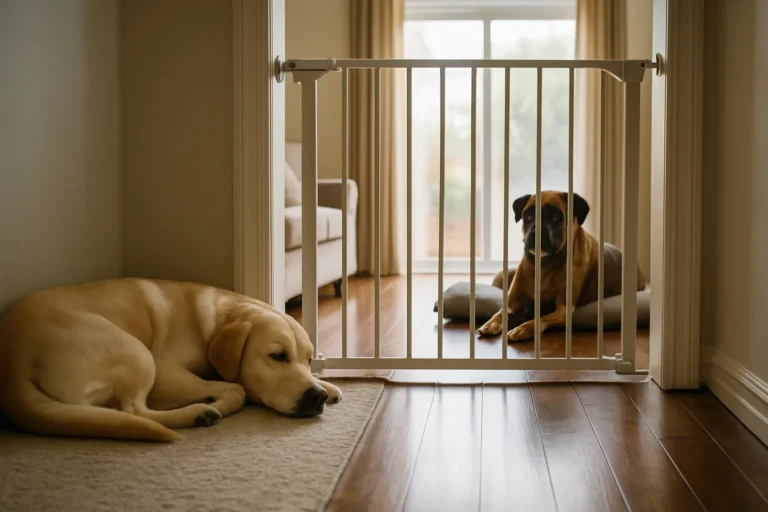
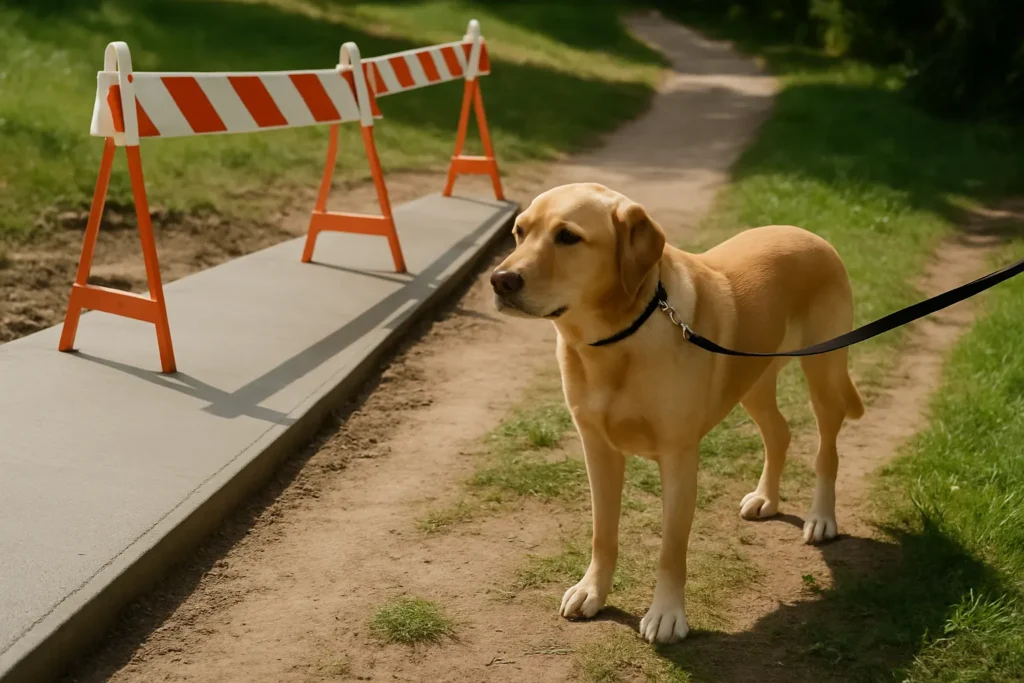
- Use barriers or a temporary alternate route until the recommended waiting period has passed.
- Choose the longer wait when the dog is large, energetic, heavy-footed, or difficult to keep calm.
- Ask the contractor before allowing access if a sealer, decorative finish, stamping, or unusual additive was used.
Why Dogs Need More Caution Than Adults Walking on New Concrete
A person taking careful steps distributes weight differently from a dog moving on four paws. Dogs also concentrate pressure through paw pads and claws, so a normal walk can leave marks where a cautious adult would not.
The greatest risk to a fresh surface often comes from movement rather than body weight alone. Running, sudden turns, digging, chasing, and zoomies can disturb soft areas, especially near edges, corners, joints, or places where finishing work is incomplete.
Fresh concrete may also have finishing residue or a wet sealer on its surface. Contact can irritate paws, and a slippery finish can make an excited dog lose traction. Keep the dog away until the contractor confirms that the surface is ready for normal foot traffic and any applied product is safe and dry.
- Paw pads and claws can leave different marks than human shoes.
- Sudden movement can damage the finish even when slow walking seems harmless.
- Wet residue can create both paw-irritation and slipping concerns.
Is 4, 6, or 8 Hours Ever Enough?
Four hours is almost never enough time before a dog walks on a new concrete pour. Six to eight hours may allow the surface to appear firm, but appearance does not show whether it can withstand claws, turning, play, or repeated traffic.
Early set time varies with temperature, humidity, shade, wind, the concrete mix, the thickness of the pour, and the finish. Warm, dry conditions may change how quickly the top appears to set without making the entire surface ready for a dog. Cool, humid, or rainy conditions can delay hardening and leave the surface vulnerable for longer.
If access is unavoidable during the early period, keep the dog completely away from the pour rather than attempting a quick test walk. The edges and corners may be weaker or less finished than the center, and one excited movement can create damage that is difficult to repair.
- Four hours: generally too soon for a dog.
- Six to eight hours: still too uncertain for routine access, even if the surface looks dry.
- Twenty-four hours: may be adequate for some situations, but contractor guidance and conditions still matter.
- Forty-eight hours: the more cautious practical choice when the dog is active or conditions slowed curing.
What Changes the Wait Time
The safest waiting period is not identical for every dog or every pour. Consider how much force the dog will place on the surface, how easily the dog can be controlled, and whether the concrete has had favorable conditions for curing.
A large or heavy dog, a dog with long nails, and a dog that pulls, jumps, or plays on leash all create more surface stress than a small, calm dog taking a short walk. Puppies may also have less reliable coordination, making slips and sudden movements more likely.
The location matters too. A thin walkway, broad driveway, patio, or house slab may have different edges, finishes, thicknesses, and exposure. A contractor’s instructions should take priority when the pour includes decorative stamping, a coating, additives, or a special sealer.
Weather can extend the wait. Cool temperatures, high humidity, shade, and rain may slow the process or affect the finish. Warm, dry weather does not automatically make early access safe, because a dry-looking top layer may not represent the condition of the whole surface.
- Dog factors: size, weight, nails, energy level, coordination, and ability to stay on a leash.
- Activity factors: calm walking is less demanding than running, digging, wrestling, or repeated crossings.
- Concrete factors: thickness, finish, edges, additives, stamping, coatings, and sealers.
- Weather factors: temperature, humidity, shade, wind, and rain.
Puppies and Growth Plates: Is Concrete a Good Surface Yet?
Fresh concrete is unsuitable for puppies for the same reasons it is unsuitable for adult dogs: the surface may be soft, slippery, irritating, or easily damaged. Keep a puppy on a protected route until the concrete has reached the contractor’s recommended stage for foot traffic.
Old, fully hardened concrete creates a different question. Puppies are still developing coordination and musculoskeletal strength, so long or repetitive walks on a hard surface may be more demanding than short, controlled outings. Hard surfaces should be one part of an age-appropriate routine rather than the setting for sustained exercise.
Favor varied, secure footing and let your veterinarian or breeder’s care guidance determine how much activity suits the puppy’s age, breed, size, and health. Stop an outing if the puppy begins lagging, limping, slipping repeatedly, or showing discomfort.
- Keep puppies away from fresh pours and wet sealers.
- Use short, controlled walks instead of prolonged repetitive exercise on hard surfaces.
- Provide softer or varied surfaces when practical.
- Seek veterinary advice for persistent limping, pain, or unusual reluctance to move.
Hot Concrete Can Still Be Dangerous After It Has Fully Cured
Cured concrete does not lose its ability to become dangerously hot. On sunny days, a sidewalk, patio, driveway, or slab can heat paw pads even when the surface is structurally sound and long past its curing period.
Before a walk, place the back of your hand against the surface and keep it there briefly. If it feels uncomfortably hot to you, choose grass or another cooler route. This check is only a screening step; shade, wind, humidity, the dog’s walking speed, and the condition of the paw pads can all affect risk.
Avoid the hottest part of the day when possible, use shaded routes, and keep outings shorter during heat. Grass can provide a cooler alternative, while protective booties may help some dogs if introduced gradually and fitted safely. Watch for redness, tenderness, licking, blisters, or reluctance to walk, and contact a veterinarian if paw injury is suspected.
- Test the surface before the dog steps onto it.
- Prefer morning, evening, shaded, or grassy routes during hot weather.
- Never force a dog to continue across a surface that appears painful.
- Check paws after warm-weather walks for irritation or injury.
Patio, Sidewalk, Driveway, and Slab Scenarios
A concrete patio may seem ready when it is dry, but brief access and unrestricted play are not equivalent. After the recommended wait, begin with calm, supervised movement and keep furniture moving, digging, and rough play away from the new finish until the installer approves normal use.
A sidewalk or narrow path may appear to harden sooner because it is easy to step around, but its edges and finish can still be vulnerable. Keep the dog on another route rather than allowing a quick crossing to test it.
A driveway may be ready for limited foot traffic before it is ready for vehicles or repeated activity. Do not use vehicle timing as a substitute for dog-walking timing, and keep paws away from curing sealers or coatings.
For a concrete slab around a home, protect the perimeter as well as the center. Edges, corners, decorative details, and areas that received extra finishing may remain more susceptible to marks or surface damage.
- Patio: allow calm, supervised access first; postpone play and digging.
- Sidewalk: protect the entire route, including edges and corners.
- Driveway: vehicle access and dog-walking access have different risks.
- Home slab: treat decorative finishes, borders, and unfinished details as vulnerable areas.
What to Do If a Dog Steps on Fresh Concrete Too Soon
Move the dog off the pour calmly and prevent repeat traffic. Avoid chasing or pulling hard, since a panicked dog can slip, scratch, or spread residue across a larger area.
If wet material or finishing residue is on the paws, rinse them with clean water and inspect between the toes and around the pads. Do not scrape hardened material aggressively or use a solvent unless a veterinarian specifically advises it.
Take clear photographs of any surface damage and contact the contractor promptly while the pour is recent. For the dog, watch for paw irritation, persistent licking, limping, cuts, or reluctance to bear weight. Contact a veterinarian if these signs occur or if material remains stuck to the paw.
- Move the dog away without creating a chase.
- Rinse residue from paws and inspect carefully.
- Photograph the affected concrete and notify the contractor.
- Monitor for irritation, cuts, limping, or pain.
How Rain Affects the Timeline
Rain soon after pouring can mark, wash, or otherwise affect the surface, depending on when it arrives and how the concrete was protected. A slab that has been rained on should not be treated as ready simply because it has stopped raining or looks dry.
Keep dogs away for longer if weather disrupted the finish, and ask the installer when the surface is suitable for foot traffic. The contractor can account for the mix, finish, protective measures, and visible condition of the pour.
Until you receive clear guidance, use a different route and prevent paw contact with puddles, wet residue, and areas that look soft or uneven.
- Treat rain-disrupted concrete as a special case.
- Do not judge readiness by surface dryness alone.
- Follow the installer’s revised guidance after significant weather.
The Bottom Line for Dogs and Concrete
When deciding when dogs can walk on concrete, separate fresh-concrete curing from hot-surface safety. Keep dogs off a new pour for at least 24 to 48 hours, lean toward the longer wait for active or large dogs, and follow the contractor’s instructions when conditions or finishes are unusual.
Once concrete is cured, check its temperature before every hot-weather walk and choose a cooler route when needed. Puppies also benefit from short, controlled activity and varied footing rather than long, repetitive exercise on hard surfaces.
Is 4 to 8 hours ever enough before a dog walks on concrete?
It is usually too soon for routine dog access. A surface can look dry while remaining vulnerable to paw prints, claw marks, slipping, and movement damage. Keep the dog away and use an alternate route until the recommended waiting period has passed.
How long before dogs can walk on a concrete patio or slab?
Use the same general 24-to-48-hour minimum for a new patio or slab, then follow the installer’s instructions. Decorative finishes, sealers, cool weather, rain, and active dogs can all justify a longer dog-free period.
Can hot concrete burn a dog’s paws?
Yes. Fully cured concrete can become hot enough to irritate or injure paw pads. Test the surface with the back of your hand, choose shade or grass when it feels uncomfortable, and check the paws afterward for redness, licking, tenderness, or blisters.
Are puppies okay to walk on concrete every day?
Short, controlled walks on safe, cool, fully cured concrete may be appropriate for some puppies, but daily activity should remain age-appropriate. Avoid long or repetitive hard-surface exercise, provide varied footing when possible, and ask a veterinarian about the puppy’s individual needs.