Do dogs know we love them? Probably not as an abstract idea they can define or measure, but they can recognize the relationship behind it. Dogs learn which people consistently provide safety, comfort, companionship, play, guidance, and help when something feels uncertain.
Your dog is more likely to understand love through your behavior than through words alone. A familiar voice, respectful touch, enjoyable routines, patient training, responsive care, and the freedom to approach or move away all help a dog experience you as a trusted attachment figure.
What Dogs Probably Understand as Love
A dog does not need a human definition of love to form a meaningful emotional bond. From a dog’s perspective, a caring relationship is built through feeling safe with someone, having important needs met, receiving welcome attention, and being able to predict how that person will respond.
Feeding, walking, playing, providing veterinary care, respecting boundaries, and remaining calmly present all contribute to the relationship. Even a familiar phrase such as “I love you” may become meaningful when your tone and behavior repeatedly accompany positive experiences.
Science cannot reveal the exact private meaning a dog assigns to these moments. What researchers and owners can observe is whether a dog voluntarily approaches, relaxes, seeks reassurance, checks in, plays, and repeatedly chooses to spend time with a particular person.
How Dogs Experience Love and Attachment
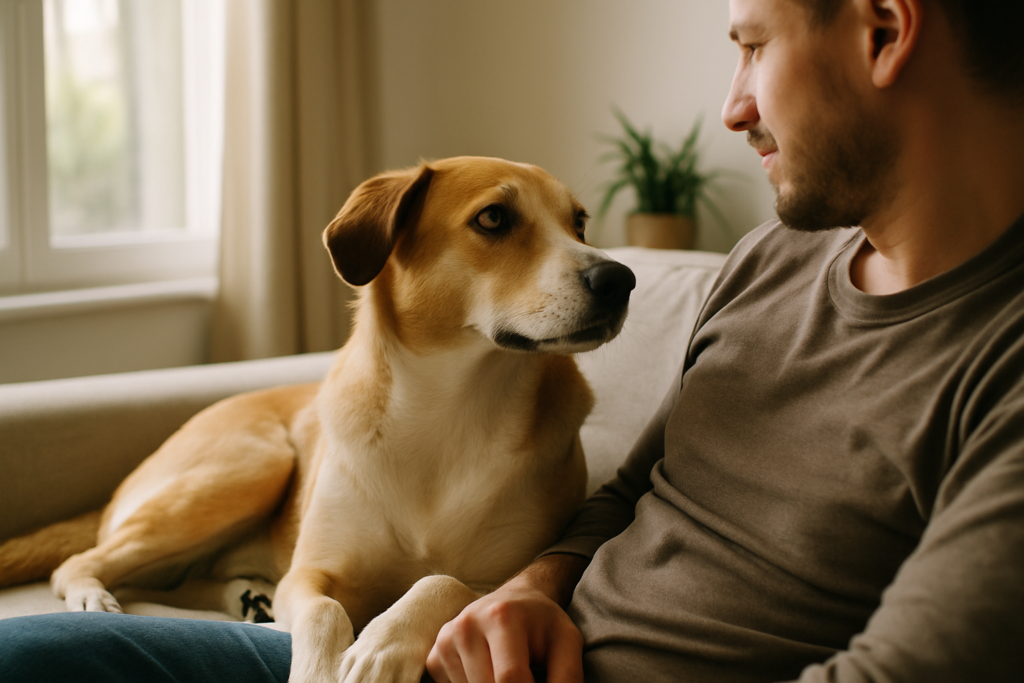
Dogs experience close relationships through attachment, familiarity, social preference, and learned emotional associations. An attached dog may seek contact during rest, look toward a trusted person in an unfamiliar situation, or greet that person differently from a stranger.
Research supports the idea that owners can serve as a secure base for their dogs. A study published in PLOS ONE found that the owner’s presence influenced dogs’ motivation during a problem-solving task, providing evidence of an owner-specific attachment effect.
A well-known 2015 study published in Science also found that longer mutual gaze between dogs and their owners was associated with changes in oxytocin concentrations in both. This does not prove that a dog interprets eye contact as the sentence “I love you,” but it provides evidence that positive dog-human interaction has measurable biological components.
Secure attachment does not require constant contact. A confident dog may explore, play, or sleep independently because experience has taught the dog that its caregiver remains dependable.
Do Dogs Get Attached to Their Owners?
Yes. Dogs can form strong, individualized attachments to owners and other regular caregivers. That bond may appear through proximity seeking, reunion behavior, checking in, shared routines, and using a familiar person as a source of reassurance.
Attachment should not be confused with separation-related distress. Persistent panic when left alone, frantic vocalization, destruction near exits, house-soiling, escape attempts, or an inability to settle may indicate a behavioral problem rather than simply an especially loving dog.
12 Signs Your Dog Knows You Care
No single behavior proves exactly what a dog feels, and individual dogs express attachment differently. Look for several relaxed, voluntary behaviors that repeat across ordinary situations rather than demanding one specific sign from every dog.
- Your dog maintains loose, comfortable body language when you are nearby.
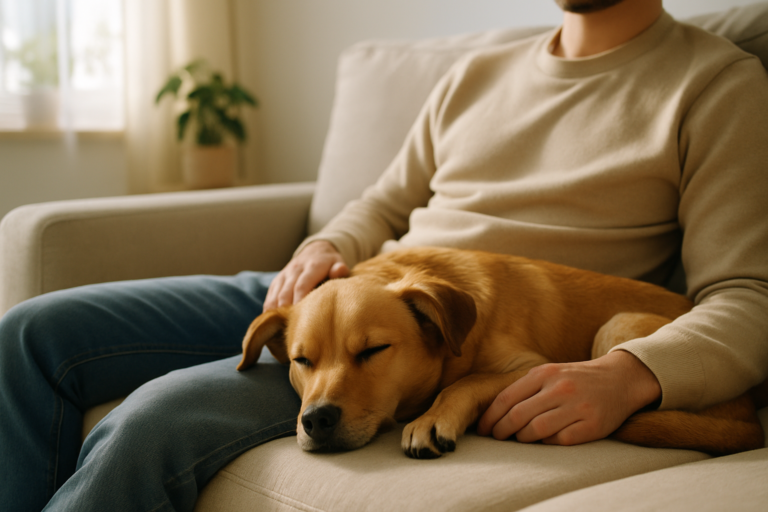
- Your dog voluntarily chooses to rest or spend quiet time in the same room.
- Your dog follows you without appearing tense, frantic, or unable to settle elsewhere.
- Your dog greets you with relaxed movement appropriate for its age and personality.
- Your dog checks in with you during walks, play, or unfamiliar situations.
- Your dog offers soft, voluntary eye contact without staring rigidly.
- Your dog approaches for touch and remains free to end the interaction.
- Your dog brings a toy, offers a play bow, or invites you into a familiar game.
- Your dog responds positively to your familiar voice.
- Your dog seeks you out for reassurance after something surprising or unsettling.
- Your dog feels safe enough to eat, sleep, explore, and behave normally in your presence.
- Your dog responds to your guidance because training has built communication and trust rather than fear.
These signs are most meaningful when they involve choice. A dog remaining motionless during a hug or tolerating touch because it cannot move away is not providing the same information as a dog that voluntarily returns for more contact.
Do Dogs Know How Much We Love Them?
Dogs cannot measure the amount of love a person feels in the way humans might describe it. They are more likely to recognize a pattern: this person is safe, attentive, predictable, enjoyable to be around, and responsive when I need something.
A dramatic display of affection does not necessarily communicate more love than consistent care. Your dog may value a predictable walk, relief from discomfort, a calm response to fear, or ten minutes of enjoyable play more than an intense hug or emotional declaration.
How a dog receives affection also depends on personal history. A confident dog accustomed to gentle handling may actively seek physical contact. A cautious, injured, or recently adopted dog may experience patient distance and the option to approach as the kinder response.
Do Dogs Have a Favorite Person?
Many dogs appear to prefer one person, although that preference can change with age, routine, health, and household circumstances. A dog may gravitate toward the person associated with safety, enjoyable activities, clear communication, or calm companionship.
Time together matters, but quality is often more important than quantity. Reward-based training, responsive care, compatible energy, positive early experiences, and respect for the dog’s boundaries can influence whom the dog seeks most often.
Having a favorite person does not mean a dog dislikes everyone else. Dogs can form distinct and meaningful relationships with several household members, approaching one person for play, another for walks, and another for quiet comfort.
Do Dogs Fall in Love?
Dogs can form powerful social bonds with people, other dogs, and sometimes other animals in the household. They may repeatedly seek a companion, rest nearby, play together, show distress when separated, or respond enthusiastically when the companion returns.
Calling that relationship love is reasonable in everyday language. However, saying that dogs experience human-style romantic love adds motives and ideas that behavior alone cannot confirm. Scientific descriptions such as attachment, social preference, familiarity, affiliation, and affection are more precise.
That distinction does not make the relationship less meaningful. It simply avoids placing a complete human story onto normal canine social behavior.
How to Say “I Love You” in a Way Your Dog Understands
The clearest way to communicate love is to create repeated experiences of safety, enjoyment, choice, and trust. Match affection to your dog’s preferences instead of assuming every dog enjoys the same type or intensity of contact.
Watch what your dog does after you offer attention. A dog that stays close, leans in, nudges your hand, or returns after a pause is probably inviting continued interaction. Turning away, walking off, stiffening, lowering the body, lip licking, or showing the whites of the eyes means you should pause and provide space.
- Use a calm, familiar voice during everyday interactions.
- Pet areas your dog appears to enjoy and pause so the dog can choose whether to continue.
- Play games suited to your dog’s interests, health, age, and preferred arousal level.
- Keep meals, walks, bathroom breaks, and rest opportunities reasonably predictable.
- Use patient, reward-based training to build clear communication.
- Provide sniffing opportunities, mental enrichment, and undisturbed sleep.
- Respond to fear without punishment, crowding, or forced exposure.
- Provide veterinary care when your dog shows pain, illness, or a sudden behavior change.
- Allow your dog to initiate closeness and move away when it has had enough.
Do Dogs Understand Kisses, Hugs, and Cuddling?
Kissing and hugging are human displays of affection, not universal canine signals. Dogs can learn that these actions predict friendly attention, but their response depends on temperament, experience, context, health, and whether they are free to move away.
Tolerance is not the same as enjoyment. Relaxed muscles, a loose face, voluntary proximity, leaning in, or requesting more contact suggest comfort. Stiffness, a turned head, lowered posture, flattened ears, repeated lip licking, escape attempts, or growling indicate that the interaction should stop.
Do Dogs Know We Love Them When We Kiss Them?
Dogs do not instinctively understand a kiss as a declaration of love. Some learn to associate kissing with a familiar voice, gentle handling, and positive attention.
Bringing a face close can make a dog uncomfortable and increases risk if the dog feels trapped. A dog that turns away, closes its mouth, freezes, licks its lips, or attempts to retreat is asking for space, even if it has never snapped or growled.
Do Dogs Feel Love When You Hug Them?
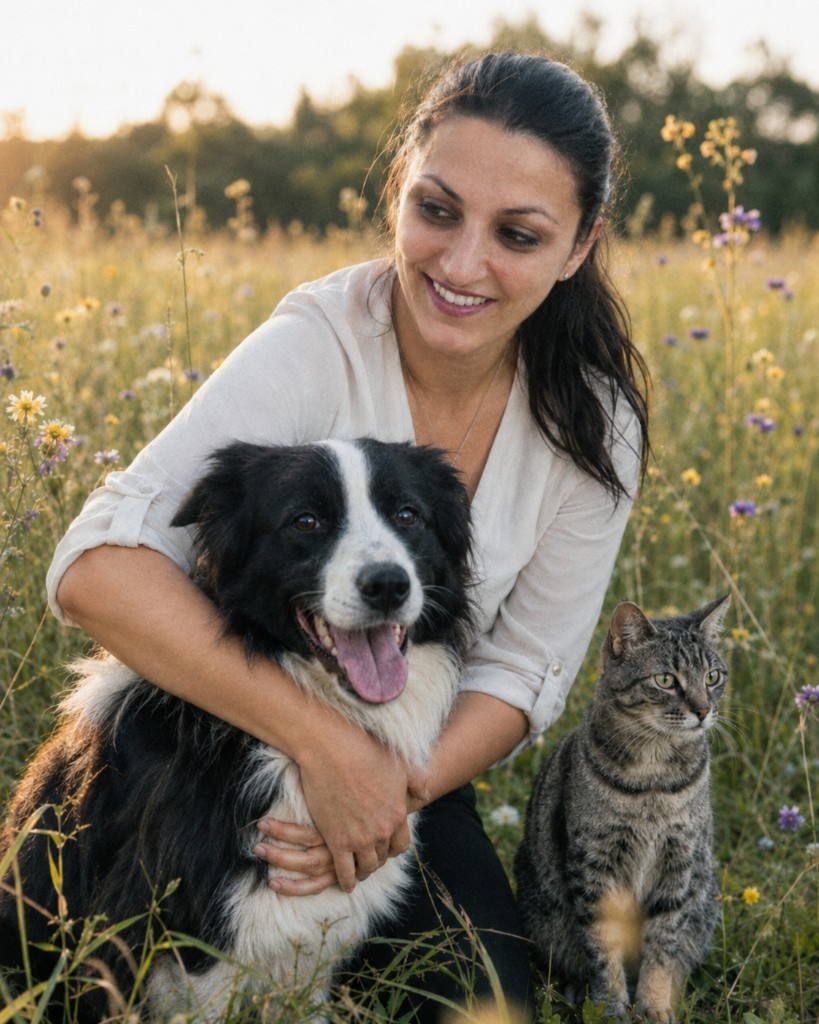
Some dogs enjoy leaning or cuddling against a trusted person, but restrictive embraces can be uncomfortable. Wrapping both arms around a dog removes its easiest way to create distance, so remaining still during a hug does not necessarily mean the dog likes it.
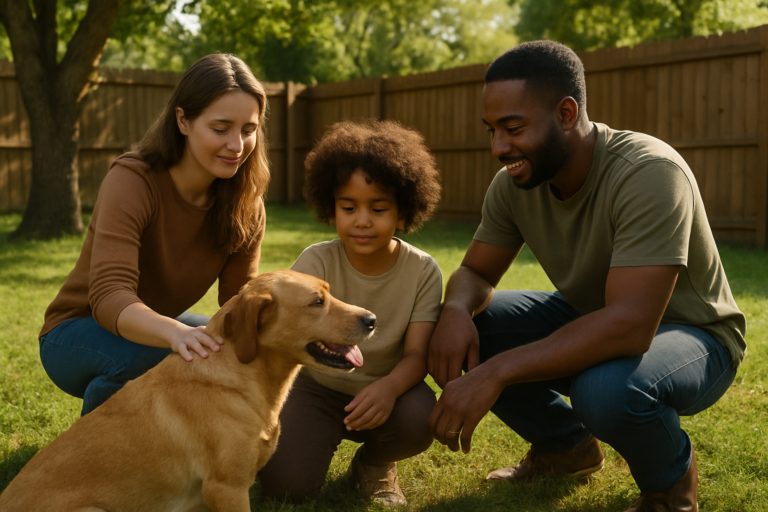
Sitting nearby and allowing the dog to initiate contact gives it more control. Children should always be supervised around dogs and should not hug, climb on, corner, or disturb them while they are eating or sleeping. The American Veterinary Medical Association provides additional guidance for recognizing risky situations and preventing dog bites.
Why Routine Matters More Than Grand Gestures
Predictable routines help a dog understand when important needs will be met. Fairly consistent opportunities for meals, bathroom breaks, movement, sleep, training, play, and social contact can make daily life feel manageable.
Routine does not mean following an exact schedule every minute. It means creating recognizable patterns and responding reliably, especially when your dog signals a need or feels uncertain.
Quietly meeting those needs every day may communicate care more effectively than occasional excitement, extra treats, or prolonged physical contact. Reliability gives the relationship value from the dog’s perspective, not only the owner’s.
When Affection Misses the Mark
Good intentions do not guarantee that an interaction feels loving to a dog. Affection works best when it accounts for body language, health, age, past experiences, current surroundings, and the dog’s ability to choose.
A sudden change in tolerance for touch may be connected to pain, illness, fear, sensory decline, or another problem. Arrange veterinary advice if a normally social dog begins avoiding contact, flinching, hiding, growling when touched, struggling to move, or behaving unusually.
- Forced cuddling can make a dog feel trapped rather than comforted.
- Crowding a worried dog can increase fear and remove its option to retreat.
- Inconsistent rules can create confusion about what behavior is expected.
- Rough or overstimulating play can become stressful when a dog needs a break.
- Repeatedly ignoring avoidance signals can teach a dog that subtle communication does not work.
- Punishing a growl may suppress a valuable warning without resolving the discomfort behind it.
- Using food to force a frightened dog closer can create conflict instead of genuine trust.
Do Dogs Know We Love Them? The Bottom Line
Dogs probably do not understand love as an abstract human idea or know exactly how much love a person feels. What they can recognize is the pattern created by that love: safety, reliable care, enjoyable interaction, respectful handling, comfort, and help when they feel uncertain.
The best way to show love is not through one special gesture. Build it into everyday life through patient training, suitable exercise, veterinary care, predictable routines, welcome affection, and respect for your dog’s signals. When your dog voluntarily seeks your company and relaxes in your presence, you are seeing the relationship that those choices have created.
Frequently Asked Questions
Can Dogs Feel if You Love Them?
Dogs can recognize a caring relationship through repeated experiences of safety, comfort, attention, play, and responsive care. They may not understand love as an abstract human concept, but they can form strong attachments and learn that a person is trustworthy.
What Is the 7-Second Rule for Dogs?
There is no universal scientific or veterinary rule requiring someone to pet a dog for exactly seven seconds. The phrase is sometimes used online for a useful consent check: pet briefly, pause, and observe whether the dog requests more contact or moves away. Your dog’s response matters more than the number of seconds.
How Do You Say “I Love You” to a Dog?
Provide reliable care, enjoyable activity, patient reward-based training, undisturbed rest, and physical affection the dog welcomes. Respecting your dog’s need for distance can communicate care just as clearly as touching or playing.
Do Dogs Understand When We Kiss Them?
Dogs do not naturally understand the human meaning of a kiss, but some learn to associate kissing with friendly attention. Only kiss a dog that remains relaxed and can move away. Stop if the dog stiffens, turns its head, closes its mouth, licks its lips, or retreats.
Does My Dog Love Me Back?
A dog that voluntarily seeks your company, relaxes near you, greets you warmly, checks in with you, invites interaction, and approaches you for comfort is showing behavior consistent with affection and attachment. Individual dogs express that bond in different ways.
Can a Dog Bond With More Than One Person?
Yes. Dogs can form meaningful attachments to several people. A dog may prefer different family members for comfort, play, walking, training, or rest, even when one person appears to be its primary attachment figure.