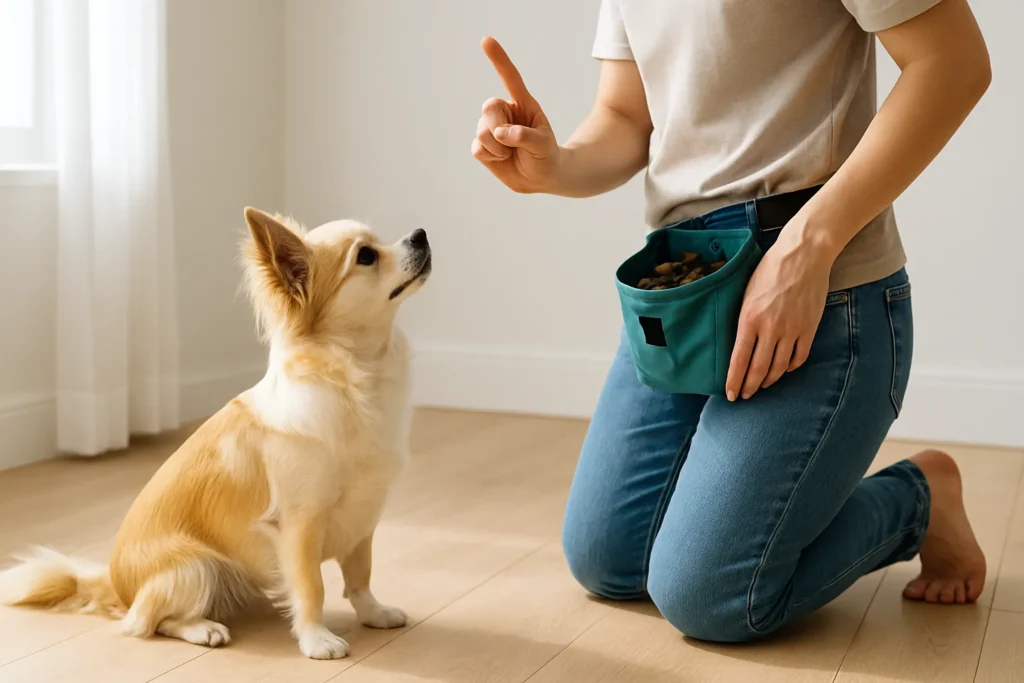
The best dog training treats for small dogs are easy to swallow, quick to chew, and small enough for repeated rewards. Toy and small breeds can benefit from tiny portions because training often involves many repetitions, while a large biscuit can interrupt the lesson or add more food than intended.
This guide compares healthy training treats for small dogs by use case rather than by unverified product claims. You will learn how to assess size, texture, smell, calorie density, ingredients, and convenience so you can choose tiny dog training treats that fit your dog and the behavior you are teaching.
How to Choose Dog Training Treats for Small Dogs
Start with the way the treat performs during a lesson, not just the ingredient list. A useful training reward should be small, appealing, easy to portion, and fast for your dog to eat. If your dog spends a long time chewing, you lose opportunities to mark and reward the exact behavior you want.
Look for treats that can be broken into very small pieces or that are already made as mini training treats. The ideal piece depends on the dog, but it should be a modest taste rather than a mouthful. For especially small dogs, crumbles can work when they are large enough to pick up without creating a frustrating search.
Soft or quick-chew treats are usually convenient for rapid indoor practice, puppy exercises, and handling work. Crunchy treats can still be useful when a dog enjoys them, but they may take longer to eat and can create crumbs in a pocket or pouch.
For frequent practice, compare calorie information on the package and choose a treat that allows many rewards without making the treat portion disproportionate to the dog’s meals. Daily calorie needs vary with body weight, life stage, health, and activity, so ask your veterinarian for individualized feeding guidance.
Smell and flavor influence motivation. A mild treat may be suitable for easy behaviors at home, while a more aromatic or moist reward may be more useful outdoors. Simple ingredient lists can make it easier to identify the main protein and notice ingredients your dog does not tolerate.
Freeze-dried training treats are often useful when you want a concentrated, less-messy reward that can be crumbled. Soft treats generally offer faster chewing and easier portioning. Neither format is automatically better; match the texture to the setting, the behavior, and your dog’s preferences.
Training treats should have a different job from everyday snacks. Reserve one mild option for routine practice and keep a more exciting reward for difficult behaviors, distractions, or situations where your dog needs extra motivation.
- Choose tiny pieces or treats that break apart cleanly.
- Prefer a texture your dog can eat quickly.
- Check calories and account for frequent repetitions.
- Use smell and flavor to match the difficulty of the task.
- Read the ingredient list and identify the main protein.
- Select packaging that keeps treats fresh and easy to carry.
Best Dog Training Treats for Small Dogs by Use Case
There is no single best treat for every small dog or every lesson. The categories below describe the features to prioritize when comparing products, rather than naming specific products without verified ingredient, calorie, or package information.
Best Overall: Small, Soft, and Easy to Portion
Choose a soft treat that can be split into consistent pieces, has an appealing smell, and does not leave excessive residue in a pouch. This combination works for everyday obedience, name response, and short practice sessions at home.
Key specifications to compare are piece size, texture, calorie information, resealability, and whether the treat breaks into neat portions. The possible drawback is that soft treats may dry out or become sticky if stored poorly.
Best Budget Pick: Breakable Treats or Kibble
For dogs that are motivated by ordinary food, a breakable treat or part of the regular meal can provide strong value. Kibble is especially practical for easy behaviors and regular repetitions because it is already portioned as part of the dog’s diet.
The drawback is that familiar food may not compete with squirrels, guests, or outdoor smells. Compare cost by the number of usable training pieces, not simply by the size of the package.
Best Soft Training Treat: Quick-Chew Pieces
Soft chewy dog treats are a practical choice when timing matters. They are suited to puppy training, leash exercises, and handling because the dog can usually return attention to you sooner than after eating a large crunchy biscuit.
Check whether the pieces can be reduced without becoming greasy or difficult to handle. A possible drawback is a shorter shelf life or a messier treat pouch, depending on the formula and storage.
Best Low-Calorie Option: Tiny Portions or Meal-Based Rewards
The most useful low calorie dog training treats are those that let you reward often with very small portions. Some owners can use part of the dog’s normal food allowance for easy exercises, then reserve tastier rewards for more demanding work.
Do not assume that a treat labeled light or mini is automatically appropriate. Read the serving information, consider how many pieces you will use, and ask your veterinarian how treats should fit into your dog’s overall feeding plan.
Best High-Value Reward: Moist, Strong-Smelling Treats
For recall training, distractions, and difficult new behaviors, choose a reward your dog considers special. Moisture, aroma, and novelty can make a treat more compelling than a dry everyday option.
Use high-value dog treats for training selectively so they retain their appeal. Rich foods may not suit every dog, so introduce a new option gradually and stop using it if it causes digestive upset.
Best for Puppies and Very Tiny Mouths: Soft, Easily Divided Rewards
Puppy training treats should be soft enough to manage and small enough that the puppy can eat them without losing focus. For puppies under three months, keep sessions brief and use rewards that do not require prolonged chewing.
A puppy may need several food introductions, so avoid changing many treats at once. Ask your veterinarian about suitable foods for a young puppy, especially if the puppy has a health concern or a sensitive digestive system.
Best Limited-Ingredient Option: A Clearly Identified Protein
For a dog with known food sensitivities, a limited ingredient dog treat with a clearly identified protein may be easier to evaluate than a treat containing many unnamed or unfamiliar ingredients. Ingredient simplicity does not diagnose or treat an allergy, however.
Discuss recurring digestive or skin problems with a veterinarian before experimenting with many rewards. The possible drawback of limited-ingredient treats is that they may offer less variety or cost more than basic training snacks.
Best Freeze-Dried Option: Crumb-Friendly, Aromatic Pieces
Freeze-dried training treats can be useful for outdoor work because they are often lightweight and easy to crumble. They may provide a strong smell in a compact format, making them suitable for recall or other behaviors that compete with distractions.
Check whether the pieces are too hard, sharp, or large for your dog and whether crumbs make the treat pouch difficult to clean. Keep the package sealed according to its label.
Best Shelf-Stable Option: Dry, Portable Rewards
For travel, classes, and walks, choose a portable treat that does not require complicated preparation and can be carried in a clean, secure pouch. Dry treats can be convenient when refrigeration is unavailable.
A shelf-stable option may be less aromatic or less soft than a moist reward. Carry a higher-value alternative when practicing around major distractions, and follow the package storage instructions.
How We Evaluated the Treats
A useful comparison should focus on training performance as well as nutrition. For small breed dog treats, piece size matters because a reward that is appropriate for a medium dog may be unnecessarily large for a toy breed. Treats that can be divided consistently receive a practical advantage.
Texture affects timing. Soft pieces and small crumbles can help keep a session moving, while hard treats may be better reserved for situations where chewing is not a problem. Calorie information also matters because repeated rewards can accumulate quickly in a small body.
Ingredient quality is not a single universal standard. We look for clear ingredient labeling, an identifiable protein source, and options that allow owners to avoid known sensitivities. We also consider mess, pocket or pouch storage, package value, and usefulness indoors, outdoors, in classes, and during handling exercises.
Because no verified product research was provided for this guide, these criteria are a framework for evaluating treats yourself rather than a claim that one unnamed product is superior to another.
- Piece size and ease of breaking
- Chew speed and texture
- Calorie information per piece or portion
- Ingredient clarity and protein source
- Mess level in pockets and treat pouches
- Package value and storage convenience
- Performance in realistic training settings
What Makes a Treat High Value for a Small Dog?
Treat value is relative to the dog and the situation. A low-value reward might be kibble or a familiar dry snack. A medium-value reward could be a preferred mini training treat, while a high-value reward is something the dog will work hard to obtain despite distractions.
Smell, moisture, novelty, and the dog’s personal preference all influence value. The most expensive or strongly flavored option is not necessarily the best choice if it makes your dog overexcited, difficult to handle, or prone to digestive upset.
Match the reward to the task. Kibble may be enough for responding to a name in a quiet room. A more appealing reward may be appropriate for leash walking near distractions, a difficult recall, or calm handling at the vet.
Rotate two or more suitable rewards instead of offering the same flavor for every exercise. Keep the most exciting option for the hardest work, and occasionally test whether an easier reward is sufficient for familiar behaviors.
- Low value: routine behaviors in a familiar, quiet setting.
- Medium value: new skills or mild distractions.
- High value: recall, outdoor distractions, difficult handling, or emergency attention.
How Many Training Treats Can a Small Dog Have?
There is no universal treat count that suits every small dog. Calorie needs depend on body weight, life stage, activity, and health, and a tiny dog can reach its daily food allowance with surprisingly small portions. Your veterinarian can provide individualized feeding guidance.
Use pea-sized portions or smaller crumbles when they are enough to reward the behavior. A dog does not need a full biscuit to understand that it made the right choice. Breaking one treat into several rewards can make a session last longer without automatically adding more food.
On a heavy training day, discuss with your veterinarian whether part of the regular meal should be used as rewards or whether meal portions should be adjusted. Do not make substantial feeding changes for a puppy, an underweight dog, or a dog with a medical condition without professional advice.
A treat may be too large or rich if your dog struggles to chew it, loses interest in the exercise, develops loose stool, vomits, gains unwanted weight, or becomes unusually thirsty after eating it. Stop using a problematic treat and seek veterinary advice when symptoms are persistent or concerning.
- Use the smallest portion that still motivates your dog.
- Break treats into multiple rewards when practical.
- Track treats alongside meals rather than treating them as free food.
- Watch body condition, digestion, and training performance.
Best Treat Types for Different Training Goals
The right reward format changes with the exercise. Choose a low-mess, quickly eaten option for rapid repetitions and a more motivating option when the environment makes learning harder.
- Everyday obedience and name response: use kibble or small, mild mini training treats when the room is quiet.
- Potty training: keep small, fast-to-eat rewards near the exit so reinforcement happens immediately after the desired behavior.
- Leash walking: use soft pieces that can be delivered frequently without stopping the walk.
- Recall practice: reserve a highly appealing, easy-to-swallow reward for returning promptly, beginning in low-distraction areas.
- Puppy socialization and first classes: use tiny, soft puppy training treats and introduce only familiar foods during a busy class.
- Vet and grooming handling: choose a reward your dog can eat while remaining calm, then deliver it during brief, cooperative touches.
- Distracting environments and reactive moments: increase distance and use a reward that competes with the surroundings; food should support a safe training plan, not force a dog to remain in an overwhelming situation.
Are Homemade Training Treats a Good Option?
Homemade dog training treats can give you more control over ingredients and allow you to use a protein your dog already tolerates. They can also be prepared in a size and texture that suits a small mouth.
The tradeoffs include inconsistent sizing, shorter shelf life, crumbs, preparation time, and difficulty calculating the calories in each piece. A homemade reward that is too moist or greasy may be inconvenient in a pocket or training pouch.
Aim for pieces that are plain, easy to portion, quick to chew, and made from ingredients appropriate for your dog. Avoid ingredients known to be unsafe for dogs, and ask a veterinarian before using homemade foods for a dog with allergies, a medical condition, or a restricted diet.
Store-bought treats are often more convenient for classes, travel, and last-minute practice because the label and storage instructions are already established. Homemade and commercial options can both work when the dog tolerates the food and the portions remain controlled.
- Ingredient control is the main advantage of homemade rewards.
- Consistent sizing and storage are the main practical challenges.
- Use only dog-safe ingredients that fit your dog’s diet.
- Choose commercial treats when portability and convenience matter most.
Common Mistakes to Avoid When Buying Training Treats for Small Dogs
A treat can look appealing on the shelf and still perform poorly in a training session. Avoiding these common mistakes helps you choose rewards that are easier to use and less likely to interfere with feeding or learning.
- Choosing pieces that are too large: large bites slow the lesson and may be difficult for a toy dog to manage.
- Using only crunchy treats: crunch is not inherently bad, but a long chew can disrupt reward timing and reduce repetition.
- Ignoring calorie density: compare how many usable rewards you get from a portion, not just the package’s marketing language.
- Buying only one flavor or value level: a single reward may become uninteresting or be unsuitable for harder situations.
- Using messy treats without a storage plan: greasy or crumbly food can soil pockets, pouches, hands, and training equipment.
- Overlooking allergies or stomach sensitivity: introduce new treats carefully and consult a veterinarian about recurring reactions.
- Relying on food when a dog is overwhelmed: increase distance, lower the difficulty, and prioritize safety rather than trying to outbid a major fear with a tastier treat.
Choosing the Right Training Treat for Your Small Dog
The best dog training treats for small dogs are not necessarily the biggest, richest, or most expensive. They are rewards your dog enjoys, can eat quickly, and can receive in appropriately small portions while you practice.
Start with a soft, easy-to-break option for routine work, add a higher-value reward for distractions, and monitor ingredients, calories, storage, and digestion. With the right reward hierarchy, even tiny portions can support clear and consistent training.
What treats do professional dog trainers use?
Trainers commonly choose rewards based on the dog and the task rather than one universal brand or formula. They may use kibble for easy behaviors, small soft treats for frequent repetitions, and more motivating food for recall, distractions, or difficult handling.
Should you give dogs treats when training?
Yes, food rewards can clearly reinforce behaviors when delivered at the right moment. Use small portions, account for treats as part of the dog’s overall food intake, and gradually vary rewards as appropriate without removing reinforcement before the behavior is reliable.
What is the 3-3-3 rule for dog training?
The 3-3-3 rule is a commonly used adjustment framework suggesting that a newly adopted dog may need time across roughly three days, three weeks, and three months to settle into a new environment. It is a general guideline, not a fixed training timetable; each dog’s history, temperament, and living situation can change the pace.