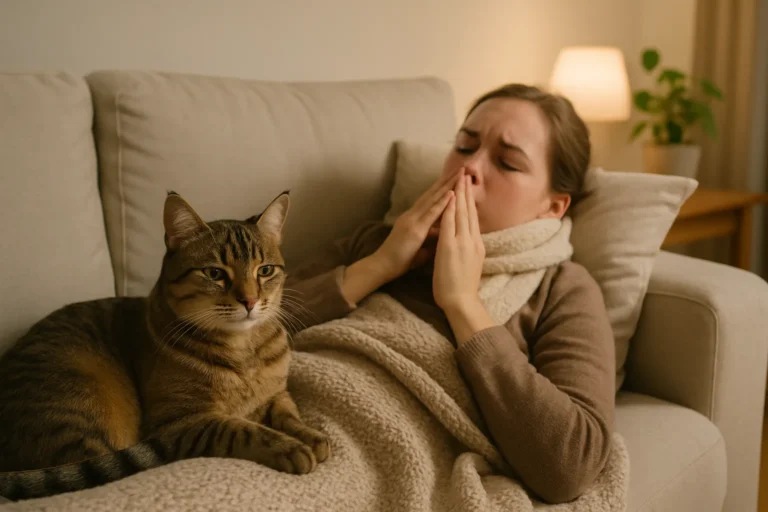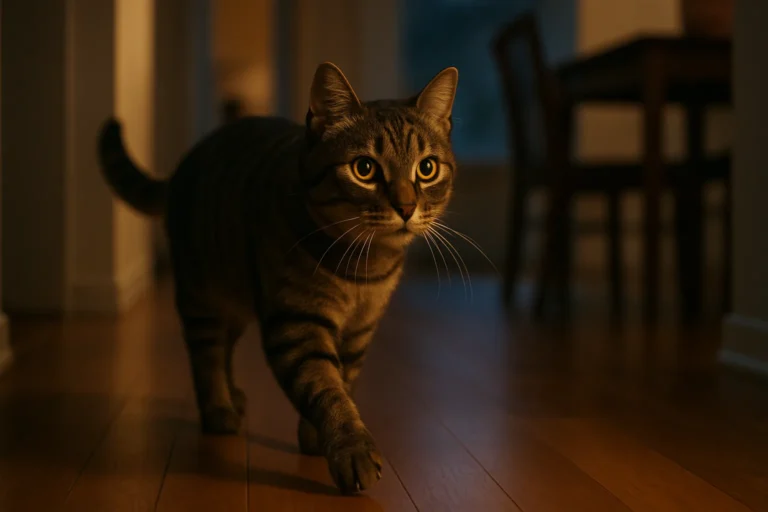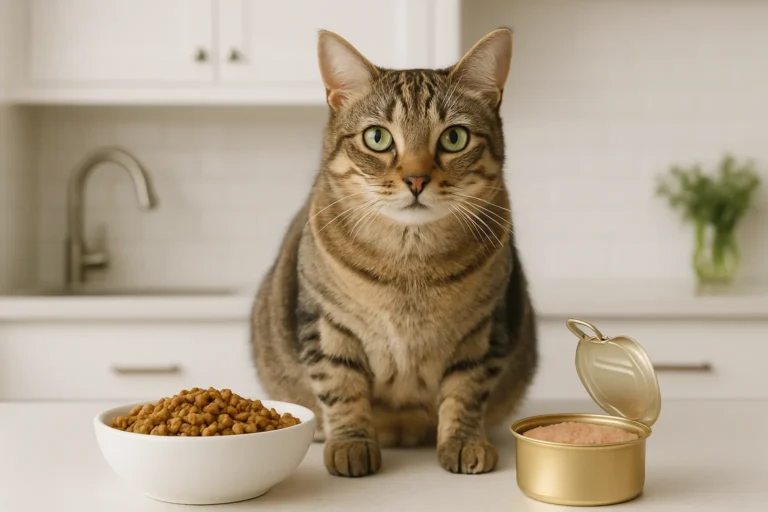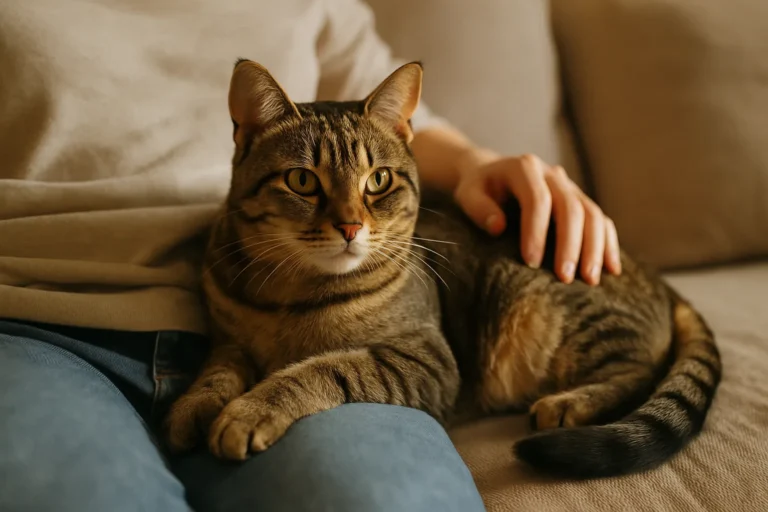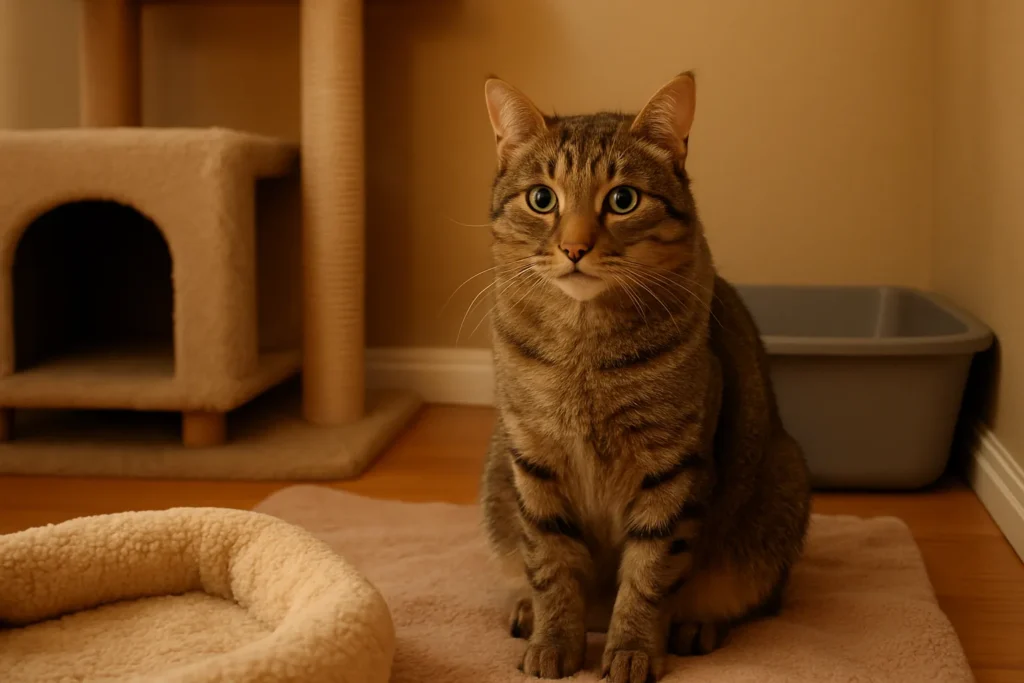
Stress in cats often appears as a small change rather than an obvious crisis. Your cat may hide more, stop playing, groom excessively, eat differently, or become unusually quiet. Learning how to tell if your cat is stressed starts with comparing current behavior with your cat’s normal routine.
This guide explains the body language and behavior changes to watch for, common household triggers, signs of stress after moving, and the differences between stress-related urination, spraying, and illness. It also covers practical ways to help and when veterinary advice is needed.
How to Tell If Your Cat Is Stressed at Home
Begin with your cat’s baseline. A single startled reaction after a loud noise may be normal, while a new pattern that continues or keeps returning deserves attention. Observe your cat during ordinary parts of the day rather than relying on one brief moment.
Look at posture, ears, eyes, tail position, grooming, appetite, sleep, vocalization, play, and litter box habits. Note what changed, when it began, and whether it followed a specific event. A brief response after a trigger may settle once the environment is quiet; persistent changes can also signal pain or illness.
| What to observe | Possible change from baseline |
|---|---|
| Body language | Crouching, tension, flattened ears, wide pupils, or a tucked tail |
| Routine | Less play, more hiding, restlessness, or disrupted sleep |
| Care habits | Overgrooming, poor grooming, appetite changes, or litter box changes |
| Response to people and pets | Avoidance, clinginess, irritability, aggression, or increased startle responses |
Common Signs Your Cat Is Stressed
The body language of a stressed cat can be easy to miss because cats often try to avoid attention when they feel unsafe. Look for clusters of changes rather than diagnosing stress from one sign alone.
Behavior can vary widely. One cat may withdraw, while another becomes clingy, vocal, or aggressive. A previously confident cat may stay on high furniture, react strongly to ordinary sounds, or stop initiating play.
| Area | Signs to watch for |
|---|---|
| Posture and face | Crouching, tense muscles, flattened ears, dilated pupils, tucked tail, skin twitching, or repeated lip licking |
| Withdrawal and activity | Hiding, avoiding people, staying up high, reduced play, pacing, or restlessness |
| Social behavior | Irritability, aggression, clinginess, unusual startle reactions, or avoiding other pets |
| Grooming | Overgrooming, bald or irritated areas, reduced grooming, or a dull coat with dandruff |
| Eating and digestion | Eating more or less than usual, reduced appetite, vomiting, or loose stool |
| Vocalization | More meowing, yowling, growling, hissing, or unusual silence |
| Litter box and marking | Urinating or defecating outside the box, frequent trips, scratching changes, or marking near doors and windows |
Why Is My Cat Stressed All of a Sudden?
Sudden stress usually follows a change that may be obvious to you or barely noticeable. Moving, renovations, visitors, travel, loud noise, schedule changes, boarding, a new food or litter, and new furniture can all disrupt a cat’s sense of control.
Conflict is another common trigger. A new pet, competition for food or resting areas, or an unfamiliar cat visible through a window can make a cat feel threatened. Household changes connected with pregnancy, preparing for a baby, or a new family member may also alter routines, smells, sounds, and access to rooms.
Do not assume every sudden behavior change is emotional. Pain, urinary problems, dental disease, arthritis, and other illnesses can cause hiding, irritability, appetite changes, or litter box problems.
| Possible trigger | Changes you may notice |
|---|---|
| Home disruption | Hiding, vigilance, reduced play, or avoidance of affected rooms |
| Social tension | Staring, blocking, chasing, hissing, marking, or guarding resources |
| Routine changes | Increased vocalization, disrupted eating, or attention-seeking behavior |
| Physical discomfort | Withdrawal, appetite loss, unusual posture, grooming changes, or litter box difficulty |
Signs of Stress in Cats After Moving or Big Home Changes
After a move, a cat may hide, eat less, remain highly watchful, vocalize differently, or have temporary litter box disruption. Even familiar furniture and people may not fully offset the unfamiliar smells, sounds, and layout.
Start with one quiet safe room containing familiar bedding, food, water, a litter box, and hiding options. Keep feeding and cleaning times predictable. Let your cat explore the rest of the home gradually instead of carrying or coaxing them into every room.
Mild adjustment behavior should gradually improve as the home becomes predictable. If your cat is not eating, seems painful or very lethargic, has urinary symptoms, or continues to deteriorate, contact a vet rather than waiting for adjustment to occur. Multi-cat homes may need separate resources and slower introductions during a transition.
| Step | Purpose |
|---|---|
| Use a quiet safe room | Gives your cat a manageable space to decompress |
| Keep familiar items nearby | Preserves familiar scents and resting habits |
| Maintain a predictable routine | Reduces uncertainty around meals, cleaning, and interaction |
| Expand access gradually | Allows exploration at your cat’s pace |
Is My Cat Stressed or Sick?
Stress and illness overlap in cats. Hiding, reduced appetite, poor grooming, vomiting, diarrhea, and litter box changes can occur during stress, but they can also be signs of a medical problem. A behavior change that has no clear trigger, worsens quickly, or affects eating and drinking should be treated cautiously.
Seek prompt veterinary attention for straining to urinate, blood in the urine, repeated vomiting, trouble breathing, sudden collapse, severe lethargy, or clear signs of pain. Urinary difficulty can become urgent, especially when a cat repeatedly visits the box but produces little or no urine.
For less urgent changes, record the timing, possible triggers, food and water intake, litter box output, and any unusual behavior. This information can help a vet separate environmental stress from pain, urinary disease, or another medical condition.
| Change | Why it needs attention |
|---|---|
| Straining or producing little urine | May indicate a urinary problem and should not be assumed to be stress |
| Repeated vomiting or severe appetite loss | Can reflect illness, dehydration, pain, or significant distress |
| Breathing difficulty, collapse, or extreme lethargy | Requires prompt veterinary assessment |
| Mild hiding after a clear household trigger | May be stress-related, but monitor for improvement and additional symptoms |
How to Tell If Your Cat Is Spraying or Stress-Peeing
Spraying and urinating outside the litter box are not always the same behavior. Spraying usually involves a small amount of urine deposited on a vertical surface while the cat stands, raises or quivers the tail, and backs toward the target. Common targets include walls, doors, furniture, and objects carrying unfamiliar scents.
Stress-related urination more often produces a larger puddle on a horizontal surface, such as a floor, bed, or rug. However, stress, territorial tension, and environmental changes can trigger either pattern. A urinary tract problem can mimic both, so location and posture are clues, not a diagnosis.
Track where the urine appears, whether the surface is vertical or horizontal, your cat’s posture, the amount, frequency, and nearby changes. Arrange veterinary advice for repeated accidents, straining, blood, frequent box trips, or any uncertainty about urinary health.
| Feature | More consistent with spraying | More consistent with urination outside the box |
|---|---|---|
| Surface | Usually vertical | Usually horizontal |
| Amount | Usually a small amount | Often a larger puddle |
| Posture | Standing with tail raised or quivering | Squatting is more typical |
| What it may indicate | Territorial or social marking | Litter box aversion, stress, or a medical problem |
How to Help a Stressed Cat
Give your cat control over distance and interaction. Provide covered hiding places, elevated resting areas, and quiet routes away from busy rooms. Never pull a hiding cat out or force contact; calm, voluntary interaction is more likely to rebuild confidence.
Keep feeding, play, litter box cleaning, and household routines as predictable as possible. In multi-cat homes, separate food, water, litter boxes, scratching areas, and resting spaces so one cat cannot easily block another’s access.
Reduce specific triggers when possible. Close blinds if an outdoor cat is causing distress, move noisy equipment away from safe areas, and introduce visitors gradually. Interactive play and gentle enrichment can help, but stop if your cat becomes more aroused or fearful.
Make changes one at a time when practical, and reward calm exploration. Punishment for hiding, aggression, scratching, spraying, or accidents can increase fear and may make the behavior harder to resolve.
| Action | How it helps |
|---|---|
| Add safe and elevated spaces | Provides escape options and lets your cat observe without being approached |
| Separate household resources | Reduces competition and blocking between cats |
| Protect predictable routines | Makes daily events easier to anticipate |
| Remove or soften triggers | Limits exposure to frightening sounds, sights, or interactions |
| Use gentle enrichment | Encourages normal play and exploration without forced contact |
Can Cats Tell If You Are Pregnant?
Cats may notice changes in scent, body language, daily schedule, and household activity during pregnancy. Preparing a nursery, moving furniture, changing work hours, or bringing new equipment into the home can be more meaningful to a cat than pregnancy itself.
Some cats become clingier, while others avoid people or spend more time hiding. These reactions do not prove that a cat understands pregnancy, and pregnancy alone is not evidence that a cat is stressed. The associated changes in routine and environment are the more practical concern.
Keep familiar resting areas available, make household changes gradually, and preserve regular meals and play. Before the baby arrives, calmly introduce new sounds, smells, and boundaries without forcing your cat to interact.
| Household change | Helpful response |
|---|---|
| Furniture or room changes | Move items gradually and preserve a familiar retreat |
| New routines | Shift schedules slowly while keeping meals and attention predictable |
| New sounds and equipment | Allow observation from a safe distance and pair calm behavior with rewards |
| Reduced access to a room | Set up an appealing alternative space before access changes |
When to Call a Vet or Behavior Professional
Contact a vet if stress-like symptoms last more than a few days, repeatedly return, or do not improve after environmental changes. Call sooner for complete appetite loss, self-injury from overgrooming, severe aggression, marked lethargy, or repeated litter box avoidance.
A vet may first look for pain, urinary disease, dental problems, skin conditions, or other medical causes. Once medical concerns are addressed, a qualified behavior professional can help with fear, territorial marking, household conflict, or complex multi-cat problems.
Bring your behavior log, photographs of urine locations when appropriate, videos of unusual movements, and details about recent household changes. Clear observations can make the assessment more efficient.
| Situation | Next step |
|---|---|
| Urgent physical signs | Seek prompt veterinary care |
| Persistent or recurring changes | Schedule a veterinary evaluation |
| Stress continues after medical causes are addressed | Ask about a qualified behavior professional |
| Multi-cat conflict or fear-based behavior | Use a structured behavior plan with professional guidance |
Helping Your Cat Feel Secure Again
The clearest way to tell if your cat is stressed is to notice a sustained change from normal behavior and connect it with body language, routine, grooming, appetite, or litter box changes. Look for patterns, not just one isolated signal.
Reduce triggers, restore predictable routines, provide safe choices, and avoid punishment. Because stress can resemble illness or urinary trouble, seek veterinary help for red flags, persistent symptoms, or behavior that does not improve.
How can I help my stressed cat?
Offer quiet hiding places and elevated perches, keep meals and cleaning predictable, separate resources in multi-cat homes, reduce obvious triggers, and let your cat choose when to interact. Do not punish hiding, aggression, scratching, spraying, or accidents.
How long does cat stress last?
It depends on the trigger, your cat’s temperament, and whether the source of stress remains. Brief stress may settle after the environment becomes calm, while moving, social conflict, or repeated disruptions can take longer. Contact a vet when symptoms persist, worsen, or affect eating, urination, or activity.
Can cats recover from stress?
Many cats improve when the trigger is reduced and their environment becomes predictable and safe. Recovery may require gradual changes, better resource distribution, medical treatment, or behavior support. Ongoing symptoms should not be dismissed as stress without veterinary advice.
What is the fastest way to calm a stressed cat?
Reduce noise and activity, give your cat access to a familiar hiding place, keep other pets and people at a respectful distance, and avoid forced handling. Let the cat settle before offering quiet interaction. If there are physical warning signs, seek veterinary care instead of trying to calm the behavior at home.