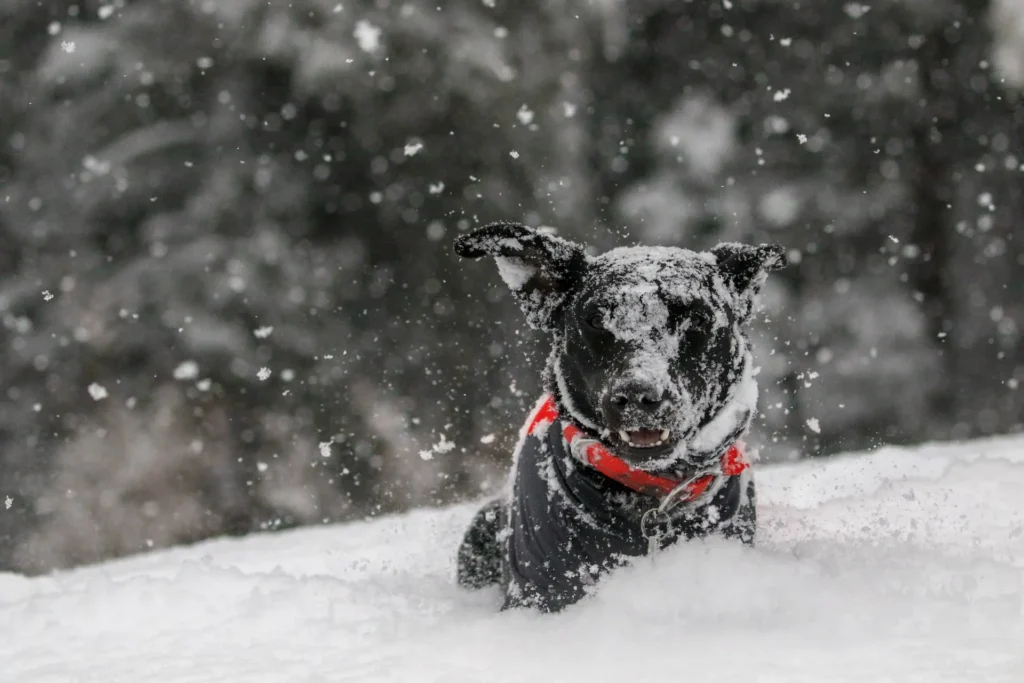
Winter can be a great season for walking, playing in snow, and spending time outdoors with your dog, but cold weather also introduces risks that are easy to underestimate.
Quick answer: Keep your dog comfortable during winter by limiting cold exposure according to the individual dog, keeping them dry, using a properly fitted coat or boots when appropriate, protecting their paws from ice and deicers, providing a warm indoor resting area, maintaining suitable exercise and nutrition, and watching closely for signs of hypothermia or frostbite.
There is no single outdoor temperature that is equally safe for every dog. A Siberian Husky, Chihuahua, Greyhound, young adult Labrador, senior dog with arthritis, and eight-week-old puppy can respond very differently to the same weather.
Wind, moisture, snow, ice, activity level, coat type, body size, age, body condition, and health all affect how quickly a dog becomes uncomfortable or dangerously cold.
How to Keep Your Dog Comfortable During Winter: 9 Tips
| Winter Tip | Why It Matters |
|---|---|
| 1. Adjust outdoor time | Cold tolerance varies considerably between individual dogs. |
| 2. Use winter clothing when appropriate | Small, lean, short-coated, senior, and young dogs may lose heat faster. |
| 3. Protect paws | Ice, snow, salt, and deicers can irritate or injure paw pads. |
| 4. Keep your dog dry | Wet fur can make a dog lose body heat faster. |
| 5. Keep exercise and food appropriate | Winter does not automatically mean every dog needs more or fewer calories. |
| 6. Support seniors and dogs with mobility problems | Ice and slippery floors can make movement more difficult and increase injury risk. |
| 7. Provide a warm resting area | Dogs should have somewhere dry, draft-free, and comfortable to rest. |
| 8. Prepare for winter emergencies | Snowstorms and power outages can interrupt access to food, medications, and veterinary care. |
| 9. Know the warning signs | Hypothermia and frostbite require prompt attention. |
1. Adjust Outdoor Time to Your Individual Dog
One of the biggest mistakes in winter dog care is looking for a universal rule such as “all dogs can stay outside for 30 minutes.”
Cold tolerance varies significantly between dogs.
Dogs that may become cold faster include:
- Small and toy breeds
- Short-coated dogs
- Hairless breeds
- Very lean dogs
- Puppies
- Senior dogs
- Dogs with certain medical conditions
- Dogs that are wet
Northern breeds with dense double coats may tolerate cold much better, but even heavily coated dogs can develop frostbite or hypothermia with sufficient exposure.
AAHA recommends shorter, more frequent outings during extreme cold rather than long periods outside.
How Can You Tell Your Dog Is Getting Too Cold?
Do not rely only on the thermometer. Watch the dog.
Early signs that it is time to head indoors can include:
- Shivering
- Lifting paws repeatedly
- Whining
- Slowing down
- Seeking shelter
- Refusing to continue walking
- Hunching or curling the body
If your dog is clearly uncomfortable, the walk is already too long for the current conditions.
2. Use a Winter Coat or Sweater When Your Dog Needs One
Not every dog needs clothing in winter, but some benefit substantially from an additional insulating layer.
Dogs more likely to benefit include:
- Chihuahuas and other small breeds
- Greyhounds and other lean, short-coated breeds
- Hairless dogs
- Senior dogs
- Dogs with very thin coats
- Dogs that have been clipped very short
AAHA recommends a properly fitted sweater or insulated coat for dogs that need additional protection. :contentReference[oaicite:2]{index=2}
How Should a Dog Winter Coat Fit?
The coat should:
- Allow normal walking and movement
- Cover useful areas of the chest and back
- Not restrict the shoulders
- Not rub behind the front legs
- Not interfere with urination
- Not contain loose parts your dog can chew
Check underneath clothing after use for rubbing, moisture, or irritated skin.
Do not leave clothing on an unsupervised dog simply because the weather is cold. AKC notes that winter clothing should supplement appropriate care rather than replace shelter and supervision. :contentReference[oaicite:3]{index=3}
3. Protect Your Dog’s Paws From Snow, Ice, and Salt
Winter conditions can be particularly hard on paws.
Problems include:
- Ice collecting between toes
- Snowballs forming in long paw hair
- Cracked pads
- Sharp ice
- Slippery surfaces
- Salt and chemical deicers
Sodium chloride, calcium chloride, and other ice-melting products can irritate paw pads, and dogs may ingest residue later while licking their feet. :contentReference[oaicite:4]{index=4}
What Should You Do After a Winter Walk?
When you return home:
- Check each paw.
- Remove ice and packed snow.
- Inspect between the toes.
- Wipe or rinse away salt and deicer residue.
- Dry the paws thoroughly.
AAHA recommends using a warm, damp cloth to remove salt, ice, and debris. :contentReference[oaicite:5]{index=5}
Do Dogs Need Winter Boots?
Boots can be very useful for dogs walking through:
- Heavily salted sidewalks
- Deep snow
- Sharp or crusted ice
- Very cold conditions
Fit matters. Boots that are too tight can rub and restrict movement, while loose boots may twist or fall off.
If your dog refuses boots, a veterinarian-approved paw balm or wax may provide some additional protection, although the paws should still be cleaned after walks.
4. Keep Your Dog Dry
A wet dog can become cold much faster than a dry dog.
Snow can melt into the coat, while rain, sleet, and wet ground can soak areas around the:
- Belly
- Chest
- Legs
- Paws
- Long coat around the tail
AKC notes that wet or damp dogs are more vulnerable to cold-related injury. :contentReference[oaicite:6]{index=6}
After a wet winter outing:
- Towel-dry your dog.
- Remove snow and ice from the coat.
- Check the paws.
- Allow the dog to warm up indoors.
- Replace wet clothing with dry clothing if needed.
Never leave a wet dog sitting outside in freezing conditions.
5. Do Not Automatically Change Your Dog’s Food in Winter
The old advice that every dog needs fewer calories because winter means less activity is too broad.
Some indoor dogs exercise less during winter and may require fewer calories to maintain a healthy body condition.
But dogs spending substantial time working or exercising in cold conditions can use more energy to maintain body temperature. VCA specifically notes that outdoor dogs may require additional calories during winter. :contentReference[oaicite:7]{index=7}
Instead of changing food simply because the calendar says December, monitor:
- Body weight
- Body condition
- Exercise level
- Time spent outside
- Appetite
- Health status
Your dog’s body condition should guide feeding changes more than the season alone.
Should Dogs Get More Omega-3 in Winter?
Omega-3 fatty acids can have veterinary uses, including supporting some skin and joint conditions, but there is no reason to automatically start or increase a supplement every winter.
Supplements add calories and appropriate amounts depend on the product, diet, dog, and reason for using them.
If your dog has arthritis, dry skin, or another condition for which omega-3 supplementation may be useful, discuss the product and dose with your veterinarian.
6. Give Senior Dogs and Dogs With Mobility Problems Extra Support
Senior dogs and dogs with orthopedic problems may need more help during winter even when they tolerate the temperature itself reasonably well.
Ice and slippery surfaces can make normal movement harder and increase the risk of falls.
Helpful changes can include:
- Shorter walks
- Walking during daylight
- Avoiding icy routes
- Using rugs or runners over slippery indoor flooring
- Keeping nails appropriately trimmed
- Using ramps where jumping has become difficult
- Providing a supportive bed
AAHA warns that black ice and other slippery winter surfaces can result in sprains, strains, and potentially fractures. :contentReference[oaicite:8]{index=8}
If your older dog suddenly struggles to stand, walks stiffly, limps, refuses stairs, or no longer wants to jump into the car, do not assume this is simply a normal winter change. Pain and mobility problems deserve veterinary assessment.
Should You Bathe Your Dog Less Often in Winter?
Some dogs may benefit from less frequent bathing during dry winter months because repeated bathing can remove natural oils from the skin and coat.
VCA recommends avoiding excessive bathing and using shampoo formulated specifically for dogs. :contentReference[oaicite:9]{index=9}
However, there is no rule that all dogs should stop bathing between certain months.
Bathing frequency can depend on:
- Coat type
- Skin condition
- Allergies
- Medical treatment
- How dirty the dog becomes
- Instructions from your veterinarian
Dry your dog thoroughly after a winter bath before going outdoors.
If your dog develops flaky skin, itching, redness, hair loss, sores, or persistent coat changes, discuss those symptoms with your veterinarian rather than repeatedly adding shampoos, oils, or supplements.
7. Give Your Dog a Warm, Dry Place to Sleep
Dogs should have access to a dry, comfortable resting area away from cold drafts.
That can be particularly important for:
- Puppies
- Senior dogs
- Small dogs
- Lean breeds
- Dogs with arthritis
- Dogs recovering from illness
A normal comfortable dog bed and blankets are sufficient for many dogs.
Are Heated Dog Beds Safe?
A pet-specific heated bed can be useful for some dogs, especially seniors that become cold easily.
AKC recommends looking for products specifically designed for pets and features such as automatic shutoff. :contentReference[oaicite:10]{index=10}
Your dog should always be able to:
- Move away from the heat
- Lie somewhere cooler
- Avoid chewing electrical cords
Do not place a dog directly onto an unprotected household heating pad or other high-temperature heat source.
Watch for Winter Hazards Beyond the Cold
Cold temperature is only one part of winter safety.
Antifreeze
Ethylene glycol antifreeze can be fatal to dogs even in relatively small quantities.
VCA warns that it can cause severe kidney damage and that no antifreeze product should simply be assumed safe. :contentReference[oaicite:11]{index=11}
Store automotive fluids securely and clean spills immediately.
Frozen Lakes and Ponds
Do not allow your dog to run onto uncertain ice.
A dog breaking through thin ice can quickly develop hypothermia and can also put the owner at serious risk during an attempted rescue.
AAHA recommends keeping dogs away from frozen bodies of water where ice safety is uncertain. :contentReference[oaicite:12]{index=12}
Cold Cars
Do not assume a parked car protects a dog from winter temperatures.
AKC explains that an unheated vehicle can become extremely cold and provides little insulation against outside conditions. :contentReference[oaicite:13]{index=13}
Keep Your Dog Active When Walks Get Shorter
Limiting outdoor time should not mean leaving your dog bored for the entire winter.
When weather makes normal walks difficult, indoor enrichment can include:
- Short training sessions
- Food puzzles
- Hide-and-seek
- Scent games
- Tug
- Indoor retrieves where flooring is safe
- Searching for scattered pieces of food
- Learning new behaviors
AAHA specifically recommends interactive games, puzzle toys, and training sessions when extreme cold reduces outdoor activity. :contentReference[oaicite:14]{index=14}
Mental activity can be particularly useful on days when long walks are simply unsafe.
8. Prepare for Snowstorms and Power Outages
A severe winter storm can interrupt roads, electricity, heating, deliveries, and access to veterinary clinics.
Do not wait until the storm has already arrived to discover that your dog’s medication or food is almost gone.
A basic winter pet kit should include:
- Several days of dog food
- Fresh drinking water
- Necessary medications
- Blankets
- Leash and harness
- Current identification
- Flashlight
- Basic first-aid supplies
- Copies of important veterinary information
AKC also recommends keeping your dog’s ID tag and microchip contact information current and planning ahead for evacuation rather than leaving pets behind during severe weather. :contentReference[oaicite:15]{index=15}
9. Know the Signs of Hypothermia
Hypothermia occurs when a dog’s core body temperature becomes abnormally low.
It can become life-threatening.
Early signs can include:
- Shivering
- Curling up for warmth
- Weakness
- Pale or cool skin
- Reduced energy
More advanced hypothermia may cause:
- Marked lethargy
- Confusion
- Slow or shallow breathing
- Slow heart rate
- Reduced responsiveness
- Loss of consciousness
AAHA advises bringing a potentially hypothermic dog indoors, wrapping them in warm blankets, and contacting a veterinarian. Warm water bottles can be used when wrapped in towels rather than placed directly against the skin. :contentReference[oaicite:16]{index=16}
Do not use dangerously hot water or direct intense heat in an attempt to warm the dog quickly.
What Does Frostbite Look Like in Dogs?
Frostbite damages tissue after exposure to extreme cold and commonly affects areas farther from the body’s core.
Common locations include:
- Ears
- Tail
- Paws
- Nose
Potential signs include:
- Pale, gray, blue, or otherwise discolored skin
- Cold skin
- Pain or tenderness
- Swelling
- Blisters
- Later development of dark or damaged tissue
AKC advises contacting a veterinarian if frostbite is suspected and specifically warns against rubbing affected tissue or applying direct heat such as a hair dryer or heating pad. :contentReference[oaicite:17]{index=17}
How Cold Is Too Cold for a Dog?
There is no perfect temperature cutoff for every dog.
Temperature is only one variable. You also need to consider:
- Wind chill
- Rain or wet snow
- How long the dog is outside
- Whether the dog is moving or stationary
- Breed and coat
- Body size and body fat
- Age
- Health
Once temperatures approach or fall below freezing, cold-weather precautions become increasingly important, particularly for vulnerable dogs. AAHA recommends close monitoring and limiting outdoor time during freezing conditions. :contentReference[oaicite:18]{index=18}
Use your dog’s behavior as an additional warning system. A dog that is shivering, repeatedly lifting paws, whining, slowing down, or trying to return home should be taken somewhere warm.
Winter Dog Care: Quick Checklist
| Before Going Outside | After Coming Inside |
|---|---|
| Check temperature, wind, and precipitation. | Remove wet clothing. |
| Use a coat when your dog needs one. | Wipe salt and deicers from paws. |
| Consider properly fitted boots. | Remove ice between toes. |
| Keep the dog on leash around unsafe ice. | Dry wet fur thoroughly. |
| Watch constantly for signs of cold stress. | Check pads for irritation or injury. |
| Shorten the outing when conditions are severe. | Provide a warm, comfortable resting area. |
How to Keep Your Dog Comfortable During Winter: The Bottom Line
Keeping a dog comfortable during winter starts with treating cold tolerance as an individual trait rather than a breed stereotype or fixed temperature rule.
Small, short-coated, lean, young, senior, and medically vulnerable dogs often need shorter outdoor sessions and may benefit from appropriate clothing. Even cold-adapted breeds still require monitoring during severe conditions.
Protect your dog’s paws from ice, snow, road salt, and chemical deicers, keep the coat dry, provide a warm indoor resting area, and adjust exercise and feeding according to the dog’s actual activity and body condition.
Winter also brings hazards unrelated to temperature, including antifreeze, frozen water, slippery ice, cold vehicles, and severe storms.
Most importantly, learn the warning signs of frostbite and hypothermia. Shivering may be an early warning, while weakness, confusion, slowed breathing, collapse, or significant tissue discoloration require prompt veterinary attention.
If your dog looks cold, uncomfortable, weak, or unusually reluctant to continue a walk, bring them inside rather than waiting for a specific temperature or time limit to tell you what to do.
Frequently Asked Questions About Dogs in Winter
How do I keep my dog warm in winter?
Limit cold exposure according to your individual dog, keep them dry, provide a warm indoor sleeping area, and use a properly fitted coat or boots when your dog’s size, coat, age, or health makes additional protection useful.
How cold is too cold for a dog?
There is no single safe cutoff for every dog. Freezing temperatures require increasing caution, especially for small, short-haired, young, senior, lean, or medically vulnerable dogs. Wind and wetness can make the effective conditions much harsher.
How can I tell if my dog is too cold?
Signs can include shivering, paw lifting, whining, slowing down, curling up, weakness, or trying to return indoors. More serious lethargy, confusion, abnormal breathing, or collapse requires veterinary attention.
Does my dog need a winter coat?
Some do. Small dogs, short-coated dogs, lean breeds, puppies, and seniors may benefit from extra insulation. Thick-coated northern breeds may need less additional clothing in many conditions.
Do dogs need boots in snow?
Not every dog needs them, but boots can protect against ice, snow accumulation, salt, deicers, and very cold surfaces. They should fit properly and not rub or restrict movement.
Should I wash my dog’s paws after walking in snow?
Yes, especially after walking on treated sidewalks. Wipe or rinse the paws with warm water or a warm damp cloth to remove salt, ice, and chemical residue, and check carefully between the toes.
Should dogs eat more food during winter?
Not automatically. Dogs spending substantial time working outdoors in cold conditions may use more energy, while indoor dogs that exercise less may need the same or fewer calories. Monitor body condition and ask your veterinarian if feeding needs change significantly.
Should I bathe my dog less in winter?
Some dogs benefit from less frequent bathing during dry winter months, but there is no universal winter bathing schedule. Use dog-specific shampoo, follow skin or medical needs, and dry your dog completely before cold exposure.
Is antifreeze dangerous to dogs?
Yes. Ethylene glycol antifreeze can cause severe, potentially fatal kidney injury. Prevent access, clean spills immediately, and contact a veterinarian or appropriate poison service immediately if ingestion is suspected.
Can I leave my dog in the car during winter?
A parked car can become dangerously cold. An unheated vehicle provides limited insulation from frigid outside temperatures and can expose a dog to hypothermia.
Can dogs get frostbite?
Yes. Ears, paws, tail, and nose are particularly vulnerable. Pale, gray, blue, swollen, cold, painful, blistered, or darkened tissue should be evaluated by a veterinarian.
What are the signs of hypothermia in dogs?
Early signs can include shivering, weakness, cold or pale skin, and reduced activity. More severe hypothermia can cause confusion, slowed breathing and heart rate, reduced responsiveness, and unconsciousness.
Winter Dog Safety Sources
This guide provides general winter-care information. Cold tolerance varies substantially between individual dogs, and dogs with medical conditions may require individualized veterinary guidance.
- AAHA — Cold Weather Pet Safety Tips for Dogs and Cats
- AAHA — How to Safely Walk Your Dog in Winter
- VCA Animal Hospitals — Cold Weather Safety for Pets
- VCA Animal Hospitals — Preparing Your Pets for Winter
- American Kennel Club — Hypothermia in Dogs
- American Kennel Club — Frostbite in Dogs
- American Kennel Club — How to Keep Your Dog Warm and Safe This Winter
- American Kennel Club — Leaving Dogs in Cars During Winter