Some large dog breeds immediately stand out. It may be an enormous mane, an unusually elegant body, a flocked coat that looks unlike anything else in the dog world, or centuries of history tied to remote regions and specialized work.
Quick answer: Five unusual large dog breeds worth knowing are the Saluki, Tibetan Mastiff, Leonberger, Borzoi, and Bergamasco Sheepdog. They range from ancient sighthounds and livestock guardians to giant family companions and Alpine herding dogs.
The word “exotic” is not an official kennel-club classification. In this guide, we use it informally for breeds that have distinctive origins, appearance, working history, or characteristics that make them less familiar than breeds such as Labrador Retrievers, German Shepherd Dogs, or Golden Retrievers.
Appearance should never be the main reason to choose one of these dogs. Several breeds on this list are independent, powerful, highly prey-driven, protective, or simply enormous. Before bringing one home, consider temperament, exercise, training, grooming, health, space, and whether you can safely manage an adult dog of that size.
5 Exotic Large Dog Breeds at a Glance
| Breed | Origin | Originally Bred For | General Character |
|---|---|---|---|
| Saluki | Middle East | Hunting by sight | Gentle, athletic, independent |
| Tibetan Mastiff | Tibet and Himalayan region | Livestock and property guarding | Protective, territorial, independent |
| Leonberger | Germany | Companion and working dog | Large, social, steady |
| Borzoi | Russia | Hunting game including wolves | Calm, fast, independent |
| Bergamasco Sheepdog | Italian Alps | Herding and guarding livestock | Intelligent, patient, protective |
These breeds have very different lifestyles despite all looking unusual. A Tibetan Mastiff owner faces different challenges from a Saluki or Borzoi owner, while the Bergamasco’s famous coat requires a completely different type of care from the Leonberger’s heavy double coat.
1. Saluki
The Saluki is one of the oldest recognizable types of domesticated dog and has been associated with hunting cultures of the Middle East for thousands of years.
Archaeological evidence shows dogs resembling modern Salukis in artwork dating back thousands of years. Historically, these swift sighthounds were valued for pursuing fast-moving quarry across large areas of difficult terrain.
Unlike scent hounds that primarily follow a trail with their noses, Salukis are sighthounds. They detect movement visually and then use speed and athleticism to pursue prey.
How Big Is a Saluki?
Salukis are tall and long-legged rather than massive. Adult males generally stand approximately 23 to 28 inches at the shoulder, while females may be noticeably smaller.
That makes the Saluki one of the lighter dogs in this list, but its height, athletic build, and need for substantial running space make it behave more like a large sporting companion than a small household dog.
Saluki Temperament
Salukis are generally described as gentle, dignified, loyal, and independent.
That independence is important. A Saluki may understand perfectly well what you are asking without having the same automatic desire to comply as some highly handler-focused working breeds.
Training should be patient, consistent, and reward-based.
Can Salukis Live With Small Pets?
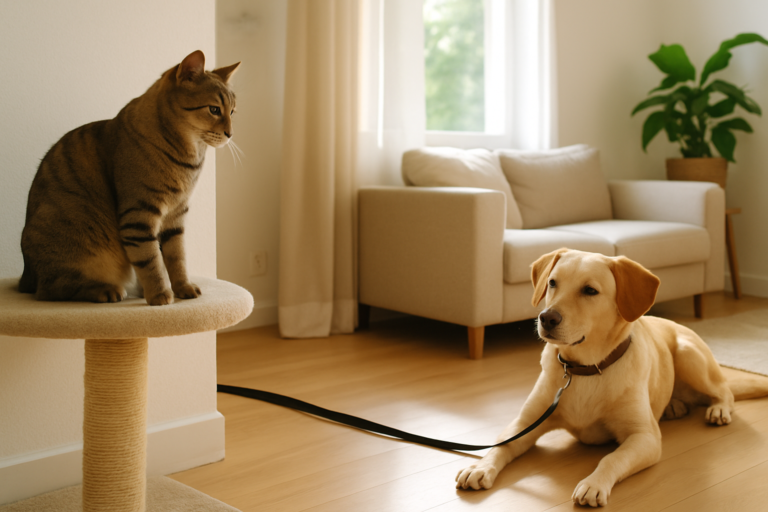
Prospective owners should take the breed’s prey drive seriously. Salukis were developed to pursue moving animals, and an individual dog may chase cats, rabbits, wildlife, or other small animals.
Even a well-trained Saluki should not be assumed to have reliable recall around fast-moving prey.
Saluki Exercise Needs
Daily walks are useful, but this athletic sighthound also benefits from opportunities to run safely in a large, securely fenced area.
Activities such as lure coursing can provide an appropriate outlet for the breed’s natural speed and chase instinct.
Best suited for: Owners who appreciate sensitive, independent sighthounds and can provide secure opportunities for running.
2. Tibetan Mastiff
Few dogs create the same visual impression as a mature Tibetan Mastiff. The breed combines enormous size, a thick double coat, a heavy mane around the neck, and centuries of livestock and property-guardian heritage.
Tibetan Mastiffs developed in the Himalayan region, where guardian dogs were expected to protect homes, livestock, and property rather than wait for constant instructions from a handler.
That history explains much about the modern breed.
How Big Is a Tibetan Mastiff?
Tibetan Mastiffs are true giant dogs. Adult males can reach around 150 pounds, although size varies considerably between individuals and bloodlines.
Their physical strength alone means early training and socialization are essential.
Tibetan Mastiff Temperament
Tibetan Mastiffs are generally devoted to their family but naturally reserved, watchful, and territorial around unfamiliar people.
They were developed to make independent decisions as guardians, so they should not be expected to behave like an obedience-focused breed that constantly waits for direction.
This combination of:
- Enormous strength
- Territorial instinct
- Independence
- Suspicion toward strangers
- Strong guardian behavior
makes the Tibetan Mastiff a poor choice for many first-time dog owners.
Are Tibetan Mastiffs Easy to Train?
They are intelligent, but intelligence and obedience are not the same thing.
Tibetan Mastiffs can be highly independent and may choose to act according to their own assessment of a situation. Early socialization, clear boundaries, secure containment, and experienced handling are particularly important.
Tibetan Mastiff Grooming
For much of the year, routine brushing is relatively straightforward for such a heavily coated dog. However, Tibetan Mastiffs have a major seasonal shedding period when they lose large amounts of undercoat.
Best suited for: Experienced owners specifically looking for a large, independent guardian breed and who have appropriate space and secure fencing.
3. Leonberger
The Leonberger is a giant German breed that combines imposing size with an appearance that is often compared with a lion.
The breed originated in the town of Leonberg, Germany, during the nineteenth century. Historical accounts connect its development with Heinrich Essig, a prominent dog breeder and local politician who wanted to establish a distinctive large breed associated with the town.
Although simplified breed histories often present an exact recipe of Newfoundland, Saint Bernard, and other giant breeds, the Leonberger’s early breeding history is more complicated than a single confirmed cross, so it is better not to describe the modern breed simply as a hybrid of three dogs.
How Big Is a Leonberger?
Leonbergers are genuine giant dogs. Large adult males can reach well over 100 pounds, with some approaching 170 pounds.
Before choosing one, consider what that size means practically:
- More expensive food
- Larger crates and beds
- More difficult transportation
- Higher medication doses
- Potentially higher veterinary costs
- A very strong dog to manage on leash
Leonberger Temperament
A well-bred Leonberger is generally expected to have a stable, affectionate temperament and enjoy being part of family life.
Their physical size means good manners matter enormously. Jumping, pulling, or uncontrolled excitement that might be manageable in a 20-pound dog becomes a serious problem in a giant breed.
Early reward-based training should therefore begin while the dog is still physically manageable.
Do Leonbergers Shed?
Yes. Leonbergers have substantial coats and owners should expect regular shedding and significant grooming.
Routine brushing is important to control loose coat and reduce tangles, particularly around areas where thick hair rubs together.
Are Leonbergers Good Family Dogs?
They can be wonderful family companions in an appropriate home, but giant size must always be considered around young children.
Even a friendly dog can accidentally knock over a child simply by turning, running, or leaning.
Best suited for: Households that want a very large companion dog and are prepared for substantial training, grooming, food, space, and ownership costs.
4. Borzoi
The Borzoi is another large sighthound, but its long flowing coat and dramatic silhouette give it a completely different appearance from the Saluki.
Historically known as the Russian Wolfhound, the Borzoi was developed by the Russian aristocracy for coursing game, including wolves.
The breed combines tremendous speed with a generally calm household temperament.
How Big Is a Borzoi?
Adult males stand at least 28 inches at the shoulder and generally weigh around 75 to 105 pounds. Females are typically somewhat smaller.
Their narrow build can make them look lighter than they actually are.
How Fast Can a Borzoi Run?
The Borzoi is built for speed. The American Kennel Club notes that these powerful sighthounds can reach approximately 35 to 40 miles per hour at full stride.
That speed and pursuit instinct make securely fenced exercise areas particularly important.
Borzoi Temperament
Borzois are generally calm, affectionate with their families, dignified, and relatively quiet.
Like many sighthounds, however, they also have an independent side.
Training tends to work best when it is:
- Patient
- Consistent
- Reward-based
- Interesting enough to maintain the dog’s attention
Can a Borzoi Live With Cats?
Some individual Borzois can live successfully with cats, particularly when appropriately raised and managed, but the breed’s chase instinct should never be ignored.
A running cat, rabbit, squirrel, or other small animal may trigger pursuit.
Borzois should therefore be exercised on leash or within safely enclosed areas.
Borzoi Grooming
Their long silky coat requires regular brushing and they do shed, with heavier shedding occurring periodically.
Best suited for: Owners who appreciate large, calm sighthounds and can provide secure exercise while respecting their strong instinct to chase.
5. Bergamasco Sheepdog
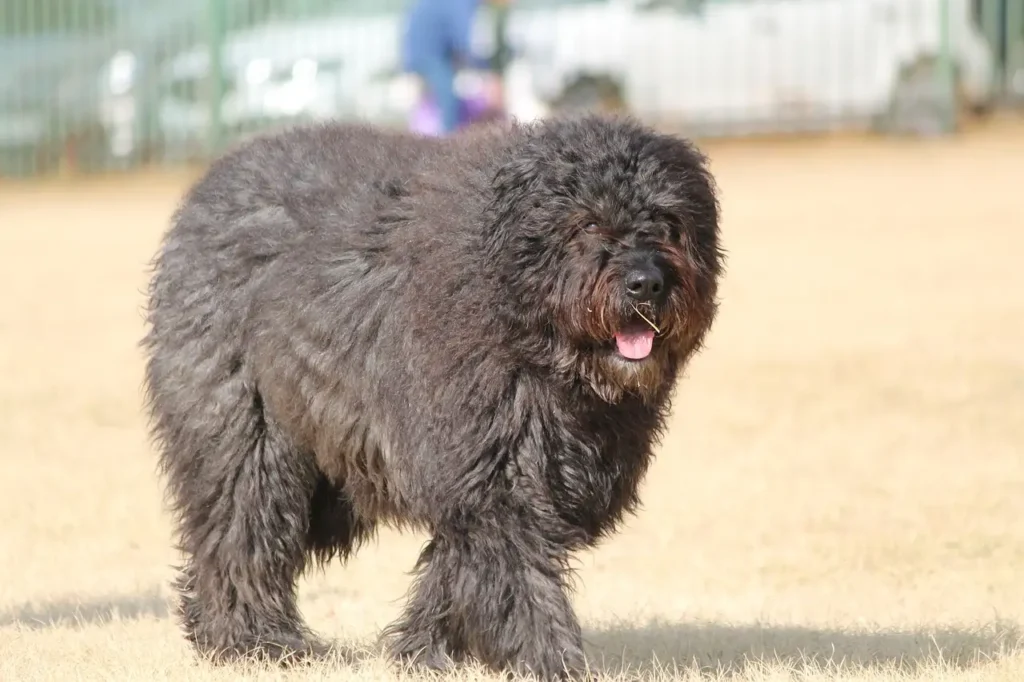
The Bergamasco Sheepdog may have the most unusual coat of any breed on this list.
This ancient-style herding breed developed in the Alpine regions of northern Italy and surrounding areas, where dogs needed intelligence, endurance, weather resistance, and enough independence to help manage livestock in challenging terrain.
Its famous coat is functional rather than simply decorative.
Why Does the Bergamasco Have a Flocked Coat?
The mature Bergamasco coat contains three distinct types of hair:
- A fine, dense undercoat
- Longer, coarser “goat hair”
- A woolly outer coat
As the coat develops, the different hair types combine into broad felted sections called flocks.
These are not the same as the narrow cords seen on breeds such as the Puli or Komondor.
Does a Bergamasco Need Constant Brushing?
Surprisingly, a correctly developed adult Bergamasco coat does not require normal body brushing.
The demanding period comes while the adult coat is developing. At around the first year of life, owners need to separate the forming mats into appropriate flocks. Once properly established, the mature coat generally requires much less day-to-day work than its appearance suggests.
The coat should still be kept clean, and drying such a dense coat thoroughly after bathing requires planning.
Bergamasco Temperament
Bergamascos are generally intelligent, patient, observant, and devoted to their work and family.
Their herding background encouraged dogs capable of making decisions rather than mechanically waiting for every command.
They therefore benefit from thoughtful training, socialization, and meaningful interaction rather than repetitive drilling.
Best suited for: Owners interested in a distinctive, intelligent herding breed and prepared to learn the unusual coat-maintenance process.
Which Exotic Large Dog Breed Is Right for You?
These five breeds should not be chosen simply because they look impressive.
| If You Want… | Consider… |
|---|---|
| An elegant, ancient and athletic sighthound | Saluki |
| A massive independent guardian | Tibetan Mastiff |
| A giant, social family companion | Leonberger |
| A calm but extremely fast large sighthound | Borzoi |
| An unusual Alpine herding dog with a flocked coat | Bergamasco Sheepdog |
The correct breed is the one whose natural behavior fits your lifestyle, not necessarily the one whose photograph you find most impressive.
Are Exotic Large Dog Breeds Good for First-Time Owners?
Some can be manageable for a committed beginner with good professional guidance, while others are much more demanding.
The Tibetan Mastiff is the clearest example of a breed that deserves serious caution from inexperienced owners because of its combination of size, territorial behavior, guardian instinct, and independence.
Sighthounds such as the Saluki and Borzoi present a different challenge. They may be relatively calm inside the home but require owners who understand prey drive, secure fencing, and the limitations of recall around moving animals.
Before choosing any uncommon breed, ask yourself whether you can realistically manage:
- The adult dog’s size and strength
- Breed-specific exercise requirements
- Natural guarding or hunting instincts
- Grooming requirements
- Training and socialization
- Secure fencing
- Food costs
- Veterinary expenses
- Transportation
- Potential restrictions from landlords or insurers
Large and Giant Dogs Cost More Than Their Purchase Price
An unusual breed may be expensive to purchase, but the purchase price is only a small part of lifetime ownership.
Large dogs generally require more of almost everything:
- Food
- Medication
- Flea and tick prevention
- Large beds
- Crates
- Harnesses and collars
- Transportation space
- Boarding space
Grooming costs can also be substantially higher for dogs such as Leonbergers, while specialized coats such as the Bergamasco require owners to understand maintenance that a typical groomer may not perform routinely.
Do not choose a rare or unusual breed because its scarcity makes it feel exclusive. Choose it only if you want to live with the behavior and care requirements that come with that breed.
How to Find a Responsible Breeder for an Uncommon Dog Breed
Rare breeds can require more research because there may be fewer reputable breeders and fewer puppies available.
A responsible breeder should be willing to discuss:
- Breed-specific health testing
- The temperaments of both parents
- The working or companion traits they breed for
- How puppies are raised and socialized
- Whether the breed is appropriate for your household
- What support is provided after purchase
- What happens if you can no longer keep the dog
Ask to see actual health-testing documentation rather than accepting statements such as “our dogs have never had health problems.”
Be especially cautious when rarity, enormous size, unusual color, or an exaggerated physical feature is being used as the primary sales pitch.
Does Exotic Mean Rare?
Not necessarily.
“Exotic” is an informal description. A breed can appear exotic because of its coat, history, origin, or physical structure without being exceptionally rare worldwide.
Likewise, a breed can be genuinely uncommon without looking particularly unusual.
For prospective owners, popularity should matter much less than whether:
- The breed suits your household
- Healthy dogs are being responsibly bred
- You can meet its physical and behavioral needs
- You can safely manage the adult dog
5 Exotic Large Dog Breeds: The Bottom Line
The Saluki, Tibetan Mastiff, Leonberger, Borzoi, and Bergamasco Sheepdog are fascinating for very different reasons.
The Saluki and Borzoi are elegant sighthounds built for speed. The Tibetan Mastiff is a powerful independent guardian. The Leonberger is a genuine giant developed in Germany and known for its imposing appearance and family-oriented temperament. The Bergamasco combines herding intelligence with one of the most unusual functional coats in the dog world.
But unusual appearance should come second to suitability. Some of these dogs have intense prey drive, some are territorial, some require enormous amounts of space and money, and others have coat-care needs unlike those of common household breeds.
Research the breed’s temperament, health testing, exercise, grooming, training, and working history before searching for a puppy.
The best unusual dog is not the rarest or most dramatic one. It is the breed whose real-life needs match the home you can provide for the next decade or longer.
Frequently Asked Questions
What are some exotic large dog breeds?
Examples of unusual large breeds include the Tibetan Mastiff, Leonberger, Borzoi, Bergamasco Sheepdog, and Saluki. “Exotic” is not an official breed category and is usually used informally for dogs with unusual origins, appearance, or history.
Which is the largest breed on this list?
The Tibetan Mastiff and Leonberger are the true giant breeds in this group. Large adult males of either breed can exceed 100 pounds, while the Saluki is much lighter despite being tall.
Is a Tibetan Mastiff good for a first-time dog owner?
Usually not. Tibetan Mastiffs are extremely powerful, independent guardian dogs that can be territorial around strangers. They are generally better suited to experienced owners who understand large protective breeds.
Is a Leonberger a good family dog?
Leonbergers are generally known for affectionate, steady temperaments and can make excellent family companions in suitable homes. Their enormous size still requires training, supervision around young children, adequate space, and substantial financial commitment.
Is a Saluki considered a large dog?
Salukis are tall sighthounds, with adult males generally standing around 23 to 28 inches at the shoulder, but they are much lighter and more slender than giant breeds such as the Tibetan Mastiff or Leonberger.
How fast can a Borzoi run?
The American Kennel Club states that a Borzoi at full stride can reach approximately 35 to 40 miles per hour. Their speed and strong pursuit instinct are important reasons they need securely fenced areas for off-leash running.
Why does the Bergamasco have matted-looking hair?
A mature Bergamasco develops broad felted sections called flocks. They form from three different hair types and are a normal, functional characteristic of the breed rather than neglected matting.
Do you brush a Bergamasco Sheepdog?
The mature flocked body coat is not brushed like an ordinary dog coat. During coat development, the forming mats need to be separated correctly into flocks. Once established, the adult coat requires relatively little routine brushing but still needs appropriate cleaning and maintenance.
What is the difference between a Borzoi and a Saluki?
Both are sighthounds, but they developed in different regions and have noticeably different builds and coats. Salukis originated in the Middle East and have either smooth or lightly feathered coats, while Borzois were developed in Russia and have much fuller, longer coats.
Are rare dog breeds more expensive?
Limited availability can influence purchase price, but rarity alone should never justify choosing a breeder. Health testing, temperament, responsible breeding practices, and lifetime ownership costs matter much more than how uncommon the breed is.
Breed Sources
Breed descriptions represent common breed characteristics rather than guarantees about an individual dog. Temperament, health, behavior, and physical traits vary according to genetics, breeding, socialization, training, and environment.
- American Kennel Club — Saluki
- American Kennel Club — Saluki History and Breed Facts
- American Kennel Club — Tibetan Mastiff
- American Kennel Club — Is the Tibetan Mastiff Right for You?
- American Kennel Club — Leonberger
- American Kennel Club — Leonberger History
- American Kennel Club — Borzoi
- American Kennel Club — Borzoi Hunting History
- American Kennel Club — Bergamasco Sheepdog
- American Kennel Club — Bergamasco Coat and Flocks
- Bergamasco Sheepdog Club of America — Coat Care