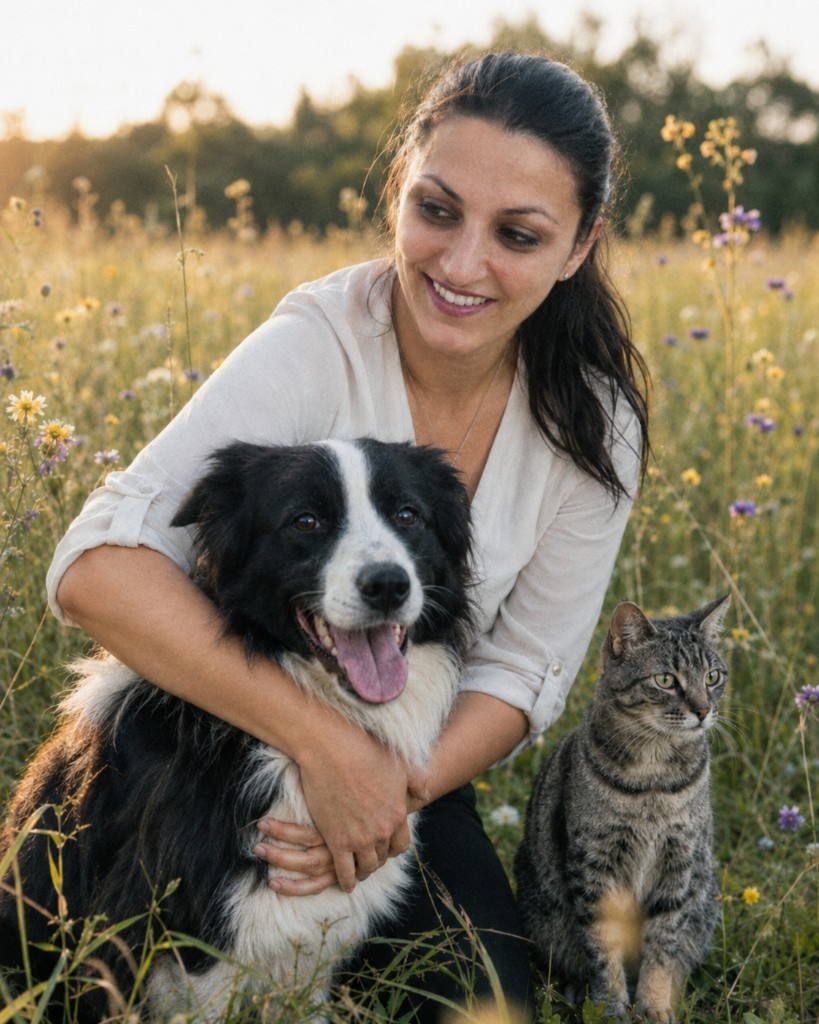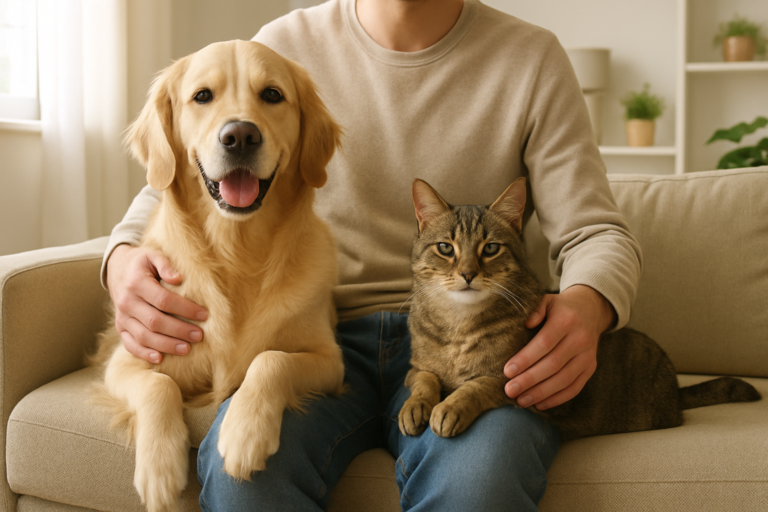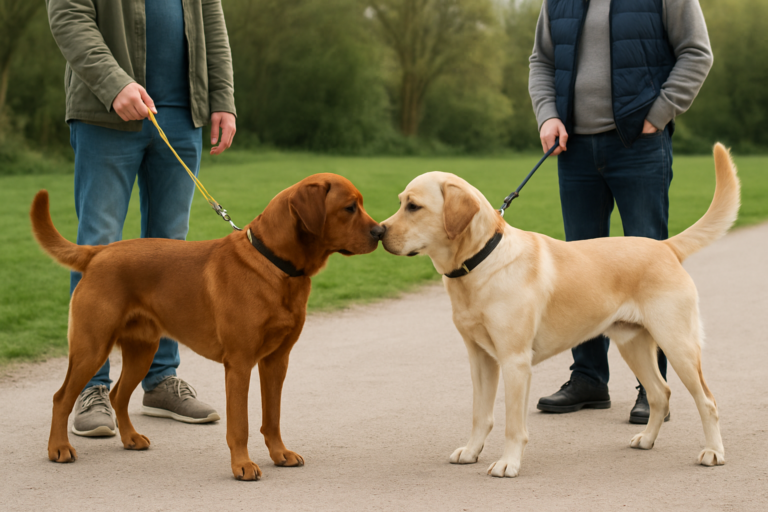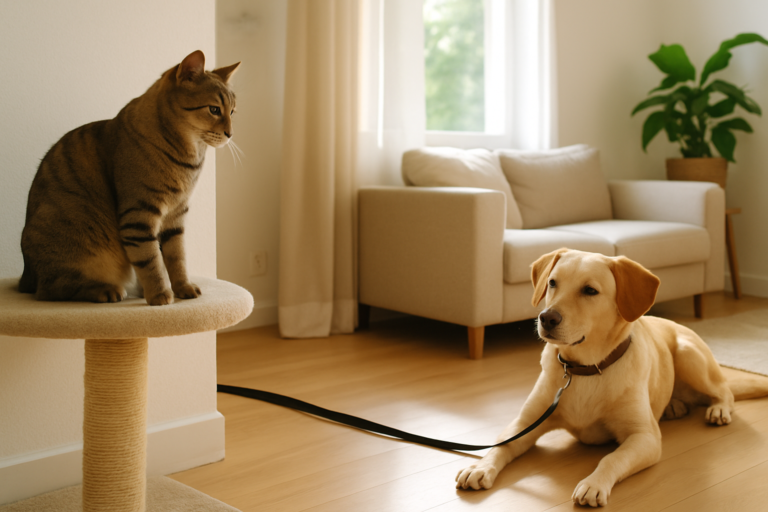
How do you know if your dog likes you? Look at what your dog chooses to do when food, walks, and other obvious rewards are not involved. A dog that voluntarily approaches you, relaxes nearby, invites interaction, and seeks you out for reassurance is showing meaningful signs of affection and trust.
No single tail wag, lick, sleeping position, or excited greeting proves that a dog loves someone. The clearest answer comes from repeated clusters of relaxed, voluntary behavior across different situations. Your dog’s individual temperament, health, age, body language, and previous experiences should always be considered.
What It Really Means When a Dog Likes You
When people say a dog “likes” someone, they usually mean that the dog associates that person with safety, comfort, predictability, and rewarding experiences. Affection describes a desire for social contact, trust reflects an expectation of safe treatment, and attachment is a longer-lasting emotional bond.
Research suggests that owners can function as a secure base from which dogs explore and solve problems. One study published in PLOS ONE found that the presence of an owner influenced dogs’ motivation during a problem-solving task, supporting the idea that canine attachment involves more than access to food or other resources.
Secure attachment should not be confused with dependence. A securely bonded dog may enjoy following you, resting nearby, and checking in during unfamiliar situations while still being able to eat, play, explore, and settle without maintaining constant contact. An anxious dog may remain close because separation feels frightening rather than because the dog is calmly choosing companionship.
One behavior is rarely conclusive. A dog may approach for affection, food, access to the yard, reassurance, or simple curiosity. Look at the complete situation and ask whether the dog appears physically loose, emotionally settled, and free to leave.
How Do You Know if Your Dog Likes You? Look for These Signs
The strongest signs combine choice, repetition, and relaxation. Notice whether your dog approaches without being called, remains comfortable during the interaction, and continues seeking your company during ordinary moments—not only when you are holding food or a leash.
1. Your Dog Chooses to Stay Near You
A dog that lies near your desk, joins you in a quiet room, or rests where it can see you probably values your company. Choosing proximity when nothing exciting is happening can be especially meaningful because there is no obvious immediate reward.
Following you from room to room can also reflect attachment when your dog remains relaxed and can settle elsewhere. If your dog pants, paces, whines, scratches at barriers, or becomes distressed whenever access to you is restricted, anxiety may be contributing to the behavior.
2. Your Dog Relaxes Around You
A comfortable dog typically has loose muscles, natural breathing, soft facial features, and a posture that does not appear frozen or ready to move away. Ear and tail positions should be interpreted relative to your dog’s natural anatomy and usual behavior.
Soft, brief eye contact can be part of a friendly interaction. A fixed stare combined with a closed mouth, rigid body, forward weight, or still tail communicates something different. Relaxation is best judged from the whole body rather than the eyes alone.
3. Your Dog Greets You and Checks In
A positive greeting may include a loose body, relaxed approach, broad wag, toy offering, or brief physical contact. The greeting does not need to be dramatic. Older, tired, reserved, or physically uncomfortable dogs may express affection by calmly approaching or settling nearby.
Looking back at you during a walk or checking your reaction in an unfamiliar environment suggests that your dog considers you socially relevant. A dog that seeks information or reassurance from you may view you as both a companion and a dependable source of guidance.
4. Your Dog Seeks Comfortable Physical Contact
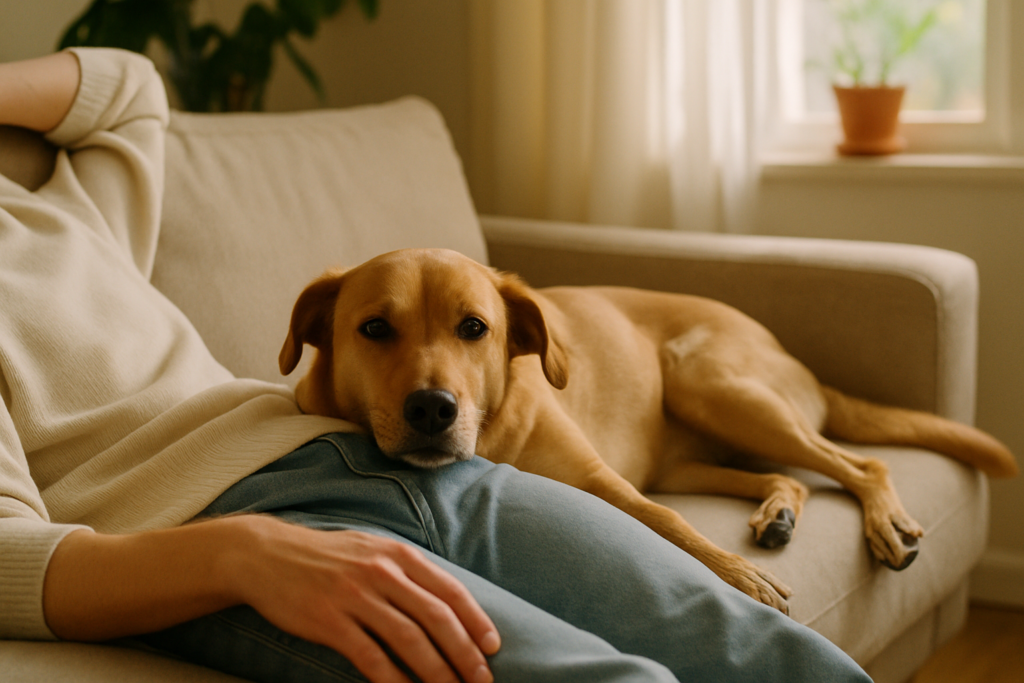
Leaning against you, resting a head on your leg, nudging your hand, or settling beside you can indicate affection when your dog remains physically loose. Some dogs prefer proximity without prolonged touching, so a lack of cuddling does not mean a lack of attachment.
Active participation is more informative than simple tolerance. During petting, pause briefly and move your hand away. A dog that leans back in, nudges you, or presents a preferred area may want the interaction to continue. Turning away, moving off, becoming still, licking the lips, or lowering the body suggests that a break may be welcome.
5. Your Dog Invites You to Play and Interact
Bringing a toy, offering a play bow, initiating a familiar game, or approaching you with a loose, bouncy body can show that your dog expects interaction with you to be enjoyable.
Not every toy delivery means “throw this.” Some dogs want to tug, retrieve, be chased, or simply hold the object while remaining near you. Repeatedly choosing you as a play partner is a positive social sign when the dog can also pause, disengage, and respect boundaries without becoming tense.
Signs That Your Dog Trusts You
Trust becomes visible when a dog feels safe enough to perform normal activities in your presence and does not need to monitor you constantly. It often develops more slowly than excitement, food-seeking, or attention-seeking behavior.
- Your dog chooses to sleep or rest near you without repeatedly watching every movement.
- Your dog eats, drinks, explores, plays, and settles normally while you are present.
- Your dog voluntarily approaches for interaction and remains free to leave when it has had enough.
- Your dog recovers from a mild surprise and can resume normal behavior when you respond calmly.
- Your dog checks in with you during an uncertain situation without appearing trapped or forced to approach.
- Your dog can disengage and rest independently because a secure relationship does not require constant physical contact.
- Your dog becomes increasingly comfortable with positively trained handling, grooming, harnessing, or veterinary-care routines.
Sleeping Behavior Can Show That Your Dog Feels Safe
Choosing to sleep near you, stretching out, changing positions naturally, and returning to sleep after ordinary household movement may suggest that your dog feels secure in your presence.
Sleeping against you can be affectionate, but distance is not rejection. Dogs choose sleeping positions based on temperature, body shape, joint comfort, bedding, noise, and personal preference. A dog resting peacefully across the room may feel just as safe as one sleeping against your leg.
A belly-up position can indicate physical relaxation, but it is not a universal measurement of trust or love. Some dogs rarely sleep that way because it is uncomfortable or makes temperature regulation more difficult.
Common Dog Behaviors That Are Easy to Misread
Many familiar dog behaviors have more than one possible meaning. Treat them as clues and read them alongside posture, muscle tension, facial expression, timing, and what happened immediately before the behavior.
- Tail wagging: A wag indicates emotional arousal or engagement, not happiness by itself. A loose, sweeping wag differs from a high, fast, stiff movement.
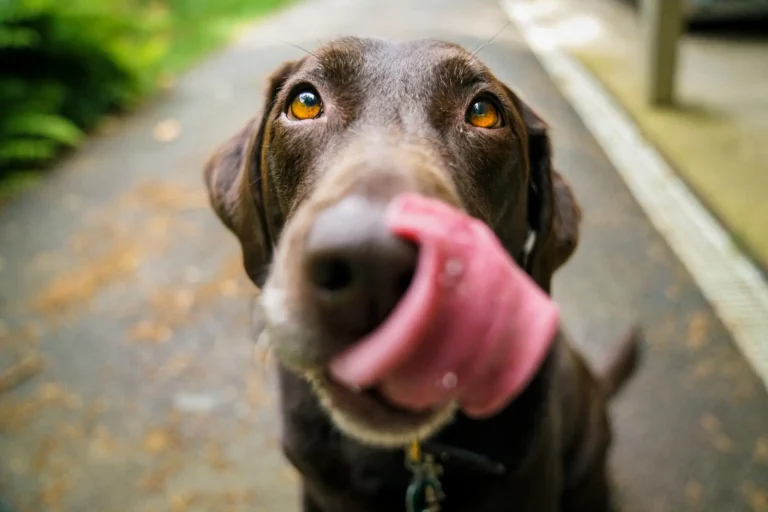
- Licking: A dog may lick because of social interest, taste, learned attention, appeasement, excitement, or stress.
- Following: Following may reflect attachment, curiosity, routine, boredom, anticipated rewards, or distress about separation.
- Belly exposure: A relaxed dog may invite interaction, while a tense dog with pinned ears, turned head, tucked tail, or closed mouth may be attempting to reduce conflict.
- Excited greetings: Enthusiasm can be positive, but calm greetings do not mean that an older, quieter, or more reserved dog cares less.
- Yawning: Yawning may indicate tiredness, but it can also appear during stress, uncertainty, or unwanted handling.
- Eye contact: Soft, voluntary eye contact may be social, while a hard, sustained stare with a rigid posture can be a warning.
Signs Your Dog May Not Feel Comfortable Yet
Behavior that looks like rejection is usually better understood as discomfort, uncertainty, fear, pain, overstimulation, resource guarding, or an attempt to gain distance. Dogs do not need to form a permanent negative opinion of someone to avoid an interaction.
Early signs of discomfort may include turning the head away, repeatedly licking the lips, yawning, lowering the body, lifting a paw, closing the mouth, or walking away during touch. More pronounced tension may involve a tucked tail, pinned ears, visible whites of the eyes, rigid muscles, growling, or sudden stillness.
Freezing should never be mistaken for calm acceptance. The ASPCA includes becoming very still and rigid among behaviors that can precede more obvious defensive or aggressive responses. Stop the interaction and create distance instead of waiting for the dog to escalate.
Growling is valuable communication. Punishing a warning may suppress the sound without changing the underlying fear or discomfort, making future behavior harder to predict. Respond by reducing pressure, identifying the trigger, and changing the situation safely.
If avoidance or defensive behavior appears suddenly, arrange a veterinary assessment because pain or illness may be involved. Persistent fear, unsafe handling, resource guarding, or escalating aggression warrants help from a qualified reward-based behavior professional or board-certified veterinary behaviorist.
How Can You Help Your Dog Like and Trust You More?
You cannot force affection, but you can create repeated experiences in which your dog feels safe, understood, and rewarded. Predictability and choice build a stronger relationship than constant touching or attempts to prove that the dog should tolerate you.
- Allow your dog to approach first instead of cornering, chasing, looming over, or reaching directly over its head.
- Use predictable routines for meals, walks, bathroom breaks, rest, training, and play.
- Reward voluntary approaches, calm check-ins, and desired behavior with food, play, praise, or access to enjoyable activities.
- Respect sleeping areas, food, toys, and personal space rather than taking items or interrupting rest to test the relationship.
- Learn where, when, and how your individual dog enjoys being touched.
- Use short reward-based training sessions to create clear, successful communication.
- Provide sniffing walks, play, enrichment, and quiet time without constantly demanding interaction.
- Pause during petting and play so your dog can choose whether to continue.
- Avoid yelling, physical punishment, intimidation, and equipment designed to cause pain or fear.
Allow the Bond to Develop on Your Dog’s Timeline
Some puppies and sociable adult dogs begin seeking interaction within days. Shy dogs, newly adopted dogs, and dogs with limited or difficult social histories may need weeks or months before they feel comfortable initiating contact.
There is no universal schedule. Genetics, temperament, health, age, past experiences, household activity, and the consistency of human behavior all affect how quickly a dog adjusts. Some dogs also reveal new behaviors after the initial transition period because they finally feel safe enough to express their normal personality.
Progress can be subtle. Your dog may begin taking treats more gently, approaching from a shorter distance, recovering faster after a sound, resting more deeply, initiating brief contact, exploring while you are nearby, or choosing to remain in the same room.
Measure improvement against your dog’s earlier behavior rather than another dog’s personality. A reserved dog calmly choosing a bed across the room may be demonstrating as much trust as a highly social dog sleeping against its owner.
Look for Choice, Relaxation, and Trust
The clearest answer to how you can tell if your dog likes you comes from repeated voluntary behavior. A dog that chooses your company, relaxes in your presence, initiates appropriate interaction, and looks to you for guidance is showing a meaningful positive connection.
Do not judge the relationship by one tail wag, lick, sleeping position, or excited greeting. Respect your dog’s signals, provide predictable and rewarding experiences, and give affection room to develop without pressure.
Frequently Asked Questions
How Can You Tell if a Dog Is Bonded to You?
A bonded dog repeatedly chooses to approach, rest, play, or check in with you and may use your presence as a source of security in unfamiliar situations. Secure bonding also allows independence, so a bonded dog does not necessarily need constant physical contact.
What Is the Highest Form of Affection From a Dog?
There is no scientific ranking of canine affection. Voluntary trust is one of the strongest signs of a close relationship: your dog feels safe resting, playing, seeking guidance, accepting positively trained care, and choosing to spend time with you.
How Do I Say “I Love You” to My Dog?
Show love through predictable care, safety, enjoyable activities, respectful touch, positive training, and opportunities to make choices. These actions communicate more clearly than forced hugging, prolonged staring, or insisting on physical closeness.
How Do Dogs Apologize?
Dogs do not necessarily apologize with a human understanding of guilt or wrongdoing. A study of the canine “guilty look” found that behaviors interpreted as guilt were more closely associated with an owner’s scolding than with whether the dog had actually disobeyed. Lowering the body, turning away, licking the lips, or approaching cautiously may therefore be responses to human tension rather than an admission of guilt.
Does My Dog Know I Love Them?
Your dog may not understand love as an abstract human concept, but it can learn that your presence predicts safety, care, comfort, play, and respectful communication. Consistent behavior is the clearest way to help your dog experience a secure and positive relationship.