The best mate for a dog is not simply the nearest available dog or one with an appealing appearance. A responsible match should support the health, temperament, structure, working ability, and genetic diversity of the future puppies while protecting the welfare of both parents.
Begin with your veterinarian, your dog’s breeder, and an established breed club rather than relying only on a dog-mating website. Online listings can introduce owners, but profile claims, registration details, health results, pedigrees, and ownership must still be verified independently.
Both owners should also be prepared for the practical consequences of breeding, including reproductive veterinary care, pregnancy complications, an emergency delivery, puppy socialization, careful placement, and lifelong responsibility for dogs they produce.
Quick answer: To find a suitable mate for your dog, define a responsible breeding goal, complete breed-relevant health testing, review temperament and pedigree, seek candidates through reputable breeders or breed clubs, meet the other dog, verify all records, and sign a detailed agreement before arranging any mating.
Important: Breeding can endanger the female and the puppies even when both parents appear healthy. Arrange a prebreeding veterinary examination, discuss infectious-disease and genetic screening, and establish an emergency plan before mating; seek urgent veterinary care for collapse, severe pain, breathing difficulty, profuse bleeding, injury, or marked distress.
Decide Whether Your Dog Should Be Bred
Before searching for a mate, ask whether breeding this particular dog is likely to benefit the next generation. Affection, unusual coloring, demand for puppies, or a desire to let a dog reproduce once are not sufficient breeding goals.
A suitable breeding dog should be physically mature, healthy, behaviorally stable, and evaluated against the needs and known risks of its breed or type. Registration and a pedigree document identity and ancestry, but they do not prove breeding quality.
1. Define the Purpose of the Breeding
Set a specific goal, such as preserving sound working ability, improving health without sacrificing temperament, or producing dogs suited to a clearly defined role. The proposed mate should complement that goal rather than merely resemble your dog.
2. Obtain an Independent Assessment
Ask experienced, impartial people to assess your dog, including your veterinarian, the original breeder, breed mentors, and qualified judges or working-dog evaluators where relevant. Honest evaluation may identify structural, behavioral, or health concerns that familiarity has made easy to overlook.
3. Consider Your Long-Term Responsibility
Responsible breeders plan for prenatal care, delivery, neonatal emergencies, socialization, suitable homes, written records, and the possible return of a puppy years later. If those responsibilities cannot be met, the appropriate decision is not to breed.
Where to Look for a Suitable Dog Mate
Start with people who understand your dog’s family and the breed’s health priorities. Your dog’s breeder may know related lines, previous offspring, and dogs that could offer complementary qualities without creating an excessively close pedigree.
Breed clubs, dog shows, working events, performance groups, and established breeder networks can provide opportunities to observe potential mates and speak with people who know them. The Royal Kennel Club guidance likewise recommends beginning with your dog’s breeder and other knowledgeable breeders.
Services such as PetsMateFinder and PairMyPet can be used to discover possible candidates by breed and location. Treat any marketplace profile as an introduction rather than evidence that a dog is healthy, suitable, or responsibly owned.
| Search route | Potential advantage | Necessary caution |
|---|---|---|
| Your dog’s breeder | Knowledge of the family, pedigree, and breed priorities. | Confirm that recommendations are supported by current health and temperament information. |
| Breed clubs and experienced mentors | Access to established breeders and breed-specific knowledge. | Verify every record and avoid assuming that club involvement guarantees quality. |
| Shows, sports, and working events | An opportunity to observe structure, ability, and behavior. | Remember that an award or working title does not replace health screening. |
| Veterinary reproductive services | Professional guidance about fertility, timing, and reproductive health. | Do not expect a veterinarian to endorse a genetic match without complete information. |
| Online mating platforms | A larger pool of candidates across different locations. | Verify identity, ownership, pedigree, health results, and claims independently. |
Compare Potential Mates on More Than Appearance
Create a written shortlist and evaluate every candidate by the same criteria. Avoid choosing primarily for color, head shape, size, online popularity, titles, or convenience.
The aim is not to find a supposedly perfect dog. It is to avoid doubling up on weaknesses while selecting two dogs whose documented strengths, health information, and temperaments make sense together.
| Factor | What to examine | Reason it matters |
|---|---|---|
| Temperament | Behavior at home, around unfamiliar people, with dogs, and during handling. | Fear, instability, or inappropriate aggression may have genetic and environmental components. |
| Physical health | Veterinary history, current examination findings, and breed-relevant screening. | A normal appearance alone cannot rule out inherited or reproductive disease. |
| Structure and function | Movement, proportions, breathing, physical soundness, and ability to perform the intended role. | Pairing dogs with the same structural weakness can increase concern for their offspring. |
| Pedigree | Shared ancestors, longevity, causes of death, health patterns, and previous litters. | A pedigree helps assess relatedness and recurring family traits. |
| Size and physical compatibility | Adult size, build, reproductive history, and any veterinary concerns about mating or delivery. | A major mismatch may create handling, mating, pregnancy, or delivery risks. |
| Previous offspring | Health, temperament, structure, fertility, and age at which problems appeared. | Offspring records may reveal information that titles and photographs cannot show. |
| Breeding goal | The qualities each dog is expected to contribute. | A clear rationale is more responsible than pairing two dogs simply because they are available. |
Complete Health and Genetic Screening Before Matching
Both dogs need a prebreeding veterinary examination and the screening recommended for their breed, ancestry, age, and region. Testing requirements may include joint evaluation, eye or cardiac examinations, hearing assessment, and DNA tests for known inherited variants, but the appropriate combination differs among breeds.
Ask for original reports or independently verifiable results rather than screenshots, verbal assurances, or the phrase “vet checked.” DNA screening also does not replace physical examinations, pedigree analysis, or evaluation for conditions without a simple genetic test.
Discuss reproductive health and transmissible infection with a veterinarian before the dogs have direct breeding contact. Depending on location, travel, history, and veterinary guidance, this may include testing for Brucella canis, an infection associated with reproductive loss that can also pose a human-health concern.
| Evidence to request | What it can establish | What it cannot establish |
|---|---|---|
| Prebreeding veterinary examination | The dog’s current physical condition and identifiable clinical concerns. | A guarantee of fertility, an uncomplicated pregnancy, or healthy puppies. |
| Breed-relevant clinical screening | The assessed status of specific joints, eyes, heart, hearing, or other body systems. | Protection from every inherited or later-onset disorder. |
| Relevant DNA results | Whether the dog carries tested genetic variants. | Overall health, temperament, structure, or freedom from untested disease. |
| Pedigree and family health records | Patterns involving relatives, longevity, and previous offspring. | Certainty that a trait will or will not appear in a puppy. |
| Reproductive and infectious-disease evaluation | Current concerns that could affect mating, fertility, pregnancy, or transmission. | A promise that conception or a normal delivery will occur. |
- Confirm that names, identification details, and dates on every result match the dog being offered.
- Check whether results remain current under the applicable screening program.
- Ask about illnesses, surgeries, medications, allergies, fertility problems, pregnancy losses, and causes of death among close relatives.
- Share your own dog’s unfavorable results and family history as openly as you expect the other owner to share theirs.
- Ask your veterinarian or a breed-health specialist to interpret results you do not understand.
Review Pedigree, Relatedness, and Genetic Compatibility
Compare several generations of pedigree and look beyond famous ancestors. Repeated dogs, close relatives, unusually short lifespans, recurring illness, reproductive difficulty, and similar temperament problems deserve investigation.
A coefficient of inbreeding can help estimate pedigree-based relatedness, but its usefulness depends on the depth and accuracy of the available pedigree. It is not a health score, and a low figure does not make two dogs compatible when they share the same disease-associated variants or serious weaknesses.
For recessive variants, a carrier may sometimes be bred responsibly to a tested clear dog within a carefully managed breed program. Two carriers of the same harmful recessive variant should not be paired, and decisions involving DNA results should be reviewed with a veterinarian, genetic counselor, or breed-health specialist.
- Request a complete pedigree rather than relying on the names of prominent ancestors.
- Investigate the health, behavior, lifespan, and breeding history of parents, siblings, previous offspring, and other close relatives.
- Compare both dogs’ DNA results for the same tested variants.
- Ask a knowledgeable breed mentor to identify line-specific concerns.
- Avoid treating genetic diversity, titles, or appearance as a substitute for a complete compatibility review.
Meet the Potential Mate and Evaluate the Owner
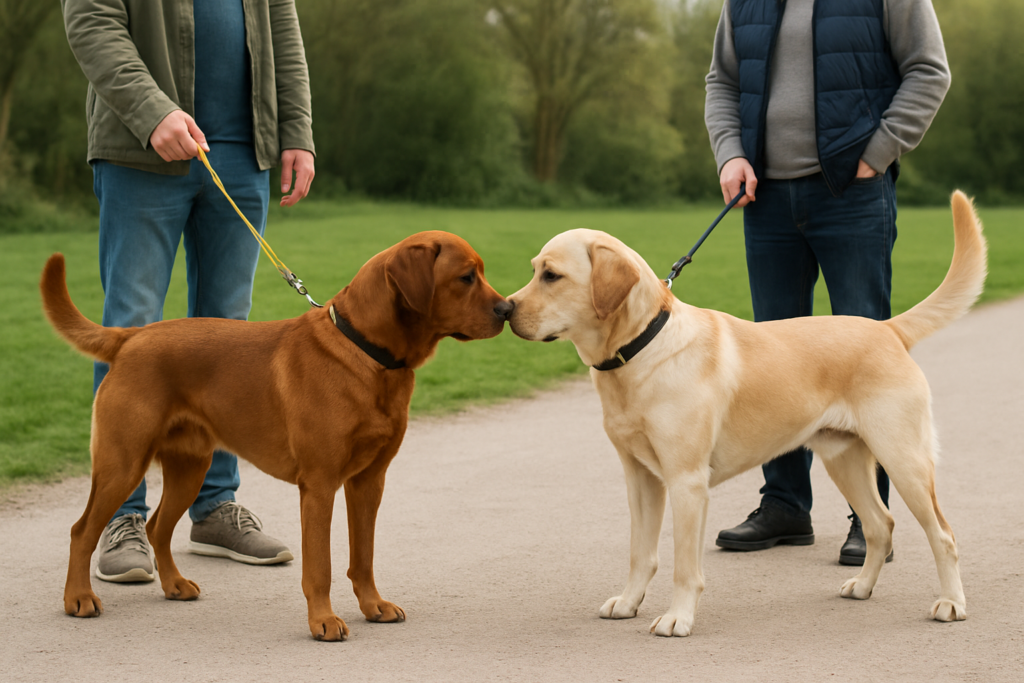
When practical, observe the potential mate in an ordinary environment before breeding. Look for comfortable movement, normal breathing, recovery after mild excitement, tolerance of handling, and behavior appropriate to the breed and situation.
A brief friendly meeting cannot reveal every behavior. Ask how the dog responds to unfamiliar visitors, children, other dogs, grooming, veterinary handling, separation, noise, frustration, and new environments, and request candid information about any bite or aggression history.
Evaluate the owner as carefully as the dog. A responsible owner should answer questions, provide documentation, discuss faults openly, ask equally detailed questions about your dog, and prioritize welfare over securing a mating.
| Reassuring signs | Reasons to pause or decline |
|---|---|
| Original or verifiable health records are provided without pressure. | The owner refuses records, offers excuses, or relies only on appearance and registration. |
| Known health and temperament limitations are discussed candidly. | The owner claims that the dog or bloodline has no faults or health risks. |
| Both parties ask detailed questions about compatibility and puppy welfare. | The conversation focuses mainly on payment, color, rarity, or immediate availability. |
| The dog can be observed safely and handled without coercion. | Serious fear, breathing difficulty, pain, aggression, or poor condition is minimized. |
| The owner is willing to use a written agreement and veterinary guidance. | The owner pressures you to mate quickly or avoid professional advice. |
Use a Written Breeding Agreement
Discuss and sign the agreement before travel, semen collection, reproductive procedures, or natural mating. Local law varies, so obtain appropriate legal advice if the arrangement involves valuable breeding rights, international transport, shared ownership, or complex payment terms.
A contract cannot eliminate medical risk, but it can record what each party disclosed and how foreseeable situations will be handled. Both owners should retain signed copies and the supporting health, pedigree, identification, and breeding records.
- Record the registered and call names, identification numbers, ownership details, and contact information for both dogs.
- Attach or identify the health tests, pedigree records, reproductive information, and known medical or behavioral concerns disclosed by each owner.
- State the stud fee or other consideration, payment schedule, travel costs, and responsibility for veterinary or collection expenses.
- Define what happens if mating does not occur, the female does not become pregnant, or the litter does not meet the contract’s stated terms.
- Address natural mating, artificial insemination, semen ownership, storage, shipping, and authorized use where applicable.
- Specify responsibility for injuries, emergency treatment, reproductive complications, registration documents, and required notifications.
- Record any agreed limits on future breeding rights and the process for resolving a disagreement.
Plan Reproductive Timing and Mating Safely
Counting days from the first sign of bleeding is not a dependable way to identify a female dog’s fertile period. Heat cycles vary between dogs and between cycles, and visible discharge does not confirm ovulation.
A veterinarian can recommend reproductive examination and hormone testing when accurate timing is important. This is particularly useful when the dogs must travel, semen will be collected or shipped, previous breeding attempts failed, or either dog has a reproductive concern.
For natural mating, use a quiet, secure area with nonslip footing and experienced handlers. Never force or restrain unwilling dogs into mating, and do not pull the dogs apart if a mating tie occurs because this may cause injury.
1. Confirm the Female’s Readiness With a Veterinarian
Contact the veterinarian early in the heat cycle and follow the recommended schedule rather than selecting a breeding day from a calendar or online rule.
2. Prepare the Location and Handlers
Remove hazards, prevent other dogs from entering, use secure fencing or leashes as appropriate, and ensure that both handlers understand normal canine behavior and signs of distress.
3. Allow Voluntary, Supervised Interaction
Let the dogs become comfortable without punishment or physical force. Stop the attempt if either dog shows sustained fear, aggression, pain, exhaustion, breathing difficulty, or an inability to move safely.
4. Respond to Problems Safely
Keep the dogs calm if a tie occurs and allow them to separate naturally. Contact a veterinarian promptly for suspected injury or unusual distress, and seek emergency care for collapse, severe pain, profuse bleeding, or breathing difficulty.
Recognize Red Flags and Be Willing to Walk Away
Declining a convenient or attractive candidate is part of responsible breeding. No deposit, travel plan, promised puppy, or social pressure should outweigh health information or welfare concerns.
Pause the process if the owner will not verify identity or ownership, refuses meaningful health records, conceals family history, proposes breeding an immature or unwell dog, dismisses serious behavior problems, or pressures you to proceed immediately.
1. Pause the Arrangement
Do not send further payment, transport either dog, or permit mating while material questions remain unresolved.
2. Verify the Information
Ask for original records, confirm identification details, contact the relevant record holder where possible, and have your veterinarian interpret medical information.
3. Seek an Independent Opinion
Consult your dog’s breeder, a breed-health representative, an experienced mentor, or a veterinarian who is not financially involved in the proposed mating.
4. Decline an Unsuitable Match
End the arrangement when the match creates avoidable health, genetic, behavioral, legal, or welfare concerns. Choosing not to breed is preferable to accepting a preventable risk.
The Bottom Line
Finding a suitable mate means verifying health, temperament, pedigree, relatedness, physical compatibility, ownership, and breeding goals rather than choosing by proximity or appearance.
Use experienced breed contacts and veterinary guidance, document the arrangement, supervise all interactions, and walk away whenever the evidence does not support a responsible match.
Frequently Asked Questions
What is the best website to find a mate for my dog?
No website can determine whether two dogs are a responsible genetic and behavioral match. Breed-club networks and referrals from your dog’s breeder are generally stronger starting points, while online platforms should be used only to discover candidates whose identity, ownership, health results, pedigree, and temperament you will verify independently.
Should I see a veterinarian before looking for a mate?
Yes. A veterinarian can assess whether your dog is physically ready for breeding, review reproductive and infectious-disease concerns, and help identify the clinical and DNA screening relevant to its breed, ancestry, age, and medical history.
How long after a dog starts bleeding is she ready to mate?
There is no reliable day that applies to every female or every heat cycle. Bleeding and behavioral changes do not confirm ovulation, so a veterinarian may recommend reproductive examination and hormone testing to identify appropriate timing.
How do I find a suitable stud dog for my female?
Ask your female’s breeder, established breed clubs, and experienced breed mentors for candidates, then compare verified health tests, temperament, structure, pedigree, relatedness, fertility history, and previous offspring. The nearest or most decorated male is not automatically the most suitable.
How can I offer my male dog for responsible breeding?
First obtain an independent assessment, complete the recommended health and genetic screening, document his pedigree and temperament, and define what he could responsibly contribute to a breeding program. Responsible female owners should be given complete records and should receive candid disclosure of his faults and family history.
Should the two dogs meet before mating?
A supervised meeting can reveal obvious behavioral or physical concerns and allows both owners to observe the dogs, but one meeting does not prove compatibility. Health records, family history, pedigree analysis, and behavior across ordinary situations remain necessary.
Does the 3-3-3 rule help choose a breeding mate?
No. The 3-3-3 rule is a general adjustment guideline commonly discussed for newly adopted dogs, not a method for evaluating breeding compatibility, fertility, genetic risk, or reproductive timing.
What is the 7-7-7 rule for dogs, and does it apply to breeding?
Versions of the 7-7-7 rule are informal puppy-socialization checklists involving varied experiences, people, surfaces, or locations. It is not a standardized veterinary breeding test and should not be used to select a mate or time a mating.
Veterinary & Safety Sources
The following resources include breeder guidance and examples of online mate-finding services discussed in this article.